mirror of
https://github.com/simplex-chat/simplexmq.git
synced 2026-08-30 18:28:23 +00:00
Compare commits
| Author | SHA1 | Date | |
|---|---|---|---|
 Evgeny Poberezkin Evgeny Poberezkin
|
091fbdd0e9 | ||
|
Evgeny Poberezkin
|
8e4c9634e9 | ||
|
Evgeny Poberezkin
|
e237c97d6e |
@@ -1 +0,0 @@
|
||||
* @epoberezkin @efim-poberezkin
|
||||
@@ -1,2 +1 @@
|
||||
github: simplex-chat
|
||||
open_collective: simplex-chat
|
||||
|
||||
@@ -1,4 +1,4 @@
|
||||
{
|
||||
"template": "${{UNCATEGORIZED}}",
|
||||
"pr_template": "- ${{TITLE}}"
|
||||
"pr_template": "- ${{TITLE}}\n"
|
||||
}
|
||||
|
||||
+17
-38
@@ -11,51 +11,33 @@ on:
|
||||
|
||||
jobs:
|
||||
build:
|
||||
name: build-${{ matrix.os }}
|
||||
runs-on: ${{ matrix.os }}
|
||||
strategy:
|
||||
fail-fast: false
|
||||
matrix:
|
||||
include:
|
||||
- os: ubuntu-18.04
|
||||
- os: ubuntu-20.04
|
||||
runs-on: ubuntu-20.04
|
||||
steps:
|
||||
- name: Clone project
|
||||
uses: actions/checkout@v2
|
||||
|
||||
- name: Setup Haskell
|
||||
- name: Setup Stack
|
||||
uses: haskell/actions/setup@v1
|
||||
with:
|
||||
ghc-version: "8.10.7"
|
||||
cabal-version: "latest"
|
||||
ghc-version: '8.8.4'
|
||||
enable-stack: true
|
||||
stack-version: 'latest'
|
||||
|
||||
- name: Cache dependencies
|
||||
uses: actions/cache@v2
|
||||
with:
|
||||
path: |
|
||||
~/.cabal/store
|
||||
dist-newstyle
|
||||
key: ${{ matrix.os }}-${{ hashFiles('cabal.project', 'simplexmq.cabal') }}
|
||||
path: ~/.stack
|
||||
key: ${{ hashFiles('stack.yaml') }}
|
||||
|
||||
- name: Build
|
||||
shell: bash
|
||||
run: cabal build --enable-tests
|
||||
|
||||
- name: Test
|
||||
if: matrix.os == 'ubuntu-18.04'
|
||||
timeout-minutes: 30
|
||||
shell: bash
|
||||
run: cabal test --test-show-details=direct
|
||||
|
||||
- name: Prepare binaries
|
||||
if: startsWith(github.ref, 'refs/tags/v') && matrix.os == 'ubuntu-20.04'
|
||||
shell: bash
|
||||
- name: Build & test
|
||||
id: build_test
|
||||
run: |
|
||||
mv $(cabal list-bin smp-server) smp-server-ubuntu-20_04-x86-64
|
||||
mv $(cabal list-bin ntf-server) ntf-server-ubuntu-20_04-x86-64
|
||||
|
||||
stack build --test --force-dirty
|
||||
install_root=$(stack path --local-install-root)
|
||||
mv ${install_root}/bin/smp-server smp-server-ubuntu-20_04-x86-64
|
||||
|
||||
- name: Build changelog
|
||||
if: startsWith(github.ref, 'refs/tags/v') && matrix.os == 'ubuntu-20.04'
|
||||
if: startsWith(github.ref, 'refs/tags/v')
|
||||
id: build_changelog
|
||||
uses: mikepenz/release-changelog-builder-action@v1
|
||||
with:
|
||||
@@ -65,21 +47,18 @@ jobs:
|
||||
commitMode: true
|
||||
env:
|
||||
GITHUB_TOKEN: ${{ secrets.GITHUB_TOKEN }}
|
||||
|
||||
|
||||
- name: Create release
|
||||
if: startsWith(github.ref, 'refs/tags/v') && matrix.os == 'ubuntu-20.04'
|
||||
if: startsWith(github.ref, 'refs/tags/v')
|
||||
uses: softprops/action-gh-release@v1
|
||||
with:
|
||||
body: |
|
||||
See full changelog [here](https://github.com/simplex-chat/simplexmq/blob/master/CHANGELOG.md).
|
||||
|
||||
Commits:
|
||||
Commits, chronological:
|
||||
${{ steps.build_changelog.outputs.changelog }}
|
||||
prerelease: true
|
||||
files: |
|
||||
LICENSE
|
||||
smp-server-ubuntu-20_04-x86-64
|
||||
ntf-server-ubuntu-20_04-x86-64
|
||||
fail_on_unmatched_files: true
|
||||
env:
|
||||
GITHUB_TOKEN: ${{ secrets.GITHUB_TOKEN }}
|
||||
|
||||
@@ -2,8 +2,3 @@
|
||||
*.db
|
||||
*.db.bak
|
||||
*.session.sql
|
||||
tests/tmp
|
||||
dist-newstyle/
|
||||
|
||||
cabal.project.local
|
||||
cabal.project.local~
|
||||
|
||||
-273
@@ -1,276 +1,3 @@
|
||||
# 4.4.1
|
||||
|
||||
SMP agent:
|
||||
|
||||
- fix handling of server addresses.
|
||||
- prevent message delivery getting stuck on IO error in SMP client.
|
||||
|
||||
# 4.4.0
|
||||
|
||||
SMP agent:
|
||||
|
||||
- support multiple user profiles with transport session isolation.
|
||||
- support optional transport isolation per connection.
|
||||
- batch connection deletion
|
||||
- improve asynchronous connection deletion – it may now be completed after the client is restarted as well.
|
||||
- improve subscription logic to retry if initial attempt fails.
|
||||
- end SMP client connection after a number of failed PINGs (defalt is 3).
|
||||
|
||||
# 4.3.0
|
||||
|
||||
SMP server:
|
||||
|
||||
- additional server usage statistics.
|
||||
|
||||
SMP agent:
|
||||
|
||||
- increase retry interval when sending messages after ERR QUOTA.
|
||||
|
||||
# 4.2.0
|
||||
|
||||
SMP agent and server:
|
||||
|
||||
- reduce sender traffic in cases when queue quota is exceeded:
|
||||
- server sends quota exceeded message to the recipient when sender receives ERR QUOTA.
|
||||
- recipient sends QCONT message to the send once the queue is drained (via reply queue).
|
||||
- sender retry delays are increased, reducing traffic, but sender instantly resumes delivery where QCONT is received.
|
||||
|
||||
SMP server:
|
||||
|
||||
- increase internal queue sizes.
|
||||
|
||||
SMP agent:
|
||||
|
||||
- deduplicate connection IDs in connect/disconnect responses.
|
||||
- unit tests for Crypto.hs.
|
||||
- fix connection switch to another queue: correctly set primary send queue.
|
||||
|
||||
Notification server (v1.3.0):
|
||||
|
||||
- check token status when sending verification notificaiton.
|
||||
|
||||
# 4.1.0
|
||||
|
||||
SMP agent and server:
|
||||
|
||||
- option to toggle TLS handshake error logs (disabled by default).
|
||||
|
||||
SMP agent:
|
||||
|
||||
- include server address in BROKER error.
|
||||
- api to get hash of double ratchet associated data (for connection verification).
|
||||
- api to get agent statistics.
|
||||
|
||||
# 4.0.0
|
||||
|
||||
SMP server:
|
||||
|
||||
- Basic authentication. The server address can now include an optional password that is required to create messaging queues, so the contacts who message you will not be able to receive messages via your server, unless you share with them the address with the password. It is recommended to enable basic authentication on all private servers by adding `create_password` parameter into AUTH section of server INI file (the previously deployed servers do not have this section, you need to add it).
|
||||
- Disable creating new queues completely with `new_queues: off` parameter in AUTH section of INI file - it can be used to simplify migrating the exising connections to another server.
|
||||
- Updated server CLI with changed defaults:
|
||||
- interactive server initialization, use -y flag to initalize the server non-interactively.
|
||||
- store log is now enabled by default, so messaging queues and messages are restored when the server is restarted (to restore undelivered messages the server needs to be stopped with SIGINT signal).
|
||||
- a random password is now generated by default during the server initialization.
|
||||
|
||||
SMP agent:
|
||||
|
||||
- API to test SMP servers. It connects to the server, creates and deletes a messaging queue. The new SimpleX Chat client uses this API to allow you to test that you have the correct server address, with the valid certificate fingerprint and pasword, before enabling the new server.
|
||||
|
||||
# 3.4.0
|
||||
|
||||
SMP agent:
|
||||
|
||||
- increase concurrency with connection-level locks
|
||||
- fix issues identified in security assessment (see the announcement: https://github.com/simplex-chat/simplex-chat/blob/stable/blog/20221108-simplex-chat-v4.2-security-audit-new-website.md)
|
||||
- manual connection queue rotation
|
||||
- optional client data in connection requests links
|
||||
|
||||
SMP server:
|
||||
|
||||
- specialize monad stack to improve performance
|
||||
- log slow commands
|
||||
|
||||
# 3.3.0
|
||||
|
||||
SMP server:
|
||||
|
||||
- allow repeated KEY command with the same key (to avoid failures on retries)
|
||||
|
||||
SMP agent:
|
||||
|
||||
- enable/disable connection notifications
|
||||
- asynchronous commands that retry on network error
|
||||
- use SQLCipher
|
||||
|
||||
# 3.2.0
|
||||
|
||||
SMP agent:
|
||||
|
||||
- Support multiple server hostnames (including onion hostnames) in server addresses.
|
||||
- Network configuration options.
|
||||
- Options to define rules to choose server hostname.
|
||||
|
||||
# 3.1.0
|
||||
|
||||
SMP server and agent:
|
||||
|
||||
- SMP protocol v4: batching multiple server commands/responses in a transport block.
|
||||
|
||||
# 3.0.0
|
||||
|
||||
SMP server:
|
||||
|
||||
- restore undeliverd messages when the server is restarted.
|
||||
- SMP protocol v3 to support push notification:
|
||||
- updated SEND and MSG to add message flags (for notification flag that contros whether the notification is sent and for any future extensions) and to move message meta-data sent to the recipient into the encrypted envelope.
|
||||
- update NKEY and NID to add e2e encryption keys (for the notification meta-data encryption between SMP server and the client), and update NMSG to include this meta-data.
|
||||
- update ACK command to include message ID (to avoid acknowledging unprocessed message).
|
||||
- add NDEL commands to remove notification subscription credentials from SMP queue.
|
||||
- add GET command to receive messages without subscription - to be used in iOS notification service extension to receive messages without terminating app subscriptions.
|
||||
|
||||
SMP agent:
|
||||
|
||||
- new protocol for duplex connection handshake reducing traffic and connection time.
|
||||
- support for SMP notifications server and managing device token.
|
||||
- remove redundant FQDN validation from TLS handshake to prepare for access via Tor.
|
||||
- support for fully stopping agent and for termporary suspending agent operations.
|
||||
- improve management of duplicate message delivery.
|
||||
|
||||
SMP notifications server v1.0:
|
||||
|
||||
- SMP notifications protocol with version negotiation during handshake.
|
||||
- device token registration and verification (via background notification).
|
||||
- SMP notification subscriptions and push notifications via APNS.
|
||||
- restoring notification subscriptions when the server is restarted.
|
||||
|
||||
# 2.3.0
|
||||
|
||||
SMP server:
|
||||
|
||||
- Save and restore undelivered messages, to avoid losing them. To save messages the server has to be stopped with SIGINT signal, if it is stopped with SIGTERM undelivered messages would not be saved.
|
||||
|
||||
# 2.2.0
|
||||
|
||||
SMP server:
|
||||
|
||||
- Fix sockets/threads/memory leak
|
||||
|
||||
SMP agent:
|
||||
|
||||
- Support stopping and resuming agent with `disconnectAgentClient` / `resumeAgentClient`
|
||||
|
||||
# 2.1.1
|
||||
|
||||
SMP server:
|
||||
|
||||
- gracefully close sockets on client disconnection
|
||||
- CLI warning when deleting server configuration
|
||||
|
||||
# 2.1.0
|
||||
|
||||
SMP server:
|
||||
|
||||
- configuration to expire inactive clients in ini file, increased TTL and check interval for client expiration
|
||||
|
||||
# 2.0.0
|
||||
|
||||
Push notifications server (beta):
|
||||
|
||||
- supports APNS
|
||||
- manage device tokens verification via notification delivery
|
||||
- sending periodic background notification to check messages (not more frequent than every 20 min)
|
||||
|
||||
SMP server:
|
||||
|
||||
- disconnect inactive clients after some period
|
||||
- remove undelivered messages after 30 days
|
||||
- log aggregate usage daily stats: only the number of queues created/secured/deleted/used and messages sent/delivered is logged, as one line per day, so we can plan server capacity and diagnose any problems.
|
||||
|
||||
SMP agent:
|
||||
|
||||
- manage device tokens and notification server connection
|
||||
- DOWN/UP events to the agent user about server disconnections/reconnections are now sent once per server
|
||||
|
||||
# 1.1.0
|
||||
|
||||
SMP server:
|
||||
|
||||
- message TTL and periodic deletion of old messages
|
||||
- configuration to prevent creation of the new queues
|
||||
|
||||
SMP agent:
|
||||
|
||||
- asynchronous connection handshake
|
||||
- configurable SMP servers at run-time
|
||||
- use TCP keep-alive for connection stability
|
||||
- improve stability of connection subscriptions
|
||||
- auto-vacuum DB to remove deleted records
|
||||
|
||||
# 1.0.3
|
||||
|
||||
SMP server:
|
||||
|
||||
- Reduce server message queue quota to 128 messages.
|
||||
|
||||
SMP agent:
|
||||
|
||||
- Add "yes to migrations" option.
|
||||
- Make new SMP client attempt to reconnect on network error.
|
||||
- Reduce connection handshake expiration to 2 days.
|
||||
|
||||
JSON encoding of types used in simplex-chat, some other minor adjustments.
|
||||
|
||||
# 1.0.2
|
||||
|
||||
General:
|
||||
|
||||
- Enable TLS 1.3 parameters for TLS handshake (server and client).
|
||||
- Switch from hs-tls fork to original repo now that it supports getFinished and getPeerFinished APIs for both TLS 1.2 and TLS 1.3.
|
||||
|
||||
SMP server:
|
||||
|
||||
- Perform TLS handshake in a separate thread per-connection.
|
||||
|
||||
SMP agent:
|
||||
|
||||
- Cease attempts to send HELLO after one week timeout.
|
||||
- Coalesce requests to connect to SMP servers, to have 1 connection per server.
|
||||
|
||||
# 1.0.1
|
||||
|
||||
SMP server:
|
||||
|
||||
- Explicitly set line buffering in stdout/stderr to log each line when output is redirected to files.
|
||||
|
||||
# 1.0.0
|
||||
|
||||
Security and privacy improvements:
|
||||
|
||||
- Faster and more secure 2-layer E2E encryption with additional encryption layer between servers and recipients:
|
||||
- application messages in each duplex connection (managed by SMP agents - see [overview](https://github.com/simplex-chat/simplexmq/blob/master/protocol/overview-tjr.md)) are encrypted using [double-ratchet algorithm](https://www.signal.org/docs/specifications/doubleratchet/), providing forward secrecy and break-in recovery. This layer uses two Curve448 keys per client for [X3DH key agreement](https://www.signal.org/docs/specifications/x3dh/), SHA512 based HKDFs and AES-GCM AEAD encryption.
|
||||
- SMP client messages are additionally E2E encrypted in each SMP queue to avoid cipher-text correlation of messages sent via multiple redundant queues (that will be supported soon). This and the next layer use [NaCl crypto_box algorithm](https://nacl.cr.yp.to/index.html) with XSalsa20Poly1305 cipher and Curve25519 keys for DH key agreement.
|
||||
- Messages delivered from the servers to the recipients are additionally encrypted to avoid cipher-text correlation between sent and received messages.
|
||||
- To prevent any traffic correlation by content size, SimpleX uses fixed transport block size of 16kb (16384 bytes) with padding on all encryption layers:
|
||||
- application messages are padded to 15788 bytes before E2E double-ratchet encryption.
|
||||
- messages between SMP clients are padded to 16032 bytes before E2E encryption in each SMP queue.
|
||||
- messages from the server to the recipient are padded to padded to 16088 bytes before the additional encryption layer (see above).
|
||||
- TLS 1.2+ with tls-unique channel binding in each command to prevent replay attacks.
|
||||
- Server identity verification via server offline certificate fingerprints included in SMP server addresses.
|
||||
|
||||
New functionality:
|
||||
|
||||
- Support for notification servers with new SMP commands: `NKEY`/`NID`, `NSUB`/`NMSG`.
|
||||
|
||||
Efficiency improvements:
|
||||
|
||||
- Binary protocol encodings to reduce overhead from circa 15% to approximately 3.7% of transmitted application message size, with only 2.2% overhead for SMP protocol messages.
|
||||
- More performant cryptographic algorithms.
|
||||
|
||||
For more information about SimpleX:
|
||||
|
||||
- [SimpleX overview](https://github.com/simplex-chat/simplexmq/blob/master/protocol/overview-tjr.md).
|
||||
- [SimpleX chat v1 announcement](https://github.com/simplex-chat/simplex-chat/blob/master/blog/20220112-simplex-chat-v1-released.md).
|
||||
|
||||
# 0.5.2
|
||||
|
||||
- Fix message delivery logic that blocked delivery of all server messages when server per-queue quota exceeded, making it concurrent per SMP queue, not per server.
|
||||
|
||||
@@ -3,255 +3,111 @@
|
||||
[](https://github.com/simplex-chat/simplexmq/actions?query=workflow%3Abuild)
|
||||
[](https://github.com/simplex-chat/simplexmq/releases)
|
||||
|
||||
📢 SimpleXMQ v1 is released - with many security, privacy and efficiency improvements, new functionality - see [release notes](https://github.com/simplex-chat/simplexmq/releases/tag/v1.0.0).
|
||||
📢 **v0.5.1 brings a hotfix to the server's subscription management logic, to apply it log in to your server via SSH and run the following command. If you have store log enabled for your server, information about already established queues will be preserved.** If you're doing a custom installation instead of Linode or DigitalOcean you may have to change the path for binary download.
|
||||
|
||||
**Please note**: v1 is not backwards compatible, but it has the version negotiation built into all protocol layers for forwards compatibility of this version and backwards compatibility of the future versions, that will be backwards compatible for at least two versions back.
|
||||
|
||||
If you have a server deployed please deploy a new server to a new host and retire the previous version once it is no longer used.
|
||||
```sh
|
||||
systemctl stop smp-server
|
||||
curl -L -o /opt/simplex/bin/smp-server https://github.com/simplex-chat/simplexmq/releases/download/v0.5.1/smp-server-ubuntu-20_04-x86-64
|
||||
systemctl start smp-server
|
||||
```
|
||||
|
||||
## Message broker for unidirectional (simplex) queues
|
||||
|
||||
SimpleXMQ is a message broker for managing message queues and sending messages over public network. It consists of SMP server, SMP client library and SMP agent that implement [SMP protocol](./protocol/simplex-messaging.md) for client-server communication and [SMP agent protocol](./protocol/agent-protocol.md) to manage duplex connections via simplex queues on multiple SMP servers.
|
||||
SimpleXMQ is a message broker for managing message queues and sending messages over public network. It consists of SMP server, SMP client library and SMP agent that implement [SMP protocol](https://github.com/simplex-chat/simplexmq/blob/master/protocol/simplex-messaging.md) for client-server communication and [SMP agent protocol](https://github.com/simplex-chat/simplexmq/blob/master/protocol/agent-protocol.md) to manage duplex connections via simplex queues on multiple SMP servers.
|
||||
|
||||
SMP protocol is inspired by [Redis serialization protocol](https://redis.io/topics/protocol), but it is much simpler - it currently has only 10 client commands and 8 server responses.
|
||||
SMP protocol is inspired by [Redis serialization protocol](https://redis.io/topics/protocol), but it is much simpler - it currently has only 8 client commands and 6 server responses.
|
||||
|
||||
SimpleXMQ is implemented in Haskell - it benefits from robust software transactional memory (STM) and concurrency primitives that Haskell provides.
|
||||
|
||||
## SimpleXMQ roadmap
|
||||
|
||||
- SimpleX service protocol and application template - to enable users building services and chat bots that work over SimpleX protocol stack. The first such service will be a notification service for a mobile app.
|
||||
- SMP queue redundancy and rotation in SMP agent connections.
|
||||
- SMP queue redundancy and rotation in SMP agent duplex connections.
|
||||
- SMP agents synchronization to share connections and messages between multiple agents (it would allow using multiple devices for [simplex-chat](https://github.com/simplex-chat/simplex-chat)).
|
||||
- Streams - high performance message queues. See [Streams RFC](https://github.com/simplex-chat/simplexmq/blob/master/rfcs/2021-02-28-streams.md) for details.
|
||||
|
||||
## Components
|
||||
|
||||
### SMP server
|
||||
|
||||
[SMP server](./apps/smp-server/Main.hs) can be run on any Linux distribution, including low power/low memory devices. OpenSSL library is required for initialization.
|
||||
[SMP server](https://github.com/simplex-chat/simplexmq/blob/master/apps/smp-server/Main.hs) can be run on any Linux distribution without any dependencies. It uses in-memory persistence with an optional append-only log of created queues that allows to re-start the server without losing the connections. This log is compacted on every server restart, permanently removing suspended and removed queues.
|
||||
|
||||
To initialize the server use `smp-server init -n <fqdn>` (or `smp-server init --ip <ip>` for IP based address) command - it will generate keys and certificates for TLS transport. The fingerprint of offline certificate is used as part of the server address to protect client/server connection against man-in-the-middle attacks: `smp://<fingerprint>@<hostname>[:5223]`.
|
||||
To enable the queue logging, uncomment `enable: on` option in `smp-server.ini` configuration file that is created the first time the server is started.
|
||||
|
||||
SMP server uses in-memory persistence with an optional append-only log of created queues that allows to re-start the server without losing the connections. This log is compacted on every server restart, permanently removing suspended and removed queues.
|
||||
On the first start the server generates an RSA key pair for encrypted transport handshake and outputs hash of the public key every time it runs - this hash should be used as part of the server address: `<hostname>:5223#<key hash>`.
|
||||
|
||||
To enable store log, initialize server using `smp-server -l` command, or modify `smp-server.ini` created during initialization (uncomment `enable: on` option in the store log section). Use `smp-server --help` for other usage tips.
|
||||
|
||||
Starting from version 2.3.0, when store log is enabled, the server would also enable saving undelivered messages on exit and restoring them on start. This can be disabled via a separate setting `restore_messages` in `smp-server.ini` file. Saving messages would only work if the server is stopped with SIGINT signal (keyboard interrupt), if it is stopped with SIGTERM signal the messages would not be saved.
|
||||
|
||||
> **Please note:** On initialization SMP server creates a chain of two certificates: a self-signed CA certificate ("offline") and a server certificate used for TLS handshake ("online"). **You should store CA certificate private key securely and delete it from the server. If server TLS credential is compromised this key can be used to sign a new one, keeping the same server identity and established connections.** CA private key location by default is `/etc/opt/simplex/ca.key`.
|
||||
|
||||
SMP server implements [SMP protocol](./protocol/simplex-messaging.md).
|
||||
|
||||
#### Running SMP server on MacOS
|
||||
|
||||
SMP server requires OpenSSL library for initialization. On MacOS OpenSSL library may be replaced with LibreSSL, which doesn't support required algorithms. Before initializing SMP server verify you have OpenSSL installed:
|
||||
|
||||
```sh
|
||||
openssl version
|
||||
```
|
||||
|
||||
If it says "LibreSSL", please install original OpenSSL:
|
||||
|
||||
```sh
|
||||
brew update
|
||||
brew install openssl
|
||||
echo 'PATH="/opt/homebrew/opt/openssl@3/bin:$PATH"' >> ~/.zprofile # or follow whatever instructions brew suggests
|
||||
. ~/.zprofile # or restart your terminal to start a new session
|
||||
```
|
||||
|
||||
Now `openssl version` should be saying "OpenSSL". You can now run `smp-server init` to initialize your SMP server.
|
||||
SMP server implements [SMP protocol](https://github.com/simplex-chat/simplexmq/blob/master/protocol/simplex-messaging.md).
|
||||
|
||||
### SMP client library
|
||||
|
||||
[SMP client](./src/Simplex/Messaging/Client.hs) is a Haskell library to connect to SMP servers that allows to:
|
||||
|
||||
[SMP client](https://github.com/simplex-chat/simplexmq/blob/master/src/Simplex/Messaging/Client.hs) is a Haskell library to connect to SMP servers that allows to:
|
||||
- execute commands with a functional API.
|
||||
- receive messages and other notifications via STM queue.
|
||||
- automatically send keep-alive commands.
|
||||
|
||||
### SMP agent
|
||||
|
||||
[SMP agent library](./src/Simplex/Messaging/Agent.hs) can be used to run SMP agent as part of another application and to communicate with the agent via STM queues, without serializing and parsing commands and responses.
|
||||
[SMP agent library](https://github.com/simplex-chat/simplexmq/blob/master/src/Simplex/Messaging/Agent.hs) can be used to run SMP agent as part of another application and to communicate with the agent via STM queues, without serializing and parsing commands and responses.
|
||||
|
||||
Haskell type [ACommand](./src/Simplex/Messaging/Agent/Protocol.hs) represents SMP agent protocol to communicate via STM queues.
|
||||
Haskell type [ACommand](https://github.com/simplex-chat/simplexmq/blob/master/src/Simplex/Messaging/Agent/Protocol.hs) represents SMP agent protocol to communicate via STM queues.
|
||||
|
||||
See [simplex-chat](https://github.com/simplex-chat/simplex-chat) terminal UI for the example of integrating SMP agent into another application.
|
||||
|
||||
[SMP agent executable](./apps/smp-agent/Main.hs) can be used to run a standalone SMP agent process that implements plaintext [SMP agent protocol](./protocol/agent-protocol.md) via TCP port 5224, so it can be used via telnet. It can be deployed in private networks to share access to the connections between multiple applications and services.
|
||||
[SMP agent executable](https://github.com/simplex-chat/simplexmq/blob/master/apps/smp-agent/Main.hs) can be used to run a standalone SMP agent process that implements plaintext [SMP agent protocol](https://github.com/simplex-chat/simplexmq/blob/master/protocol/agent-protocol.md) via TCP port 5224, so it can be used via telnet. It can be deployed in private networks to share access to the connections between multiple applications and services.
|
||||
|
||||
## Using SMP server and SMP agent
|
||||
|
||||
You can either run your own SMP server locally or deploy using [Linode StackScript](https://cloud.linode.com/stackscripts/748014), or try local SMP agent with the deployed servers:
|
||||
You can either run your own SMP server locally or deploy using [Linode StackScript](#deploy-smp-server-on-linode), or try local SMP agent with the deployed servers:
|
||||
|
||||
`smp://u2dS9sG8nMNURyZwqASV4yROM28Er0luVTx5X1CsMrU=@smp4.simplex.im`
|
||||
|
||||
`smp://hpq7_4gGJiilmz5Rf-CswuU5kZGkm_zOIooSw6yALRg=@smp5.simplex.im`
|
||||
|
||||
`smp://PQUV2eL0t7OStZOoAsPEV2QYWt4-xilbakvGUGOItUo=@smp6.simplex.im`
|
||||
`smp2.simplex.im#z5W2QLQ1Br3Yd6CoWg7bIq1bHdwK7Y8bEiEXBs/WfAg=` (London, UK)
|
||||
`smp3.simplex.im#nxc7HnrnM8dOKgkMp008ub/9o9LXJlxlMrMpR+mfMQw=` (Fremont, CA)
|
||||
|
||||
It's the easiest to try SMP agent via a prototype [simplex-chat](https://github.com/simplex-chat/simplex-chat) terminal UI.
|
||||
|
||||
## Deploy SMP server on Linux
|
||||
|
||||
You can run your SMP server as a Linux process, optionally using a service manager for booting and restarts.
|
||||
|
||||
Notice that `smp-server` requires `openssl` as run-time dependency (it is used to generate server certificates during initialization). Install it with your packet manager:
|
||||
|
||||
```sh
|
||||
# For Ubuntu
|
||||
apt update && apt install openssl
|
||||
```
|
||||
|
||||
### Install binaries
|
||||
|
||||
#### Using Docker
|
||||
|
||||
On Linux, you can deploy smp server using Docker. This will download image from [Docker Hub](https://hub.docker.com/r/simplexchat/simplexmq).
|
||||
|
||||
1. Create `config` and `logs` directories:
|
||||
|
||||
```sh
|
||||
mkdir -p ~/simplex/{config,logs}
|
||||
```
|
||||
|
||||
2. Run your Docker container. You must change **your_ip_or_domain**. `-e pass="password"` is optional variable to password-protect your `smp` server:
|
||||
```sh
|
||||
docker run -d \
|
||||
-e addr="your_ip_or_domain" \
|
||||
-e pass="password" \
|
||||
-p 5223:5223 \
|
||||
-v $HOME/simplex/config:/etc/opt/simplex:z \
|
||||
-v $HOME/simplex/logs:/var/opt/simplex:z \
|
||||
simplexchat/simplexmq
|
||||
```
|
||||
|
||||
#### Ubuntu
|
||||
|
||||
For Ubuntu you can download a binary from [the latest release](https://github.com/simplex-chat/simplexmq/releases).
|
||||
|
||||
### Build from source
|
||||
|
||||
#### Using Docker
|
||||
|
||||
> **Please note:** to build the app use source code from [stable branch](https://github.com/simplex-chat/simplexmq/tree/stable).
|
||||
|
||||
On Linux, you can build smp server using Docker.
|
||||
|
||||
1. Build your `smp-server` image:
|
||||
|
||||
```sh
|
||||
git clone https://github.com/simplex-chat/simplexmq
|
||||
cd simplexmq
|
||||
git checkout stable
|
||||
DOCKER_BUILDKIT=1 docker build -t smp-server -f ./build.Dockerfile .
|
||||
```
|
||||
|
||||
2. Create `config` and `logs` directories:
|
||||
|
||||
```sh
|
||||
mkdir -p ~/simplex/{config,logs}
|
||||
```
|
||||
|
||||
3. Run your Docker container. You must change **your_ip_or_domain**. `-e pass="password"` is optional variable to password-protect your `smp` server::
|
||||
```sh
|
||||
docker run -d \
|
||||
-e addr="your_ip_or_domain" \
|
||||
-e pass="password" \
|
||||
-p 5223:5223 \
|
||||
-v $HOME/simplex/config:/etc/opt/simplex:z \
|
||||
-v $HOME/simplex/logs:/var/opt/simplex:z \
|
||||
smp-server
|
||||
```
|
||||
|
||||
#### Using your distribution
|
||||
|
||||
1. Install [Haskell GHCup](https://www.haskell.org/ghcup/), GHC 8.10.7 and cabal:
|
||||
|
||||
```sh
|
||||
curl --proto '=https' --tlsv1.2 -sSf https://get-ghcup.haskell.org | sh
|
||||
ghcup install ghc 8.10.7
|
||||
ghcup install cabal
|
||||
ghcup set ghc 8.10.7
|
||||
ghcup set cabal
|
||||
```
|
||||
|
||||
2. Build the project:
|
||||
|
||||
```sh
|
||||
git clone https://github.com/simplex-chat/simplexmq
|
||||
cd simplexmq
|
||||
git checkout stable
|
||||
# On Ubuntu. Depending on your distribution, use your package manager to determine package names.
|
||||
apt-get update && apt-get install -y build-essential libgmp3-dev zlib1g-dev
|
||||
cabal update
|
||||
cabal install
|
||||
```
|
||||
|
||||
- Initialize SMP server with `smp-server init [-l] -n <fqdn>` or `smp-server init [-l] --ip <ip>` - depending on how you initialize it, either FQDN or IP will be used for server's address.
|
||||
|
||||
- Run `smp-server start` to start SMP server, or you can configure a service manager to run it as a service.
|
||||
|
||||
- Optionally, `smp-server` can be setup for having an onion address in `tor` network. See: [`scripts/tor`](./scripts/tor/). In this case, the server address can have both public and onion hostname pointing to the same server, to allow two people connect when only one of them is using Tor. The server address would be: `smp://<fingerprint>@<public_hostname>,<onion_hostname>`
|
||||
|
||||
See [this section](#smp-server) for more information. Run `smp-server -h` and `smp-server init -h` for explanation of commands and options.
|
||||
|
||||
[<img alt="Linode" src="./img/linode.svg" align="right" width="200">](https://cloud.linode.com/stackscripts/748014)
|
||||
[<img alt="Linode" src="https://raw.githubusercontent.com/simplex-chat/simplexmq/master/img/linode.svg" align="right" width="200">](https://cloud.linode.com/stackscripts/748014)
|
||||
|
||||
## Deploy SMP server on Linode
|
||||
|
||||
\* You can use free credit Linode offers when [creating a new account](https://www.linode.com/) to deploy an SMP server.
|
||||
You can get Linode [free credits](https://www.linode.com/lp/affiliate-referral/?irclickid=02-QkdTEpxyLW0W0EOSREQreUkB2DtzGE2lGTE0&irgwc=1&utm_source=impact) to deploy SMP server.
|
||||
|
||||
Deployment on Linode is performed via StackScripts, which serve as recipes for Linode instances, also called Linodes. To deploy SMP server on Linode:
|
||||
Deployment on [Linode](https://www.linode.com/) is performed via StackScripts, which serve as recipes for Linode instances, also called Linodes. To deploy SMP server on Linode:
|
||||
|
||||
- Create a Linode account or login with an already existing one.
|
||||
- Open [SMP server StackScript](https://cloud.linode.com/stackscripts/748014) and click "Deploy New Linode".
|
||||
- You can optionally configure the following parameters:
|
||||
- SMP Server store log flag for queue persistence on server restart, recommended.
|
||||
- [Linode API token](https://www.linode.com/docs/guides/getting-started-with-the-linode-api#get-an-access-token) to attach server address etc. as tags to Linode and to add A record to your 2nd level domain (e.g. `example.com` [domain should be created](https://cloud.linode.com/domains/create) in your account prior to deployment). The API token access scopes:
|
||||
- read/write for "linodes"
|
||||
- read/write for "domains"
|
||||
- Domain name to use instead of Linode IP address, e.g. `smp1.example.com`.
|
||||
- Choose the region and plan, Shared CPU Nanode with 1Gb is sufficient.
|
||||
- Provide ssh key to be able to connect to your Linode via ssh. If you haven't provided a Linode API token this step is required to login to your Linode and get the server's fingerprint either from the welcome message or from the file `/etc/opt/simplex/fingerprint` after server starts. See [Linode's guide on ssh](https://www.linode.com/docs/guides/use-public-key-authentication-with-ssh/) .
|
||||
- [SMP Server store log](#SMP-server) flag for queue persistence on server restart (recommended).
|
||||
- [Linode API token](https://www.linode.com/docs/guides/getting-started-with-the-linode-api#get-an-access-token) for attaching server info as tags to Linode (server address, public key hash, version) and adding A record to your 2nd level domain (Note: 2nd level e.g. `example.com` domain should be [created](https://cloud.linode.com/domains/create) in your account prior to deployment). The API token access scope should be read/write access to "linodes" (to update linode tags - you need them), and "domains" (to add A record for the 3rd level domain, e.g. `smp`).
|
||||
- Domain name to use instead of Linode ip address, e.g. `smp.example.com`.
|
||||
- Choose the region and plan according to your requirements (for regular use Shared CPU Nanode should be sufficient).
|
||||
- Provide ssh key to be able to connect to your Linode via ssh. This step is required if you haven't provided a Linode API token, because you will need to login to your Linode and get a public key hash either from the welcome message or from the file `/etc/opt/simplex/pub_key_hash` on your Linode after SMP server starts.
|
||||
- Deploy your Linode. After it starts wait for SMP server to start and for tags to appear (if a Linode API token was provided). It may take up to 5 minutes depending on the connection speed on the Linode. Connecting Linode IP address to provided domain name may take some additional time.
|
||||
- Get `address` and `fingerprint` either from Linode tags (click on a tag and copy it's value from the browser search panel) or via ssh.
|
||||
- Great, your own SMP server is ready! If you provided FQDN use `smp://<fingerprint>@<fqdn>` as SMP server address in the client, otherwise use `smp://<fingerprint>@<ip_address>`.
|
||||
- Get `hostname` and `hash` either from Linode tags (click on a tag and copy it's value from the browser search panel) or via ssh. Linode has a good [guide](https://www.linode.com/docs/guides/use-public-key-authentication-with-ssh/) about ssh.
|
||||
- Great, your own SMP server is ready! Use `address#hash` as SMP server address in the client.
|
||||
|
||||
Please submit an [issue](https://github.com/simplex-chat/simplexmq/issues) if any problems occur.
|
||||
|
||||
[<img alt="DigitalOcean" src="/img/digitalocean.png" align="right" width="300">](https://marketplace.digitalocean.com/apps/simplex-server)
|
||||
[<img alt="DigitalOcean" src="https://raw.githubusercontent.com/simplex-chat/simplexmq/master/img/digitalocean.png" align="right" width="300">](https://marketplace.digitalocean.com/apps/simplex-server)
|
||||
|
||||
## Deploy SMP server on DigitalOcean
|
||||
|
||||
> 🚧 DigitalOcean snapshot is currently not up to date, it will soon be updated 🏗️
|
||||
|
||||
\* When creating a DigitalOcean account you can use [this link](https://try.digitalocean.com/freetrialoffer/) to get free credit. (You would still be required either to provide your credit card details or make a confirmation pre-payment with PayPal)
|
||||
|
||||
To deploy SMP server use [SimpleX Server 1-click app](https://marketplace.digitalocean.com/apps/simplex-server) from DigitalOcean marketplace:
|
||||
You can deploy SMP server using [SimpleX Server 1-click app](https://marketplace.digitalocean.com/apps/simplex-server) from DigitalOcean marketplace:
|
||||
|
||||
- Create a DigitalOcean account or login with an already existing one.
|
||||
- Click 'Create SimpleX server Droplet' button.
|
||||
- Choose the region and plan according to your requirements (Basic plan should be sufficient).
|
||||
- Finalize Droplet creation.
|
||||
- Open "Console" on your Droplet management page to get SMP server fingerprint - either from the welcome message or from `/etc/opt/simplex/fingerprint`. Alternatively you can manually SSH to created Droplet, see [DigitalOcean instruction](https://docs.digitalocean.com/products/droplets/how-to/connect-with-ssh/).
|
||||
- Great, your own SMP server is ready! Use `smp://<fingerprint>@<ip_address>` as SMP server address in the client.
|
||||
- Choose the region and plan according to your requirements (cheapest Regular plan should be sufficient).
|
||||
- Provide ssh key and confirm Droplet creation.
|
||||
- SSH to created Droplet (`ssh root@<droplet_ip_address>`) to get SMP server public key hash - either from the welcome message or from `/etc/opt/simplex/pub_key_hash`. DigitalOcean has a good guide on [how to login to Droplet via ssh](https://docs.digitalocean.com/products/droplets/how-to/connect-with-ssh/).
|
||||
- Great, your own SMP server is ready! Use `ip_address#hash` as SMP server address in the client.
|
||||
|
||||
Please submit an [issue](https://github.com/simplex-chat/simplexmq/issues) if any problems occur.
|
||||
|
||||
> **Please note:** SMP server uses server address as a Common Name for server certificate generated during initialization. If you would like your server address to be FQDN instead of IP address, you can log in to your Droplet and run the commands below to re-initialize the server. Alternatively you can use [Linode StackScript](https://cloud.linode.com/stackscripts/748014) which allows this parameterization.
|
||||
|
||||
```sh
|
||||
smp-server delete
|
||||
smp-server init [-l] -n <fqdn>
|
||||
```
|
||||
|
||||
## SMP server design
|
||||
|
||||

|
||||
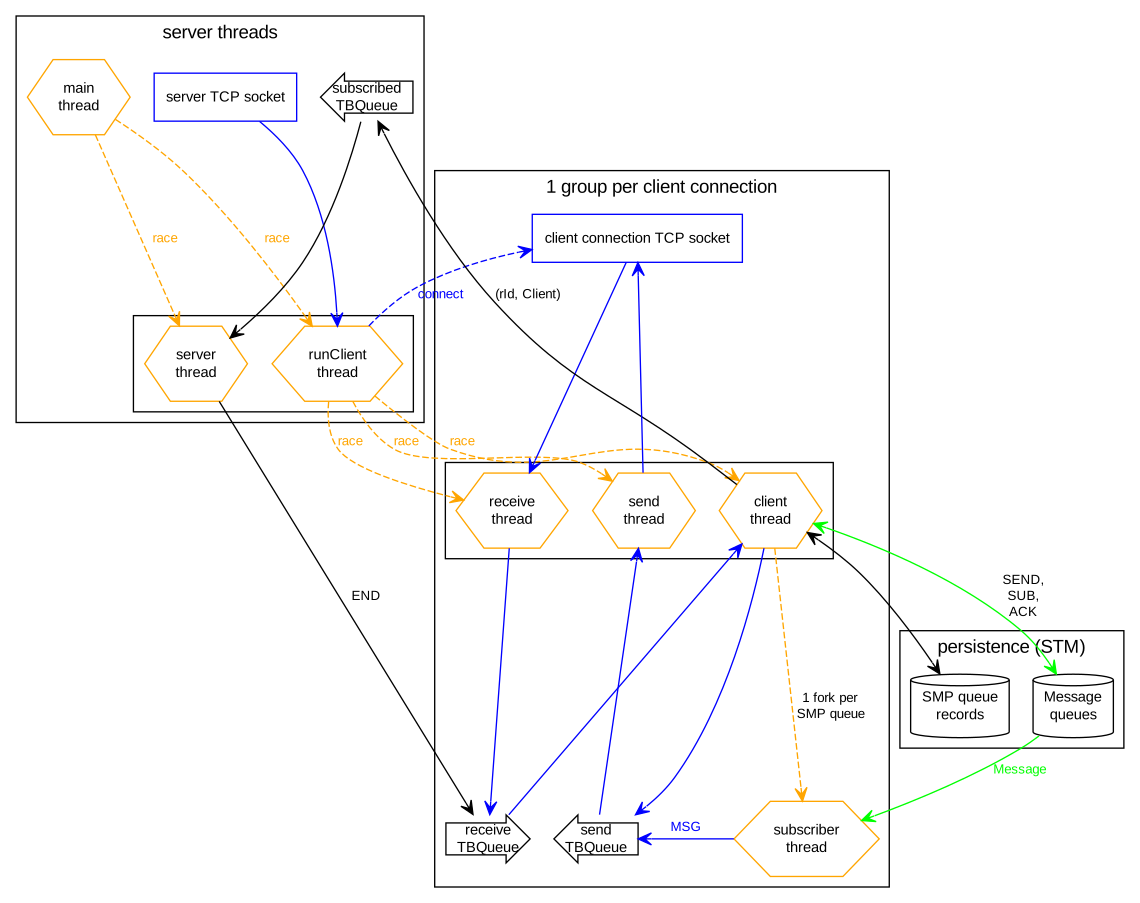
|
||||
|
||||
## SMP agent design
|
||||
|
||||

|
||||
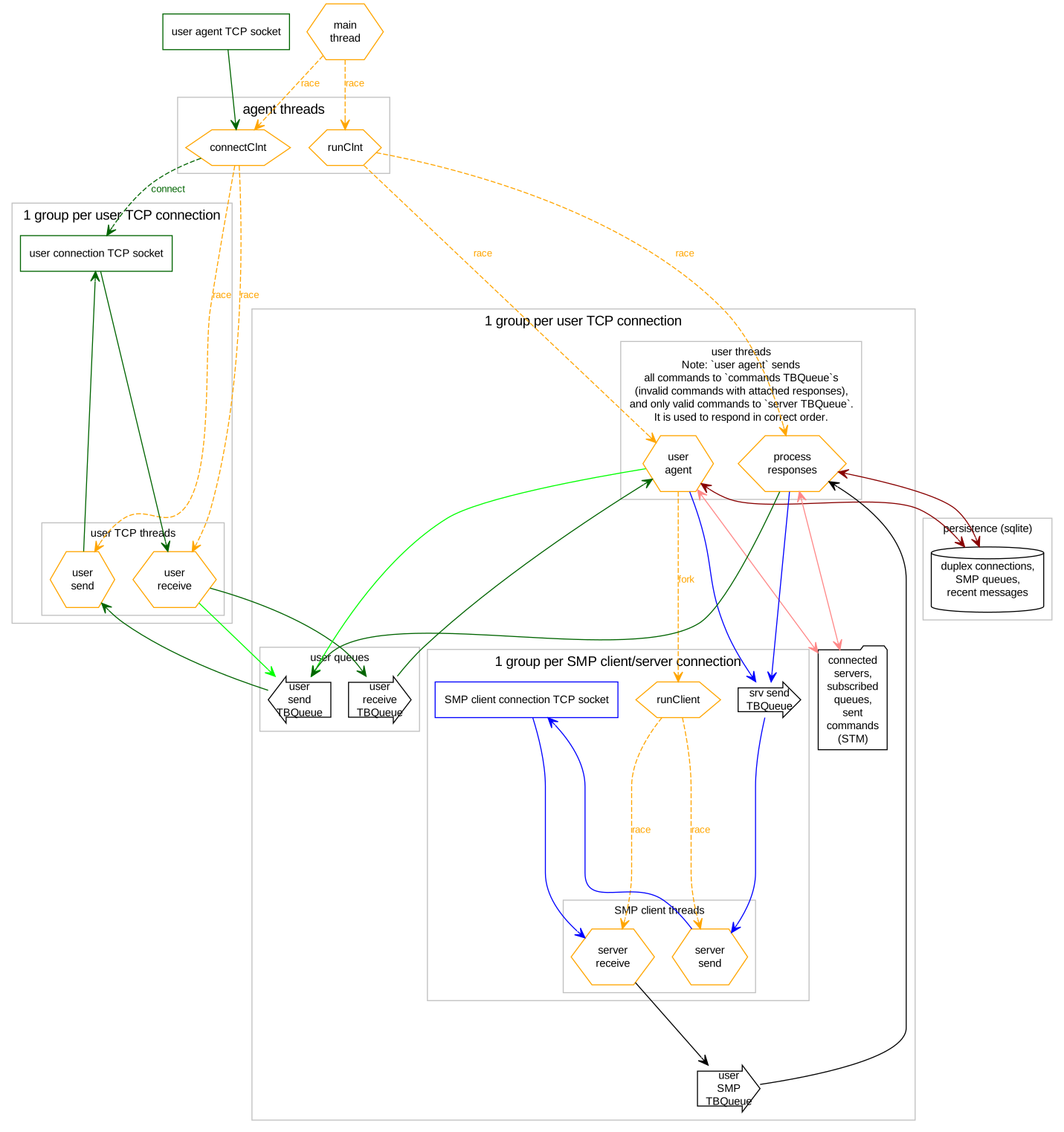
|
||||
|
||||
## License
|
||||
|
||||
[AGPL v3](./LICENSE)
|
||||
[AGPL v3](https://github.com/simplex-chat/simplexmq/blob/master/LICENSE)
|
||||
|
||||
@@ -1,18 +0,0 @@
|
||||
module Main where
|
||||
|
||||
import Control.Logger.Simple
|
||||
import Simplex.Messaging.Notifications.Server.Main
|
||||
|
||||
cfgPath :: FilePath
|
||||
cfgPath = "/etc/opt/simplex-notifications"
|
||||
|
||||
logPath :: FilePath
|
||||
logPath = "/var/opt/simplex-notifications"
|
||||
|
||||
logCfg :: LogConfig
|
||||
logCfg = LogConfig {lc_file = Nothing, lc_stderr = True}
|
||||
|
||||
main :: IO ()
|
||||
main = do
|
||||
setLogLevel LogDebug -- change to LogError in production
|
||||
withGlobalLogging logCfg $ ntfServerCLI cfgPath logPath
|
||||
+4
-15
@@ -1,5 +1,4 @@
|
||||
{-# LANGUAGE DuplicateRecordFields #-}
|
||||
{-# LANGUAGE NumericUnderscores #-}
|
||||
{-# LANGUAGE OverloadedStrings #-}
|
||||
{-# LANGUAGE TypeApplications #-}
|
||||
|
||||
@@ -7,22 +6,12 @@ module Main where
|
||||
|
||||
import Control.Logger.Simple
|
||||
import qualified Data.List.NonEmpty as L
|
||||
import qualified Data.Map.Strict as M
|
||||
import Simplex.Messaging.Agent (runSMPAgent)
|
||||
import Simplex.Messaging.Agent.Env.SQLite
|
||||
import Simplex.Messaging.Agent.Server (runSMPAgent)
|
||||
import Simplex.Messaging.Client (defaultNetworkConfig)
|
||||
import Simplex.Messaging.Transport (TLS, Transport (..))
|
||||
import Simplex.Messaging.Transport (TCP, Transport (..))
|
||||
|
||||
cfg :: AgentConfig
|
||||
cfg = defaultAgentConfig
|
||||
|
||||
servers :: InitialAgentServers
|
||||
servers =
|
||||
InitialAgentServers
|
||||
{ smp = M.fromList [(1, L.fromList ["smp://bU0K-bRg24xWW__lS0umO1Zdw_SXqpJNtm1_RrPLViE=@localhost:5223"])],
|
||||
ntf = [],
|
||||
netCfg = defaultNetworkConfig
|
||||
}
|
||||
cfg = defaultAgentConfig {smpServers = L.fromList ["localhost:5223#bU0K+bRg24xWW//lS0umO1Zdw/SXqpJNtm1/RrPLViE="]}
|
||||
|
||||
logCfg :: LogConfig
|
||||
logCfg = LogConfig {lc_file = Nothing, lc_stderr = True}
|
||||
@@ -31,4 +20,4 @@ main :: IO ()
|
||||
main = do
|
||||
putStrLn $ "SMP agent listening on port " ++ tcpPort (cfg :: AgentConfig)
|
||||
setLogLevel LogInfo -- LogError
|
||||
withGlobalLogging logCfg $ runSMPAgent (transport @TLS) cfg servers
|
||||
withGlobalLogging logCfg $ runSMPAgent (transport @TCP) cfg
|
||||
|
||||
+269
-10
@@ -1,18 +1,277 @@
|
||||
{-# LANGUAGE DataKinds #-}
|
||||
{-# LANGUAGE DuplicateRecordFields #-}
|
||||
{-# LANGUAGE LambdaCase #-}
|
||||
{-# LANGUAGE NamedFieldPuns #-}
|
||||
{-# LANGUAGE OverloadedStrings #-}
|
||||
{-# LANGUAGE TypeApplications #-}
|
||||
|
||||
module Main where
|
||||
|
||||
import Control.Logger.Simple
|
||||
import Simplex.Messaging.Server.Main
|
||||
import Control.Monad.Except
|
||||
import Control.Monad.Trans.Except
|
||||
import qualified Crypto.Store.PKCS8 as S
|
||||
import Data.ByteString.Base64 (encode)
|
||||
import qualified Data.ByteString.Char8 as B
|
||||
import Data.Char (toLower)
|
||||
import Data.Ini (Ini, lookupValue, readIniFile)
|
||||
import Data.Text (Text)
|
||||
import qualified Data.Text as T
|
||||
import Data.X509 (PrivKey (PrivKeyRSA))
|
||||
import Network.Socket (ServiceName)
|
||||
import Options.Applicative
|
||||
import qualified Simplex.Messaging.Crypto as C
|
||||
import Simplex.Messaging.Server (runSMPServer)
|
||||
import Simplex.Messaging.Server.Env.STM
|
||||
import Simplex.Messaging.Server.StoreLog (StoreLog, openReadStoreLog, storeLogFilePath)
|
||||
import Simplex.Messaging.Transport (ATransport (..), TCP, Transport (..))
|
||||
import Simplex.Messaging.Transport.WebSockets (WS)
|
||||
import System.Directory (createDirectoryIfMissing, doesFileExist, removeFile)
|
||||
import System.Exit (exitFailure)
|
||||
import System.FilePath (combine)
|
||||
import System.IO (IOMode (..), hFlush, stdout)
|
||||
import Text.Read (readEither)
|
||||
|
||||
cfgPath :: FilePath
|
||||
cfgPath = "/etc/opt/simplex"
|
||||
defaultServerPort :: ServiceName
|
||||
defaultServerPort = "5223"
|
||||
|
||||
logPath :: FilePath
|
||||
logPath = "/var/opt/simplex"
|
||||
defaultBlockSize :: Int
|
||||
defaultBlockSize = 4096
|
||||
|
||||
logCfg :: LogConfig
|
||||
logCfg = LogConfig {lc_file = Nothing, lc_stderr = True}
|
||||
serverConfig :: ServerConfig
|
||||
serverConfig =
|
||||
ServerConfig
|
||||
{ tbqSize = 16,
|
||||
serverTbqSize = 128,
|
||||
msgQueueQuota = 256,
|
||||
queueIdBytes = 12,
|
||||
msgIdBytes = 6,
|
||||
-- below parameters are set based on ini file /etc/opt/simplex/smp-server.ini
|
||||
transports = undefined,
|
||||
storeLog = undefined,
|
||||
blockSize = undefined,
|
||||
serverPrivateKey = undefined
|
||||
}
|
||||
|
||||
newKeySize :: Int
|
||||
newKeySize = 2048 `div` 8
|
||||
|
||||
cfgDir :: FilePath
|
||||
cfgDir = "/etc/opt/simplex"
|
||||
|
||||
logDir :: FilePath
|
||||
logDir = "/var/opt/simplex"
|
||||
|
||||
defaultStoreLogFile :: FilePath
|
||||
defaultStoreLogFile = combine logDir "smp-server-store.log"
|
||||
|
||||
iniFile :: FilePath
|
||||
iniFile = combine cfgDir "smp-server.ini"
|
||||
|
||||
defaultKeyFile :: FilePath
|
||||
defaultKeyFile = combine cfgDir "server_key"
|
||||
|
||||
main :: IO ()
|
||||
main = do
|
||||
setLogLevel LogDebug
|
||||
withGlobalLogging logCfg $ smpServerCLI cfgPath logPath
|
||||
opts <- getServerOpts
|
||||
case serverCommand opts of
|
||||
ServerInit ->
|
||||
runExceptT (getConfig opts) >>= \case
|
||||
Right cfg -> do
|
||||
putStrLn "Error: server is already initialized. Start it with `smp-server start` command"
|
||||
printConfig cfg
|
||||
exitFailure
|
||||
Left _ -> do
|
||||
cfg <- initializeServer opts
|
||||
putStrLn "Server was initialized. Start it with `smp-server start` command"
|
||||
printConfig cfg
|
||||
ServerStart ->
|
||||
runExceptT (getConfig opts) >>= \case
|
||||
Right cfg -> runServer cfg
|
||||
Left e -> do
|
||||
putStrLn $ "Server is not initialized: " <> e
|
||||
putStrLn "Initialize server with `smp-server init` command"
|
||||
exitFailure
|
||||
ServerDelete -> do
|
||||
deleteServer
|
||||
putStrLn "Server key, config file and store log deleted"
|
||||
|
||||
getConfig :: ServerOpts -> ExceptT String IO ServerConfig
|
||||
getConfig opts = do
|
||||
ini <- readIni
|
||||
pk <- readKey ini
|
||||
storeLog <- liftIO $ openStoreLog opts ini
|
||||
pure $ makeConfig ini pk storeLog
|
||||
|
||||
makeConfig :: IniOpts -> C.FullPrivateKey -> Maybe (StoreLog 'ReadMode) -> ServerConfig
|
||||
makeConfig IniOpts {serverPort, blockSize, enableWebsockets} pk storeLog =
|
||||
let transports = (serverPort, transport @TCP) : [("80", transport @WS) | enableWebsockets]
|
||||
in serverConfig {serverPrivateKey = pk, storeLog, blockSize, transports}
|
||||
|
||||
printConfig :: ServerConfig -> IO ()
|
||||
printConfig ServerConfig {serverPrivateKey, storeLog} = do
|
||||
B.putStrLn $ "transport key hash: " <> serverKeyHash serverPrivateKey
|
||||
putStrLn $ case storeLog of
|
||||
Just s -> "store log: " <> storeLogFilePath s
|
||||
Nothing -> "store log disabled"
|
||||
|
||||
initializeServer :: ServerOpts -> IO ServerConfig
|
||||
initializeServer opts = do
|
||||
createDirectoryIfMissing False cfgDir
|
||||
ini <- createIni opts
|
||||
pk <- createKey ini
|
||||
storeLog <- openStoreLog opts ini
|
||||
pure $ makeConfig ini pk storeLog
|
||||
|
||||
runServer :: ServerConfig -> IO ()
|
||||
runServer cfg = do
|
||||
printConfig cfg
|
||||
forM_ (transports cfg) $ \(port, ATransport t) ->
|
||||
putStrLn $ "listening on port " <> port <> " (" <> transportName t <> ")"
|
||||
runSMPServer cfg
|
||||
|
||||
deleteServer :: IO ()
|
||||
deleteServer = do
|
||||
ini <- runExceptT readIni
|
||||
deleteIfExists iniFile
|
||||
case ini of
|
||||
Right IniOpts {storeLogFile, serverKeyFile} -> do
|
||||
deleteIfExists storeLogFile
|
||||
deleteIfExists serverKeyFile
|
||||
Left _ -> do
|
||||
deleteIfExists defaultKeyFile
|
||||
deleteIfExists defaultStoreLogFile
|
||||
|
||||
data IniOpts = IniOpts
|
||||
{ enableStoreLog :: Bool,
|
||||
storeLogFile :: FilePath,
|
||||
serverKeyFile :: FilePath,
|
||||
serverPort :: ServiceName,
|
||||
blockSize :: Int,
|
||||
enableWebsockets :: Bool
|
||||
}
|
||||
|
||||
readIni :: ExceptT String IO IniOpts
|
||||
readIni = do
|
||||
fileExists iniFile
|
||||
ini <- ExceptT $ readIniFile iniFile
|
||||
let enableStoreLog = (== Right "on") $ lookupValue "STORE_LOG" "enable" ini
|
||||
storeLogFile = opt defaultStoreLogFile "STORE_LOG" "file" ini
|
||||
serverKeyFile = opt defaultKeyFile "TRANSPORT" "key_file" ini
|
||||
serverPort = opt defaultServerPort "TRANSPORT" "port" ini
|
||||
enableWebsockets = (== Right "on") $ lookupValue "TRANSPORT" "websockets" ini
|
||||
blockSize <- liftEither . readEither $ opt (show defaultBlockSize) "TRANSPORT" "block_size" ini
|
||||
pure IniOpts {enableStoreLog, storeLogFile, serverKeyFile, serverPort, blockSize, enableWebsockets}
|
||||
where
|
||||
opt :: String -> Text -> Text -> Ini -> String
|
||||
opt def section key ini = either (const def) T.unpack $ lookupValue section key ini
|
||||
|
||||
createIni :: ServerOpts -> IO IniOpts
|
||||
createIni ServerOpts {enableStoreLog} = do
|
||||
writeFile iniFile $
|
||||
"[STORE_LOG]\n\
|
||||
\# The server uses STM memory to store SMP queues and messages,\n\
|
||||
\# that will be lost on restart (e.g., as with redis).\n\
|
||||
\# This option enables saving SMP queues to append only log,\n\
|
||||
\# and restoring them when the server is started.\n\
|
||||
\# Log is compacted on start (deleted queues are removed).\n\
|
||||
\# The messages in the queues are not logged.\n\n"
|
||||
<> (if enableStoreLog then "" else "# ")
|
||||
<> "enable: on\n\
|
||||
\# file: "
|
||||
<> defaultStoreLogFile
|
||||
<> "\n\n\
|
||||
\[TRANSPORT]\n\n\
|
||||
\# key_file: "
|
||||
<> defaultKeyFile
|
||||
<> "\n\
|
||||
\# port: "
|
||||
<> defaultServerPort
|
||||
<> "\n\
|
||||
\# block_size: "
|
||||
<> show defaultBlockSize
|
||||
<> "\n\
|
||||
\websockets: on\n"
|
||||
pure
|
||||
IniOpts
|
||||
{ enableStoreLog,
|
||||
storeLogFile = defaultStoreLogFile,
|
||||
serverKeyFile = defaultKeyFile,
|
||||
serverPort = defaultServerPort,
|
||||
blockSize = defaultBlockSize,
|
||||
enableWebsockets = True
|
||||
}
|
||||
|
||||
readKey :: IniOpts -> ExceptT String IO C.FullPrivateKey
|
||||
readKey IniOpts {serverKeyFile} = do
|
||||
fileExists serverKeyFile
|
||||
liftIO (S.readKeyFile serverKeyFile) >>= \case
|
||||
[S.Unprotected (PrivKeyRSA pk)] -> pure $ C.FullPrivateKey pk
|
||||
[_] -> err "not RSA key"
|
||||
[] -> err "invalid key file format"
|
||||
_ -> err "more than one key"
|
||||
where
|
||||
err :: String -> ExceptT String IO b
|
||||
err e = throwE $ e <> ": " <> serverKeyFile
|
||||
|
||||
createKey :: IniOpts -> IO C.FullPrivateKey
|
||||
createKey IniOpts {serverKeyFile} = do
|
||||
(_, pk) <- C.generateKeyPair newKeySize
|
||||
S.writeKeyFile S.TraditionalFormat serverKeyFile [PrivKeyRSA $ C.rsaPrivateKey pk]
|
||||
pure pk
|
||||
|
||||
fileExists :: FilePath -> ExceptT String IO ()
|
||||
fileExists path = do
|
||||
exists <- liftIO $ doesFileExist path
|
||||
unless exists . throwE $ "file " <> path <> " not found"
|
||||
|
||||
deleteIfExists :: FilePath -> IO ()
|
||||
deleteIfExists path = doesFileExist path >>= (`when` removeFile path)
|
||||
|
||||
confirm :: String -> IO ()
|
||||
confirm msg = do
|
||||
putStr $ msg <> " (y/N): "
|
||||
hFlush stdout
|
||||
ok <- getLine
|
||||
when (map toLower ok /= "y") exitFailure
|
||||
|
||||
serverKeyHash :: C.FullPrivateKey -> B.ByteString
|
||||
serverKeyHash = encode . C.unKeyHash . C.publicKeyHash . C.publicKey'
|
||||
|
||||
openStoreLog :: ServerOpts -> IniOpts -> IO (Maybe (StoreLog 'ReadMode))
|
||||
openStoreLog ServerOpts {enableStoreLog = l} IniOpts {enableStoreLog = l', storeLogFile = f}
|
||||
| l || l' = do
|
||||
createDirectoryIfMissing True logDir
|
||||
Just <$> openReadStoreLog f
|
||||
| otherwise = pure Nothing
|
||||
|
||||
data ServerOpts = ServerOpts
|
||||
{ serverCommand :: ServerCommand,
|
||||
enableStoreLog :: Bool
|
||||
}
|
||||
|
||||
data ServerCommand = ServerInit | ServerStart | ServerDelete
|
||||
|
||||
serverOpts :: Parser ServerOpts
|
||||
serverOpts =
|
||||
ServerOpts
|
||||
<$> subparser
|
||||
( command "init" (info (pure ServerInit) (progDesc "Initialize server: generate server key and ini file"))
|
||||
<> command "start" (info (pure ServerStart) (progDesc "Start server (ini: /etc/opt/simplex/smp-server.ini)"))
|
||||
<> command "delete" (info (pure ServerDelete) (progDesc "Delete server key, ini file and store log"))
|
||||
)
|
||||
<*> switch
|
||||
( long "store-log"
|
||||
<> short 'l'
|
||||
<> help "enable store log for SMP queues persistence"
|
||||
)
|
||||
|
||||
getServerOpts :: IO ServerOpts
|
||||
getServerOpts = customExecParser p opts
|
||||
where
|
||||
p = prefs showHelpOnEmpty
|
||||
opts =
|
||||
info
|
||||
(serverOpts <**> helper)
|
||||
( fullDesc
|
||||
<> header "Simplex Messaging Protocol (SMP) Server"
|
||||
)
|
||||
|
||||
@@ -1,51 +0,0 @@
|
||||
FROM ubuntu:focal AS final
|
||||
FROM ubuntu:focal AS build
|
||||
|
||||
### Build stage
|
||||
|
||||
# Install curl and git and smp-related dependencies
|
||||
RUN apt-get update && apt-get install -y curl git build-essential libgmp3-dev zlib1g-dev
|
||||
|
||||
# Install ghcup
|
||||
RUN curl https://downloads.haskell.org/~ghcup/x86_64-linux-ghcup -o /usr/bin/ghcup && \
|
||||
chmod +x /usr/bin/ghcup
|
||||
|
||||
# Install ghc
|
||||
RUN ghcup install ghc 8.10.7
|
||||
# Install cabal
|
||||
RUN ghcup install cabal
|
||||
# Set both as default
|
||||
RUN ghcup set ghc 8.10.7 && \
|
||||
ghcup set cabal
|
||||
|
||||
COPY . /project
|
||||
WORKDIR /project
|
||||
|
||||
# Adjust PATH
|
||||
ENV PATH="/root/.cabal/bin:/root/.ghcup/bin:$PATH"
|
||||
|
||||
# Compile smp-server
|
||||
RUN cabal update
|
||||
RUN cabal install
|
||||
|
||||
### Final stage
|
||||
|
||||
FROM final
|
||||
|
||||
# Install OpenSSL dependency
|
||||
RUN apt-get update && apt-get install -y openssl
|
||||
|
||||
# Copy compiled smp-server from build stage
|
||||
COPY --from=build /root/.cabal/bin/smp-server /usr/bin/smp-server
|
||||
|
||||
# Copy our helper script
|
||||
COPY ./scripts/docker/entrypoint /usr/bin/entrypoint
|
||||
|
||||
# Open smp-server listening port
|
||||
EXPOSE 5223
|
||||
|
||||
# SimpleX requires using SIGINT to correctly preserve undelivered messages and restore them on restart
|
||||
STOPSIGNAL SIGINT
|
||||
|
||||
# Finally, execute helper script
|
||||
ENTRYPOINT [ "/usr/bin/entrypoint" ]
|
||||
@@ -1,23 +0,0 @@
|
||||
packages: .
|
||||
-- packages: . ../direct-sqlcipher ../sqlcipher-simple
|
||||
-- packages: . ../hs-socks
|
||||
|
||||
source-repository-package
|
||||
type: git
|
||||
location: https://github.com/simplex-chat/aeson.git
|
||||
tag: 3eb66f9a68f103b5f1489382aad89f5712a64db7
|
||||
|
||||
source-repository-package
|
||||
type: git
|
||||
location: https://github.com/simplex-chat/hs-socks.git
|
||||
tag: a30cc7a79a08d8108316094f8f2f82a0c5e1ac51
|
||||
|
||||
source-repository-package
|
||||
type: git
|
||||
location: https://github.com/simplex-chat/direct-sqlcipher.git
|
||||
tag: 34309410eb2069b029b8fc1872deb1e0db123294
|
||||
|
||||
source-repository-package
|
||||
type: git
|
||||
location: https://github.com/simplex-chat/sqlcipher-simple.git
|
||||
tag: 5e154a2aeccc33ead6c243ec07195ab673137221
|
||||
@@ -1,20 +0,0 @@
|
||||
FROM ubuntu:focal
|
||||
|
||||
# Install curl
|
||||
RUN apt-get update && apt-get install -y curl
|
||||
|
||||
# Download latest smp-server release and assign executable permission
|
||||
RUN curl -L https://github.com/simplex-chat/simplexmq/releases/latest/download/smp-server-ubuntu-20_04-x86-64 -o /usr/bin/smp-server && \
|
||||
chmod +x /usr/bin/smp-server
|
||||
|
||||
# Copy our helper script
|
||||
COPY ./scripts/docker/entrypoint /usr/bin/entrypoint
|
||||
|
||||
# Open smp-server listening port
|
||||
EXPOSE 5223
|
||||
|
||||
# SimpleX requires using SIGINT to correctly preserve undelivered messages and restore them on restart
|
||||
STOPSIGNAL SIGINT
|
||||
|
||||
# Finally, execute helper script
|
||||
ENTRYPOINT [ "/usr/bin/entrypoint" ]
|
||||
+1
-1

@@ -1 +1 @@
|
||||
<svg xmlns="http://www.w3.org/2000/svg" viewBox="0 0 506.94 131.5"><path d="m109.65 58.21-18.21-10.07-15.37 9.38-.19 9.59-7.47-4.92-10.16 6.19-.44-10.48-10.48-7 10-5.17c-.08 0 0 1-1.48-34.34l-23.65-11.39-32.2 10 7.19 34.63 10.81 8.37-8.22 3.9 5.37 26.1 7.55 7.09-5.4 3.29 4.19 20.18 16.94 17.94c.08-.1 1.78-1.41 21.79-17.32l-.58-13.71 8.58 7.28c.12-.12 1.84-1.39 17.56-13.89l.61-10.14 6.48 4.5c.13-.12 1.58-1.22 14.26-11.33z" fill="#231f20"/><path d="m94.54 69 15.11-10.79-18.21-10.07-15.37 9.38z"/><path d="m92.87 88.2 1.67-19.2-18.47-11.48-.38 18.75z" fill="#004b16"/><path d="m68.22 107.73v-19.89l-18.66-14.15 1.47 19.54z" fill="#004b16"/><path d="m68.22 87.84 18.74-13.43-18.55-12.22-18.85 11.5z"/><path d="m38.43 131.48-2.98-20.32-18.15-17.8 4.19 20.18z" fill="#004b16"/><path d="m35.45 111.16 23.91-17.06-18.53-15.09-23.53 14.35z"/><path d="m33.9 100.6-3.94-26.88-20.22-16.81 5.41 26.07z" fill="#004b16"/><path d="m29.96 73.72 27.85-15.82-20.8-13.94-27.27 12.95z"/><path d="m28.07 60.88-5.4-36.81-22.67-14.06 7.19 34.62z" fill="#004b16"/><path d="m22.67 24.07 33.14-12.7-23.61-11.37-32.2 10.01z"/><g fill="#1cb35c"><path d="m107.13 76.87c-14.02 11.13-14.33 11.33-14.26 11.33 1.74-20.1 1.59-19.2 1.67-19.2 16-11.45 15-10.79 15.11-10.79z"/><path d="m85.78 93.84c-17.35 13.8-17.63 13.89-17.56 13.89-.17-20.82-.07-19.89 0-19.89 20-14.3 18.67-13.43 18.74-13.43z"/><path d="m60.22 114.16c-21.66 17.22-21.86 17.32-21.79 17.32-3.07-20.94-3-20.32-3-20.32 25.47-18.16 23.86-17.06 23.93-17.06z"/><path d="m55.81 11.37c1.52 35.37 1.4 34.34 1.48 34.34-28.66 14.89-29.29 15.17-29.22 15.17-5.52-37.63-5.47-36.81-5.4-36.81z"/><path d="m57.81 57.9c1.15 26.81 1 25.88 1.11 25.88-24.81 16.67-25.09 16.82-25 16.82-4-27.58-4-26.88-3.94-26.88z"/></g><path xmlns="http://www.w3.org/2000/svg" d="m151.61 14.24 16.58-4v79.88q0 13.13 7.83 15.65-3.84 7.31-13.13 7.3-11.28 0-11.28-15.66z"/><path d="m186.66 111.72v-57.42h-9.08v-13.6h25.86v71zm8.56-98.54a9.62 9.62 0 1 1 -9.62 9.62 9.63 9.63 0 0 1 9.62-9.62z"/><path d="m262.94 111.74v-41.06c0-6.05-1.16-10.48-3.48-13.26s-6.11-4.18-11.37-4.18a17.74 17.74 0 0 0 -7.8 2.06 18 18 0 0 0 -6.46 5.1v51.34h-16.59v-71h11.94l3 6.64q6.76-8 20-8 12.66 0 20 7.59t7.33 21.19v43.58z"/><path d="m288.42 76.06q0-16.26 9.38-26.47t24.77-10.21q16.19 0 25.14 9.82t9 26.86q0 17-9.12 27t-25 10q-16.18 0-25.17-10.12t-9-26.88zm17.24 0q0 23.47 16.91 23.48a14.54 14.54 0 0 0 12.31-6.11q4.55-6.09 4.54-17.37 0-23.14-16.85-23.15a14.61 14.61 0 0 0 -12.33 6.09q-4.58 6.11-4.58 17.06z"/><path d="m412.37 111.74v-4.31c-1.37 1.5-3.71 2.82-7 3.95a31.33 31.33 0 0 1 -10.15 1.69q-14.87 0-23.38-9.42t-8.52-26.27q0-16.84 9.78-27.42a32 32 0 0 1 24.51-10.58 32.37 32.37 0 0 1 14.72 3.32v-28.46l16.58-4v101.5zm0-54.06a17.6 17.6 0 0 0 -11.07-4.24q-10 0-15.33 6.07t-5.37 17.41q0 22.15 21.36 22.15a16.11 16.11 0 0 0 5.87-1.42c2.32-1 3.83-1.92 4.54-2.89z"/><path d="m505.55 81.3h-50.74q.46 8.49 5.83 13.2t14.46 4.7q11.34 0 17.25-5.9l6.43 12.7q-8.75 7.09-26.13 7.1-16.25 0-25.7-9.52t-9.45-26.58q0-16.78 10.38-27.2a33.91 33.91 0 0 1 24.9-10.41q15.45 0 24.81 9.22t9.35 23.48a46.28 46.28 0 0 1 -1.39 9.21zm-50.15-12.47h34.89q-1.73-15.58-17.24-15.59-14.2 0-17.65 15.59z"/></svg>
|
||||
<svg xmlns="http://www.w3.org/2000/svg" viewBox="0 0 506.94 131.5"><path d="m109.65 58.21-18.21-10.07-15.37 9.38-.19 9.59-7.47-4.92-10.16 6.19-.44-10.48-10.48-7 10-5.17c-.08 0 0 1-1.48-34.34l-23.65-11.39-32.2 10 7.19 34.63 10.81 8.37-8.22 3.9 5.37 26.1 7.55 7.09-5.4 3.29 4.19 20.18 16.94 17.94c.08-.1 1.78-1.41 21.79-17.32l-.58-13.71 8.58 7.28c.12-.12 1.84-1.39 17.56-13.89l.61-10.14 6.48 4.5c.13-.12 1.58-1.22 14.26-11.33z" fill="#231f20"/><path d="m94.54 69 15.11-10.79-18.21-10.07-15.37 9.38z"/><path d="m92.87 88.2 1.67-19.2-18.47-11.48-.38 18.75z" fill="#004b16"/><path d="m68.22 107.73v-19.89l-18.66-14.15 1.47 19.54z" fill="#004b16"/><path d="m68.22 87.84 18.74-13.43-18.55-12.22-18.85 11.5z"/><path d="m38.43 131.48-2.98-20.32-18.15-17.8 4.19 20.18z" fill="#004b16"/><path d="m35.45 111.16 23.91-17.06-18.53-15.09-23.53 14.35z"/><path d="m33.9 100.6-3.94-26.88-20.22-16.81 5.41 26.07z" fill="#004b16"/><path d="m29.96 73.72 27.85-15.82-20.8-13.94-27.27 12.95z"/><path d="m28.07 60.88-5.4-36.81-22.67-14.06 7.19 34.62z" fill="#004b16"/><path d="m22.67 24.07 33.14-12.7-23.61-11.37-32.2 10.01z"/><g fill="#1cb35c"><path d="m107.13 76.87c-14.02 11.13-14.33 11.33-14.26 11.33 1.74-20.1 1.59-19.2 1.67-19.2 16-11.45 15-10.79 15.11-10.79z"/><path d="m85.78 93.84c-17.35 13.8-17.63 13.89-17.56 13.89-.17-20.82-.07-19.89 0-19.89 20-14.3 18.67-13.43 18.74-13.43z"/><path d="m60.22 114.16c-21.66 17.22-21.86 17.32-21.79 17.32-3.07-20.94-3-20.32-3-20.32 25.47-18.16 23.86-17.06 23.93-17.06z"/><path d="m55.81 11.37c1.52 35.37 1.4 34.34 1.48 34.34-28.66 14.89-29.29 15.17-29.22 15.17-5.52-37.63-5.47-36.81-5.4-36.81z"/><path d="m57.81 57.9c1.15 26.81 1 25.88 1.11 25.88-24.81 16.67-25.09 16.82-25 16.82-4-27.58-4-26.88-3.94-26.88z"/></g><path xmlns="http://www.w3.org/2000/svg" d="m151.61 14.24 16.58-4v79.88q0 13.13 7.83 15.65-3.84 7.31-13.13 7.3-11.28 0-11.28-15.66z"/><path d="m186.66 111.72v-57.42h-9.08v-13.6h25.86v71zm8.56-98.54a9.62 9.62 0 1 1 -9.62 9.62 9.63 9.63 0 0 1 9.62-9.62z"/><path d="m262.94 111.74v-41.06c0-6.05-1.16-10.48-3.48-13.26s-6.11-4.18-11.37-4.18a17.74 17.74 0 0 0 -7.8 2.06 18 18 0 0 0 -6.46 5.1v51.34h-16.59v-71h11.94l3 6.64q6.76-8 20-8 12.66 0 20 7.59t7.33 21.19v43.58z"/><path d="m288.42 76.06q0-16.26 9.38-26.47t24.77-10.21q16.19 0 25.14 9.82t9 26.86q0 17-9.12 27t-25 10q-16.18 0-25.17-10.12t-9-26.88zm17.24 0q0 23.47 16.91 23.48a14.54 14.54 0 0 0 12.31-6.11q4.55-6.09 4.54-17.37 0-23.14-16.85-23.15a14.61 14.61 0 0 0 -12.33 6.09q-4.58 6.11-4.58 17.06z"/><path d="m412.37 111.74v-4.31c-1.37 1.5-3.71 2.82-7 3.95a31.33 31.33 0 0 1 -10.15 1.69q-14.87 0-23.38-9.42t-8.52-26.27q0-16.84 9.78-27.42a32 32 0 0 1 24.51-10.58 32.37 32.37 0 0 1 14.72 3.32v-28.46l16.58-4v101.5zm0-54.06a17.6 17.6 0 0 0 -11.07-4.24q-10 0-15.33 6.07t-5.37 17.41q0 22.15 21.36 22.15a16.11 16.11 0 0 0 5.87-1.42c2.32-1 3.83-1.92 4.54-2.89z"/><path d="m505.55 81.3h-50.74q.46 8.49 5.83 13.2t14.46 4.7q11.34 0 17.25-5.9l6.43 12.7q-8.75 7.09-26.13 7.1-16.25 0-25.7-9.52t-9.45-26.58q0-16.78 10.38-27.2a33.91 33.91 0 0 1 24.9-10.41q15.45 0 24.81 9.22t9.35 23.48a46.28 46.28 0 0 1 -1.39 9.21zm-50.15-12.47h34.89q-1.73-15.58-17.24-15.59-14.2 0-17.65 15.59z"/></svg>
|
||||
|
Before Width: | Height: | Size: 3.1 KiB After Width: | Height: | Size: 3.1 KiB |
@@ -0,0 +1,117 @@
|
||||
CREATE TABLE IF NOT EXISTS servers(
|
||||
host TEXT NOT NULL,
|
||||
port TEXT NOT NULL,
|
||||
key_hash BLOB,
|
||||
PRIMARY KEY (host, port)
|
||||
) WITHOUT ROWID;
|
||||
|
||||
CREATE TABLE IF NOT EXISTS rcv_queues(
|
||||
host TEXT NOT NULL,
|
||||
port TEXT NOT NULL,
|
||||
rcv_id BLOB NOT NULL,
|
||||
conn_alias BLOB NOT NULL,
|
||||
rcv_private_key BLOB NOT NULL,
|
||||
snd_id BLOB,
|
||||
snd_key BLOB,
|
||||
decrypt_key BLOB NOT NULL,
|
||||
verify_key BLOB,
|
||||
status TEXT NOT NULL,
|
||||
PRIMARY KEY (host, port, rcv_id),
|
||||
FOREIGN KEY (host, port) REFERENCES servers (host, port),
|
||||
FOREIGN KEY (conn_alias)
|
||||
REFERENCES connections (conn_alias)
|
||||
ON DELETE CASCADE
|
||||
DEFERRABLE INITIALLY DEFERRED,
|
||||
UNIQUE (host, port, snd_id)
|
||||
) WITHOUT ROWID;
|
||||
|
||||
CREATE TABLE IF NOT EXISTS snd_queues(
|
||||
host TEXT NOT NULL,
|
||||
port TEXT NOT NULL,
|
||||
snd_id BLOB NOT NULL,
|
||||
conn_alias BLOB NOT NULL,
|
||||
snd_private_key BLOB NOT NULL,
|
||||
encrypt_key BLOB NOT NULL,
|
||||
sign_key BLOB NOT NULL,
|
||||
status TEXT NOT NULL,
|
||||
PRIMARY KEY (host, port, snd_id),
|
||||
FOREIGN KEY (host, port) REFERENCES servers (host, port),
|
||||
FOREIGN KEY (conn_alias)
|
||||
REFERENCES connections (conn_alias)
|
||||
ON DELETE CASCADE
|
||||
DEFERRABLE INITIALLY DEFERRED
|
||||
) WITHOUT ROWID;
|
||||
|
||||
CREATE TABLE IF NOT EXISTS connections(
|
||||
conn_alias BLOB NOT NULL,
|
||||
rcv_host TEXT,
|
||||
rcv_port TEXT,
|
||||
rcv_id BLOB,
|
||||
snd_host TEXT,
|
||||
snd_port TEXT,
|
||||
snd_id BLOB,
|
||||
last_internal_msg_id INTEGER NOT NULL, -- TODO add defauls here and below in the new schema
|
||||
last_internal_rcv_msg_id INTEGER NOT NULL,
|
||||
last_internal_snd_msg_id INTEGER NOT NULL,
|
||||
last_external_snd_msg_id INTEGER NOT NULL,
|
||||
last_rcv_msg_hash BLOB NOT NULL,
|
||||
last_snd_msg_hash BLOB NOT NULL,
|
||||
PRIMARY KEY (conn_alias),
|
||||
FOREIGN KEY (rcv_host, rcv_port, rcv_id) REFERENCES rcv_queues (host, port, rcv_id),
|
||||
FOREIGN KEY (snd_host, snd_port, snd_id) REFERENCES snd_queues (host, port, snd_id)
|
||||
) WITHOUT ROWID;
|
||||
|
||||
CREATE TABLE IF NOT EXISTS messages(
|
||||
conn_alias BLOB NOT NULL,
|
||||
internal_id INTEGER NOT NULL,
|
||||
internal_ts TEXT NOT NULL,
|
||||
internal_rcv_id INTEGER,
|
||||
internal_snd_id INTEGER,
|
||||
body TEXT NOT NULL, -- deprecated
|
||||
PRIMARY KEY (conn_alias, internal_id),
|
||||
FOREIGN KEY (conn_alias)
|
||||
REFERENCES connections (conn_alias)
|
||||
ON DELETE CASCADE,
|
||||
FOREIGN KEY (conn_alias, internal_rcv_id)
|
||||
REFERENCES rcv_messages (conn_alias, internal_rcv_id)
|
||||
ON DELETE CASCADE
|
||||
DEFERRABLE INITIALLY DEFERRED,
|
||||
FOREIGN KEY (conn_alias, internal_snd_id)
|
||||
REFERENCES snd_messages (conn_alias, internal_snd_id)
|
||||
ON DELETE CASCADE
|
||||
DEFERRABLE INITIALLY DEFERRED
|
||||
) WITHOUT ROWID;
|
||||
|
||||
CREATE TABLE IF NOT EXISTS rcv_messages(
|
||||
conn_alias BLOB NOT NULL,
|
||||
internal_rcv_id INTEGER NOT NULL,
|
||||
internal_id INTEGER NOT NULL,
|
||||
external_snd_id INTEGER NOT NULL,
|
||||
external_snd_ts TEXT NOT NULL,
|
||||
broker_id BLOB NOT NULL,
|
||||
broker_ts TEXT NOT NULL,
|
||||
rcv_status TEXT NOT NULL,
|
||||
ack_brocker_ts TEXT,
|
||||
ack_sender_ts TEXT,
|
||||
internal_hash BLOB NOT NULL,
|
||||
external_prev_snd_hash BLOB NOT NULL,
|
||||
integrity BLOB NOT NULL,
|
||||
PRIMARY KEY (conn_alias, internal_rcv_id),
|
||||
FOREIGN KEY (conn_alias, internal_id)
|
||||
REFERENCES messages (conn_alias, internal_id)
|
||||
ON DELETE CASCADE
|
||||
) WITHOUT ROWID;
|
||||
|
||||
CREATE TABLE IF NOT EXISTS snd_messages(
|
||||
conn_alias BLOB NOT NULL,
|
||||
internal_snd_id INTEGER NOT NULL,
|
||||
internal_id INTEGER NOT NULL,
|
||||
snd_status TEXT NOT NULL,
|
||||
sent_ts TEXT,
|
||||
delivered_ts TEXT,
|
||||
internal_hash BLOB NOT NULL,
|
||||
PRIMARY KEY (conn_alias, internal_snd_id),
|
||||
FOREIGN KEY (conn_alias, internal_id)
|
||||
REFERENCES messages (conn_alias, internal_id)
|
||||
ON DELETE CASCADE
|
||||
) WITHOUT ROWID;
|
||||
@@ -0,0 +1,9 @@
|
||||
CREATE TABLE conn_confirmations (
|
||||
confirmation_id BLOB NOT NULL PRIMARY KEY,
|
||||
conn_alias BLOB NOT NULL REFERENCES connections ON DELETE CASCADE,
|
||||
sender_key BLOB NOT NULL,
|
||||
sender_conn_info BLOB NOT NULL,
|
||||
accepted INTEGER NOT NULL,
|
||||
own_conn_info BLOB,
|
||||
created_at TEXT NOT NULL DEFAULT (datetime('now'))
|
||||
) WITHOUT ROWID;
|
||||
@@ -0,0 +1,3 @@
|
||||
ALTER TABLE messages ADD msg_body BLOB NOT NULL DEFAULT x''; -- this field replaces body TEXT
|
||||
-- TODO possibly migrate the data from body if it is possible in migration
|
||||
ALTER TABLE snd_messages ADD previous_msg_hash BLOB NOT NULL DEFAULT x'';
|
||||
@@ -0,0 +1,11 @@
|
||||
ALTER TABLE connections ADD conn_mode TEXT NOT NULL DEFAULT 'INV';
|
||||
|
||||
CREATE TABLE conn_invitations (
|
||||
invitation_id BLOB NOT NULL PRIMARY KEY,
|
||||
contact_conn_id BLOB NOT NULL REFERENCES connections ON DELETE CASCADE,
|
||||
cr_invitation BLOB NOT NULL,
|
||||
recipient_conn_info BLOB NOT NULL,
|
||||
accepted INTEGER NOT NULL DEFAULT 0,
|
||||
own_conn_info BLOB,
|
||||
created_at TEXT NOT NULL DEFAULT (datetime('now'))
|
||||
) WITHOUT ROWID;
|
||||
@@ -0,0 +1,9 @@
|
||||
# SQLite database migrations
|
||||
|
||||
These migrations are [embedded](../src/Simplex/Messaging/Agent/Store/SQLite/Migrations.hs) into the executable and run when SMP agent starts (as a separate executable or as a part of [simplex-chat](https://github.com/simplex-chat/simplex-chat) app).
|
||||
|
||||
Migration file names must have a format `YYYYMMDD-name.sql` - they will be executed in the order or lexicographic sorting of the names, the files with any other extension than `.sql` are ignored.
|
||||
|
||||
The proposed approach is to minimize the number of migrations and merge them together when possible, to align with the agent releases.
|
||||
|
||||
**Please note**: Adding or editing migrations will NOT update the migrations embedded into the executable, unless the [Migrations](../src/Simplex/Messaging/Agent/Store/SQLite/Migrations.hs) module is rebuilt - use `stack build --force-dirty` (in addition to edited files it seems to rebuild the files with TH splices and their dependencies, not all files as with `stack clean`).
|
||||
+19
-49
@@ -1,7 +1,7 @@
|
||||
name: simplexmq
|
||||
version: 4.4.1
|
||||
name: simplexmq-v0
|
||||
version: 0.5.3
|
||||
synopsis: SimpleXMQ message broker
|
||||
description: |
|
||||
description: |
|
||||
This package includes <./docs/Simplex-Messaging-Server.html server>,
|
||||
<./docs/Simplex-Messaging-Client.html client> and
|
||||
<./docs/Simplex-Messaging-Agent.html agent> for SMP protocols:
|
||||
@@ -15,73 +15,50 @@ homepage: https://github.com/simplex-chat/simplexmq#readme
|
||||
license: AGPL-3
|
||||
author: simplex.chat
|
||||
maintainer: chat@simplex.chat
|
||||
copyright: 2020-2022 simplex.chat
|
||||
copyright: 2020 simplex.chat
|
||||
category: Chat, Network, Web, System, Cryptography
|
||||
extra-source-files:
|
||||
- README.md
|
||||
- CHANGELOG.md
|
||||
- migrations/*.*
|
||||
|
||||
dependencies:
|
||||
- aeson == 2.0.*
|
||||
- ansi-terminal >= 0.10 && < 0.12
|
||||
- asn1-encoding == 0.9.*
|
||||
- asn1-types == 0.3.*
|
||||
- async == 2.2.*
|
||||
- attoparsec == 0.14.*
|
||||
- base >= 4.14 && < 5
|
||||
- attoparsec == 0.13.*
|
||||
- base >= 4.7 && < 5
|
||||
- base64-bytestring >= 1.0 && < 1.3
|
||||
- bytestring == 0.10.*
|
||||
- case-insensitive == 1.2.*
|
||||
- composition == 1.0.*
|
||||
- constraints >= 0.12 && < 0.14
|
||||
- containers == 0.6.*
|
||||
- cryptonite >= 0.27 && < 0.30
|
||||
- cryptostore == 0.2.*
|
||||
- data-default == 0.7.*
|
||||
- direct-sqlcipher == 2.3.*
|
||||
- direct-sqlite == 2.3.*
|
||||
- directory == 1.3.*
|
||||
- file-embed >= 0.0.14.0 && <= 0.0.15.0
|
||||
- filepath == 1.4.*
|
||||
- http-types == 0.12.*
|
||||
- http2 == 3.0.*
|
||||
- generic-random >= 1.3 && < 1.5
|
||||
- ini == 0.4.1
|
||||
- iso8601-time == 0.1.*
|
||||
- memory == 0.15.*
|
||||
- mtl == 2.2.*
|
||||
- network >= 3.1.2.7 && < 3.2
|
||||
- network-transport == 0.5.4
|
||||
- optparse-applicative >= 0.15 && < 0.17
|
||||
- network == 3.1.*
|
||||
- network-transport == 0.5.*
|
||||
- QuickCheck == 2.14.*
|
||||
- process == 1.6.*
|
||||
- random >= 1.1 && < 1.3
|
||||
- simple-logger == 0.1.*
|
||||
- socks == 0.6.*
|
||||
- sqlcipher-simple == 0.4.*
|
||||
- sqlite-simple == 0.4.*
|
||||
- stm == 2.5.*
|
||||
- template-haskell == 2.16.*
|
||||
- text == 1.2.*
|
||||
- time == 1.9.*
|
||||
- time-compat == 1.9.*
|
||||
- time-manager == 0.0.*
|
||||
- tls >= 1.6.0 && < 1.7
|
||||
- transformers == 0.5.*
|
||||
- unliftio == 0.2.*
|
||||
- unliftio-core == 0.2.*
|
||||
- websockets == 0.12.*
|
||||
- x509 == 1.7.*
|
||||
- x509-store == 1.6.*
|
||||
- x509-validation == 1.6.*
|
||||
|
||||
flags:
|
||||
swift:
|
||||
description: Enable swift JSON format
|
||||
manual: True
|
||||
default: False
|
||||
|
||||
when:
|
||||
- condition: flag(swift)
|
||||
cpp-options:
|
||||
- -DswiftJSON
|
||||
|
||||
library:
|
||||
source-dirs: src
|
||||
@@ -91,15 +68,10 @@ executables:
|
||||
source-dirs: apps/smp-server
|
||||
main: Main.hs
|
||||
dependencies:
|
||||
- simplexmq
|
||||
ghc-options:
|
||||
- -threaded
|
||||
|
||||
ntf-server:
|
||||
source-dirs: apps/ntf-server
|
||||
main: Main.hs
|
||||
dependencies:
|
||||
- simplexmq
|
||||
- cryptostore == 0.2.*
|
||||
- ini == 0.4.*
|
||||
- optparse-applicative >= 0.15 && < 0.17
|
||||
- simplexmq-v0
|
||||
ghc-options:
|
||||
- -threaded
|
||||
|
||||
@@ -107,22 +79,20 @@ executables:
|
||||
source-dirs: apps/smp-agent
|
||||
main: Main.hs
|
||||
dependencies:
|
||||
- simplexmq
|
||||
- simplexmq-v0
|
||||
ghc-options:
|
||||
- -threaded
|
||||
|
||||
tests:
|
||||
simplexmq-test:
|
||||
smp-server-test:
|
||||
source-dirs: tests
|
||||
main: Test.hs
|
||||
dependencies:
|
||||
- simplexmq
|
||||
- simplexmq-v0
|
||||
- hspec == 2.7.*
|
||||
- hspec-core == 2.7.*
|
||||
- HUnit == 1.6.*
|
||||
- QuickCheck == 2.14.*
|
||||
- silently == 1.2.*
|
||||
- main-tester == 0.2.*
|
||||
- timeit == 2.0.*
|
||||
|
||||
ghc-options:
|
||||
|
||||
+37
-13
@@ -123,7 +123,7 @@ Each SMP message client body, once decrypted, contains 3 parts (one of them may
|
||||
- to send and to acknowledge user messages (`clientMsg`, `acknowledgeMsg`)
|
||||
- to manage SMP queue rotation (`newQueueMessage`, `deleteQueueMsg`)
|
||||
- to manage encryption key rotation (TODO)
|
||||
- `msgPadding` - an optional message padding to make all SMP messages have constant size, to prevent servers from observing the actual message size. The only case the message padding can be absent is when the message has exactly the maximum size, in all other cases the message MUST be padded to a fixed size.
|
||||
- `msgPadding` - an optional message padding to make all SMP messages have constant size, to prevent servers from observing the actual message size.
|
||||
|
||||
### Messages between SMP agents
|
||||
|
||||
@@ -131,34 +131,56 @@ Message syntax below uses [ABNF][3] with [case-sensitive strings extension][4].
|
||||
|
||||
```abnf
|
||||
decryptedSmpMessageBody = agentMsgHeader CRLF agentMessage CRLF msgPadding
|
||||
agentMsgHeader = agentMsgId SP previousMsgHash ; here `agentMsgId` is sequential ID set by the sending agent
|
||||
agentMsgHeader = agentMsgId SP agentTimestamp SP previousMsgHash ; here `agentMsgId` is sequential ID set by the sending agent
|
||||
agentMsgId = 1*DIGIT
|
||||
agentTimestamp = <date-time> ; RFC3339
|
||||
previousMsgHash = encoded
|
||||
encoded = <base64 encoded>
|
||||
|
||||
agentMessage = helloMsg / replyQueueMsg /
|
||||
clientMsg / invitationMsg /
|
||||
clientMsg / invitationMsg/ acknowledgeMsg /
|
||||
newQueueMessage / deleteQueueMsg
|
||||
|
||||
msgPadding = *OCTET ; optional random bytes to get messages to the same size (as defined in SMP message size)
|
||||
|
||||
helloMsg = %s"H"
|
||||
helloMsg = %s"HELLO" SP signatureVerificationKey [SP %s"NO_ACK"]
|
||||
; NO_ACK means that acknowledgements to client messages will NOT be sent in this connection by the agent that sent `HELLO` message.
|
||||
signatureVerificationKey = encoded
|
||||
|
||||
replyQueueMsg = %s"R" connectionRequest ; `connectionRequest` is defined below
|
||||
replyQueueMsg = %s"REPLY" SP connectionRequest ; `connectionRequest` is defined below
|
||||
; this message can only be sent by the second connection party
|
||||
|
||||
clientMsg = %s"M" clientMsgBody
|
||||
clientMsg = %s"MSG" SP size CRLF clientMsgBody CRLF ; CRLF is in addition to CRLF in decryptedSmpMessageBody
|
||||
size = 1*DIGIT
|
||||
clientMsgBody = *OCTET
|
||||
|
||||
; TODO remove and move to "public" header
|
||||
invitationMsg = %s"INV" SP connReqInvitation SP connInfo
|
||||
; `connReqInvitation` and `connInfo` are defined below
|
||||
|
||||
newQueueMsg = %s"N" queueURI
|
||||
acknowledgeMsg = %s"ACK" SP agentMsgId SP msgHash SP ackStatus
|
||||
; NOT SUPPORTED in the current implementation
|
||||
|
||||
msgHash = encoded
|
||||
; base64 encoded hash of the received message
|
||||
|
||||
ackStatus = %s"OK" / ackError
|
||||
|
||||
ackError = %s"ERR" SP ackErrorType
|
||||
|
||||
ackErrorType = ackUnknownMsg / ackProhibitedMsg / ackSyntaxErr
|
||||
|
||||
ackUnknownMsg = %s"UNKNOWN"
|
||||
|
||||
ackProhibitedMsg = %s"PROHIBITED" ; unexpected message e.g. "HELLO" or "REPLY"
|
||||
|
||||
ackSyntaxErr = %s"SYNTAX" SP syntaxErrCode
|
||||
syntaxErrCode = 1*DIGIT ; TODO
|
||||
|
||||
newQueueMsg = %s"NEW" SP queueURI
|
||||
; this message can be sent by any party to add SMP queue to the connection.
|
||||
; NOT SUPPORTED in the current implementation
|
||||
|
||||
deleteQueueMsg = %s"D" queueURI
|
||||
deleteQueueMsg = %s"DEL" SP queueURI
|
||||
; notification that the queue with passed URI will be deleted
|
||||
; no need to notify the other party about suspending queue separately, as suspended and deleted queues are indistinguishable to the sender
|
||||
; NOT SUPPORTED in the current implementation
|
||||
@@ -192,7 +214,7 @@ This message is sent to add an additional SMP queue to the connection. Unlike RE
|
||||
|
||||
#### DEL message
|
||||
|
||||
This message is sent to notify that the queue with passed URI will be deleted - having received this message, the receiving agent should no longer send messages to this queue. In case it was the last remaining send queue in the duplex connection, the agent MAY also delete the reply queue(s) in the connection.
|
||||
This message is sent to notify that the queue with passed URI will be deleted - having received this message, the receiving agent should no longer send messages to this queue. In case it was the only queue in the connection to which the agent could send the messages, it MAY also delete the reply queue(s) in the connection.
|
||||
|
||||
## SMP agent commands
|
||||
|
||||
@@ -203,11 +225,13 @@ Commands syntax below is provided using [ABNF][3] with [case-sensitive strings e
|
||||
Each transmission between the user and SMP agent must have this format/syntax:
|
||||
|
||||
```abnf
|
||||
agentTransmission = [corrId] CRLF [connId] CRLF agentCommand
|
||||
agentTransmission = [corrId] CRLF [cAlias] CRLF agentCommand
|
||||
|
||||
corrId = 1*(%x21-7F) ; any characters other than control/whitespace
|
||||
|
||||
connId = encoded
|
||||
cAlias = cId / cName
|
||||
cId = encoded
|
||||
cName = 1*(ALPHA / DIGIT / "_" / "-")
|
||||
|
||||
agentCommand = (userCmd / agentMsg) CRLF
|
||||
userCmd = newCmd / joinCmd / letCmd / acceptCmd / subscribeCmd / sendCmd / acknowledgeCmd / suspendCmd / deleteCmd
|
||||
@@ -280,7 +304,7 @@ messageError = %s"MERR" SP agentMsgId SP <errorType>
|
||||
message = %s"MSG" SP msgIntegrity SP recipientMeta SP brokerMeta SP senderMeta SP binaryMsg
|
||||
recipientMeta = %s"R=" agentMsgId "," agentTimestamp ; receiving agent message metadata
|
||||
brokerMeta = %s"B=" brokerMsgId "," brokerTimestamp ; broker (server) message metadata
|
||||
senderMeta = %s"S=" agentMsgId ; sending agent message ID
|
||||
senderMeta = %s"S=" agentMsgId "," agentTimestamp ; sending agent message metadata
|
||||
brokerMsgId = encoded
|
||||
brokerTimestamp = <date-time>
|
||||
msgIntegrity = ok / msgIntegrityError
|
||||
|
||||
@@ -1,71 +0,0 @@
|
||||
sequenceDiagram
|
||||
participant A as Alice
|
||||
participant AA as Alice's<br>agent
|
||||
participant AS as Alice's<br>server
|
||||
participant BS as Bob's<br>server
|
||||
participant BA as Bob's<br>agent
|
||||
participant B as Bob
|
||||
|
||||
note over AA, BA: status (receive/send): NONE/NONE
|
||||
|
||||
note over A, AA: 1. request connection<br>from agent
|
||||
A ->> AA: NEW: create<br>duplex connection
|
||||
|
||||
note over AA, AS: 2. create Alice's SMP queue
|
||||
AA ->> AS: NEW: create SMP queue
|
||||
AS ->> AA: IDS: SMP queue IDs
|
||||
note over AA: status: NEW/NONE
|
||||
|
||||
AA ->> A: INV: invitation<br>to connect
|
||||
|
||||
note over A, B: 3. out-of-band invitation
|
||||
A ->> B: OOB: invitation to connect
|
||||
|
||||
note over BA, B: 4. accept connection
|
||||
B ->> BA: JOIN:<br>via invitation info
|
||||
note over BA: status: NONE/NEW
|
||||
|
||||
note over BA, BS: 5. create Bob's SMP queue
|
||||
BA ->> BS: NEW: create SMP queue
|
||||
BS ->> BA: IDS: SMP queue IDs
|
||||
note over BA: status: NEW/NEW
|
||||
|
||||
note over BA, AA: 6. establish Alice's SMP queue
|
||||
BA ->> AS: SEND: Bob's info and sender server key (SMP confirmation with reply queues)
|
||||
note over BA: status: NEW/CONFIRMED
|
||||
|
||||
AS ->> AA: MSG: Bob's info and<br>sender server key
|
||||
note over AA: status: CONFIRMED/NONE
|
||||
AA ->> AS: ACK: confirm message
|
||||
AA ->> A: CONF: connection request ID<br>and Bob's info
|
||||
A ->> AA: LET: accept connection request,<br>send Alice's info
|
||||
AA ->> AS: KEY: secure queue
|
||||
note over AA: status: SECURED/NONE
|
||||
|
||||
AA ->> BS: SEND: Alice's info and sender's server key (SMP confirmation without reply queues)
|
||||
note over AA: status: SECURED/CONFIRMED
|
||||
|
||||
BS ->> BA: MSG: Alice's info and<br>sender's server key
|
||||
note over BA: status: CONFIRMED/CONFIRMED
|
||||
BA ->> B: INFO: Alice's info
|
||||
BA ->> BS: ACK: confirm message
|
||||
BA ->> BS: KEY: secure queue
|
||||
note over BA: status: SECURED/CONFIRMED
|
||||
|
||||
BA ->> AS: SEND: HELLO: only needs to be sent once in v2
|
||||
|
||||
note over BA: status: SECURED/ACTIVE
|
||||
note over BA, B: 7a. notify Bob<br>about connection success
|
||||
BA ->> B: CON: connected
|
||||
|
||||
AS ->> AA: MSG: HELLO: Alice's agent<br>knows Bob can send
|
||||
note over AA: status: SECURED/ACTIVE
|
||||
AA ->> AS: ACK: confirm message
|
||||
note over A, AA: 7a. notify Alice<br>about connection success
|
||||
AA ->> A: CON: connected
|
||||
|
||||
AA ->> BS: SEND: HELLO: only needs to be sent once in v2
|
||||
note over AA: status: ACTIVE/ACTIVE
|
||||
BS ->> BA: MSG: HELLO: Bob's agent<br>knows Alice can send
|
||||
note over BA: status: ACTIVE/ACTIVE
|
||||
BA ->> BS: ACK: confirm message
|
||||
@@ -33,8 +33,8 @@ sequenceDiagram
|
||||
AS ->> AA: MSG: Bob's info and<br>sender server key
|
||||
note over AA: status: CONFIRMED/NONE
|
||||
AA ->> AS: ACK: confirm message
|
||||
AA ->> A: CONF: connection request ID<br>and Bob's info
|
||||
A ->> AA: LET: accept connection request,<br>send Alice's info
|
||||
AA ->> A: REQ: connection request ID<br>and Bob's info
|
||||
A ->> AA: ACPT: accept connection request,<br>send Alice's info
|
||||
AA ->> AS: KEY: secure queue
|
||||
note over AA: status: SECURED/NONE
|
||||
|
||||
|
||||
@@ -1,30 +0,0 @@
|
||||
sequenceDiagram
|
||||
participant M as mobile app
|
||||
participant C as chat core
|
||||
participant A as agent
|
||||
participant P as push server
|
||||
participant APN as APN
|
||||
|
||||
note over M, APN: get device token
|
||||
M ->> APN: registerForRemoteNotifications()
|
||||
APN ->> M: device token
|
||||
|
||||
note over M, P: register device token with push server
|
||||
M ->> C: /_ntf register <token>
|
||||
C ->> A: registerNtfToken(<token>)
|
||||
A ->> P: TNEW
|
||||
P ->> A: ID (tokenId)
|
||||
A ->> C: registered
|
||||
C ->> M: registered
|
||||
|
||||
note over M, APN: verify device token
|
||||
P ->> APN: E2E encrypted code<br>in background<br>notification
|
||||
APN ->> M: deliver background notification with e2ee verification token
|
||||
M ->> C: /_ntf verify <e2ee code>
|
||||
C ->> A: verifyNtfToken(<e2ee code>)
|
||||
A ->> P: TVFY code
|
||||
P ->> A: OK / ERR
|
||||
A ->> C: verified
|
||||
C ->> M: verified
|
||||
|
||||
note over M, APN: now token ID can be used
|
||||
@@ -1,40 +0,0 @@
|
||||
sequenceDiagram
|
||||
participant M as mobile app
|
||||
participant C as chat core
|
||||
participant A as agent
|
||||
participant S as SMP server
|
||||
participant N as NTF server
|
||||
participant APN as APN
|
||||
|
||||
note over M, APN: register subscription
|
||||
|
||||
alt register existing
|
||||
M -->> A: on /_ntf register, for subscribed queues
|
||||
else create new connection
|
||||
A -->> S: NEW / JOIN
|
||||
note over A, S: ...<br>Connection handshake<br>...
|
||||
S -->> A: CON
|
||||
end
|
||||
A ->> S: NKEY nKey
|
||||
S ->> A: NID nId
|
||||
A ->> N: SNEW tknId dhKey (smpServer, nId, nKey)
|
||||
N ->> A: ID subId dhKey
|
||||
N ->> S: NSUB nId
|
||||
S ->> N: OK [/ NMSG]
|
||||
|
||||
note over M, APN: notify about message
|
||||
|
||||
S ->> N: NMSG
|
||||
N ->> APN: APNSMutableContent<br>ntfQueue, nonce
|
||||
APN ->> M: UNMutableNotificationContent
|
||||
note over M, S: ...<br>Client awaken, message is received<br>...
|
||||
S ->> M: message
|
||||
note over M: mutate notification
|
||||
|
||||
note over M, APN: change APN token
|
||||
|
||||
APN ->> M: new device token
|
||||
M -->> C: /_ntf_sub update tkn
|
||||
C -->> A: updateNtfToken()
|
||||
A -->> N: TUPD tknId newDeviceToken
|
||||
note over M, N: ...<br>Verify token<br>...
|
||||
@@ -1,313 +0,0 @@
|
||||
Revision 1, 2022-01-01
|
||||
|
||||
Evgeny Poberezkin
|
||||
|
||||
# SimpleX: messaging and application platform
|
||||
|
||||
## Table of contents
|
||||
|
||||
- [Introduction](#introduction)
|
||||
- [What is SimpleX](#what-is-simplex)
|
||||
- [SimpleX objectives](#simplex-objectives)
|
||||
- [In Comparison](#in-comparison)
|
||||
- [Technical Details](#technical-details)
|
||||
- [Trust in Servers](#trust-in-servers)
|
||||
- [Client -> Server Communication](#client---server-communication)
|
||||
- [SimpleX Messaging Protocol](#simplex-messaging-protocol)
|
||||
- [SimpleX Agents](#simplex-agents)
|
||||
- [Encryption Primitives Used](#encryption-primitives-used)
|
||||
- [Threat model](#threat-model)
|
||||
- [Acknowledgements](#acknowledgements)
|
||||
|
||||
## Introduction
|
||||
|
||||
#### What is SimpleX
|
||||
|
||||
SimpleX as a whole is a platform upon which applications can be built. [SimpleX Chat](https://github.com/simplex-chat/simplex-chat) is one such application that also serves as an example and reference application.
|
||||
|
||||
- [SimpleX Messaging Protocol](https://github.com/simplex-chat/simplexmq/blob/master/protocol/simplex-messaging.md) (SMP) is a protocol to send messages in one direction to a recipient, relying on a server in-between. The messages are delivered via uni-directional queues created by recipients.
|
||||
|
||||
- SMP runs over a transport protocol (shown below as TLS) that provides integrity, server authentication, confidentiality, and transport channel binding.
|
||||
|
||||
- A SimpleX Server is one of those servers.
|
||||
|
||||
- The SimpleX Network is the term used for the collective of SimpleX Servers that facilitate SMP.
|
||||
|
||||
- SimpleX Client libraries speak SMP to SimpleX Servers and provide a low-level API not generally intended to be used by applications.
|
||||
|
||||
- SimpleX Agents interface with SimpleX Clients to provide a more high-level API intended to be used by applications. Typically they are embedded as libraries, but are designed so they can also be abstracted into local services.
|
||||
|
||||
|
||||
*Diagram showing the SimpleX Chat app, with logical layers of the chat application interfacing with a SimpleX Agent library, which in turn interfaces with a SimpleX Client library. The Client library in turn speaks the Messaging Protocol to a SimpleX Server.*
|
||||
|
||||
```
|
||||
User's Computer Internet Third-Party Server
|
||||
------------------ | ---------------------- | -------------------------
|
||||
| |
|
||||
SimpleX Chat | |
|
||||
| |
|
||||
+----------------+ | |
|
||||
| Chat App | | |
|
||||
+----------------+ | |
|
||||
| SimpleX Agent | | |
|
||||
+----------------+ -------------- TLS ---------------- +----------------+
|
||||
| SimpleX Client | ------ SimpleX Messaging Protocol ------> | SimpleX Server |
|
||||
+----------------+ ----------------------------------- +----------------+
|
||||
| |
|
||||
```
|
||||
|
||||
#### SimpleX objectives
|
||||
|
||||
1. Provide messaging infrastructure for distributed applications. This infrastructure needs to have the following qualities:
|
||||
|
||||
- Security against passive and active (man-in-the-middle) attacks: the parties should have reliable end-to-end encryption and be able to detect the presence of an active attacker who modified, deleted or added messages.
|
||||
|
||||
- Privacy: protect against traffic correlation attacks to determine the contacts that the users communicate with.
|
||||
|
||||
- Reliability: the messages should be delivered even if some participating network servers or receiving clients fail, with “at least once” delivery guarantee.
|
||||
|
||||
- Integrity: the messages sent in one direction are ordered in a way that sender and recipient agree on; the recipient can detect when a message was removed or changed.
|
||||
|
||||
- Asynchronous delivery: it should not be required that both communicating parties (client devices, services or applications) are online for reliable message delivery.
|
||||
|
||||
- Low latency: the delay introduced by the network should not be higher than 100ms-1s in addition to the underlying TCP network latency.
|
||||
|
||||
2. Provide better communication security and privacy than the alternative instant messaging solutions. In particular SimpleX provides better privacy of metadata (who talks to whom and when) and better security against active network attackers and malicious servers.
|
||||
|
||||
3. Balance user experience with privacy requirements, prioritizing experience of mobile device users.
|
||||
|
||||
#### In Comparison
|
||||
|
||||
SimpleX network has a design similar to P2P networks, but unlike most P2P networks it consists of clients and servers without depending on any centralized component.
|
||||
In comparison to more traditional messaging applications (e.g. WhatsApp, Signal, Telegram) the key differences of SimpleX network are:
|
||||
|
||||
- participants do not need to have globally unique addresses to communicate, instead they use redundant unidirectional (simplex) messaging queues, with a separate set of queues for each contact.
|
||||
|
||||
- connection requests are passed out-of-band, non-optionally protecting key exchange against man-in-the-middle attack.
|
||||
|
||||
- simple message queues provided by network servers are used by the clients to create more complex communication scenarios, such as duplex one-to-one communication, transmitting files, group communication without central servers, and content/communication channels.
|
||||
|
||||
- servers do not store any user information (no user profiles or contacts, or messages once they are delivered), and primarily use in-memory persistence.
|
||||
|
||||
- users can change servers with minimal disruption - even after an in-use server disappears, simply by changing the configuration on which servers the new queues are created.
|
||||
|
||||
## Technical Details
|
||||
|
||||
#### Trust in Servers
|
||||
|
||||
Clients communicate directly with servers (but not with other clients) using SimpleX Messaging Protocol (SMP) running over some transport protocol that provides integrity, server authentication, confidentiality, and transport channel binding. By default, we assume this transport protocol is TLS.
|
||||
|
||||
Users use multiple servers, and choose where to receive their messages. Accordingly, they send messages to their communication partners' chosen servers.
|
||||
|
||||
Although end-to-end encryption is always present, users place a degree of trust in servers. This trust decision is very similar to a user's choice of email provider; however the trust placed in a SimpleX server is significantly less. Notably, there is no re-used identifier or credential between queues on the same (or different) servers. While a user *may* re-use a connection to fetch from multiple queues, or connect to a server from the same IP address, both are choices a user may opt into to break the promise of un-correlatable queues.
|
||||
|
||||
Users may trust a server because:
|
||||
|
||||
- They deploy and control the servers themselves from the available open-source code. This has the trade-offs of strong trust in the server but limited metadata obfuscation to a passive network observer. Techniques such as noise traffic, traffic mixing (incurring latency), and using an onion routing transport protocol can mitigate that latter.
|
||||
|
||||
- They use servers from a trusted commercial provider. The more clients the provider has, the less metadata about the communication times is leaked to the network observers.
|
||||
|
||||
- Users trust their contacts and the servers they chose.
|
||||
|
||||
By default, servers do not retain access logs, and permanently delete messages and queues when requested. Messages persist only in memory until they cross a threshold of time, typically on the order of days.[0] There is still a risk that a server maliciously records all queues and messages (even though encrypted) sent via the same transport connection to gain a partial knowledge of the user’s communications graph and other meta-data.
|
||||
|
||||
SimpleX supports measures (managed transparently to the user at the agent level) to mitigate the trust placed in servers. These include rotating the queues in use between users, noise traffic, and supporting overlay networks such as Tor.
|
||||
|
||||
[0] While configurable by servers, a minimum value is enforced by the default software. SimpleX Agents provide redundant routing over queues to mitigate against message loss.
|
||||
|
||||
|
||||
#### Client -> Server Communication
|
||||
|
||||
Utilizing TLS grants the SimpleX Messaging Protocol (SMP) server authentication and metadata protection to a passive network observer. But SMP does not rely on the transport protocol for message confidentiality or client authentication. The SMP protocol itself provides end-to-end confidentiality, authentication, and integrity of messages between communicating parties.
|
||||
|
||||
Servers have long-lived, self-signed, offline certificates whose hash is pre-shared with clients over secure channels - either provided with the client library or provided in the secure introduction between clients. The offline certificate signs an online certificate used in the transport protocol handshake. [0]
|
||||
|
||||
If the transport protocol's confidentiality is broken, incoming and outgoing messages to the server cannot be correlated by message contents. Additionally, because of encryption at the SMP layer, impersonating the server is not sufficient to pass (and therefore correlate) a message from a sender to recipient - the only attack possible is to drop the messages. Only by additionally *compromising* the server can one pass and correlate messages.
|
||||
|
||||
It's important to note that the SMP protocol does not do server authentication. Instead we rely upon the fact that an attacker who tricks the transport protocol into authenticating the server incorrectly cannot do anything with the SMP messages except drop them.
|
||||
|
||||
After the connection is established, the client sends blocks of a fixed size 16Kb, and the server replies with the blocks of the same size to reduce metadata observable to a network adversary. The protocol has been designed to make traffic correlation attacks difficult, adapting ideas from Tor, remailers, and more general onion and mix networks. It does not try to replace Tor though - SimpleX servers can be deployed as onion services and SimpleX clients can communicate with servers over Tor to further improve participants privacy.
|
||||
|
||||
By using fixed-size blocks, oversized for the expected content, the vast majority of traffic is uniform in nature. When enough traffic is transiting a server simultaneously, the server acts as a (very) low-latency mix node. We can't rely on this behavior to make a security claim, but we have engineered to take advantage of it when we can. As mentioned, this holds true even if the transport connection is compromised.
|
||||
|
||||
The protocol does not protect against attacks targeted at particular users with known identities - e.g., if the attacker wants to prove that two known users are communicating, they can achieve it. At the same time, it substantially complicates large-scale traffic correlation, making determining the real user identities much less effective.
|
||||
|
||||
[0] Future versions of SMP may add support for revocation lists of certificates, presently this risk is mitigated by the SMP protocol itself.
|
||||
|
||||
|
||||
#### SimpleX Messaging Protocol
|
||||
|
||||
SMP is initialized with an in-person or out-of-band introduction message, where Alice provides Bob with details of a server (including IP, port, and hash of the long-lived offline certificate), a queue ID, and Alice's public key for her receiving queue. These introductions are similar to the PANDA key-exchange, in that if observed, the adversary can race to establish the communication channel instead of the intended participant. [0]
|
||||
|
||||
Because queues are uni-directional, Bob provides an identically-formatted introduction message to Alice over Alice's now-established receiving queue.
|
||||
|
||||
When setting up a queue, the server will create separate sender and recipient queue IDs (provided to Alice during set-up and Bob during initial connection). Additionally, during set-up Alice will perform a DH exchange with the server to agree upon a shared secret. This secret will be used to re-encrypt Bob's incoming message before Alice receives it, creating the anti-correlation property earlier-described should the transport encryption be compromised.
|
||||
|
||||
[0] Users can additionally create public 'contact queues' that are only used to receive connection requests.
|
||||
|
||||
#### SimpleX Agents
|
||||
|
||||
SimpleX agents provide higher-level operations compared to SimpleX Clients, who are primarily concerned with creating queues and communicating with servers using SMP. Agent operations include:
|
||||
|
||||
- Managing sets of bi-directional, redundant queues for communication partners
|
||||
|
||||
- Providing end-to-end encryption of messages
|
||||
|
||||
- Rotating queues periodically with communication partners
|
||||
|
||||
- Noise traffic
|
||||
|
||||
#### Encryption Primitives Used
|
||||
|
||||
- Ed448 to sign/verify commands to SMP servers (Ed25519 is also supported via client/server configuration).
|
||||
- Curve25519 for DH exchange to agree:
|
||||
- the shared secret between server and recipient (to encrypt message bodies - it avoids shared cipher-text in sender and recipient traffic)
|
||||
- the shared secret between sender and recipient (to encrypt messages end-to-end in each queue - it avoids shared cipher-text in redundant queues).
|
||||
- [NaCl crypto_box](https://nacl.cr.yp.to/box.html) encryption scheme (curve25519xsalsa20poly1305) for message body encryption between server and recipient and for E2E per-queue encryption.
|
||||
- SHA256 to validate server offline certificates.
|
||||
- [double ratchet](https://signal.org/docs/specifications/doubleratchet/) protocol for end-to-end message encryption between the agents:
|
||||
- Curve448 keys to agree shared secrets required for double ratchet initialization (using [X3DH](https://signal.org/docs/specifications/x3dh/) key agreement with 2 ephemeral keys for each side),
|
||||
- AES-GCM AEAD cipher,
|
||||
- SHA512-based HKDF for key derivation.
|
||||
|
||||
## Threat Model
|
||||
|
||||
#### Global Assumptions
|
||||
|
||||
- A user protects their local database and key material
|
||||
- The user's application is authentic, and no local malware is running
|
||||
- The cryptographic primitives in use are not broken
|
||||
- A user's choice of servers is not directly tied to their identity or otherwise represents distinguishing information about the user.
|
||||
|
||||
#### A passive adversary able to monitor the traffic of one user
|
||||
|
||||
*can:*
|
||||
|
||||
- identify that and when a user is using SimpleX
|
||||
|
||||
- block SimpleX traffic
|
||||
|
||||
- determine which servers the user communicates with
|
||||
|
||||
- observe how much traffic is being sent, and make guesses as to its purpose.
|
||||
|
||||
*cannot:*
|
||||
|
||||
- see who sends messages to the user and who the user sends the messages to
|
||||
|
||||
#### A passive adversary able to monitor a set of senders and recipients
|
||||
|
||||
*can:*
|
||||
|
||||
- identify who and when is using SimpleX
|
||||
|
||||
- learn which SimpleX Messaging Protocol servers are used as receive queues for which users
|
||||
|
||||
- learn when messages are sent and received
|
||||
|
||||
- perform traffic correlation attacks against senders and recipients and correlate senders and recipients within the monitored set, frustrated by the number of users on the servers
|
||||
|
||||
- observe how much traffic is being sent, and make guesses as to its purpose
|
||||
|
||||
*cannot, even in case of a compromised transport protocol:*
|
||||
|
||||
- perform traffic correlation attacks with any increase in efficiency over a non-compromised transport protocol
|
||||
|
||||
#### SimpleX Messaging Protocol server
|
||||
|
||||
*can:*
|
||||
|
||||
- learn when a queue recipient or sender is online
|
||||
|
||||
- know how many messages are sent via the queue (although some may be noise)
|
||||
|
||||
- perform queue correlation (matching multiple queues to a single user) via either a re-used transport connection, user's IP Address, or connection timing regularities
|
||||
|
||||
- learn a user's IP address, track them through other IP addresses they use to access the same queue, and infer information (e.g. employer) based on the IP addresses, as long as Tor is not used.
|
||||
|
||||
- drop all future messages inserted into a queue, detectable only over other, redundant queues
|
||||
|
||||
- lie about the state of a queue to the recipient and/or to the sender (e.g. suspended or deleted when it is not).
|
||||
|
||||
- spam a user with invalid messages
|
||||
|
||||
*cannot:*
|
||||
|
||||
- undetectably add, duplicate, or corrupt individual messages
|
||||
|
||||
- undetectably drop individual messages, so long as a subsequent message is delivered
|
||||
|
||||
- learn the contents of messages
|
||||
|
||||
- distinguish noise messages from regular messages except via timing regularities
|
||||
|
||||
- compromise the user's end-to-end encryption with an active attack
|
||||
|
||||
#### An attacker who obtained Alice's (decrypted) chat database
|
||||
|
||||
*can:*
|
||||
|
||||
- see the history of all messages exchanged by Alice with her communication partners
|
||||
|
||||
- see shared profiles of contacts and groups
|
||||
|
||||
- surreptitiously receive new messages sent to Alice via existing queues; until communication queues are rotated or the Double-Ratchet advances forward
|
||||
|
||||
- prevent Alice from receiving all new messages sent to her - either surreptitiously by emptying the queues regularly or overtly by deleting them
|
||||
|
||||
- send messages from the user to their contacts; recipients will detect it as soon as the user sends the next message, because the previous message hash won’t match (and potentially won’t be able to decrypt them in case they don’t keep the previous ratchet keys).
|
||||
|
||||
*cannot:*
|
||||
|
||||
- impersonate a sender and send messages to the user whose database was stolen. Doing so requires also compromising the server (to place the message in the queue, that is possible until the Double-Ratchet advances forward) or the user's device at a subsequent time (to place the message in the database).
|
||||
|
||||
- undetectably communicate at the same time as Alice with her contacts. Doing so would result in the contact getting different messages with repeated IDs.
|
||||
|
||||
- undetectably monitor message queues in realtime without alerting the user they are doing so, as a second subscription request unsubscribes the first and notifies the second.
|
||||
|
||||
#### A user’s contact
|
||||
|
||||
*can:*
|
||||
|
||||
- spam the user with messages
|
||||
|
||||
- forever retain messages from the user
|
||||
|
||||
*cannot:*
|
||||
|
||||
- cryptographically prove to a third-party that a message came from a user (assuming the user’s device is not seized)
|
||||
|
||||
- prove that two contacts they have is the same user
|
||||
|
||||
- cannot collaborate with another of the user's contacts to confirm they are communicating with the same user
|
||||
|
||||
#### An attacker who observes Alice showing an introduction message to Bob
|
||||
|
||||
*can:*
|
||||
|
||||
- Impersonate Bob to Alice
|
||||
|
||||
*cannot:*
|
||||
|
||||
- Impersonate Alice to Bob
|
||||
|
||||
#### An attacker with Internet access
|
||||
|
||||
*can:*
|
||||
|
||||
- Denial of Service SimpleX messaging servers
|
||||
|
||||
- spam a user's public “contact queue” with connection requests
|
||||
|
||||
*cannot:*
|
||||
|
||||
- send messages to a user who they are not connected with
|
||||
|
||||
- enumerate queues on a SimpleX server
|
||||
|
||||
|
||||
## Acknowledgements
|
||||
|
||||
Efim Poberezkin contributed to the design and implementation of [SimpleX Messaging Protocol](https://github.com/simplex-chat/simplexmq/blob/master/protocol/simplex-messaging.md) and [SimpleX Agent Protocol](https://github.com/simplex-chat/simplexmq/blob/master/protocol/agent-protocol.md) since 2019.
|
||||
|
||||
Adam Langley's [Pond](https://github.com/agl/pond) inspired some of the recent improvements and the structure of this document.
|
||||
@@ -0,0 +1,259 @@
|
||||
# SimpleX: messaging and application network
|
||||
|
||||
## Table of contents
|
||||
|
||||
- [SimpleX objectives](#simplex-objectives)
|
||||
- [SimpleX network](#simplex-network)
|
||||
- [Threat model](#threat-model)
|
||||
|
||||
## SimpleX objectives
|
||||
|
||||
1. Provide messaging infrastructure for distributed applications. This infrastructure needs to have the following qualities:
|
||||
|
||||
- Security against passive and active (man-in-the-middle) attacks: the parties should have reliable end-to-end encryption and be able to identify and to some extent compensate for the presence of the active attacker who may modify, delete or add messages.
|
||||
|
||||
- Privacy: network server operators should have no ability to read or modify messages without detection, and it should be impossible or hard to infer the contacts the users communicate with. Non-malicious network operators should retain no record of participants communications.
|
||||
|
||||
- Reliability: the messages should be delivered even if some participating network servers or receiving clients fail, with “at least once” delivery guarantee.
|
||||
|
||||
- Integrity: the messages should be delivered without alteration, in the same order, and any unauthorized message change should be detected by the recipient.
|
||||
|
||||
- Asynchronous delivery: it should not be required that both communicating parties (client devices, services or applications) are online for reliable message delivery.
|
||||
|
||||
- Low latency: the delay introduced by the network should not be higher than 100ms-1s in addition to the underlying TCP network latency.
|
||||
|
||||
2. Provide better communication privacy, in particular meta-data privacy (who talks to whom and when), and security, in particular security against active attacks, than the alternative instant messaging solutions.
|
||||
|
||||
3. Balance user experience with privacy requirements, prioritizing experience of mobile device users.
|
||||
|
||||
## SimpleX network
|
||||
|
||||
### Overview
|
||||
|
||||
SimpleX network provides asynchronous messaging infrastructure that aims to deliver on the above objectives and to avoid the disadvantages of the alternative solutions.
|
||||
|
||||
The key differences of SimpleX network are:
|
||||
|
||||
- participants do not need to have globally unique addresses to communicate, instead they use redundant unidirectional (simplex) messaging queues, with a separate set of queues for each contact.
|
||||
|
||||
- connection requests are passed out-of-band, non-optionally protecting key exchange against man-in-the-middle attack.
|
||||
|
||||
- message queues provided by network servers are used by the clients to create more complex communication scenarios, such as duplex one-to-one communication, transmitting files, group communication without central servers and content/communication channels (requiring a separate type of server to host them, which is out of scope of this document).
|
||||
|
||||
- servers do not store any user information (no user profiles, contacts or messages, once they are delivered), and can use in-memory persistence only.
|
||||
|
||||
- users can change server provider(s) without losing their communication contacts, simply by changing the configuration on which servers the new queues are created.
|
||||
|
||||
SimpleX network has design similar to P2P networks, but unlike most P2P networks it consists of clients and servers, without dependency on any centralized component. Servers provide anonymous unidirectional message queues in order to:
|
||||
|
||||
- continuously accept messages for the recipients, even when they are offline.
|
||||
|
||||
- provide recipient anonymity, as the messaging queues do not identify the users, and different addresses of the same queue are used for senders and recipients to provide additional protection against server traffic correlation, in case transport connections are compromised.
|
||||
|
||||
Coincidentally, SimpleX network reminds [Pond messenger](https://github.com/agl/pond) design, the main differences are:
|
||||
|
||||
- Clients can receive messages via multiple servers (in Pond users use one home server and it serves as a user permanent address),
|
||||
|
||||
- Clients do not need to poll servers to receive messages, the messages from subscribed queues are delivered via an open transport connection as they are received by the servers, resulting in low latency of message delivery.
|
||||
|
||||
### SimpleX servers
|
||||
|
||||
Clients communicate with servers (but not with other clients) using SimpleX Messaging Protocol (SMP) running over some transport protocol that provides server authentication, confidentiality with forward secrecy, integrity and transport channel binding (to prevent SMP commands replay).
|
||||
|
||||
Users can use multiple servers. They choose the servers they use to receive the messages through, and they communicate with the servers chosen by the recipients to send messages.
|
||||
|
||||
It is assumed that users have some degree of trust to the servers, for one of the following reasons:
|
||||
|
||||
- They deploy and control the servers themselves from the available open-source code. The advantage of self-deployed servers is that users have full control of server information and activity, but the downside is that it is easier to correlate incoming and outgoing messages by observing server traffic, assuming small number of messages sent via user-hosted servers and irregular communication time. It can be mitigated by:
|
||||
|
||||
- sending noise traffic.
|
||||
|
||||
- future protocol versions can add configurable per queue message delivery delays (compromising on one of the design objectives of low latency).
|
||||
|
||||
- using SMP servers via an onion routing or mix network.
|
||||
|
||||
- They use servers from the trusted commercial providers. The more clients the provider has, the less meta-data about the communication times is leaked to the network observers, and even if transport confidentiality is compromised it is not possible to correlate sent and received traffic without compromising the server, because the clients use different queue IDs to send and receive messages, and the message delivered to the recipient is additionally encrypted by the server.
|
||||
|
||||
- To some extent, users trust their contacts and the servers they chose that the users send messages to. The client applications could further improve user trust to the servers chosen by their contacts by supporting either the list of servers that are “allowed to send to” or “prohibited to send to” (e.g., known trusted or compromised servers, certain IP ranges, server geographical locations etc.).
|
||||
|
||||
If users use the free servers deployed by the volunteers, there is a risk that the server code can maliciously record all queues and messages (even though encrypted) sent via the same transport connection and to gain a partial knowledge of the user’s communications graph and other meta-data. User clients can mitigate it by using some overlay network that protects the privacy of TCP connections, e.g., Tor, and by sending noise traffic between the end users.
|
||||
|
||||
The servers authorize users to access (send/receive/etc.) their message queues via a digital signature of transmissions using a unique key pair different for each queue sender and recipient, so no information that is required for the server to authorize users allows to aggregate user communications across multiple queues.
|
||||
|
||||
### Transport
|
||||
|
||||
SimpleX network does not rely on transport or overlay network for server or client authentication. SMP protocol itself must provide integrity, forward secure confidentiality of communicating parties and mutual authentication even if transport protocol (but not the server) is compromised by the active attacker.
|
||||
|
||||
To protect against MITM attack on the transport, the clients should verify server self-signed certificate during TLS handshake by validating its pre-shared hash of the certificate in the server address (either as part of client configuration or passed in SMP connection request).
|
||||
|
||||
Clients use TLS1.3 protocol to connect to the server, restricting supported cryptographic protocols as defined in SimpleX Messaging Protocol.
|
||||
|
||||
After TCP transport connection is established, and the server is authenticated, the client sends blocks of a fixed size 16Kb, and the server replies with the blocks of the same size. When the actual message is smaller, it should be padded before encryption, and if it is larger, it can be split to chunks by the client application. The first blocks from the client and the server should include protocol version so that the party with the higher version can confirm compatibility and the transport channel identifier as described in SMP protocol.
|
||||
|
||||
Client can terminate the server transport connection without losing any messages – removal of the message from the server and the delivery of the next message happens when the client acknowledges the message reception (normally, after it is persisted in the client’s database).
|
||||
|
||||
Depending on the privacy requirements of the clients, the client can use a separate transport connection per queue, or receive messages from multiple queues via a single transport connection, for efficiency. In our implementations this configuration will be available to the end users.
|
||||
|
||||
### Server implementation
|
||||
|
||||
- does not store user access logs.
|
||||
|
||||
- does not store messages after the client has received them.
|
||||
|
||||
- permanently removes queues after they are deleted by the users
|
||||
|
||||
- only stores messages in transit in server operating memory; as clients are expected to use multiple servers to deliver each message, the message loss in one of the servers is acceptable.
|
||||
|
||||
### SimpleX clients and agents
|
||||
|
||||
Clients are assumed to be running on the trusted devices and can use the locally encrypted storage for messages, contacts, groups and other resources.
|
||||
|
||||
SimpleX clients implementing application-level protocols communicate with SimpleX servers via agents. SimpleX agents can be accessed in one of the following ways:
|
||||
|
||||
- via TCP network using trusted network connection or an overlay transport network.
|
||||
|
||||
- via local port (when the agent runs on the same device as a separate process).
|
||||
|
||||
- via agent library, when the agent logic is included directly into the client application.
|
||||
|
||||
The last option is the most secure, as it reduces the number of attack vectors in comparison with other options. The current implementation of SimpleX Chat uses this approach.
|
||||
|
||||
SimpleX agents provide the following operations:
|
||||
|
||||
- Creating and managing bi-directional (duplex) client connections and delivering messages via redundant groups of SimpleX queues.
|
||||
|
||||
- Exchanging keys and providing end-to-end encryption. The current prototype uses RSA cryptography with ad-hoc hybrid encryption scheme, we are currently switching it to X3DH for key exchange and double ratchet protocol for E2E encryption.
|
||||
|
||||
Communication between the client and the agent and the communication between the agents (via end-to-end encrypted messages delivered via SMP protocol) is described by SimpleX Agent Protocol.
|
||||
|
||||
Bi-directional client connections consist of multiple “send” and multiple “receive” queues (for redundancy) that agents use to send and receive messages; each queue should be used for limited amount of time, the rotation of queues is negotiated using SimpleX Agent Protocol.
|
||||
|
||||
There are two ways that SimpleX network users can establish the connection:
|
||||
|
||||
- Users communicate the initial connection invitation out-of-band, via link or via QR code. This out-of-band communication is assumed secure against active attacks and insecure against passive attacks. Once the connection is established that users are assumed to have confirmed out-of-band, the connection can no longer be compromised even if out-of-band invitation was obtained by the attacker. This out-of-band invitation does not contain any personal information, only the address of the queue and public key for the key exchange for end-to-end encryption.
|
||||
|
||||
- Users can create a “contact queue(s)” on SMP servers that would be used to receive connection requests. The important distinction with commonly used addressing systems is that this queue is only used to pass the connection request and not for subsequent messages. So, while it is possible to spam users who created such contact queues with connection requests, they can be removed without disrupting the communication with the existing contacts.
|
||||
|
||||
The reply queue addresses and the key exchange for the reply queues is negotiated via the direct queue.
|
||||
|
||||
### Message encryption
|
||||
|
||||
Messages are encrypted end-to-end using double ratchet protocol. Once the sending client deletes messages it won’t be able to decrypt them again. While messages are numbered within the queue, this only reveals to the servers how messages have been exchanged in a given queue that has a limited lifetime, so the total number of messages exchanged between contacts is not revealed.
|
||||
|
||||
The next queue to use is negotiated between agents in encrypted messages, and in most cases, it will be on another server (unless the client is configured to use one server, which is not recommended).
|
||||
|
||||
### Client storage
|
||||
|
||||
It is assumed that the client device and the storage is trusted, but clients can implement storage encryption using a user-provided passphrase.
|
||||
|
||||
## Threat model
|
||||
|
||||
### Assumptions
|
||||
|
||||
User protects their information and keys.
|
||||
|
||||
SimpleX Chat software is authentic.
|
||||
|
||||
User device is not compromised, excluding the scenarios below where it is explicitly stated it is compromised.
|
||||
|
||||
Used cryptographic primitives are not compromised.
|
||||
|
||||
### SimpleX Messaging Protocol server
|
||||
|
||||
**can:**
|
||||
|
||||
- learn when a queue recipient or sender is online via transmission times.
|
||||
|
||||
- correlate multiple queues to a single user in case they are accessed via the same transport connection or from the same IP address.
|
||||
|
||||
- correlate multiple queues to a single user based on the time they are accessed. Clients that use message notification servers can mitigate it by only subscribing to the queues after they receive the notifications and disconnecting after some time of inactivity.
|
||||
|
||||
- know how many messages is sent via the queue, clients can mitigate it with noise traffic.
|
||||
|
||||
- add, drop, duplicate or corrupt messages, but it will be detected by the client on SimpleX Agent Protocol level. Using multiple servers to deliver each message mitigates the loss of messages.
|
||||
|
||||
**cannot:**
|
||||
|
||||
- decrypt messages
|
||||
|
||||
- compromise e2e encryption with MITM attack (as server is only used to pass one of two keys in DH exchange, the first key is passed out-of-band)
|
||||
|
||||
### A global passive adversary monitoring all Internet traffic
|
||||
|
||||
**can:**
|
||||
|
||||
- learn who is using SimpleX Chat.
|
||||
|
||||
- learn when messages are sent and received.
|
||||
|
||||
- learn which SimpleX Messaging Protocol servers are used.
|
||||
|
||||
- in case of low traffic on the servers, correlate senders and recipients by the time messages sent and received.
|
||||
|
||||
- observe the approximate size of the files transmitted – to O(log log M) of file size precision.
|
||||
|
||||
**cannot, even in case of compromised transport protocol:**
|
||||
|
||||
- correlate senders and recipients by the content of messages (as different queue IDs are used for senders and recipients, with additional encryption layer in the delivered messages).
|
||||
|
||||
### A local network attacker
|
||||
|
||||
**can:**
|
||||
|
||||
- observe when a user is using SimpleX Chat.
|
||||
|
||||
- block SimpleX Chat traffic.
|
||||
|
||||
- determine which servers the user communicates with.
|
||||
|
||||
- observe the approximate size of files transmissions and receptions.
|
||||
|
||||
**cannot:**
|
||||
|
||||
- see who sends messages to the user and who the user sends the messages to
|
||||
|
||||
### An attacker who obtained user’s decrypted chat database
|
||||
|
||||
**can:**
|
||||
|
||||
- see the history of all messages
|
||||
|
||||
- see shared profiles of contacts and groups
|
||||
|
||||
- receive new user messages, but the user will detect it as the number and the hash of the previous message won’t match. Also, they will be instantly alerted that an unknown device is connected to their message queues, as long as they are online at the same time, as message queues only allow one active subscription.
|
||||
|
||||
- delete user’s message queues, so the contacts won’t be able to send messages.
|
||||
|
||||
- send messages from the user to their contacts, but the recipients will detect it as soon as the user sends the next message, because the previous message hash won’t match (and potentially won’t be able to decrypt them in case they don’t keep the previous ratchet keys).
|
||||
|
||||
**cannot:**
|
||||
|
||||
- impersonate a sender and send messages to the user whose database was stolen without also compromising the server (to place the message in the queue) or the user's device at a subsequent time (to place the message in the database).
|
||||
|
||||
### A user’s contact
|
||||
|
||||
**can:**
|
||||
|
||||
- spam the user with messages.
|
||||
|
||||
- forever retain messages from the user.
|
||||
|
||||
**cannot:**
|
||||
|
||||
- prove to a third-party that a message came from a user (assuming a user’s device is not seized)
|
||||
|
||||
- prove that two contacts they have is the same user.
|
||||
|
||||
- two contacts cannot confirm if they are communicating with the same user.
|
||||
|
||||
### An attacker with Internet access
|
||||
|
||||
**can:**
|
||||
|
||||
- DoS SimpleX messaging servers.
|
||||
|
||||
- spam the user who created a “contact queue” (queue for accepting connection requests) by sending multiple connection requests.
|
||||
|
||||
**cannot:**
|
||||
|
||||
- send messages to the user who they are not connected with.
|
||||
+114
-286
@@ -14,7 +14,6 @@
|
||||
- [Simplex queue IDs](#simplex-queue-ids)
|
||||
- [Server security requirements](#server-security-requirements)
|
||||
- [Message delivery notifications](#message-delivery-notifications)
|
||||
- [SMP Transmission structure](#smp-transmission-structure)
|
||||
- [SMP commands](#smp-commands)
|
||||
- [Correlating responses with commands](#correlating-responses-with-commands)
|
||||
- [Command authentication](#command-authentication)
|
||||
@@ -24,7 +23,6 @@
|
||||
- [Subscribe to queue](#subscribe-to-queue)
|
||||
- [Secure queue command](#secure-queue-command)
|
||||
- [Enable notifications command](#enable-notifications-command)
|
||||
- [Disable notifications command](#disable-notifications-command)
|
||||
- [Acknowledge message delivery](#acknowledge-message-delivery)
|
||||
- [Suspend queue](#suspend-queue)
|
||||
- [Delete queue](#delete-queue)
|
||||
@@ -51,8 +49,6 @@ It's designed with the focus on communication security and integrity, under the
|
||||
|
||||
It is designed as a low level protocol for other application protocols to solve the problem of secure and private message transmission, making [MITM attack][1] very difficult at any part of the message transmission system.
|
||||
|
||||
This document describes SMP protocol versions 3 and 4, the previous versions are discontinued.
|
||||
|
||||
## Introduction
|
||||
|
||||
The objective of Simplex Messaging Protocol (SMP) is to facilitate the secure and private unidirectional transfer of messages from senders to recipients via persistent simplex queues managed by the message broker (server).
|
||||
@@ -93,7 +89,7 @@ The simplex queue is the main unit of SMP protocol. It is used by:
|
||||
|
||||
- Sender of the queue (who received out-of-band message) to send messages to the server using sender's queue ID, signed by sender's key.
|
||||
|
||||
- Recipient of the queue (who created the queue and sent out-of-band message) will use it to retrieve messages from the server, signing the commands by the recipient key. Recipient decrypts the messages with the key negotiated during the creation of the queue.
|
||||
- Recipient of the queue (who created the queue and sent out-of-band message) will use it to retrieve messages from the server, signing the commands by the recipient key.
|
||||
|
||||
- Participant identities are not shared with the server - new unique keys and queue IDs are used for each queue.
|
||||
|
||||
@@ -103,7 +99,7 @@ This approach is based on the concept of [unidirectional networks][4] that are u
|
||||
|
||||
Access to each queue is controlled with unique (not shared with other queues) asymmetric key pairs, separate for the sender and the recipient. The sender and the receiver have private keys, and the server has associated public keys to authenticate participants' commands by verifying cryptographic signatures.
|
||||
|
||||
The messages sent over the queue are end-to-end encrypted using the DH secret agreed via out-of-band message and SMP confirmation.
|
||||
The messages sent over the queue are encrypted and decrypted using another key pair that was shared via out-of-band message - the recipient has the private key and the sender has the associated public key.
|
||||
|
||||
**Simplex queue diagram:**
|
||||
|
||||
@@ -120,19 +116,14 @@ The SMP queue URIs MUST include server identity, queue hostname, an optional por
|
||||
The [ABNF][8] syntax of the queue URI is:
|
||||
|
||||
```abnf
|
||||
queueURI = %s"smp://" smpServer "/" queueId "#" recipientDhPublicKey
|
||||
smpServer = serverIdentity "@" srvHost [":" port]
|
||||
queueURI = %s"smp://" smpServer "/" queueId "#" serverSignaturePublicKey
|
||||
; serverSignaturePublicKey syntax is defined below
|
||||
smpServer = serverIdentity "@" srvHost [":" port]
|
||||
srvHost = <hostname> ; RFC1123, RFC5891
|
||||
port = 1*DIGIT
|
||||
serverIdentity = base64url
|
||||
queueId = base64url
|
||||
base64url = <base64url encoded binary> ; RFC4648, section 5
|
||||
recipientDhPublicKey = x509UrlEncoded
|
||||
; the recipient's Curve25519 key for DH exchange to derive the secret
|
||||
; that the sender will use to encrypt delivered messages
|
||||
; using [NaCl crypto_box][16] encryption scheme (curve25519xsalsa20poly1305).
|
||||
|
||||
x509UrlEncoded = <base64url X509 key encoding>
|
||||
```
|
||||
|
||||
`hostname` can be IP address or domain name, as defined in RFC 1123, section 2.1.
|
||||
@@ -149,61 +140,55 @@ To create and start using a simplex queue Alice and Bob follow these steps:
|
||||
|
||||
1. Alice creates a simplex queue on the server:
|
||||
|
||||
1. Decides which SMP server to use (can be the same or different server that Alice uses for other queues) and opens secure encrypted transport connection to the chosen SMP server (see [Appendix A](#appendix-a)).
|
||||
1. Decides which SMP server to use (can be the same or different server that Alice uses for other queues) and opens secure encrypted transport connection to the chosen SMP server (see [Appendix A](#appendix-a)).
|
||||
|
||||
2. Generates a new random public/private key pair (encryption key - `EK`) that she did not use before for Bob to encrypt the messages.
|
||||
2. Generates a new random public/private key pair (encryption key - `EK`) that she did not use before for Bob to encrypt the messages.
|
||||
|
||||
3. Generates another new random public/private key pair (recipient key - `RK`) that she did not use before for her to sign commands and to decrypt the transmissions received from the server.
|
||||
3. Generates another new random public/private key pair (recipient key - `RK`) that she did not use before for her to sign commands and to decrypt the transmissions received from the server.
|
||||
|
||||
4. Generates one more random key pair (recipient DH key - `RDHK`) to negotiate symmetric key that will be used by the server to encrypt message bodies delivered to Alice (to avoid shared cipher-text inside transport connection).
|
||||
4. Sends `"NEW"` command to the server to create a simplex queue (see `create` in [Create queue command](#create-queue-command)). This command contains previously generated unique "public" key `RK` that will be used to verify the following commands related to the same queue signed by its private counterpart, for example to subscribe to the messages received to this queue or to update the queue, e.g. by setting the key required to send the messages (initially Alice creates the queue that accepts unsigned messages, so anybody could send the message via this queue if they knew the queue sender's ID and server address).
|
||||
|
||||
5. Sends `"NEW"` command to the server to create a simplex queue (see `create` in [Create queue command](#create-queue-command)). This command contains previously generated unique "public" keys `RK` and `RDHK`. `RK` will be used to verify the following commands related to the same queue signed by its private counterpart, for example to subscribe to the messages received to this queue or to update the queue, e.g. by setting the key required to send the messages (initially Alice creates the queue that accepts unsigned messages, so anybody could send the message via this queue if they knew the queue sender's ID and server address).
|
||||
5. The server sends `"IDS"` response with queue IDs (`queueIds`):
|
||||
|
||||
6. The server sends `"IDS"` response with queue IDs (`queueIds`):
|
||||
- Recipient ID `RID` for Alice to manage the queue and to receive the messages.
|
||||
|
||||
- Recipient ID `RID` for Alice to manage the queue and to receive the messages.
|
||||
|
||||
- Sender ID `SID` for Bob to send messages to the queue.
|
||||
|
||||
- Server public DH key (`SDHK`) to negotiate a shared secret for message body encryption, that Alice uses to derive a shared secret with the server `SS`.
|
||||
- Sender ID `SID` for Bob to send messages to the queue.
|
||||
|
||||
2. Alice sends an out-of-band message to Bob via the alternative channel that both Alice and Bob trust (see [protocol abstract](#simplex-messaging-protocol-abstract)). The message must include:
|
||||
|
||||
- Unique "public" key (`EK`) that Bob must use for E2E key agreement.
|
||||
- Unique "public" key (`EK`) that Bob must use to encrypt messages.
|
||||
|
||||
- SMP server hostname and information to open secure encrypted transport connection (see [Appendix A](#appendix-a)).
|
||||
- SMP server hostname and information to open secure encrypted transport connection (see [Appendix A](#appendix-a)).
|
||||
|
||||
- Sender queue ID `SID` for Bob to use.
|
||||
- Sender queue ID `SID` for Bob to use.
|
||||
|
||||
3. Bob, having received the out-of-band message from Alice, connects to the queue:
|
||||
|
||||
1. Generates a new random public/private key pair (sender key - `SK`) that he did not use before for him to sign messages sent to Alice's server.
|
||||
1. Generates a new random public/private key pair (sender key - `SK`) that he did not use before for him to sign messages sent to Alice's server.
|
||||
|
||||
2. Prepares the confirmation message for Alice to secure the queue. This message includes:
|
||||
2. Prepares the confirmation message for Alice to secure the queue. This message includes:
|
||||
|
||||
- Previously generated "public" key `SK` that will be used by Alice's server to authenticate Bob's messages, once the queue is secured.
|
||||
- Previously generated "public" key `SK` that will be used by Alice's server to authenticate Bob's messages, once the queue is secured.
|
||||
|
||||
- Optionally, any additional information (application specific, e.g. Bob's profile name and details).
|
||||
- Optionally, any additional information (application specific, e.g. Bob's profile name and details).
|
||||
|
||||
3. Encrypts the confirmation body with the "public" key `EK` (that Alice provided via the out-of-band message).
|
||||
3. Encrypts the confirmation body with the "public" key `EK` (that Alice provided via the out-of-band message).
|
||||
|
||||
4. Sends the encrypted message to the server with queue ID `SID` (see `send` in [Send message](#send-message)). This initial message to the queue must not be signed - signed messages will be rejected until Alice secures the queue (below).
|
||||
4. Sends the encrypted message to the server with queue ID `SID` (see `send` in [Send message](#send-message)). This initial message to the queue must not be signed - signed messages will be rejected until Alice secures the queue (below).
|
||||
|
||||
4. Alice receives Bob's message from the server using recipient queue ID `RID` (possibly, via the same transport connection she already has opened - see `message` in [Deliver queue message](#deliver-queue-message)):
|
||||
|
||||
1. She decrypts received message body using the secret `SS`.
|
||||
1. She decrypts received message with "private" key `EK`.
|
||||
|
||||
2. She decrypts received message with [key agreed with sender using] "private" key `EK`.
|
||||
|
||||
3. Even though anybody could have sent the message to the queue with ID `SID` before it is secured (e.g. if communication is compromised), Alice would ignore all messages until the decryption succeeds (i.e. the result contains the expected message format). Optionally, in the client application, she also may identify Bob using the information provided, but it is out of scope of SMP protocol.
|
||||
2. Even though anybody could have sent the message to the queue with ID `SID` before it is secured (e.g. if communication is compromised), Alice would ignore all messages until the decryption succeeds (i.e. the result contains the expected message format). Optionally, in the client application, she also may identify Bob using the information provided, but it is out of scope of SMP protocol.
|
||||
|
||||
5. Alice secures the queue `RID` with `"KEY"` command so only Bob can send messages to it (see [Secure queue command](#secure-queue-command)):
|
||||
|
||||
1. She sends the `KEY` command with `RID` signed with "private" key `RK` to update the queue to only accept requests signed by "private" key `SK` provided by Bob. This command contains unique "public" key `SK` previously generated by Bob.
|
||||
1. She sends the `KEY` command with `RID` signed with "private" key `RK` to update the queue to only accept requests signed by "private" key `SK` provided by Bob. This command contains unique "public" key `SK` previously generated by Bob.
|
||||
|
||||
2. From this moment the server will accept only signed commands to `SID`, so only Bob will be able to send messages to the queue `SID` (corresponding to `RID` that Alice has).
|
||||
2. From this moment the server will accept only signed commands to `SID`, so only Bob will be able to send messages to the queue `SID` (corresponding to `RID` that Alice has).
|
||||
|
||||
3. Once queue is secured, Alice deletes `SID` and `SK` - even if Alice's client is compromised in the future, the attacker would not be able to send messages pretending to be Bob.
|
||||
3. Once queue is secured, Alice deletes `SID` and `SK` - even if Alice's client is compromised in the future, the attacker would not be able to send messages pretending to be Bob.
|
||||
|
||||
6. The simplex queue `RID` is now ready to be used.
|
||||
|
||||
@@ -217,21 +202,21 @@ Bob now can securely send messages to Alice:
|
||||
|
||||
1. Bob sends the message:
|
||||
|
||||
1. He encrypts the message to Alice with "public" key `EK` (provided by Alice, only known to Bob, used only for one simplex queue).
|
||||
1. He encrypts the message to Alice with "public" key `EK` (provided by Alice, only known to Bob, used only for one simplex queue).
|
||||
|
||||
2. He signs `"SEND"` command to the server queue `SID` using the "private" key `SK` (that only he knows, used only for this queue).
|
||||
2. He signs `"SEND"` command to the server queue `SID` using the "private" key `SK` (that only he knows, used only for this queue).
|
||||
|
||||
3. He sends the command to the server (see `send` in [Send message](#send-message)), that the server will authenticate using the "public" key `SK` (that Alice earlier received from Bob and provided to the server via `"KEY"` command).
|
||||
3. He sends the command to the server (see `send` in [Send message](#send-message)), that the server will authenticate using the "public" key `SK` (that Alice earlier provided to the server).
|
||||
|
||||
2. Alice receives the message(s):
|
||||
|
||||
1. She signs `"SUB"` command to the server to subscribe to the queue `RID` with the "private" key `RK` (see `subscribe` in [Subscribe to queue](#subscribe-to-queue)).
|
||||
1. She signs `"SUB"` command to the server to subscribe to the queue `RID` with the "private" key `RK` (see `subscribe` in [Subscribe to queue](#subscribe-to-queue)).
|
||||
|
||||
2. The server, having authenticated Alice's command with the "public" key `RK` that she provided, delivers Bob's message(s) (see `message` in [Deliver queue message](#deliver-queue-message)).
|
||||
2. The server, having authenticated Alice's command with the "public" key `RK` that she provided, delivers Bob's message(s) (see `message` in [Deliver queue message](#deliver-queue-message)).
|
||||
|
||||
3. She decrypts Bob's message(s) with the "private" key `EK` (that only she has).
|
||||
3. She decrypts Bob's message(s) with the "private" key `EK` (that only she has).
|
||||
|
||||
4. She acknowledges the message reception to the server with `"ACK"` so that the server can delete the message and deliver the next messages.
|
||||
4. She acknowledges the message reception to the server with `"ACK"` so that the server can delete the message and deliver the next messages.
|
||||
|
||||
This flow is show on sequence diagram below.
|
||||
|
||||
@@ -358,42 +343,26 @@ To protect the privacy of the recipients, there are several commands in SMP prot
|
||||
The clients can optionally instruct a dedicated push notification server to subscribe to notifications and deliver push notifications to the device, which can then retrieve the messages in the background and send local notifications to the user - this is out of scope of SMP protocol. The commands that SMP protocol provides to allow it:
|
||||
|
||||
- `enableNotifications` (`"NKEY"`) with `notifierId` (`"NID"`) response - see [Enable notifications command](#enable-notifications-command).
|
||||
- `disableNotifications` (`"NDEL"`) - see [Disable notifications command](#disable-notifications-command).
|
||||
- `subscribeNotifications` (`"NSUB"`) - see [Subscribe to queue notifications](#subscribe-to-queue-notifications).
|
||||
- `messageNotification` (`"NMSG"`) - see [Deliver message notification](#deliver-message-notification).
|
||||
|
||||
[`SEND` command](#send-message) includes the notification flag to instruct SMP server whether to send the notification - this flag is forwarded to the recepient inside encrypted envelope, together with the timestamp and the message body, so even if TLS is compromised this flag cannot be used for traffic correlation.
|
||||
## SMP commands
|
||||
|
||||
## SMP Transmission andtransport block structure
|
||||
Commands syntax below is provided using [ABNF][8] with [case-sensitive strings extension][8a].
|
||||
|
||||
Each transport block (SMP transmission) has a fixed size of 16384 bytes for traffic uniformity.
|
||||
|
||||
From SMP version 4 each block can contain multiple transmissions, version 3 blocks have 1 transmission.
|
||||
Some parts of SMP transmission are padded to a fixed size; this padding is uniformly added as a word16 encoded in network byte order - see `paddedString` syntax.
|
||||
|
||||
In places where some part of the transmission should be padded, the syntax for `paddedNotation` is used:
|
||||
Each transmission between the client and the server must have this format/syntax (after the decryption):
|
||||
|
||||
```abnf
|
||||
paddedString = originalLength string pad
|
||||
originalLength = 2*2 OCTET
|
||||
pad = N*N"#" ; where N = paddedLength - originalLength - 2
|
||||
|
||||
paddedNotation = <padded(string, paddedLength)>
|
||||
; string - un-padded string
|
||||
; paddedLength - required length after padding, including 2 bytes for originalLength
|
||||
```
|
||||
|
||||
Each transmission/block for SMP v3 between the client and the server must have this format/syntax:
|
||||
|
||||
```abnf
|
||||
paddedTransmission = <padded(transmission), 16384>
|
||||
transmission = [signature] SP signed
|
||||
signed = sessionIdentifier SP [corrId] SP [queueId] SP smpCommand
|
||||
; corrId is required in client commands and server responses,
|
||||
; it is empty in server notifications.
|
||||
corrId = 1*32(%x21-7F) ; any characters other than control/whitespace
|
||||
queueId = encoded ; max 32 bytes when decoded (24 bytes is used),
|
||||
; empty queue ID is used with "create" command and in some server responses
|
||||
transmission = [signature] SP signed SP pad ; pad to the fixed block size
|
||||
signed = sessionIdentifier SP [corrId] SP [queueId] SP cmd ; corrId is required in client commands and server responses,
|
||||
; corrId is empty in server notifications.
|
||||
cmd = ping / recipientCmd / send / subscribeNotifications / serverMsg
|
||||
recipientCmd = create / subscribe / secure / enableNotifications /
|
||||
acknowledge / suspend / delete
|
||||
serverMsg = queueIds / message / notifierId / messageNotification /
|
||||
unsubscribed / ok / error
|
||||
corrId = 1*(%x21-7F) ; any characters other than control/whitespace
|
||||
queueId = encoded ; empty queue ID is used with "create" command
|
||||
signature = encoded
|
||||
; empty signature can be used with "send" before the queue is secured with secure command
|
||||
; signature is always empty with "ping" and "serverMsg"
|
||||
@@ -402,28 +371,6 @@ encoded = <base64 encoded binary>
|
||||
|
||||
`base64` encoding should be used with padding, as defined in section 4 of [RFC 4648][9]
|
||||
|
||||
Transport block for SMP v4 has this syntax:
|
||||
|
||||
```abnf
|
||||
paddedTransportBlock = <padded(transportBlock), 16384>
|
||||
transportBlock = transmissionCount transmissions
|
||||
transmissionCount = 1*1 OCTET ; equal or greater than 1
|
||||
transmissions = transmissionLength transmission [transmissions]
|
||||
transmissionLength = 2*2 OCTET ; word16 encoded in network byte order
|
||||
```
|
||||
|
||||
## SMP commands
|
||||
|
||||
Commands syntax below is provided using [ABNF][8] with [case-sensitive strings extension][8a].
|
||||
|
||||
```abnf
|
||||
smpCommand = ping / recipientCmd / send / subscribeNotifications / serverMsg
|
||||
recipientCmd = create / subscribe / secure / enableNotifications / disableNotifications /
|
||||
acknowledge / suspend / delete
|
||||
serverMsg = queueIds / message / notifierId / messageNotification /
|
||||
unsubscribed / ok / error
|
||||
```
|
||||
|
||||
The syntax of specific commands and responses is defined below.
|
||||
|
||||
### Correlating responses with commands
|
||||
@@ -455,36 +402,45 @@ Sending any of the commands in this section (other than `create`, that is sent w
|
||||
This command is sent by the recipient to the SMP server to create a new queue. The syntax is:
|
||||
|
||||
```abnf
|
||||
create = %s"NEW " recipientSignaturePublicKey recipientDhPublicKey
|
||||
recipientSignaturePublicKey = length x509encoded
|
||||
; the recipient's Ed25519 or Ed448 public key to verify commands for this queue
|
||||
create = %s"NEW" SP recipientSignaturePublicKey SP recipientDhPublicKey
|
||||
recipientSignaturePublicKey = signaturePublicKey
|
||||
; the recipient's public key to verify commands for this queue
|
||||
|
||||
recipientDhPublicKey = length x509encoded
|
||||
; the recipient's Curve25519 key for DH exchange to derive the secret
|
||||
signaturePublicKey = signatureScheme ":" x509encoded
|
||||
signatureScheme = %s"rsa" | %s"ed25519" | %s"ed448"
|
||||
; "rsa" means deprecated RSA-PSS signature scheme,
|
||||
; it must not be used for the new queues.
|
||||
|
||||
recipientDhPublicKey = dhPublicKey
|
||||
dhPublicKey = encryptionScheme ":" x509encoded
|
||||
; the recipient's key for DH exchange to derive the secret
|
||||
; that the server will use to encrypt delivered message bodies
|
||||
; using [NaCl crypto_box][16] encryption scheme (curve25519xsalsa20poly1305).
|
||||
|
||||
x509encoded = <binary X509 key encoding>
|
||||
encryptionScheme = %s"x25519" | %s"x448"
|
||||
; TODO change to define the encryption scheme, e.g. "crypto_box"
|
||||
|
||||
length = 1*1 OCTET
|
||||
x509encoded = <base64 X509 key encoding>
|
||||
```
|
||||
|
||||
If the queue is created successfully, the server must send `queueIds` response with the recipient's and sender's queue IDs and public keys to sign all responses and messages and to encrypt delivered message bodies:
|
||||
|
||||
```abnf
|
||||
queueIds = %s"IDS " recipientId senderId srvDhPublicKey
|
||||
serverDhPublicKey = length x509encoded
|
||||
; the server's Curve25519 key for DH exchange to derive the secret
|
||||
queueIds = %s"IDS" SP recipientId SP senderId
|
||||
SP serverSignaturePublicKey SP serverDhPublicKey
|
||||
serverSignaturePublicKey = signatureKey
|
||||
; the server's public key to verify responses and messages for this queue
|
||||
serverDhPublicKey = dhPublicKey
|
||||
; the server's key for DH exchange to derive the secret
|
||||
; that the server will use to encrypt delivered message bodies to the recipient
|
||||
recipientId = length *OCTET ; 16-24 bytes
|
||||
senderId = length *OCTET ; 16-24 bytes
|
||||
recipientId = encoded
|
||||
senderId = encoded
|
||||
```
|
||||
|
||||
Once the queue is created, the recipient gets automatically subscribed to receive the messages from that queue, until the transport connection is closed. The `subscribe` command is needed only to start receiving the messages from the existing queue when the new transport connection is opened.
|
||||
|
||||
`NEW` transmission MUST be signed using the private part of the `recipientSignaturePublicKey` – this verifies that the client has the private key that will be used to sign subsequent commands for this queue.
|
||||
|
||||
`IDS` response transmission MUST be sent with empty queue ID (the third part of the transmission).
|
||||
`IDS` response transmission MUST be sent signed with `serverSignaturePublicKey` – this verifies that the server has the private key that will be used to sign subsequent responses and messages for this queue. This response should be sent with empty queue ID (the third part of the transmission).
|
||||
|
||||
#### Subscribe to queue
|
||||
|
||||
@@ -505,9 +461,9 @@ This transmission and its response MUST be signed.
|
||||
This command is sent by the recipient to the server to add sender's key to the queue:
|
||||
|
||||
```abnf
|
||||
secure = %s"KEY " senderSignaturePublicKey
|
||||
senderSignaturePublicKey = length x509encoded
|
||||
; the sender's Ed25519 or Ed448 key to verify SEND commands for this queue
|
||||
secure = %s"KEY" SP senderSignaturePublicKey
|
||||
senderSignaturePublicKey = signaturePublicKey
|
||||
; the sender's key to verify SEND commands for this queue
|
||||
```
|
||||
|
||||
`senderKey` is received from the sender as part of the first message - see [Send Message](#send-message) command.
|
||||
@@ -519,42 +475,21 @@ Once the queue is secured only signed messages can be sent to it.
|
||||
This command is sent by the recipient to the server to add notifier's key to the queue, to allow push notifications server to receive notifications when the message arrives, via a separate queue ID, without receiving message content.
|
||||
|
||||
```abnf
|
||||
enableNotifications = %s"NKEY " notifierKey recipientNotificationDhPublicKey
|
||||
notifierKey = length x509encoded
|
||||
; the notifier's Ed25519 or Ed448 public key public key to verify NSUB command for this queue
|
||||
|
||||
recipientNotificationDhPublicKey = length x509encoded
|
||||
; the recipient's Curve25519 key for DH exchange to derive the secret
|
||||
; that the server will use to encrypt notification metadata (encryptedNMsgMeta in NMSG)
|
||||
; using [NaCl crypto_box][16] encryption scheme (curve25519xsalsa20poly1305).
|
||||
enableNotifications = %s"NKEY" SP notifierKey
|
||||
notifierKey = signatureScheme ":" x509encoded ; the notifier's public key public key to verify NSUB command for this queue
|
||||
```
|
||||
|
||||
The server will respond with `notifierId` response if notifications were enabled and the notifier's key was successfully added to the queue:
|
||||
|
||||
```abnf
|
||||
notifierId = %s"NID " notifierId srvNotificationDhPublicKey
|
||||
notifierId = length *OCTET ; 16-24 bytes
|
||||
srvNotificationDhPublicKey = length x509encoded
|
||||
; the server's Curve25519 key for DH exchange to derive the secret
|
||||
; that the server will use to encrypt notification metadata to the recipient (encryptedNMsgMeta in NMSG)
|
||||
notifierId = %s"NID" SP notifierId
|
||||
recipientId = encoded
|
||||
```
|
||||
|
||||
This response is sent with the recipient's queue ID (the third part of the transmission).
|
||||
|
||||
To receive the message notifications, `subscribeNotifications` command ("NSUB") must be sent signed with the notifier's key.
|
||||
|
||||
#### Disable notifications command
|
||||
|
||||
This command is sent by the recipient to the server to remove notifier's credentials from the queue:
|
||||
|
||||
```abnf
|
||||
disableNotifications = %s"NDEL"
|
||||
```
|
||||
|
||||
The server must respond `ok` to this command if it was successful.
|
||||
|
||||
Once notifier's credentials are removed server will no longer send "NMSG" for this queue to notifier.
|
||||
|
||||
#### Acknowledge message delivery
|
||||
|
||||
The recipient should send the acknowledgement of message delivery once the message was stored in the client, to notify the server that the message should be deleted:
|
||||
@@ -602,19 +537,10 @@ Currently SMP defines only one command that can be used by senders - `send` mess
|
||||
This command is sent to the server by the sender both to confirm the queue after the sender received out-of-band message from the recipient and to send messages after the queue is secured:
|
||||
|
||||
```abnf
|
||||
send = %s"SEND " msgFlags SP smpEncMessage
|
||||
msgFlags = notificationFlag reserved
|
||||
notificationFlag = %s"T" / %s"F"
|
||||
smpEncMessage = smpPubHeader sentMsgBody ; message up to 16088 bytes
|
||||
smpPubHeader = smpClientVersion ("1" senderPublicDhKey / "0")
|
||||
smpClientVersion = word16
|
||||
senderPublicDhKey = length x509encoded
|
||||
; sender's Curve25519 public key to agree DH secret for E2E encryption in this queue
|
||||
; it is only sent in confirmation message
|
||||
x509encoded = <binary X509 key encoding>
|
||||
sentMsgBody = 16032*16032 OCTET
|
||||
; E2E-encrypted smpClientMessage padded to 16032 bytes before encryption
|
||||
word16 = 2*2 OCTET
|
||||
send = %s"SEND" SP size SP msgBody SP
|
||||
; the last SP is in addition to SP in the transmission
|
||||
size = 1*DIGIT ; size in bytes
|
||||
msgBody = *OCTET ; any binary content of specified size
|
||||
```
|
||||
|
||||
The first message is sent to confirm the queue - it should contain sender's server key (see decrypted message syntax below) - this first message must be sent without signature.
|
||||
@@ -632,93 +558,15 @@ Until the queue is secured, the server should accept any number of unsigned mess
|
||||
The body should be encrypted with the recipient's "public" key (`EK`); once decrypted it must have this format:
|
||||
|
||||
```abnf
|
||||
sentMsgBody = <encrypted padded(smpClientMessage, 16032)>
|
||||
smpClientMessage = smpPrivHeader clientMsgBody
|
||||
smpPrivHeader = emptyHeader / smpConfirmationHeader
|
||||
emptyHeader = " "
|
||||
smpConfirmationHeader = %s"K" senderKey
|
||||
senderKey = length x509encoded
|
||||
; the sender's Ed25519 or Ed448 public key to sign SEND commands for this queue
|
||||
clientMsgBody = *OCTET ; up to 16016 in case of emptyHeader
|
||||
decryptedBody = [clientHeader] CRLF clientBody CRLF
|
||||
clientHeader = senderKeyMsg
|
||||
senderKeyMsg = %s"KEY" SP senderKey
|
||||
senderKey = signatureScheme ":" x509encoded ; the sender's public key to sign SEND commands for this queue
|
||||
clientBody = *OCTET
|
||||
```
|
||||
|
||||
`clientHeader` in the initial unsigned message is used to transmit sender's server key and can be used in the future revisions of SMP protocol for other purposes.
|
||||
|
||||
SMP transmission structure for sent messages:
|
||||
|
||||
```
|
||||
------- transmission (= 16384 bytes)
|
||||
2 | originalLength
|
||||
276- | signature sessionId corrId queueId %s"SEND" SP (1+114 + 1+32? + 1+32 + 1+24 + 4+1 = 210)
|
||||
....... smpEncMessage (= 16088 bytes = 16384 - 296 bytes)
|
||||
8- | smpPubHeader (for messages it is only version and '0' to mean "no DH key" = 3 bytes)
|
||||
24 | nonce for smpClientMessage
|
||||
16 | auth tag for smpClientMessage
|
||||
------- smpClientMessage (E2E encrypted, = 16032 bytes = 16088 - 48)
|
||||
2 | originalLength
|
||||
12- | smpPrivHeader
|
||||
.......
|
||||
| clientMsgBody (<= 16016 bytes = 16032 - 14)
|
||||
.......
|
||||
0+ | smpClientMessage pad
|
||||
------- smpClientMessage end
|
||||
|
|
||||
....... smpEncMessage end
|
||||
18+ | transmission pad
|
||||
------- transmission end
|
||||
```
|
||||
|
||||
SMP transmission structure for received messages:
|
||||
|
||||
```
|
||||
------- transmission (= 16384 bytes)
|
||||
2 | originalLength
|
||||
276- | signature sessionId corrId queueId %s"MSG" SP msgId timestamp (1+114 + 1+32? + 1+32 + 1+24 + 3+1 + 24+1 + 8 = 243)
|
||||
16 | auth tag (msgId is used as nonce)
|
||||
------- serverEncryptedMsg (= 16090 bytes = 16384 - 294 bytes)
|
||||
2 | originalLength
|
||||
....... smpEncMessage (= 16088 bytes = 16090 - 2 bytes)
|
||||
16- | smpPubHeader (empty header for the message)
|
||||
24 | nonce for smpClientMessage
|
||||
16 | auth tag for smpClientMessage
|
||||
------- smpClientMessage (E2E encrypted, = 16032 bytes = 16088 - 56 bytes)
|
||||
2 | originalLength
|
||||
16- | smpPrivHeader (empty header for the message)
|
||||
....... clientMsgBody (<= 16016 bytes = 16032 - 16)
|
||||
-- TODO move internal structure (below) to agent protocol
|
||||
20- | agentPublicHeader (the size is for user messages post handshake, without E2E X3DH keys - it is version and 'M' for the messages - 3 bytes in total)
|
||||
....... E2E double-ratchet encrypted (<= 15996 bytes = 16016 - 20)
|
||||
1 | encoded double ratchet header length (it is 123 now)
|
||||
123 | encoded double ratchet header, including:
|
||||
2 | version
|
||||
16 | double-ratchet header iv
|
||||
16 | double-ratchet header auth tag
|
||||
1+88 | double-ratchet header (actual size is 69 bytes, the rest is reserved)
|
||||
16 | message auth tag (IV generated from chain ratchet)
|
||||
------- encrypted agent message (= 15856 bytes = 15996 - 140)
|
||||
2 | originalLength
|
||||
64- | agentHeader (the actual size is 41 = 8 + 1+32)
|
||||
2 | %s"MM"
|
||||
.......
|
||||
| application message (<= 15788 bytes = 15856 - 68)
|
||||
.......
|
||||
0+ | encrypted agent message pad
|
||||
------- encrypted agent message end
|
||||
|
|
||||
....... E2E double-ratchet encrypted end
|
||||
|
|
||||
-- TODO move internal structure (above) to agent protocol
|
||||
....... clientMsgBody end
|
||||
0+ | smpClientMessage pad
|
||||
------- smpClientMessage end
|
||||
|
|
||||
....... smpEncMessage end
|
||||
0+ | serverEncryptedMsg pad
|
||||
------- serverEncryptedMsg end
|
||||
0+ | transmission pad
|
||||
------- transmission end
|
||||
```
|
||||
|
||||
### Notifier commands
|
||||
|
||||
#### Subscribe to queue notifications
|
||||
@@ -746,20 +594,18 @@ See its syntax in [Create queue command](#create-queue-command)
|
||||
The server must deliver messages to all subscribed simplex queues on the currently open transport connection. The syntax for the message delivery is:
|
||||
|
||||
```abnf
|
||||
message = %s"MSG " msgId encryptedRcvMsgBody
|
||||
encryptedMsgBody = <encrypt paddedSentMsgBody> ; server-encrypted padded sent msgBody
|
||||
paddedSentMsgBody = <padded(sentMsgBody, maxMessageLength + 2)> ; maxMessageLength = 16088
|
||||
encryptedRcvMsgBody = <encrypt rcvMsgBody> ; server-encrypted meta-data and padded sent msgBody
|
||||
rcvMsgBody = timestamp msgFlags SP paddedSentMsgBody
|
||||
msgId = length 24*24OCTET
|
||||
timestamp = 8*8OCTET
|
||||
message = %s"MSG" SP encryptedMessage
|
||||
encryptedMessage = <encrypt sentMessage>
|
||||
sentMessage = msgId SP timestamp SP size SP msgBody SP
|
||||
msgId = encoded
|
||||
timestamp = <date-time defined in RFC3339>
|
||||
```
|
||||
|
||||
`msgId` - unique message ID generated by the server based on cryptographically strong random bytes. It should be used by the clients to detect messages that were delivered more than once (in case the transport connection was interrupted and the server did not receive the message delivery acknowledgement). Message ID is used as a nonce for server/recipient encryption of message bodies.
|
||||
`msgId` - unique message ID generated by the server based on cryptographically strong random bytes. It should be used by the clients to detect messages that were delivered more than once (in case the transport connection was interrupted and the server did not receive the message delivery acknowledgement).
|
||||
|
||||
`timestamp` - system time when the server received the message from the sender as **a number of seconds** since Unix epoch (1970-01-01) encoded as 64-bit integer in network byte order. If a client system/language does not support 64-bit integers, until 2106 it is safe to simply skip the first 4 zero bytes and decode 32-bit unsigned integer (or as signed integer until 2038).
|
||||
`timestamp` - the UTC time when the server received the message from the sender, must be in date-time format defined by [RFC 3339][10]
|
||||
|
||||
`paddedSentMsgBody` - see syntax in [Send message](#send-message)
|
||||
`msgBody` - see syntax in [Send message](#send-message)
|
||||
|
||||
When server delivers the messages to the recipient, message body should be encrypted with the secret derived from DH exchange using the keys passed during the queue creation and returned with `queueIds` response.
|
||||
|
||||
@@ -776,19 +622,10 @@ See its syntax in [Enable notifications command](#enable-notifications-command)
|
||||
The server must deliver message notifications to all simplex queues that were subscribed with `subscribeNotifications` command ("NSUB") on the currently open transport connection. The syntax for the message notification delivery is:
|
||||
|
||||
```abnf
|
||||
messageNotification = %s"NMSG " nmsgNonce encryptedNMsgMeta
|
||||
|
||||
encryptedNMsgMeta = <encrypted message metadata passed in notification>
|
||||
; metadata E2E encrypted between server and recipient containing server's message ID and timestamp (allows extension),
|
||||
; to be passed to the recipient by the notifier for them to decrypt
|
||||
; with key negotiated in NKEY and NID commands using nmsgNonce
|
||||
|
||||
nmsgNonce = <nonce used in NaCl crypto_box encryption scheme>
|
||||
; nonce used by the server for encryption of message metadata, to be passed to the recipient by the notifier
|
||||
; for them to use in decryption of E2E encrypted metadata
|
||||
messageNotification = %s"NMSG"
|
||||
```
|
||||
|
||||
Message notification does not contain any message data or non E2E encrypted metadata.
|
||||
Message notification does not contain any message data or meta-data, it only notifies that the message is available.
|
||||
|
||||
#### Subscription END notification
|
||||
|
||||
@@ -803,24 +640,24 @@ No further messages should be delivered to unsubscribed transport connection.
|
||||
#### Error responses
|
||||
|
||||
- incorrect block format, encoding or signature size (`BLOCK`).
|
||||
- missing or different session ID - tls-unique binding of TLS transport (`SESSION`)
|
||||
- command errors (`CMD`):
|
||||
- error parsing command (`SYNTAX`)
|
||||
- prohibited command (`PROHIBITED`) - any server response sent from client or `ACK` sent without active subscription or without message delivery.
|
||||
- incorrect RSA key size in `NEW` or `KEY` commands - only 1024, 2048 and 4096-bit keys are allowed (`KEY_SIZE`).
|
||||
- transmission has no required signature or queue ID (`NO_AUTH`)
|
||||
- transmission has unexpected credentials (`HAS_AUTH`)
|
||||
- transmission has no required queue ID (`NO_QUEUE`)
|
||||
- authentication error (`AUTH`) - incorrect signature, unknown (or suspended) queue, sender's ID is used in place of recipient's and vice versa, and some other cases (see [Send message](#send-message) command).
|
||||
- message queue quota exceeded error (`QUOTA`) - too many messages were sent to the message queue. Further messages can only be sent after the recipient retrieves the messages.
|
||||
- sent message is too large (> 16088) to be delivered (`LARGE_MSG`).
|
||||
- incorrect message body size (`SIZE`).
|
||||
- internal server error (`INTERNAL`).
|
||||
|
||||
The syntax for error responses:
|
||||
|
||||
```abnf
|
||||
error = %s"ERR " errorType
|
||||
errorType = %s"BLOCK" / %s"SESSION" / %s"CMD " cmdError / %s"AUTH" / %s"LARGE_MSG" /%s"INTERNAL"
|
||||
cmdError = %s"SYNTAX" / %s"PROHIBITED" / %s"NO_AUTH" / %s"HAS_AUTH" / %s"NO_ENTITY"
|
||||
error = %s"ERR" SP errorType
|
||||
errorType = %s"BLOCK" / %s"CMD" SP cmdError / %s"AUTH" / %s"SIZE" /%s"INTERNAL"
|
||||
cmdError = %s"SYNTAX" / %s"PROHIBITED" / %s"KEY_SIZE" / %s"NO_AUTH" / %s"HAS_AUTH" / %s"NO_QUEUE"
|
||||
```
|
||||
|
||||
Server implementations must aim to respond within the same time for each command in all cases when `"ERR AUTH"` response is required to prevent timing attacks (e.g., the server should perform signature verification even when the queue does not exist on the server or the signature of different size is sent, using any RSA key with the same size as the signature size).
|
||||
@@ -842,7 +679,6 @@ ok = %s"OK"
|
||||
Both the recipient and the sender can use TCP or some other, possibly higher level, transport protocol to communicate with the server. The default TCP port for SMP server is 5223.
|
||||
|
||||
For scenarios when meta-data privacy is critical, it is recommended that clients:
|
||||
|
||||
- communicating over Tor network,
|
||||
- establish a separate connection for each SMP queue,
|
||||
- send noise traffic (using PING command).
|
||||
@@ -850,45 +686,38 @@ For scenarios when meta-data privacy is critical, it is recommended that clients
|
||||
In addition to that, the servers can be deployed as Tor onion services.
|
||||
|
||||
The transport protocol should provide the following:
|
||||
|
||||
- server authentication (by matching server certificate hash with `serverIdentity`),
|
||||
- forward secrecy (by encrypting the traffic using ephemeral keys agreed during transport handshake),
|
||||
- integrity (preventing data modification by the attacker without detection),
|
||||
- unique channel binding (`sessionIdentifier`) to include in the signed part of SMP transmissions.
|
||||
|
||||
By default, the client and server communicate using [TLS 1.3 protocol][13] restricted to:
|
||||
|
||||
- TLS_CHACHA20_POLY1305_SHA256 cipher suite (for better performance on mobile devices),
|
||||
- TLS_AES_256_GCM_SHA384 cypher suite,
|
||||
- ed25519 and ed448 EdDSA algorithms for signatures,
|
||||
- x25519 and x448 ECDHE groups for key exchange.
|
||||
- servers must send the chain of exactly 2 self-signed certificates in the handshake, with the first (offline) certificate one signing the second (online) certificate. Offline certificate fingerprint is used as a server identity - it is a part of SMP server address.
|
||||
- The clients must abort the connection in case a different number of certificates is sent.
|
||||
- servers must send only one self-signed certificate in the handshake, clients must abort the connection in case more than one certificate is sent.
|
||||
- server and client TLS configuration should not allow resuming the sessions.
|
||||
|
||||
During TLS handshake the client must validate that the fingerprint of the online server certificate is equal to the `serverIdentity` the client received as part of SMP server address; if the server identity does not match the client must abort the connection.
|
||||
During TLS handshake the client must validate that the hash of the server certificate SPKI block is equal to the `serverIdentity` the client received as part of SMP server address; if the server identity does not match the client must abort the connection.
|
||||
|
||||
Once TLS handshake is complete, client and server will exchange blocks of fixed size (16384 bytes).
|
||||
|
||||
The first block sent by the server should be `serverHello` and the client should respond with `clientHello` - these blocks are used to agree SMP protocol version:
|
||||
The first block sent by the client should be `clientHello` and the server should respond with `serverHello`:
|
||||
|
||||
```abnf
|
||||
serverHello = minSmpVersion maxSmpVersion sessionIdentifier pad
|
||||
minSmpVersion = smpVersion
|
||||
maxSmpVersion = smpVersion
|
||||
sessionIdentifier = length *OCTET
|
||||
; unique session identifier derived from transport connection handshake
|
||||
; it should be included in all SMP transmissions sent in this transport connection.
|
||||
clientHello = SP smpVersion SP reserved pad
|
||||
serverHello = sessionIdentifier SP smpVersion SP reserved pad
|
||||
sessionIdentifier = <base64 encoded> ; unique session identifier derived from transport connection handshake
|
||||
; it should be included in all SMP transmissions sent in this transport connection.
|
||||
|
||||
clientHello = smpVersion pad
|
||||
; chosen SMP protocol version - it must be the maximum supported version
|
||||
; within the range offered by the server
|
||||
|
||||
smpVersion = 2*2OCTET ; Word16 version number
|
||||
|
||||
pad = *OCTET
|
||||
smpVersion = %s"SMP v" 1*DIGIT "." 1*DIGIT "." 1*DIGIT ; semver format, the version in this document is v0.5.0
|
||||
reserved = <reserved for additional information>
|
||||
pad = 1*OCTET
|
||||
```
|
||||
|
||||
For TLS transport client should assert that `sessionIdentifier` is equal to `tls-unique` channel binding defined in [RFC 5929][14] (TLS Finished message struct); we pass it in `serverHello` block to allow communication over some other transport protocol (possibly, with another channel binding).
|
||||
For TLS 1.3 transport client should assert that `sessionIdentifier` is equal to `tls-unique` channel binding defined in [RFC 5929][14] (TLS Finished message struct); we pass it in `serverHello` block to allow communication over some other transport protocol.
|
||||
|
||||
The communication party (client or server) that has the lower protocol version should assume that this version will be supported by another party, the party with the higher protocol version should abort the connection in case they cannot support the lower version.
|
||||
|
||||
[1]: https://en.wikipedia.org/wiki/Man-in-the-middle_attack
|
||||
[2]: https://en.wikipedia.org/wiki/End-to-end_encryption
|
||||
@@ -905,4 +734,3 @@ For TLS transport client should assert that `sessionIdentifier` is equal to `tls
|
||||
[13]: https://datatracker.ietf.org/doc/html/rfc8446
|
||||
[14]: https://datatracker.ietf.org/doc/html/rfc5929#section-3
|
||||
[15]: https://www.rfc-editor.org/rfc/rfc8709.html
|
||||
[16]: https://nacl.cr.yp.to/box.html
|
||||
|
||||
@@ -1,18 +0,0 @@
|
||||
Scheme name: simplex
|
||||
|
||||
Status: Provisional
|
||||
|
||||
Applications/protocols that use this scheme name:
|
||||
This scheme is used for connection requests in SimpleX Agent Protocol,
|
||||
a middle layer protocol for managing bi-directional communication via
|
||||
redundant unidirectional SimpleX Messaging Protocol queues.
|
||||
|
||||
Contact: Evgeny Poberezkin <ep@simplex.chat>
|
||||
|
||||
Change controller: Evgeny Poberezkin <ep@simplex.chat>
|
||||
|
||||
References:
|
||||
The syntax for connection requests in the latest version of SimpleX Agent Protocol:
|
||||
https://github.com/simplex-chat/simplexmq/blob/master/protocol/agent-protocol.md#connection-request
|
||||
SimpleX Messaging Protocol:
|
||||
https://github.com/simplex-chat/simplexmq/blob/master/protocol/simplex-messaging.md
|
||||
@@ -1,16 +0,0 @@
|
||||
Scheme name: smp
|
||||
|
||||
Status: Provisional
|
||||
|
||||
Applications/protocols that use this scheme name:
|
||||
This scheme is used for URIs of message queues in SimpleX Messaging Protocol,
|
||||
a client-server protocol for asynchronous distributed unidirectional
|
||||
message transmission via persistent message queues.
|
||||
|
||||
Contact: Evgeny Poberezkin <ep@simplex.chat>
|
||||
|
||||
Change controller: Evgeny Poberezkin <ep@simplex.chat>
|
||||
|
||||
References:
|
||||
The syntax for message queue URIs in the latest version of SimpleX Messaging Protocol:
|
||||
https://github.com/simplex-chat/simplexmq/blob/master/protocol/simplex-messaging.md#smp-queue-uri
|
||||
@@ -26,20 +26,20 @@ Such connections that can be unidirectional or duplex can be managed by agents v
|
||||
|
||||
The protocol to create and manage such stream could be the following:
|
||||
|
||||
1. The sender client notifies the agent about the stream it has to create for a specific duplex connection (the connection must be duplex for it to be possible): `<conn_id> SNEW <size>` (where `conn_id` is the existing duplex connection, `size` is the size for the data to be transferred; 0 for unbounded streams), the response is `<conn_id> STREAM <stream_id> <size>`.
|
||||
1. The sender client notifies the agent about the stream it has to create for a specific duplex connection (the connection must be duplex for it to be possible): `<conn_alias> SNEW <size>` (where `conn_alias` is the existing duplex connection, `size` is the size for the data to be transferred; 0 for unbounded streams), the response is `<conn_alias> STREAM <stream_id> <size>`.
|
||||
2. The sender agent sends to the recipient agent the "envelope" `STREAM <stream_id> <size>`
|
||||
3. The receiving agent would notify the client about availability of the stream by sending `<conn_id> STREAM <stream_id> <size>` notification.
|
||||
4. Receiving client would send `<conn_id> SJOIN <stream_id>` command to the receiving agent.
|
||||
3. The receiving agent would notify the client about availability of the stream by sending `<conn_alias> STREAM <stream_id> <size>` notification.
|
||||
4. Receiving client would send `<conn_alias> SJOIN <stream_id>` command to the receiving agent.
|
||||
5. Receiving agent provisions the SMP queue on the random SMP server (we planned to remove SMP server from NEW command anyway). Possibly, there will be a limited list of servers that support streams (that is un-throttled number of messages), and stream support can be communicated via welcome header and change with AUTH SMP command.
|
||||
6. Receiving agent sends the envelop to sending agent `SJOIN <stream_id> <invitation>` (where invitation has the same format as in out-of-band message, but it has symmetric AES key and IV instead of asymmetric RSA key - the encryption scheme should codified in the invitation to make it generic).
|
||||
7. Sending agent and receiving agent confirm and secure SMP queue as usual. This is still not solving the problem that the sending agent should sign each command. We might extend SMP protocol to create a new queue type that allows authenticating the sender only once per TCP session so that messages can be sent without signing - the server can see that these queues are special anyway, as there will be much faster traffic there.
|
||||
8. Sending agent, once the queue is confirmed notifies the sending client that the stream is ready to accept data by sending notification `<conn_id> SREADY <stream_id> <max_chunk_size>`.
|
||||
9. Sending agent client can now send packets into the stream up to total `<size>` limit if it was specified by using command `<conn_id> SPUT <stream_id> <chunk_no> <chunk_size> <binary> ` (the chunk size should not be bigger than `max_chunk_size`, the agent would pad it to this size before sending to the receiving agent)
|
||||
8. Sending agent, once the queue is confirmed notifies the sending client that the stream is ready to accept data by sending notification `<conn_alias> SREADY <stream_id> <max_chunk_size>`.
|
||||
9. Sending agent client can now send packets into the stream up to total `<size>` limit if it was specified by using command `<conn_alias> SPUT <stream_id> <chunk_no> <chunk_size> <binary> ` (the chunk size should not be bigger than `max_chunk_size`, the agent would pad it to this size before sending to the receiving agent)
|
||||
10. Sending agent would send the chunk to the receiving agent in `CHUNK <chunk_no> <ts> <chunk_size> <binary>` envelope, where the first 4 bytes in decrypted binary is chunk size.
|
||||
11. Receiving agent would send the chunk to the client as `<conn_id> SDATA <stream_id> <chunk_no> <ts> <status> <chunk_size> <binary>` (possibly, with three IDs and timestamps as with messages).
|
||||
12. Both the receiving and sending clients can terminate the stream with `<conn_id> SCLOSE <stream_id>` command. The agent would send `SCLOSED <stream_id>` envelope and the opposite client would receive `<conn_id> SCLOSED <stream_id>` notification - no more data will be accepted into this stream.
|
||||
11. Receiving agent would send the chunk to the client as `<conn_alias> SDATA <stream_id> <chunk_no> <ts> <status> <chunk_size> <binary>` (possibly, with three IDs and timestamps as with messages).
|
||||
12. Both the receiving and sending clients can terminate the stream with `<conn_alias> SCLOSE <stream_id>` command. The agent would send `SCLOSED <stream_id>` envelope and the opposite client would receive `<conn_alias> SCLOSED <stream_id>` notification - no more data will be accepted into this stream.
|
||||
13. If the stream was bounded with some `size` then both the sending and receiving client would receive `SCLOSED` notification after the last chunk of correct size was sent (and the incorrect chunk would be rejected).
|
||||
14. If the stream was interrupted then the recipient client can request resuming this stream using `<conn_id> SRESUME <stream_id> <from_chunk_no>`, the recipient agent would send "envelope" `SRESUME <stream_id> <from_chunk_no> <invitation>`.
|
||||
14. If the stream was interrupted then the recipient client can request resuming this stream using `<conn_alias> SRESUME <stream_id> <from_chunk_no>`, the recipient agent would send "envelope" `SRESUME <stream_id> <from_chunk_no> <invitation>`.
|
||||
|
||||
To be clarified:
|
||||
1. Possibly the internal stream ID used by clients should be different from stream ID communicated between agents, and in any case it should be connection scoped (same as with messages).
|
||||
|
||||
@@ -17,7 +17,7 @@ Additional parameters in commands in SMP agent protocol:
|
||||
|
||||
- `NEW` command will have a parameter `INV` or `CON` to create an invitation or a permanent contact connection.
|
||||
|
||||
`conn_id? OPEN` (or `PUB`, `NEWPUB`, tbc) - to create an "open"/"public" queue, the response is an invitation in a different format (TBC):
|
||||
`conn_alias? OPEN` (or `PUB`, `NEWPUB`, tbc) - to create an "open"/"public" queue, the response is an invitation in a different format (TBC):
|
||||
- should allow multiple servers (probably the original invitation should be extended to support it)
|
||||
- should have a marker to indicate it's an open/public queue (probably the original invitation should be extended to include an invitation type).
|
||||
|
||||
@@ -1,21 +0,0 @@
|
||||
# SMP confirmation timeout recovery
|
||||
|
||||
## Problem
|
||||
|
||||
When sending an SMP confirmation a network timeout can lead to the following race condition:
|
||||
- server receives the confirmation while the joining party fails to receive the server's response;
|
||||
- joining party deletes the connection together with credentials sent in the confirmation for securing the queue;
|
||||
- initiating party will receive the confirmation from the server and secure the queue;
|
||||
- on subsequent attempt to join via the same invitation link initiating party will generate new credentials and fail authorization.
|
||||
|
||||
This renders the joining party permanently unable to join via that invitation link and complete the connection.
|
||||
|
||||
## Solution
|
||||
|
||||
A possible solution is to keep and try to reuse same credentials on subsequent attempts:
|
||||
- joining party has to remember invitation link when saving the connection;
|
||||
- if SMP confirmation fails due to network timeout joining party doesn't delete the connection and keeps the credentials;
|
||||
- when joining, joining party checks whether such invitation link was already used for a connection, if yes:
|
||||
- joining party tries to send SMP confirmation with the same credentials;
|
||||
- if this SMP confirmation fails with authorization error (for example it can happen due to race condition explained above) joining party tries to send HELLO message;
|
||||
- if HELLO message fails with authorization error (it can happen if connection was deleted or secured with different credentials), the recovery is no longer possible and connection can be deleted.
|
||||
@@ -1,161 +0,0 @@
|
||||
# SimpleX File Transfer protocol
|
||||
|
||||
## Problem
|
||||
|
||||
Sending files as currently implemented in SimpleX Chat is inefficient for these reasons:
|
||||
|
||||
1. Slow: message delivery requires acknowledgement for each message before the server sends the next message.
|
||||
2. Not fully asynchronous:
|
||||
a. SMP queue size is limited, so the whole file cannot be sent/stored in server memory.
|
||||
b. Recipient needs to accept the file before it is sent.
|
||||
3. No broadcast: sending the same file to multiple recipients requires sending it multiple times.
|
||||
|
||||
## Possible solutions
|
||||
|
||||
These problems could be solved within SMP protocol:
|
||||
|
||||
- streaming messages without waiting for acknowledgements.
|
||||
- bigger queue sizes stored on hard drive and accepting large files without waiting for the recipient confirmation.
|
||||
- adding broadcast to SMP servers.
|
||||
|
||||
These solution are complex and they do not scale well.
|
||||
|
||||
Another approach would be adopting some open-source file storage, possibly S3-compatible, to host files while "in transit". The downsides are:
|
||||
|
||||
1. Missing features. S3-compatible file servers require a service layer that we would need to develop to manage user accounts and permissions. There are solutions that allow self-registering users and uploading files without service layer, but they are not flexible enough in managing policies for these files.
|
||||
2. Limited meta-data protection, both on the application and on transport layer: same address for sending and receiving a file, file size is known to the server, etc.
|
||||
3. More difficult to self-host for the users when the server has 2 components (a 3rd party solution with our service component).
|
||||
|
||||
We are not considering P2P solutions because of their bad meta-data privacy and requirement of having a single network - the same reason why P2P design is not used for SimpleX messaging network.
|
||||
|
||||
A proposed solution is to develop a file hosting service (SimpleX File Transfer service) that would have better meta-data protection and functionality than the alternatives, using the ideas from SMP protocol design.
|
||||
|
||||
The parameters of the solution would be:
|
||||
|
||||
1. The server does not have knowledge of the users and actual files – only anonymously uploaded fixed-size chunks (considered 8Mb, maybe we should allow 2 sizes, e.g. 1Mb and 8Mb).
|
||||
2. The server should allow broadcast, so that a chunk can be downloaded by multiple recipients.
|
||||
3. There should be no identifiers and ciphertext in common inside TLS between sender and recipient traffic, and between the traffic of different recipients of the same file. This approach can be extended to support public chunks that have persistent identifiers.
|
||||
4. The server should prevent multiple uploads of the same chunk. This can be extended to allow multiple downloads from the same persistent address.
|
||||
5. Clients can send the chunks from the same file via multiple servers, both by splitting chunks between them and for redundancy.
|
||||
|
||||
## Design approach
|
||||
|
||||
File transfer servers will be chosen by file senders. The servers will allow senders to anonymously upload fixed-size file chunks.
|
||||
|
||||
### Transport protocol
|
||||
|
||||
- binary-encoded commands sent as fixed-size padded block in the body of HTTP2 POST request, similar to SMP and notifications server protocol transmission encodings.
|
||||
- HTTP2 POST with a fixed size padded block body for file upload and download.
|
||||
|
||||
Block size - 4096 bytes (it would fit ~120 Ed25519 recipient keys).
|
||||
|
||||
The reasons to use HTTP2:
|
||||
|
||||
- avoid the need to have two hostnames (or two different ports) for commands and file uploads.
|
||||
- compatibility with the existing HTTP2 client libraries.
|
||||
|
||||
The reason not to use JSON bodies:
|
||||
|
||||
- bigger request size, so fewer recipient keys would fit in a single request
|
||||
- signature over command has to be outside of JSON anyway.
|
||||
|
||||
The reason not to use URI segments / HTTP verbs / REST semantics is to have consistent request size.
|
||||
|
||||
### Required server commands:
|
||||
|
||||
- File sender:
|
||||
- create file chunk record.
|
||||
- Parameters:
|
||||
- Ed25519 key for subsequent sender commands and Ed25519 keys for commands of each recipient.
|
||||
- chunk size.
|
||||
- Response:
|
||||
- chunk ID for the sender and different IDs for all recipients.
|
||||
- add recipients to file chunk
|
||||
- Parameters:
|
||||
- sender's chunk ID
|
||||
- Ed25519 keys for commands of each recipient.
|
||||
- Response:
|
||||
- chunk IDs for new recipients.
|
||||
- upload file chunk.
|
||||
- delete file chunk (invalidates all recipient IDs).
|
||||
- File recipient:
|
||||
- download file chunk:
|
||||
- chunk ID
|
||||
- DH key for additional encryption of the chunk.
|
||||
- command should be signed with the key passed by the sender when creating chunk record.
|
||||
- delete file chunk ID (only for one recipient): signed with the same key.
|
||||
|
||||
### Storage model
|
||||
|
||||
Same as for SMP and notifications server - in-memory storage of the records, with adding to append-only log, restored and compacted on server restart.
|
||||
|
||||
### Sending file
|
||||
|
||||
To send the file, the sender will:
|
||||
|
||||
- compute SHA512 digest
|
||||
- pad the file to match the whole number of chunks in size,
|
||||
- encrypt it with a randomly chosen symmetric key and IV (e.g., using NaCL crypto_secretbox),
|
||||
- split into fixed size chunks
|
||||
- upload each chunk to a randomly chosen server.
|
||||
|
||||
The sending client should generate more per-recipient keys than the actual number of recipients, possibly rounding up to a power of 2, to conceal the actual number of intended recipients.
|
||||
|
||||
Then the sending client will combine addresses of all chunks and other information into "file description", different for each file recipient, that will include:
|
||||
|
||||
- an encryption key that was used to encrypt the file (the same for all recipients).
|
||||
- file SHA512 digest
|
||||
- list of chunk descriptions; information for each chunk:
|
||||
- private Ed25519 key to sign commands for file transfer server.
|
||||
- chunk address (server host and chunk ID).
|
||||
- chunk sha512 digest
|
||||
|
||||
To reduce the size, chunk descriptions will be grouped by the server host.
|
||||
|
||||
This "file description" itself will be sent as a small file over an authenticated channel, to prevent file description modification. To estimate its size:
|
||||
|
||||
- each chunk \* redundancy per chunk, assuming chunks are grouped per server:
|
||||
- 1-based chunk number in the file - 8 bytes (including any overhead)
|
||||
- Ed25519 key (different for each recipient / chunk combination) - 32 bytes \* 4/3 (base64, assuming text encoding)
|
||||
- chunk ID (different for each recipient) - 64 bytes \* 4/3
|
||||
- optional (only in the first chunk occurence) chunk sha512 digests - 64 bytes \* 4/3
|
||||
- server addresses - say, 128 bytes per server
|
||||
- sha512 digest - 64 bytes \* 4/3
|
||||
- encryption key - 32 bytes \* 4/3
|
||||
- IV - 32 bytes \* 4/3
|
||||
- encoding overhead - say, 256 bytes
|
||||
|
||||
For 1gb file, sent via 4 different servers, in 8Mb chunks, with redundancy 2, the size of "file description", assuming text encoding, will be ~45kb (`128 * (8 + 32 + 64) * 2 * 4/3 + 128 * 64 * 4/3 + 128 * 4 + (64 + 32 + 32) * 4/3 + 256`).
|
||||
|
||||
File description format (yml):
|
||||
|
||||
```
|
||||
name: file.ext
|
||||
size: 33200000
|
||||
chunk: 8Mb
|
||||
hash: abc=
|
||||
key: abc=
|
||||
iv: abc=
|
||||
part_hashes: [def=, def=, def=, def=]
|
||||
parts:
|
||||
- server: xftp://abc=@example1.com
|
||||
chunks: [1:abc=:def=:ghi=, 3:abc=:def=:ghi=]
|
||||
- server: xftp://abc=@example2.com
|
||||
chunks: [2:abc=:def=:ghi=, 4:abc=:def=:ghi=]
|
||||
- server: xftp://abc=@example3.com
|
||||
chunks: [1:abc=:def=, 4:abc=:def=]
|
||||
- server: xftp://abc=@example4.com
|
||||
chunks: [2:abc=:def=, 3:abc=:def=]
|
||||
```
|
||||
|
||||
This file description is sent to all recipients via normal messages, split to 15780 byte chunks if needed.
|
||||
|
||||
### Receiving file
|
||||
|
||||
Having received the description, the recipient will:
|
||||
|
||||
- download all chunks falling back to secondary servers, if needed
|
||||
- combine the chunks into a file
|
||||
- decrypt the file
|
||||
- un-pad it
|
||||
- validate file digest
|
||||
@@ -1,20 +0,0 @@
|
||||
# SMP and SMP agent protocol extensions to manage queue quotas
|
||||
|
||||
## Problem
|
||||
|
||||
SMP servers define a limit on the number of messages that can be stored on the server. When the sender reaches this limit, they continue trying to send the message with exponential back off, until the server allows it. To reduce the traffic we added expiration on unsent messages of 2 days that:
|
||||
|
||||
- adds its own set of problems because of expired control messages - e.g., group fragmentation.
|
||||
- doesn't solve problem of traffic in active groups with many inactive members - there are still too many retries in queues that reached capacity.
|
||||
|
||||
## Solution
|
||||
|
||||
Sending agent permanently stops trying to send messages having received `ERR QUOTA` (or, for the period of clients migration, increases TTL much more than in cases of network errors).
|
||||
|
||||
Add SMP server event that means "quota reached" (e.g. `QTA` or `MSG QUOTA`) - it will be delivered to the recipient once all messages are retrieved at the same point in message stream where the sender received `ERR QUOTA`. Alternatively, it could be a message flag that is set on the last message in the queue at a point the sender received `ERR QUOTA`.
|
||||
|
||||
Add SMP agent message that means "quota available, resume sending" (e.g. `A_QTA` or `A_RESUME`) – the receiving agent will send it via the reply queue to the sending agent that will resume sending messages at this point.
|
||||
|
||||
Possibly, increase TTL for local messages to 30 days. That might require separately addressing the problem of permanently failing servers.
|
||||
|
||||
We discussed a possible solution of merging all messages to one server into one delivery queue, so that having multiple failing queues on this server will not result in multiple connection attempts, and this proposal also answers the question what to do with the messages when quota is exceeded - the whole queue can be marked as suspended, and processed separately from others - TBD.
|
||||
@@ -31,7 +31,7 @@ Agent disconnected from host:port
|
||||
### Received command from the client
|
||||
|
||||
```
|
||||
n --> A : corrId connId parsed_command // raw_command
|
||||
n --> A : corrId connAlias parsed_command // raw_command
|
||||
```
|
||||
|
||||
`raw_command` is added only in case of parsing failure.
|
||||
@@ -53,13 +53,13 @@ In case the response is a message or notification, corrId should be replaced wit
|
||||
### Interpreted ("unwrapped") SMP message as agent message
|
||||
|
||||
```
|
||||
Agent msg : connId parsed_message // raw_message
|
||||
Agent msg : connAlias parsed_message // raw_message
|
||||
```
|
||||
|
||||
### Sent response / message to the client
|
||||
|
||||
```
|
||||
n <-- A : corrId connId parsed_command // raw_command
|
||||
n <-- A : corrId connAlias parsed_command // raw_command
|
||||
```
|
||||
|
||||
### Database changes
|
||||
|
||||
@@ -1,91 +0,0 @@
|
||||
# Notification server
|
||||
|
||||
## Background and motivation
|
||||
|
||||
SimpleX Chat clients should receive message notifications when not being online and/or subscribed to SMP servers.
|
||||
|
||||
To avoid revealing identities of clients directly to SMP servers via any kind of push notification tokens, a new party called SimpleX Notification Server is introduced to act as a service for subscribing to SMP server queue notifications on behalf of clients and sending push notifications to them.
|
||||
|
||||
## Proposal
|
||||
|
||||
TCP service using the same TLS transport as SMP server, with the fixed size blocks (256 bytes?) and the following set of commands:
|
||||
|
||||
### Protocol
|
||||
|
||||
#### Create subscription
|
||||
|
||||
Command:
|
||||
|
||||
`%s"CREATE " ntfSmpQueueURI ntfPrivateKey token subPublicKey`
|
||||
|
||||
Response:
|
||||
|
||||
`s%"OK"`
|
||||
|
||||
#### Check subscription status
|
||||
|
||||
Command:
|
||||
|
||||
`%s"CHECK " ntfSmpQueueURI`
|
||||
|
||||
Response:
|
||||
|
||||
```abnf
|
||||
statusResp = %s"STAT " status
|
||||
status = %s"ERR AUTH" / "ERR SMP AUTH" / %s"ERR SMP TIMEOUT" / %s"ACTIVE" / %s"PENDING"
|
||||
```
|
||||
|
||||
#### Update subscription device token
|
||||
|
||||
Command:
|
||||
|
||||
`%s"TOKEN " ntfSmpQueueURI token`
|
||||
|
||||
Response:
|
||||
|
||||
`s%"OK" / %s"ERR"`
|
||||
|
||||
#### Delete subscription (e.g. when deleting the queue or moving to another notification server)
|
||||
|
||||
Command:
|
||||
|
||||
`%s"DELETE " SP ntfSmpQueueURI`
|
||||
|
||||
Response:
|
||||
|
||||
`s%"OK" / %s"ERR"`
|
||||
|
||||
### Agent schema changes
|
||||
|
||||
See [migration](../src/Simplex/Messaging/Agent/Store/SQLite/Migrations/M20220322_notifications.hs)
|
||||
|
||||
### Agent code
|
||||
|
||||
```haskell
|
||||
data NtfOptions = NtfOptions
|
||||
{ ntfServer :: Server, -- same type as for SMP servers, probably will be renamed
|
||||
ntfToken :: ByteString,
|
||||
ntfInitialCheckDelay :: Int, -- initial check delay after subscription is created, seconds
|
||||
ntfPeriodicCheckInterval :: Int -- subscription check interval, seconds
|
||||
}
|
||||
|
||||
data AgentConfig = AgentConfig {
|
||||
-- ...
|
||||
initialNtfOpts :: Maybe NtfOptions
|
||||
-- ...
|
||||
}
|
||||
|
||||
data AgentClient = AgentClient {
|
||||
-- ...
|
||||
ntfOpts :: TVar (Maybe NtfOptions)
|
||||
-- ...
|
||||
}
|
||||
```
|
||||
|
||||
A configuration parameter `initialNtfOpts :: Maybe NtfOptions` - if it is set or changes the agent would automatically manage subscriptions as SMP queues are subscribed/created/deleted and as the token or server changes.
|
||||
|
||||
There will be a method to update notifications configuration in case token or server changes.
|
||||
|
||||
All subscriptions will be managed in a separate subscription management loop, that would always take the earliest un-updated subscription that requires some action (ntf_sub_action column) and perform this action - the table of subscription would serve both as the table of existing subscriptions and required actions.
|
||||
|
||||
E.g. if the queue is subscribed and there is no notification subscription, it will be created in the table with "create" action, and the loop would create it and schedule "check" action on it.
|
||||
@@ -1,34 +0,0 @@
|
||||
# SMP protocol changes to support push notifications on iOS
|
||||
|
||||
## Problem
|
||||
|
||||
There are already commands/responses to allow subscriptions to message notifications - NKEY/NID, NSUB/NMSG. These commands will be used by SMP agent (NKEY/NID) and by notification server (NSUB/NMSG) to have message notifications delivered to notification server, so it can forward them to APNS server using device token.
|
||||
|
||||
There are two remaining problems that these commands do not solve.
|
||||
|
||||
1. Receiving the message when notification arrives.
|
||||
|
||||
iOS requires creating a bundled notification service extension (NSE) that runs in isolated container and, if we were to use the existing commands, would have SMP subscription to the same SMP servers as the main app, triggering resubscriptions every time the message reception switches between the app and NSE. That would cause a substantial increase in traffic and battery consumption to the users.
|
||||
|
||||
2. Showing notifications for service messages.
|
||||
|
||||
Users do not expect to see notifications for every single SMP messages - e.g., we currently do not show notifications when messages are edited and deleted, and users do not expect them. NSE requires that for every received push notification there should be some notification shown to the users. So only we would have to show a notification for message deletes and updates, we would have to show it for all service messages - e.g. user accepted file invitation, or file transmission has started, contact profile updates and so on.
|
||||
|
||||
We considered differentiating whether notifications are sent per queue, from the recipient side, so we do not send notifications for file queues. But it seems insufficient, particularly if we add such features as message receipts, status updates, etc.
|
||||
|
||||
## Proposal
|
||||
|
||||
1. To retrieve messages when push notifications arrive, we will add 2 SMP commands:
|
||||
|
||||
- GET: retrieve one message from the connection. Resonse could be either MSG (the same as when MSG is delivered, but with the correlation id) or GMSG (to simplify processing) – TBC during implementation. If message is not available, the response could be ERR NO_MSG
|
||||
- ACK or GACK: acknowledge that the message was processed by the client and can be removed - TBC which one is better. The response is OK or ERR NO_MSG if there was nothing to acknowledge (same as with ACK now)
|
||||
|
||||
This would allow receiving a single message from the queue without subscription, this way avoiding that the main app is unsubscribed from the queue.
|
||||
|
||||
2. The only way to avoid showing unnecessary notifications (status updates, service messages, etc.) is to avoid sending them. That requires instructing SMP server whether notification should be sent both per queue, from the recipient side, and per message - from the sender side. So the notification would only be sent if the queue has them enabled (via NKEY command) and the sender includes an additional flag in SEND command. The same flag should be included into MSG, so when the message is retrieved with GET command, the client knows, on the agent or chat level (or both), whether this message should have notification shown to the user, and if not - retrieve the next one(s) as well.
|
||||
|
||||
This is a substantial change to SMP protocol, that would require client and server upgrade for notifications to be supported.
|
||||
|
||||
We should consider whether to increase the SMP protocol version number to 2, so that the new clients can connect to the old clients but without notifications, or we could keep the old commands in the protocol and instead of adding flags to the existing commands, create new commands.
|
||||
|
||||
We can also consider making commands extensible so that the new flags can be added (and ignored by parsers if not supported) to at least some existing commands.
|
||||
@@ -1,75 +0,0 @@
|
||||
# DB access and processing messages for iOS notification service extension
|
||||
|
||||
## Problem
|
||||
|
||||
The only way to receive/process notificaitons is via a separate NSE process that requires a concurrent DB and network access.
|
||||
|
||||
SQLite concurenncy does not work, so we need to sync database access.
|
||||
|
||||
The problem is complex, as we do not directly control db access from the app, it can be triggered by the message arriving and it may fail to complete in case the app is suspended in the background.
|
||||
|
||||
So we need to prevent db access from starting when we know the app is about to be suspended.
|
||||
|
||||
The last problem is how to receive and process messages in NSE - should it use recently added GET command or should it subscribe to the connections that receive messages and process messages normally.
|
||||
|
||||
To summarize, 2 problems need to be solved:
|
||||
|
||||
1. sync db access between 2 (or more, if we add share extension) processes
|
||||
|
||||
2. prevent access from starting when the process is due to suspend, only complete operations.
|
||||
|
||||
3. Receiveing and processing agent messages in NSE
|
||||
|
||||
## Proposed solution
|
||||
|
||||
For problem 1, we can use Posix semaphores from our core code, in the same bracket that manages database connection - it would wait for semaphore to be free and unlock it once the db operation is complete.
|
||||
|
||||
For problem 2, we need to communicate from the app when it goes to the background to prevent database access starting and completing before the suspension. This would set some `aboutToSuspend` STM flag (or the opposite) that would prevent operations from progressing (using STM retry, that would block until the flag has the value allowing operation to progress).
|
||||
|
||||
Several possibilities can be considered:
|
||||
|
||||
- use this flag in the bracket that provides DB connections. While simple, it may lock some operations in the middle and may also lead to the situation when network operation succeeds but database access was blocked, and the database is not updated.
|
||||
- use this flag to stop network operations that would require database updates - like sending messages, subscriptions and ACK - all these operations would require database access once they succeed.
|
||||
- use two flags, for both cases above, but set them at different times since going to background - block new network operations as soon as the app goes to the background and block database access once the app is about to be suspended.
|
||||
|
||||
The last option seems more robust. To do it, there will be an api allowing the app to communicat its phase:
|
||||
|
||||
- app going to the background would trigger blocking new network operations and start a new background task - `background` phase.
|
||||
- background task receiving completion warning, or, maybe, some time after it is started - probably 20 seconds - or whatever happens earlier - would trigger call blocking db access - `suspended` phase.
|
||||
- app becoming active would trigger unblocking both flags - `active` phase.
|
||||
|
||||
`/_app phase <phase>` where `phase` can be one of the above values.
|
||||
|
||||
NSE would also use the same phases:
|
||||
|
||||
- sending `active` when it is started (the process starts as active, but it is possible that the new notification arrives to the same process, after the previous one sent background/suspension)
|
||||
- sending `background + suspended` (or `suspended` should set both flags) once it is finished processing the notification, provided no new notification arrived and started processing - this should be tracked in NSE.
|
||||
|
||||
For problem 3, NSE can do one of the following:
|
||||
|
||||
- use SUB and process messages normally - the downside is that the app will have to resubscribe and it has to be tracked.
|
||||
- use GET and process messages by pushing them through the processing function - the downside it that a rewiring of message processing is needed.
|
||||
- use GET but deliver messages through the same queue as when they arrive normally (in which case getMessage agent function should not return the message, but will return a flag showing whether the message was received, or, possibly, or, possibly will return a message but the message would also be sent to the queue?).
|
||||
- process messages in agent manually and in chat via the queue.
|
||||
|
||||
One of the downside of GET is that it requires calling GET again after ACK. We could have two variants of ACK (or additional ACK parameter) - one that never delivers a new message, and another one that does. In this case, if get needs to process the next message (when the current one has no notification flag), it can call ACK that delivers the next message. But, it is probably a premature optimization, and having general support of batched commands would add more value.
|
||||
|
||||
Additional problem is concurrency in NSE - if the new notification from the same queue arrives before the current one finishes processing in the same process one of the following can happen:
|
||||
|
||||
- the 2nd notification naively call GET and receives the same message.
|
||||
- the 2nd notification waits until the first finished processing, in which case it can run out of time.
|
||||
|
||||
The problem is that the app won't know it's the same queue, as nId is encrypted, so the agent should handle this scenario when the new call to getMessage is made before the previous one finished processing, and differentiate between calls made for additional messages (possibly, getMessage should include previous message ID, if it is available) and the first call.
|
||||
|
||||
EDIT: GETs have to be sent from UI to chat and from chat to agent as function calls, but the agent will have to queue get calls to make sure they return different messages. GET call would return message flags (incl. notification flag), so that the UI can send the next GET if needed without waiting.
|
||||
|
||||
Considered alternative: include notification content in the message and have NSE only perform decryption, without any network IO. In this case notification content would be in SEND and in NMSG, e2e encrypted.
|
||||
|
||||
While promising, as it solves network coordination issues and makes GET unnecessary, it creates mutliple other problems, so it was rejected:
|
||||
|
||||
- message content is exposed to centralized ntf and apns servers, creating additional attack vector.
|
||||
- it adds complexity in security critical parts of the stack - double ratchet encryption, as it requires either storing message keys and using different IVs for notifications, or initializing completely separate ratchet for notifications content.
|
||||
- it reduces the size of the message.
|
||||
- it makes user experience worse, as:
|
||||
- it would not accelerate handshake for new contacts and for file delivery - this approach only works for content messages.
|
||||
- it would open the app without the new messages - the users would have to wait until the messages are received. It is also bad for "security optics" - the users might think that the message content was exposed to notifications.
|
||||
@@ -1,61 +0,0 @@
|
||||
sequenceDiagram
|
||||
participant M as iOS message<br>notification
|
||||
participant S as iOS system
|
||||
participant N as iOS NSE
|
||||
participant U as iOS UI
|
||||
participant C as Core chat
|
||||
participant A as Core agent
|
||||
|
||||
M ->> N: notification
|
||||
S ->> N: get app pref
|
||||
note over N: ignore,<br>app is active
|
||||
|
||||
note over M, A: app going to background
|
||||
S ->> U: phase: background<br>(possibly, "will" method)
|
||||
U ->> S: set app pref "pausing"
|
||||
U ->> C: /_app phase paused, result CRCmdOk
|
||||
C ->> A: pauseAgent<br>(no new network IO)
|
||||
M ->> N: notification
|
||||
S ->> N: get app pref
|
||||
note over N: wait/poll for<br>"paused"/"suspending"/"suspended"<br>event/pref
|
||||
A ->> C: event "IO paused"<br>(after in-flight op completed)<br>PHASE PAUSED
|
||||
C ->> U: event "IO paused" (CRAppPaused)
|
||||
U ->> S: set shared pref "paused"
|
||||
|
||||
note over M, A: process notification
|
||||
M ->> N: notification
|
||||
S ->> N: get app pref<br>continue if<br>"paused"/"suspending"/"suspended"
|
||||
N ->> S: set NSE pref "active"
|
||||
N ->> C: /_get message
|
||||
C ->> A: getMessage
|
||||
A ->> C: msg flags
|
||||
C ->> N: msg flags
|
||||
note over N: get messages<br>until notification flag set
|
||||
A ->> C: MSG/CONF/INFO
|
||||
C ->> N: some event
|
||||
N ->> S: set NSE pref "completed"
|
||||
N ->> S: show notification
|
||||
|
||||
note over M, A: app about to be suspended<br>(or 15-20 sec after background)
|
||||
S ->> U: background task notice
|
||||
U ->> S: set app pref "suspending"
|
||||
U ->> C: /_app phase suspended, response ok
|
||||
C ->> A: suspendAgent<br>(no new DB)
|
||||
A ->> C: event "DB paused"<br>(after in-flight op completed)<br>PHASE SUSPENDED
|
||||
C ->> U: event "DB paused" (CRAppSuspended)
|
||||
U ->> S: set app pref "suspended"
|
||||
|
||||
note over M, A: app about to be activated
|
||||
S ->> U: phase: active<br>(or inactive?)<br><br>(possibly, "will" method)
|
||||
S ->> U: get NSE pref
|
||||
U ->> S: set app pref "activating"
|
||||
alt nse active?
|
||||
U ->> C: /_app phase inactive
|
||||
note over U: poll/wait till NSE pref is "completed"
|
||||
end
|
||||
|
||||
U ->> C: /_app phase active (response result)
|
||||
C ->> A: activateAgent<br>(allow IO/DB)
|
||||
A ->> C: result ()
|
||||
C ->> U: CRCmdOk
|
||||
U ->> S: set app pref "active"
|
||||
@@ -1,26 +0,0 @@
|
||||
# Accessing SMP servers via Tor
|
||||
|
||||
## Problem
|
||||
|
||||
While SMP protocol is focussed on minimizing application-level meta-data by using pair-wise identifiers instead of user profile identifiers, it is important for many users to protect their IP addresses.
|
||||
|
||||
Further, even if IP addresses are hidden by onion routing, clients should be able to choose to use a separate TCP connection to subscribe to each queue, even though it increases traffic and battery consumption, as otherwise the servers can observe multiple queues accessed by the same client.
|
||||
|
||||
## Solution and requirements
|
||||
|
||||
While some users may want to access SMP servers via tor, some other users (even their contacts) may want the opposite - e.g., if they use the network when accessing Tor would be suspicious (or blocked).
|
||||
|
||||
Therefore we need to support the connections when one of the user accesses the same server via Tor (and, possibly, via onion address), while another user accesses this server without Tor.
|
||||
|
||||
At the same time the user accessing the server via Tor may not want that their contacts access this server without Tor, and it also may be possible that the server is not available under a normal (not .onion) address.
|
||||
|
||||
The proposed options for connecting via Tor are:
|
||||
|
||||
1. Access servers via Socks proxy: no/yes (specify port?)
|
||||
2. Use .onion addresses: no/when available/warn/always
|
||||
3. Require senders to use .onion addresses: yes/no
|
||||
4. Use separate TCP connection for each queue
|
||||
|
||||
While it should be possible for SMP servers to have two addresses (with and without Tor), the queues should only use one server address - if the queue started being accessed via .onion address it should not be possible to access it via a normal address. Queue addresses in connection invitations should support dual server addresses (when senders are not required ot use .onion address).
|
||||
|
||||
At the same time, the queue with the normal addresses can be accessed with and without Tor, depending on the current device settings.
|
||||
@@ -1,53 +0,0 @@
|
||||
# SMP queue rotation and redundancy
|
||||
|
||||
## Problem
|
||||
|
||||
1. Long term usage of the queue allows the servers to analyze long term traffic patterns.
|
||||
|
||||
2. If the user changes the configured SMP server(s), the previously created contacts do not migrate to the new server(s).
|
||||
|
||||
3. Server can lose messages.
|
||||
|
||||
## Solution
|
||||
|
||||
Additional messages exchanged by SMP agents to negotiate addition and removal of queues to the connection.
|
||||
|
||||
This approach allows for both rotation and redundancy, as changing queue will be done be adding a queue and then removing the existing queue.
|
||||
|
||||
The reason for this approach is that otherwise it's non-trivial to switch from one queue to another without losing messages or delivering them out of order, it's easier to have messages delivered via both queues during the switch, however short or long time it is.
|
||||
|
||||
### Messages
|
||||
|
||||
Additional agent messages required for the protocol:
|
||||
|
||||
QADD_ -> "QA"
|
||||
QKEY_ -> "QK"
|
||||
QUSE_ -> "QU"
|
||||
QTEST_ -> "QT"
|
||||
|
||||
`QADD`: add the new queue address(es), the same format as `REPLY` message, encoded as `QA`.
|
||||
|
||||
`QKEY`: pass sender's key via existing connection (SMP confirmation message will not be used, to avoid the same "race" of the initial key exchange that would create the risk of intercepting the queue for the attacker), encoded as `QK`.
|
||||
|
||||
`QUSE`: instruct the sender to use the new queue with sender's queue ID as parameter, encoded as `QU`.
|
||||
|
||||
`QTEST`: send test message to the new connection, encoded as `QT`. Any other message can be sent if available to continue rotation, the absence of this message is not an error. Once this message is successfully sent the sender will stop using the old queue. Once this message (or any other message in the new queue) is received, the recipient will stop using the old queue and delete it.
|
||||
|
||||
### Protocol
|
||||
|
||||
```
|
||||
participant A as Alice
|
||||
participant B as Bob
|
||||
participant R as Server that has A's receive queue
|
||||
participant S as Server that has A's send queue (B's receive queue)
|
||||
participant R' as Server that hosts the new A's receive queue
|
||||
|
||||
A ->> R': create new queue
|
||||
A ->> S ->> B: QADD (R'): snd address of the new queue(s)
|
||||
B ->> S(R) ->> A: QKEY (R'): sender's key for the new queue(s) (to avoid the race of SMP confirmation for the initial exchange)
|
||||
A ->> S(R'): secure new queue
|
||||
A ->> S ->> B: QUSE (R'): instruction to use new queue(s)
|
||||
B ->> S(R') ->> A: QTEST
|
||||
A ->> S(R): DEL: delete the old queue
|
||||
B ->> S(R') ->> A: send all new messages to the new queue
|
||||
```
|
||||
@@ -1,27 +0,0 @@
|
||||
# SMP Basic Auth
|
||||
|
||||
## Problem
|
||||
|
||||
Users who host their own servers do not want unknown people to be able to create messaging queues on their servers after discovering server address in groups or after making a connection. As the number of self-hosted servers is growing it became more important than it was when we excluded it from the original design.
|
||||
|
||||
## Solution
|
||||
|
||||
Single access password that can be optionally included in server address that is passed to app configuration. It will not be allowed in the existing contexts (and parsing will fail), to avoid accidentally leaking it. Server address with password will look this way: `smp://fingerprint:password@hosts`
|
||||
|
||||
## Implementation plan
|
||||
|
||||
1. A separate type to include server and password, so it can only be used where allowed.
|
||||
|
||||
2. Server password to create queues will be configured in TRANSPORT section of INI file, as `create_password` parameter.
|
||||
|
||||
3. The password will only be required in server configuration/address to create queues only, it won't be required for other receiving queue operations on already existing queues.
|
||||
|
||||
4. If new command is attempted in the session that does not allow creating queues, the server will send `ERR AUTH` response
|
||||
|
||||
5. Passing password to the server can be done in one of the several ways, we need to decide:
|
||||
|
||||
- as a parameter of NEW command. Pros: a local change, that only needs checking when queue is created. Cons: protocol version change.
|
||||
- as a separate command AUTH. Pros: allows to include additional parameters and potentially be extended beyond basic auth. Cons: more complex to manage server state, can be more difficult syntax in the future, if extended.
|
||||
- as part of handshake (we currently ignore the unparsed part of handshake block, so it can be extended). Pros: probably, the simplest, and independent of the commands protocol – establishes create permission for the current session. Cons: the client won't know about whether it is able to create the queue until it tries (same as in case 1).
|
||||
|
||||
My preference is the last option. As a variant of the last option, we can add a server response/message that includes permission to create queues - it will only be sent to the clients who pass credential in handshake - that might simplify testing server connection (we currently do not do it). It might be unnecessary, as we could simply create and delete queue in case credential is passed as part of testing connection (and even sending a message to it).
|
||||
@@ -1,29 +0,0 @@
|
||||
#!/usr/bin/env sh
|
||||
confd="/etc/opt/simplex"
|
||||
logd="/var/opt/simplex/"
|
||||
|
||||
# Check if server has been initialized
|
||||
if [ ! -f "$confd/smp-server.ini" ]; then
|
||||
# If not, determine ip or domain
|
||||
case $addr in
|
||||
'') printf "Please specify \$addr environment variable.\n"; exit 1 ;;
|
||||
*[a-zA-Z]*) set -- -n $addr ;;
|
||||
*) set -- --ip $addr ;;
|
||||
esac
|
||||
|
||||
case $pass in
|
||||
'') set -- "$@" --no-password ;;
|
||||
*) set -- "$@" --password $pass ;;
|
||||
esac
|
||||
|
||||
smp-server init -y -l "$@"
|
||||
fi
|
||||
|
||||
# backup store log
|
||||
[ -f "$logd/smp-server-store.log" ] && cp "$logd"/smp-server-store.log "$logd"/smp-server-store.log.bak
|
||||
# rotate server log
|
||||
[ -f "$logd/smp-server.log" ] && mv "$logd"/smp-server.log "$logd"/smp-server-"$(date +'%FT%T')".log
|
||||
|
||||
# Finally, run smp-sever. Notice that "exec" here is important:
|
||||
# smp-server replaces our helper script, so that it can catch INT signal
|
||||
exec smp-server start > "$logd"/smp-server.log 2>&1
|
||||
@@ -1,178 +0,0 @@
|
||||
#!/bin/bash
|
||||
|
||||
# <UDF name="enable_store_log" label="Store log - persist notification subscriptions to append only log and restore them upon server restart." default="on" oneof="on, off" />
|
||||
# <UDF name="api_token" label="Linode API token - enable Linode to create tags with server address, fingerprint and version. Note: minimal permissions token should have are read/write access to `linodes` (to create tags) and `domains` (to add A record for the third level domain if FQDN is provided)." default="" />
|
||||
# <UDF name="fqdn" label="FQDN (Fully Qualified Domain Name) - provide third level domain name (e.g. ntf.example.com). If provided use `ntf://fingerprint@FQDN` as server address in the client. If FQDN is not provided use `ntf://fingerprint@IP` instead." default="" />
|
||||
# <UDF name="apns_key_id" label="APNS key ID." default="" />
|
||||
|
||||
# Log all stdout output to stackscript.log
|
||||
exec &> >(tee -i /var/log/stackscript.log)
|
||||
|
||||
# Uncomment next line to enable debugging features
|
||||
# set -xeo pipefail
|
||||
|
||||
cd $HOME
|
||||
|
||||
# https://superuser.com/questions/1638779/automatic-yess-to-linux-update-upgrade
|
||||
# https://superuser.com/questions/1412054/non-interactive-apt-upgrade
|
||||
sudo DEBIAN_FRONTEND=noninteractive \
|
||||
apt-get \
|
||||
-o Dpkg::Options::=--force-confold \
|
||||
-o Dpkg::Options::=--force-confdef \
|
||||
-y --allow-downgrades --allow-remove-essential --allow-change-held-packages \
|
||||
update
|
||||
|
||||
sudo DEBIAN_FRONTEND=noninteractive \
|
||||
apt-get \
|
||||
-o Dpkg::Options::=--force-confold \
|
||||
-o Dpkg::Options::=--force-confdef \
|
||||
-y --allow-downgrades --allow-remove-essential --allow-change-held-packages \
|
||||
dist-upgrade
|
||||
|
||||
# TODO install unattended-upgrades
|
||||
sudo DEBIAN_FRONTEND=noninteractive \
|
||||
apt-get \
|
||||
-o Dpkg::Options::=--force-confold \
|
||||
-o Dpkg::Options::=--force-confdef \
|
||||
-y --allow-downgrades --allow-remove-essential --allow-change-held-packages \
|
||||
install jq
|
||||
|
||||
# Add firewall
|
||||
echo "y" | ufw enable
|
||||
|
||||
# Open ports
|
||||
ufw allow ssh
|
||||
ufw allow https
|
||||
ufw allow 5223
|
||||
|
||||
# Increase file descriptors limit
|
||||
echo 'fs.file-max = 1000000' >> /etc/sysctl.conf
|
||||
echo 'fs.inode-max = 1000000' >> /etc/sysctl.conf
|
||||
echo 'root soft nofile unlimited' >> /etc/security/limits.conf
|
||||
echo 'root hard nofile unlimited' >> /etc/security/limits.conf
|
||||
|
||||
# Download latest release
|
||||
bin_dir="/opt/simplex-notifications/bin"
|
||||
binary="$bin_dir/ntf-server"
|
||||
mkdir -p $bin_dir
|
||||
curl -L -o $binary https://github.com/simplex-chat/simplexmq/releases/latest/download/ntf-server-ubuntu-20_04-x86-64
|
||||
chmod +x $binary
|
||||
|
||||
# / Add to PATH
|
||||
cat > /etc/profile.d/simplex.sh << EOF
|
||||
#!/bin/bash
|
||||
|
||||
export PATH="$PATH:$bin_dir"
|
||||
|
||||
EOF
|
||||
# Add to PATH /
|
||||
|
||||
# Source and test PATH
|
||||
source /etc/profile.d/simplex.sh
|
||||
ntf-server --version
|
||||
|
||||
# Initialize server
|
||||
init_opts=()
|
||||
|
||||
[[ $ENABLE_STORE_LOG == "on" ]] && init_opts+=(-l)
|
||||
|
||||
ip_address=$(curl ifconfig.me)
|
||||
init_opts+=(--ip $ip_address)
|
||||
|
||||
[[ -n "$FQDN" ]] && init_opts+=(-n $FQDN)
|
||||
|
||||
ntf-server init "${init_opts[@]}"
|
||||
|
||||
# Server fingerprint
|
||||
fingerprint=$(cat /etc/opt/simplex-notifications/fingerprint)
|
||||
|
||||
# Determine server address to specify in welcome script and Linode tag
|
||||
if [[ -n "$FQDN" ]]; then
|
||||
server_address=$FQDN
|
||||
else
|
||||
server_address=$ip_address
|
||||
fi
|
||||
|
||||
# Set up welcome script
|
||||
on_login_script="/opt/simplex-notifications/on_login.sh"
|
||||
|
||||
# / Welcome script
|
||||
cat > $on_login_script << EOF
|
||||
#!/bin/bash
|
||||
|
||||
fingerprint=\$1
|
||||
server_address=\$2
|
||||
|
||||
cat << EOF2
|
||||
********************************************************************************
|
||||
|
||||
SimpleX notifications server address: ntf://\$fingerprint@\$server_address
|
||||
Check server status with: systemctl status ntf-server
|
||||
|
||||
To keep this server secure, the UFW firewall is enabled.
|
||||
All ports are BLOCKED except 22 (SSH), 443 (HTTPS), 5223 (notifications server).
|
||||
|
||||
********************************************************************************
|
||||
To stop seeing this message delete line - bash /opt/simplex-notifications/on_login.sh - from /root/.bashrc
|
||||
EOF2
|
||||
|
||||
EOF
|
||||
# Welcome script /
|
||||
|
||||
chmod +x $on_login_script
|
||||
echo "bash $on_login_script $fingerprint $server_address" >> /root/.bashrc
|
||||
|
||||
# Create A record and update Linode's tags
|
||||
if [[ -n "$API_TOKEN" ]]; then
|
||||
if [[ -n "$FQDN" ]]; then
|
||||
domain_address=$(echo $FQDN | rev | cut -d "." -f 1,2 | rev)
|
||||
domain_id=$(curl -H "Authorization: Bearer $API_TOKEN" https://api.linode.com/v4/domains \
|
||||
| jq --arg da "$domain_address" '.data[] | select( .domain == $da ) | .id')
|
||||
if [[ -n $domain_id ]]; then
|
||||
curl \
|
||||
-s -H "Content-Type: application/json" \
|
||||
-H "Authorization: Bearer $API_TOKEN" \
|
||||
-X POST -d "{\"type\":\"A\",\"name\":\"$FQDN\",\"target\":\"$ip_address\"}" \
|
||||
https://api.linode.com/v4/domains/${domain_id}/records
|
||||
fi
|
||||
fi
|
||||
|
||||
version=$(ntf-server --version | cut -d ' ' -f 3-)
|
||||
|
||||
curl \
|
||||
-s -H "Content-Type: application/json" \
|
||||
-H "Authorization: Bearer $API_TOKEN" \
|
||||
-X PUT -d "{\"tags\":[\"$server_address\",\"$fingerprint\",\"$version\"]}" \
|
||||
https://api.linode.com/v4/linode/instances/$LINODE_ID
|
||||
fi
|
||||
|
||||
# / Create systemd service
|
||||
cat > /etc/systemd/system/ntf-server.service << EOF
|
||||
[Unit]
|
||||
Description=SimpleX notifications server
|
||||
|
||||
[Service]
|
||||
Environment="APNS_KEY_FILE=/etc/opt/simplex-notifications/AuthKey.p8"
|
||||
Environment="APNS_KEY_ID=$APNS_KEY_ID"
|
||||
Type=simple
|
||||
ExecStart=/bin/sh -c "exec $binary start >> /var/opt/simplex-notifications/ntf-server.log 2>&1"
|
||||
KillSignal=SIGINT
|
||||
Restart=always
|
||||
RestartSec=10
|
||||
LimitNOFILE=1000000
|
||||
LimitNOFILESoft=1000000
|
||||
|
||||
[Install]
|
||||
WantedBy=multi-user.target
|
||||
|
||||
EOF
|
||||
# Create systemd service /
|
||||
|
||||
# Start systemd service
|
||||
chmod 644 /etc/systemd/system/ntf-server.service
|
||||
sudo systemctl enable ntf-server
|
||||
# ! APNS key file and certificate have to be copied manually
|
||||
# sudo systemctl start ntf-server
|
||||
|
||||
# Reboot Linode to apply upgrades
|
||||
# sudo reboot
|
||||
@@ -1,4 +1,10 @@
|
||||
# SMP server image for DigitalOcean
|
||||
# Server image for DigitalOcean
|
||||
|
||||
The current image used for 1-click deployment on DigitalOcean does not contain the source or binary of SMP Server - it downloads the compiled binary of the latest release (rather than a particular release) from GitHub.
|
||||
|
||||
The upside is that the new image does not have to be created and approved by DigitalOcean every time when the new release is created.
|
||||
|
||||
The downside is that while the release is being prepared in CI, when the release object is already created in GitHub but the server binary is not attached yet, the attempt to install the server would fail - it can last anything from several to 20 minutes, depending on whether the cached dependencies were used or everything was recompiled. Currently, when there is a small number of users, it is not a big problem, but we should consider some possible solutions in the future. Linode StackScript has the same issue.
|
||||
|
||||
## How to build an image
|
||||
|
||||
@@ -16,8 +22,3 @@ brew install hashicorp/tap/packer
|
||||
cd ./scripts/smp-server-digitalocean-droplet
|
||||
DIGITALOCEAN_TOKEN=$YOUR_TOKEN packer build -on-error=ask -color=false ./marketplace-image.json
|
||||
```
|
||||
|
||||
**TODO** (see Linode script)
|
||||
|
||||
- Increase file descriptors limit
|
||||
- Configure Restart for systemd service
|
||||
|
||||
@@ -1,51 +0,0 @@
|
||||
#!/bin/bash
|
||||
|
||||
# Download latest release
|
||||
bin_dir="/opt/simplex/bin"
|
||||
binary="$bin_dir/smp-server"
|
||||
mkdir -p $bin_dir
|
||||
curl -L -o $binary https://github.com/simplex-chat/simplexmq/releases/latest/download/smp-server-ubuntu-20_04-x86-64
|
||||
chmod +x $binary
|
||||
|
||||
# / Add to PATH
|
||||
cat > /etc/profile.d/simplex.sh << EOF
|
||||
#!/bin/bash
|
||||
|
||||
export PATH="$PATH:$bin_dir"
|
||||
|
||||
EOF
|
||||
# Add to PATH /
|
||||
|
||||
# Source and test PATH
|
||||
source /etc/profile.d/simplex.sh
|
||||
smp-server --version
|
||||
|
||||
# Initialize server
|
||||
ip_address=$(curl ifconfig.me)
|
||||
smp-server init -l --ip $ip_address
|
||||
|
||||
# Server fingerprint
|
||||
fingerprint=$(cat /etc/opt/simplex/fingerprint)
|
||||
|
||||
# Set up welcome script
|
||||
echo "bash /opt/simplex/on_login.sh $fingerprint $ip_address" >> /root/.bashrc
|
||||
|
||||
# / Create systemd service for SMP server
|
||||
cat > /etc/systemd/system/smp-server.service << EOF
|
||||
[Unit]
|
||||
Description=SMP server
|
||||
|
||||
[Service]
|
||||
Type=simple
|
||||
ExecStart=/bin/sh -c "exec $binary start >> /var/opt/simplex/smp-server.log 2>&1"
|
||||
|
||||
[Install]
|
||||
WantedBy=multi-user.target
|
||||
|
||||
EOF
|
||||
# Create systemd service for SMP server /
|
||||
|
||||
# Start systemd service for SMP server
|
||||
chmod 644 /etc/systemd/system/smp-server.service
|
||||
sudo systemctl enable smp-server
|
||||
sudo systemctl start smp-server
|
||||
@@ -1,16 +1,17 @@
|
||||
#!/bin/bash
|
||||
# receives pubkey_hash file location as the first parameter
|
||||
|
||||
fingerprint=$1
|
||||
server_address=$2
|
||||
ip_address=$(hostname -I | awk '{print$1}')
|
||||
hash=$(cat $1)
|
||||
|
||||
cat <<EOF
|
||||
********************************************************************************
|
||||
|
||||
SMP server address: smp://$fingerprint@$server_address
|
||||
SMP server address: $ip_address#$hash
|
||||
Check SMP server status with: systemctl status smp-server
|
||||
|
||||
To keep this server secure, the UFW firewall is enabled.
|
||||
All ports are BLOCKED except 22 (SSH), 443 (HTTPS), 5223 (SMP server).
|
||||
All ports are BLOCKED except 22 (SSH), 80 (HTTP), 5223 (SMP server).
|
||||
|
||||
********************************************************************************
|
||||
To stop seeing this message delete line - bash /opt/simplex/on_login.sh - from /root/.bashrc
|
||||
|
||||
@@ -1,12 +0,0 @@
|
||||
#!/bin/bash
|
||||
|
||||
set -eu
|
||||
|
||||
if [[ ! -f /opt/simplex/do_initialize_server ]]; then
|
||||
touch /opt/simplex/do_initialize_server
|
||||
elif [[ ! -f /etc/opt/simplex/smp-server.ini ]]; then
|
||||
chmod +x /opt/simplex/initialize_server.sh
|
||||
/opt/simplex/initialize_server.sh
|
||||
else
|
||||
echo "SMP server already initialized"
|
||||
fi
|
||||
@@ -1,25 +1,8 @@
|
||||
#!/bin/sh
|
||||
|
||||
# https://superuser.com/questions/1638779/automatic-yess-to-linux-update-upgrade
|
||||
# https://superuser.com/questions/1412054/non-interactive-apt-upgrade
|
||||
sudo DEBIAN_FRONTEND=noninteractive \
|
||||
apt-get \
|
||||
-o Dpkg::Options::=--force-confold \
|
||||
-o Dpkg::Options::=--force-confdef \
|
||||
-y --allow-downgrades --allow-remove-essential --allow-change-held-packages \
|
||||
update
|
||||
# update apt
|
||||
apt-get -y update
|
||||
apt-get -y upgrade
|
||||
|
||||
sudo DEBIAN_FRONTEND=noninteractive \
|
||||
apt-get \
|
||||
-o Dpkg::Options::=--force-confold \
|
||||
-o Dpkg::Options::=--force-confdef \
|
||||
-y --allow-downgrades --allow-remove-essential --allow-change-held-packages \
|
||||
dist-upgrade
|
||||
|
||||
# TODO install unattended-upgrades; jq is not needed on DigitalOcean
|
||||
# sudo DEBIAN_FRONTEND=noninteractive \
|
||||
# apt-get \
|
||||
# -o Dpkg::Options::=--force-confold \
|
||||
# -o Dpkg::Options::=--force-confdef \
|
||||
# -y --allow-downgrades --allow-remove-essential --allow-change-held-packages \
|
||||
# install jq
|
||||
# packages needed for smp-server init-start.sh
|
||||
apt-get install -y jq
|
||||
|
||||
@@ -1,9 +1,9 @@
|
||||
#!/bin/sh
|
||||
|
||||
# Add firewall
|
||||
# add firewall
|
||||
echo "y" | ufw enable
|
||||
|
||||
# Open ports
|
||||
# open ports
|
||||
ufw allow ssh
|
||||
ufw allow https
|
||||
ufw allow http
|
||||
ufw allow 5223
|
||||
|
||||
@@ -1,23 +1,57 @@
|
||||
#!/bin/bash
|
||||
|
||||
chmod +x /opt/simplex/server_bootstrap.sh
|
||||
bin_dir="/opt/simplex/bin"
|
||||
conf_dir="/etc/opt/simplex"
|
||||
var_dir="/var/opt/simplex"
|
||||
mkdir -p $bin_dir
|
||||
mkdir -p $conf_dir
|
||||
mkdir -p $var_dir
|
||||
|
||||
# / Create systemd service for server bootstrap script
|
||||
cat > /etc/systemd/system/server-bootstrap.service << EOF
|
||||
echo "downloading the latest SMP server release"
|
||||
curl -s https://api.github.com/repos/simplex-chat/simplexmq/releases/latest > release.json
|
||||
jq '.assets[].browser_download_url | select(test("smp-server-ubuntu-20_04-x86-64"))' release.json \
|
||||
| tr -d \" \
|
||||
| wget -qi -
|
||||
|
||||
release_version=$(jq '.tag_name' release.json | tr -d \")
|
||||
echo "downloaded SMP server $release_version"
|
||||
rm release.json
|
||||
|
||||
echo "preparing for SMP server initiaization"
|
||||
mv smp-server-ubuntu-20_04-x86-64 $bin_dir/smp-server
|
||||
chmod +x $bin_dir/smp-server
|
||||
|
||||
cat <<EOT >> /etc/profile.d/simplex.sh
|
||||
#!/bin/bash
|
||||
|
||||
export PATH="$PATH:$bin_dir"
|
||||
|
||||
EOT
|
||||
source /etc/profile.d/simplex.sh
|
||||
|
||||
# prepare SMP server systemd service
|
||||
cat <<EOT >> /etc/systemd/system/smp-server.service
|
||||
[Unit]
|
||||
Description=Server bootstrap script that downloads and initializes SMP server from the latest release
|
||||
Description=SMP server systemd service
|
||||
|
||||
[Service]
|
||||
Type=oneshot
|
||||
ExecStart=/opt/simplex/server_bootstrap.sh
|
||||
Type=simple
|
||||
ExecStart=/bin/sh -c "$bin_dir/smp-server start"
|
||||
|
||||
[Install]
|
||||
WantedBy=multi-user.target
|
||||
|
||||
EOF
|
||||
# Create systemd service for server bootstrap script /
|
||||
EOT
|
||||
chmod 644 /etc/systemd/system/smp-server.service
|
||||
|
||||
# Start systemd service for server bootstrap script
|
||||
chmod 644 /etc/systemd/system/server-bootstrap.service
|
||||
sudo systemctl enable server-bootstrap
|
||||
sudo systemctl start server-bootstrap
|
||||
echo "initializing SMP server"
|
||||
hash_file="$conf_dir/pubkey_hash"
|
||||
smp-server init -l | grep "transport key hash:" | cut -f2 -d":" | xargs > $hash_file
|
||||
# turn off websockets support
|
||||
sed -e '/websockets/s/^/# /g' -i $conf_dir/smp-server.ini
|
||||
# add welcome script to .bashrc
|
||||
echo "bash /opt/simplex/on_login.sh $hash_file" >> /root/.bashrc
|
||||
|
||||
echo "starting SMP server"
|
||||
sudo systemctl enable smp-server
|
||||
sudo systemctl start smp-server
|
||||
|
||||
+70
-120
@@ -1,175 +1,125 @@
|
||||
#!/bin/bash
|
||||
# <UDF name="enable_store_log" label="Store log - persists SMP queues to append only log and restores them upon server restart." default="on" oneof="on, off" />
|
||||
# <UDF name="api_token" label="Linode API token - enables StackScript to create tags containing SMP server domain/ip address, transport key hash and server version. Use `domain#hash` or `ip#hash` as SMP server address in the client. Note: minimal permissions token should have are - read/write access to `linodes` (to update linode tags - you need them) and `domains` (to add A record for the chosen 3rd level domain)" default="" />
|
||||
# <UDF name="fqdn" label="FQDN (Fully qualified domain name) - provide third level domain name (ex: smp.example.com). If provided can be used instead of ip address." default="" />
|
||||
|
||||
# <UDF name="enable_store_log" label="Store log - persist SMP queues to append only log and restore them upon server restart." default="on" oneof="on, off" />
|
||||
# <UDF name="api_token" label="Linode API token - enable Linode to create tags with server address, fingerprint and version. Note: minimal permissions token should have are read/write access to `linodes` (to create tags) and `domains` (to add A record for the third level domain if FQDN is provided)." default="" />
|
||||
# <UDF name="fqdn" label="FQDN (Fully Qualified Domain Name) - provide third level domain name (e.g. smp.example.com). If provided use `smp://fingerprint@FQDN` as server address in the client. If FQDN is not provided use `smp://fingerprint@IP` instead." default="" />
|
||||
|
||||
# Log all stdout output to stackscript.log
|
||||
# log all stdout output to stackscript.log
|
||||
exec &> >(tee -i /var/log/stackscript.log)
|
||||
|
||||
# Uncomment next line to enable debugging features
|
||||
# uncomment next line to enable debugging features
|
||||
# set -xeo pipefail
|
||||
|
||||
cd $HOME
|
||||
|
||||
# https://superuser.com/questions/1638779/automatic-yess-to-linux-update-upgrade
|
||||
# https://superuser.com/questions/1412054/non-interactive-apt-upgrade
|
||||
sudo DEBIAN_FRONTEND=noninteractive \
|
||||
apt-get \
|
||||
-o Dpkg::Options::=--force-confold \
|
||||
-o Dpkg::Options::=--force-confdef \
|
||||
-y --allow-downgrades --allow-remove-essential --allow-change-held-packages \
|
||||
update
|
||||
sudo apt-get -y update
|
||||
sudo apt-get -y upgrade
|
||||
sudo apt-get install -y jq
|
||||
|
||||
sudo DEBIAN_FRONTEND=noninteractive \
|
||||
apt-get \
|
||||
-o Dpkg::Options::=--force-confold \
|
||||
-o Dpkg::Options::=--force-confdef \
|
||||
-y --allow-downgrades --allow-remove-essential --allow-change-held-packages \
|
||||
dist-upgrade
|
||||
|
||||
# TODO install unattended-upgrades
|
||||
sudo DEBIAN_FRONTEND=noninteractive \
|
||||
apt-get \
|
||||
-o Dpkg::Options::=--force-confold \
|
||||
-o Dpkg::Options::=--force-confdef \
|
||||
-y --allow-downgrades --allow-remove-essential --allow-change-held-packages \
|
||||
install jq
|
||||
|
||||
# Add firewall
|
||||
# add firewall
|
||||
echo "y" | ufw enable
|
||||
|
||||
# Open ports
|
||||
# open ports
|
||||
ufw allow ssh
|
||||
ufw allow https
|
||||
ufw allow http
|
||||
ufw allow 5223
|
||||
|
||||
# Increase file descriptors limit
|
||||
echo 'fs.file-max = 1000000' >> /etc/sysctl.conf
|
||||
echo 'fs.inode-max = 1000000' >> /etc/sysctl.conf
|
||||
echo 'root soft nofile unlimited' >> /etc/security/limits.conf
|
||||
echo 'root hard nofile unlimited' >> /etc/security/limits.conf
|
||||
|
||||
# Download latest release
|
||||
bin_dir="/opt/simplex/bin"
|
||||
binary="$bin_dir/smp-server"
|
||||
conf_dir="/etc/opt/simplex"
|
||||
var_dir="/var/opt/simplex"
|
||||
mkdir -p $bin_dir
|
||||
curl -L -o $binary https://github.com/simplex-chat/simplexmq/releases/latest/download/smp-server-ubuntu-20_04-x86-64
|
||||
chmod +x $binary
|
||||
mkdir -p $conf_dir
|
||||
mkdir -p $var_dir
|
||||
|
||||
# / Add to PATH
|
||||
cat > /etc/profile.d/simplex.sh << EOF
|
||||
# retrieve latest release info and download smp-server executable
|
||||
curl -s https://api.github.com/repos/simplex-chat/simplexmq/releases/latest > release.json
|
||||
jq '.assets[].browser_download_url | select(test("smp-server-ubuntu-20_04-x86-64"))' release.json \
|
||||
| tr -d \" \
|
||||
| wget -qi -
|
||||
|
||||
mv smp-server-ubuntu-20_04-x86-64 $bin_dir/smp-server
|
||||
chmod +x $bin_dir/smp-server
|
||||
|
||||
cat <<EOT >> /etc/profile.d/simplex.sh
|
||||
#!/bin/bash
|
||||
|
||||
export PATH="$PATH:$bin_dir"
|
||||
|
||||
EOF
|
||||
# Add to PATH /
|
||||
|
||||
# Source and test PATH
|
||||
EOT
|
||||
source /etc/profile.d/simplex.sh
|
||||
smp-server --version
|
||||
|
||||
# Initialize server
|
||||
# initialize SMP server
|
||||
init_opts=()
|
||||
|
||||
[[ $ENABLE_STORE_LOG == "on" ]] && init_opts+=(-l)
|
||||
|
||||
ip_address=$(curl ifconfig.me)
|
||||
init_opts+=(--ip $ip_address)
|
||||
|
||||
[[ -n "$FQDN" ]] && init_opts+=(-n $FQDN)
|
||||
|
||||
smp-server init "${init_opts[@]}"
|
||||
|
||||
# Server fingerprint
|
||||
fingerprint=$(cat /etc/opt/simplex/fingerprint)
|
||||
|
||||
# Determine server address to specify in welcome script and Linode tag
|
||||
if [[ -n "$FQDN" ]]; then
|
||||
server_address=$FQDN
|
||||
else
|
||||
server_address=$ip_address
|
||||
fi
|
||||
|
||||
# Set up welcome script
|
||||
hash_file="$conf_dir/pubkey_hash"
|
||||
smp-server init "${init_opts[@]}" | grep "transport key hash:" | cut -f2 -d":" | xargs > $hash_file
|
||||
# turn off websockets support
|
||||
sed -e '/websockets/s/^/# /g' -i $conf_dir/smp-server.ini
|
||||
# create script that will run on login
|
||||
on_login_script="/opt/simplex/on_login.sh"
|
||||
|
||||
# / Welcome script
|
||||
cat > $on_login_script << EOF
|
||||
cat <<EOT >> $on_login_script
|
||||
#!/bin/bash
|
||||
# receives pubkey_hash file location as the first parameter
|
||||
|
||||
fingerprint=\$1
|
||||
server_address=\$2
|
||||
ip_address=\$(hostname -I | awk '{print\$1}')
|
||||
hash=\$(cat \$1)
|
||||
|
||||
cat << EOF2
|
||||
cat <<EOF
|
||||
********************************************************************************
|
||||
|
||||
SMP server address: smp://\$fingerprint@\$server_address
|
||||
SMP server address: \$ip_address#\$hash
|
||||
Check SMP server status with: systemctl status smp-server
|
||||
|
||||
To keep this server secure, the UFW firewall is enabled.
|
||||
All ports are BLOCKED except 22 (SSH), 443 (HTTPS), 5223 (SMP server).
|
||||
All ports are BLOCKED except 22 (SSH), 80 (HTTP), 5223 (SMP server).
|
||||
|
||||
********************************************************************************
|
||||
To stop seeing this message delete line - bash /opt/simplex/on_login.sh - from /root/.bashrc
|
||||
EOF2
|
||||
|
||||
EOF
|
||||
# Welcome script /
|
||||
|
||||
EOT
|
||||
chmod +x $on_login_script
|
||||
echo "bash $on_login_script $fingerprint $server_address" >> /root/.bashrc
|
||||
echo "bash $on_login_script $hash_file" >> /root/.bashrc
|
||||
|
||||
# Create A record and update Linode's tags
|
||||
if [[ -n "$API_TOKEN" ]]; then
|
||||
if [[ -n "$FQDN" ]]; then
|
||||
domain_address=$(echo $FQDN | rev | cut -d "." -f 1,2 | rev)
|
||||
domain_id=$(curl -H "Authorization: Bearer $API_TOKEN" https://api.linode.com/v4/domains \
|
||||
| jq --arg da "$domain_address" '.data[] | select( .domain == $da ) | .id')
|
||||
if [[ -n $domain_id ]]; then
|
||||
curl \
|
||||
-s -H "Content-Type: application/json" \
|
||||
-H "Authorization: Bearer $API_TOKEN" \
|
||||
-X POST -d "{\"type\":\"A\",\"name\":\"$FQDN\",\"target\":\"$ip_address\"}" \
|
||||
https://api.linode.com/v4/domains/${domain_id}/records
|
||||
fi
|
||||
fi
|
||||
# create A record and update linode's tags
|
||||
if [ ! -z "$API_TOKEN" ]; then
|
||||
ip_address=$(curl ifconfig.me)
|
||||
address=$ip_address
|
||||
if [ ! -z "$FQDN" ]; then
|
||||
domain_address=$(echo $FQDN | rev | cut -d "." -f 1,2 | rev)
|
||||
domain_id=$(curl -H "Authorization: Bearer $API_TOKEN" https://api.linode.com/v4/domains \
|
||||
| jq --arg da "$domain_address" '.data[] | select( .domain == $da ) | .id')
|
||||
if [[ ! -z $domain_id ]]; then
|
||||
curl -s -H "Content-Type: application/json" \
|
||||
-H "Authorization: Bearer $API_TOKEN" \
|
||||
-X POST -d "{\"type\":\"A\",\"name\":\"$FQDN\",\"target\":\"$ip_address\"}" \
|
||||
https://api.linode.com/v4/domains/${domain_id}/records
|
||||
address=$FQDN
|
||||
fi
|
||||
fi
|
||||
|
||||
version=$(smp-server --version | cut -d ' ' -f 3-)
|
||||
hash=$(cat $hash_file)
|
||||
release_version=$(jq '.tag_name' release.json | tr -d \")
|
||||
|
||||
curl \
|
||||
-s -H "Content-Type: application/json" \
|
||||
-H "Authorization: Bearer $API_TOKEN" \
|
||||
-X PUT -d "{\"tags\":[\"$server_address\",\"$fingerprint\",\"$version\"]}" \
|
||||
https://api.linode.com/v4/linode/instances/$LINODE_ID
|
||||
curl -s -H "Content-Type: application/json" \
|
||||
-H "Authorization: Bearer $API_TOKEN" \
|
||||
-X PUT -d "{\"tags\":[\"$address\",\"#$hash\",\"$release_version\"]}" \
|
||||
https://api.linode.com/v4/linode/instances/$LINODE_ID
|
||||
fi
|
||||
|
||||
# / Create systemd service
|
||||
cat > /etc/systemd/system/smp-server.service << EOF
|
||||
# create, enable and start SMP server systemd service
|
||||
cat <<EOT >> /etc/systemd/system/smp-server.service
|
||||
[Unit]
|
||||
Description=SMP server
|
||||
Description=SMP server systemd service
|
||||
|
||||
[Service]
|
||||
Type=simple
|
||||
ExecStart=/bin/sh -c "exec $binary start >> /var/opt/simplex/smp-server.log 2>&1"
|
||||
KillSignal=SIGINT
|
||||
TimeoutStopSec=infinity
|
||||
Restart=always
|
||||
RestartSec=10
|
||||
LimitNOFILE=1000000
|
||||
LimitNOFILESoft=1000000
|
||||
ExecStart=/bin/sh -c "$bin_dir/smp-server start"
|
||||
|
||||
[Install]
|
||||
WantedBy=multi-user.target
|
||||
|
||||
EOF
|
||||
# Create systemd service /
|
||||
|
||||
# Start systemd service
|
||||
EOT
|
||||
chmod 644 /etc/systemd/system/smp-server.service
|
||||
sudo systemctl enable smp-server
|
||||
sudo systemctl start smp-server
|
||||
|
||||
# Reboot Linode to apply upgrades
|
||||
sudo reboot
|
||||
# cleanup
|
||||
rm release.json
|
||||
|
||||
@@ -1,37 +0,0 @@
|
||||
1. Install `tor` following [official guide](https://community.torproject.org/onion-services/setup/install/).
|
||||
|
||||
2. Modify `/etc/tor/torrc` configuration file:
|
||||
|
||||
```sh
|
||||
...
|
||||
# Disable anonymous mode for better connectivity
|
||||
## Needed for HiddenServiceNonAnonymousMode
|
||||
SOCKSPort 0
|
||||
## Needed for HiddenServiceSingleHopMode
|
||||
HiddenServiceNonAnonymousMode 1
|
||||
## Flag to disable anonymous mode
|
||||
## This option reduces the latency of server connection, but it makes server itself not anonymous,
|
||||
## it only protects the anonymity of the users connecting to the server.
|
||||
## In case your server address has both public and onion hostnames it is not anonymous anyway,
|
||||
## so this is what you want.
|
||||
HiddenServiceSingleHopMode 1
|
||||
|
||||
# Specify folder for smp-tor
|
||||
## Folder for keys, address, etc.
|
||||
HiddenServiceDir /var/lib/tor/simplex-smp/
|
||||
## Map smp port (5223) to tor
|
||||
HiddenServicePort 5223 localhost:5223
|
||||
...
|
||||
```
|
||||
|
||||
3. Restart `tor` system service:
|
||||
|
||||
```
|
||||
sudo systemctl restart tor
|
||||
```
|
||||
|
||||
4. Onion address can be obtained from following file:
|
||||
|
||||
```sh
|
||||
sudo cat /var/lib/tor/simplex-smp/hostname
|
||||
```
|
||||
@@ -1,12 +0,0 @@
|
||||
#!/bin/bash
|
||||
|
||||
# systemd has to be configured to use SIGINT to save and restore undelivered messages after restart.
|
||||
# Add this to [Service] section:
|
||||
# KillSignal=SIGINT
|
||||
curl -L -o /opt/simplex/bin/smp-server-new https://github.com/simplex-chat/simplexmq/releases/latest/download/smp-server-ubuntu-20_04-x86-64
|
||||
systemctl stop smp-server
|
||||
cp /var/opt/simplex/smp-server-store.log /var/opt/simplex/smp-server-store.log.bak
|
||||
mv /opt/simplex/bin/smp-server /opt/simplex/bin/smp-server-old
|
||||
mv /opt/simplex/bin/smp-server-new /opt/simplex/bin/smp-server
|
||||
chmod +x /opt/simplex/bin/smp-server
|
||||
systemctl start smp-server
|
||||
@@ -0,0 +1,259 @@
|
||||
cabal-version: 1.12
|
||||
|
||||
-- This file has been generated from package.yaml by hpack version 0.34.4.
|
||||
--
|
||||
-- see: https://github.com/sol/hpack
|
||||
|
||||
name: simplexmq-v0
|
||||
version: 0.5.3
|
||||
synopsis: SimpleXMQ message broker
|
||||
description: This package includes <./docs/Simplex-Messaging-Server.html server>,
|
||||
<./docs/Simplex-Messaging-Client.html client> and
|
||||
<./docs/Simplex-Messaging-Agent.html agent> for SMP protocols:
|
||||
.
|
||||
* <https://github.com/simplex-chat/simplexmq/blob/master/protocol/simplex-messaging.md SMP protocol>
|
||||
* <https://github.com/simplex-chat/simplexmq/blob/master/protocol/agent-protocol.md SMP agent protocol>
|
||||
.
|
||||
See <https://github.com/simplex-chat/simplex-chat terminal chat prototype> built with SimpleXMQ broker.
|
||||
category: Chat, Network, Web, System, Cryptography
|
||||
homepage: https://github.com/simplex-chat/simplexmq#readme
|
||||
author: simplex.chat
|
||||
maintainer: chat@simplex.chat
|
||||
copyright: 2020 simplex.chat
|
||||
license: AGPL-3
|
||||
license-file: LICENSE
|
||||
build-type: Simple
|
||||
extra-source-files:
|
||||
README.md
|
||||
CHANGELOG.md
|
||||
migrations/20210101_initial.sql
|
||||
migrations/20210624_confirmations.sql
|
||||
migrations/20210809_snd_messages.sql
|
||||
migrations/20211202_connection_mode.sql
|
||||
migrations/README.md
|
||||
|
||||
library
|
||||
exposed-modules:
|
||||
Simplex.Messaging.Agent
|
||||
Simplex.Messaging.Agent.Client
|
||||
Simplex.Messaging.Agent.Env.SQLite
|
||||
Simplex.Messaging.Agent.ExceptT
|
||||
Simplex.Messaging.Agent.Protocol
|
||||
Simplex.Messaging.Agent.RetryInterval
|
||||
Simplex.Messaging.Agent.Store
|
||||
Simplex.Messaging.Agent.Store.SQLite
|
||||
Simplex.Messaging.Agent.Store.SQLite.Migrations
|
||||
Simplex.Messaging.Client
|
||||
Simplex.Messaging.Crypto
|
||||
Simplex.Messaging.Parsers
|
||||
Simplex.Messaging.Protocol
|
||||
Simplex.Messaging.Server
|
||||
Simplex.Messaging.Server.Env.STM
|
||||
Simplex.Messaging.Server.MsgStore
|
||||
Simplex.Messaging.Server.MsgStore.STM
|
||||
Simplex.Messaging.Server.QueueStore
|
||||
Simplex.Messaging.Server.QueueStore.STM
|
||||
Simplex.Messaging.Server.StoreLog
|
||||
Simplex.Messaging.Transport
|
||||
Simplex.Messaging.Transport.WebSockets
|
||||
Simplex.Messaging.Util
|
||||
other-modules:
|
||||
Paths_simplexmq_v0
|
||||
hs-source-dirs:
|
||||
src
|
||||
ghc-options: -Wall -Wcompat -Werror=incomplete-patterns -Wredundant-constraints -Wincomplete-record-updates -Wincomplete-uni-patterns -Wunused-type-patterns
|
||||
build-depends:
|
||||
QuickCheck ==2.14.*
|
||||
, ansi-terminal >=0.10 && <0.12
|
||||
, asn1-encoding ==0.9.*
|
||||
, asn1-types ==0.3.*
|
||||
, async ==2.2.*
|
||||
, attoparsec ==0.13.*
|
||||
, base >=4.7 && <5
|
||||
, base64-bytestring >=1.0 && <1.3
|
||||
, bytestring ==0.10.*
|
||||
, composition ==1.0.*
|
||||
, constraints >=0.12 && <0.14
|
||||
, containers ==0.6.*
|
||||
, cryptonite >=0.27 && <0.30
|
||||
, direct-sqlite ==2.3.*
|
||||
, directory ==1.3.*
|
||||
, file-embed >=0.0.14.0 && <=0.0.15.0
|
||||
, filepath ==1.4.*
|
||||
, generic-random >=1.3 && <1.5
|
||||
, http-types ==0.12.*
|
||||
, iso8601-time ==0.1.*
|
||||
, memory ==0.15.*
|
||||
, mtl ==2.2.*
|
||||
, network ==3.1.*
|
||||
, network-transport ==0.5.*
|
||||
, random >=1.1 && <1.3
|
||||
, simple-logger ==0.1.*
|
||||
, sqlite-simple ==0.4.*
|
||||
, stm ==2.5.*
|
||||
, template-haskell ==2.16.*
|
||||
, text ==1.2.*
|
||||
, time ==1.9.*
|
||||
, transformers ==0.5.*
|
||||
, unliftio ==0.2.*
|
||||
, unliftio-core ==0.2.*
|
||||
, websockets ==0.12.*
|
||||
, x509 ==1.7.*
|
||||
default-language: Haskell2010
|
||||
|
||||
executable smp-agent
|
||||
main-is: Main.hs
|
||||
other-modules:
|
||||
Paths_simplexmq_v0
|
||||
hs-source-dirs:
|
||||
apps/smp-agent
|
||||
ghc-options: -Wall -Wcompat -Werror=incomplete-patterns -Wredundant-constraints -Wincomplete-record-updates -Wincomplete-uni-patterns -Wunused-type-patterns -threaded
|
||||
build-depends:
|
||||
QuickCheck ==2.14.*
|
||||
, ansi-terminal >=0.10 && <0.12
|
||||
, asn1-encoding ==0.9.*
|
||||
, asn1-types ==0.3.*
|
||||
, async ==2.2.*
|
||||
, attoparsec ==0.13.*
|
||||
, base >=4.7 && <5
|
||||
, base64-bytestring >=1.0 && <1.3
|
||||
, bytestring ==0.10.*
|
||||
, composition ==1.0.*
|
||||
, constraints >=0.12 && <0.14
|
||||
, containers ==0.6.*
|
||||
, cryptonite >=0.27 && <0.30
|
||||
, direct-sqlite ==2.3.*
|
||||
, directory ==1.3.*
|
||||
, file-embed >=0.0.14.0 && <=0.0.15.0
|
||||
, filepath ==1.4.*
|
||||
, generic-random >=1.3 && <1.5
|
||||
, http-types ==0.12.*
|
||||
, iso8601-time ==0.1.*
|
||||
, memory ==0.15.*
|
||||
, mtl ==2.2.*
|
||||
, network ==3.1.*
|
||||
, network-transport ==0.5.*
|
||||
, random >=1.1 && <1.3
|
||||
, simple-logger ==0.1.*
|
||||
, simplexmq-v0
|
||||
, sqlite-simple ==0.4.*
|
||||
, stm ==2.5.*
|
||||
, template-haskell ==2.16.*
|
||||
, text ==1.2.*
|
||||
, time ==1.9.*
|
||||
, transformers ==0.5.*
|
||||
, unliftio ==0.2.*
|
||||
, unliftio-core ==0.2.*
|
||||
, websockets ==0.12.*
|
||||
, x509 ==1.7.*
|
||||
default-language: Haskell2010
|
||||
|
||||
executable smp-server
|
||||
main-is: Main.hs
|
||||
other-modules:
|
||||
Paths_simplexmq_v0
|
||||
hs-source-dirs:
|
||||
apps/smp-server
|
||||
ghc-options: -Wall -Wcompat -Werror=incomplete-patterns -Wredundant-constraints -Wincomplete-record-updates -Wincomplete-uni-patterns -Wunused-type-patterns -threaded
|
||||
build-depends:
|
||||
QuickCheck ==2.14.*
|
||||
, ansi-terminal >=0.10 && <0.12
|
||||
, asn1-encoding ==0.9.*
|
||||
, asn1-types ==0.3.*
|
||||
, async ==2.2.*
|
||||
, attoparsec ==0.13.*
|
||||
, base >=4.7 && <5
|
||||
, base64-bytestring >=1.0 && <1.3
|
||||
, bytestring ==0.10.*
|
||||
, composition ==1.0.*
|
||||
, constraints >=0.12 && <0.14
|
||||
, containers ==0.6.*
|
||||
, cryptonite >=0.27 && <0.30
|
||||
, cryptostore ==0.2.*
|
||||
, direct-sqlite ==2.3.*
|
||||
, directory ==1.3.*
|
||||
, file-embed >=0.0.14.0 && <=0.0.15.0
|
||||
, filepath ==1.4.*
|
||||
, generic-random >=1.3 && <1.5
|
||||
, http-types ==0.12.*
|
||||
, ini ==0.4.*
|
||||
, iso8601-time ==0.1.*
|
||||
, memory ==0.15.*
|
||||
, mtl ==2.2.*
|
||||
, network ==3.1.*
|
||||
, network-transport ==0.5.*
|
||||
, optparse-applicative >=0.15 && <0.17
|
||||
, random >=1.1 && <1.3
|
||||
, simple-logger ==0.1.*
|
||||
, simplexmq-v0
|
||||
, sqlite-simple ==0.4.*
|
||||
, stm ==2.5.*
|
||||
, template-haskell ==2.16.*
|
||||
, text ==1.2.*
|
||||
, time ==1.9.*
|
||||
, transformers ==0.5.*
|
||||
, unliftio ==0.2.*
|
||||
, unliftio-core ==0.2.*
|
||||
, websockets ==0.12.*
|
||||
, x509 ==1.7.*
|
||||
default-language: Haskell2010
|
||||
|
||||
test-suite smp-server-test
|
||||
type: exitcode-stdio-1.0
|
||||
main-is: Test.hs
|
||||
other-modules:
|
||||
AgentTests
|
||||
AgentTests.ConnectionRequestTests
|
||||
AgentTests.FunctionalAPITests
|
||||
AgentTests.SQLiteTests
|
||||
ProtocolErrorTests
|
||||
ServerTests
|
||||
SMPAgentClient
|
||||
SMPClient
|
||||
Paths_simplexmq_v0
|
||||
hs-source-dirs:
|
||||
tests
|
||||
ghc-options: -Wall -Wcompat -Werror=incomplete-patterns -Wredundant-constraints -Wincomplete-record-updates -Wincomplete-uni-patterns -Wunused-type-patterns
|
||||
build-depends:
|
||||
HUnit ==1.6.*
|
||||
, QuickCheck ==2.14.*
|
||||
, ansi-terminal >=0.10 && <0.12
|
||||
, asn1-encoding ==0.9.*
|
||||
, asn1-types ==0.3.*
|
||||
, async ==2.2.*
|
||||
, attoparsec ==0.13.*
|
||||
, base >=4.7 && <5
|
||||
, base64-bytestring >=1.0 && <1.3
|
||||
, bytestring ==0.10.*
|
||||
, composition ==1.0.*
|
||||
, constraints >=0.12 && <0.14
|
||||
, containers ==0.6.*
|
||||
, cryptonite >=0.27 && <0.30
|
||||
, direct-sqlite ==2.3.*
|
||||
, directory ==1.3.*
|
||||
, file-embed >=0.0.14.0 && <=0.0.15.0
|
||||
, filepath ==1.4.*
|
||||
, generic-random >=1.3 && <1.5
|
||||
, hspec ==2.7.*
|
||||
, hspec-core ==2.7.*
|
||||
, http-types ==0.12.*
|
||||
, iso8601-time ==0.1.*
|
||||
, memory ==0.15.*
|
||||
, mtl ==2.2.*
|
||||
, network ==3.1.*
|
||||
, network-transport ==0.5.*
|
||||
, random >=1.1 && <1.3
|
||||
, simple-logger ==0.1.*
|
||||
, simplexmq-v0
|
||||
, sqlite-simple ==0.4.*
|
||||
, stm ==2.5.*
|
||||
, template-haskell ==2.16.*
|
||||
, text ==1.2.*
|
||||
, time ==1.9.*
|
||||
, timeit ==2.0.*
|
||||
, transformers ==0.5.*
|
||||
, unliftio ==0.2.*
|
||||
, unliftio-core ==0.2.*
|
||||
, websockets ==0.12.*
|
||||
, x509 ==1.7.*
|
||||
default-language: Haskell2010
|
||||
-437
@@ -1,437 +0,0 @@
|
||||
cabal-version: 1.12
|
||||
|
||||
-- This file has been generated from package.yaml by hpack version 0.35.1.
|
||||
--
|
||||
-- see: https://github.com/sol/hpack
|
||||
|
||||
name: simplexmq
|
||||
version: 4.4.1
|
||||
synopsis: SimpleXMQ message broker
|
||||
description: This package includes <./docs/Simplex-Messaging-Server.html server>,
|
||||
<./docs/Simplex-Messaging-Client.html client> and
|
||||
<./docs/Simplex-Messaging-Agent.html agent> for SMP protocols:
|
||||
.
|
||||
* <https://github.com/simplex-chat/simplexmq/blob/master/protocol/simplex-messaging.md SMP protocol>
|
||||
* <https://github.com/simplex-chat/simplexmq/blob/master/protocol/agent-protocol.md SMP agent protocol>
|
||||
.
|
||||
See <https://github.com/simplex-chat/simplex-chat terminal chat prototype> built with SimpleXMQ broker.
|
||||
category: Chat, Network, Web, System, Cryptography
|
||||
homepage: https://github.com/simplex-chat/simplexmq#readme
|
||||
author: simplex.chat
|
||||
maintainer: chat@simplex.chat
|
||||
copyright: 2020-2022 simplex.chat
|
||||
license: AGPL-3
|
||||
license-file: LICENSE
|
||||
build-type: Simple
|
||||
extra-source-files:
|
||||
README.md
|
||||
CHANGELOG.md
|
||||
|
||||
flag swift
|
||||
description: Enable swift JSON format
|
||||
manual: True
|
||||
default: False
|
||||
|
||||
library
|
||||
exposed-modules:
|
||||
Simplex.Messaging.Agent
|
||||
Simplex.Messaging.Agent.Client
|
||||
Simplex.Messaging.Agent.Env.SQLite
|
||||
Simplex.Messaging.Agent.Lock
|
||||
Simplex.Messaging.Agent.NtfSubSupervisor
|
||||
Simplex.Messaging.Agent.Protocol
|
||||
Simplex.Messaging.Agent.QueryString
|
||||
Simplex.Messaging.Agent.RetryInterval
|
||||
Simplex.Messaging.Agent.Server
|
||||
Simplex.Messaging.Agent.Store
|
||||
Simplex.Messaging.Agent.Store.SQLite
|
||||
Simplex.Messaging.Agent.Store.SQLite.Migrations
|
||||
Simplex.Messaging.Agent.Store.SQLite.Migrations.M20220101_initial
|
||||
Simplex.Messaging.Agent.Store.SQLite.Migrations.M20220301_snd_queue_keys
|
||||
Simplex.Messaging.Agent.Store.SQLite.Migrations.M20220322_notifications
|
||||
Simplex.Messaging.Agent.Store.SQLite.Migrations.M20220608_v2
|
||||
Simplex.Messaging.Agent.Store.SQLite.Migrations.M20220625_v2_ntf_mode
|
||||
Simplex.Messaging.Agent.Store.SQLite.Migrations.M20220811_onion_hosts
|
||||
Simplex.Messaging.Agent.Store.SQLite.Migrations.M20220817_connection_ntfs
|
||||
Simplex.Messaging.Agent.Store.SQLite.Migrations.M20220905_commands
|
||||
Simplex.Messaging.Agent.Store.SQLite.Migrations.M20220915_connection_queues
|
||||
Simplex.Messaging.Agent.Store.SQLite.Migrations.M20230110_users
|
||||
Simplex.Messaging.Agent.Store.SQLite.Migrations.M20230117_fkey_indexes
|
||||
Simplex.Messaging.Agent.Store.SQLite.Migrations.M20230120_delete_errors
|
||||
Simplex.Messaging.Agent.Store.SQLite.Migrations.M20230217_server_key_hash
|
||||
Simplex.Messaging.Agent.TAsyncs
|
||||
Simplex.Messaging.Agent.TRcvQueues
|
||||
Simplex.Messaging.Client
|
||||
Simplex.Messaging.Client.Agent
|
||||
Simplex.Messaging.Crypto
|
||||
Simplex.Messaging.Crypto.Lazy
|
||||
Simplex.Messaging.Crypto.Ratchet
|
||||
Simplex.Messaging.Encoding
|
||||
Simplex.Messaging.Encoding.String
|
||||
Simplex.Messaging.Notifications.Client
|
||||
Simplex.Messaging.Notifications.Protocol
|
||||
Simplex.Messaging.Notifications.Server
|
||||
Simplex.Messaging.Notifications.Server.Env
|
||||
Simplex.Messaging.Notifications.Server.Main
|
||||
Simplex.Messaging.Notifications.Server.Push.APNS
|
||||
Simplex.Messaging.Notifications.Server.Stats
|
||||
Simplex.Messaging.Notifications.Server.Store
|
||||
Simplex.Messaging.Notifications.Server.StoreLog
|
||||
Simplex.Messaging.Notifications.Transport
|
||||
Simplex.Messaging.Notifications.Types
|
||||
Simplex.Messaging.Parsers
|
||||
Simplex.Messaging.Protocol
|
||||
Simplex.Messaging.Server
|
||||
Simplex.Messaging.Server.CLI
|
||||
Simplex.Messaging.Server.Env.STM
|
||||
Simplex.Messaging.Server.Expiration
|
||||
Simplex.Messaging.Server.Main
|
||||
Simplex.Messaging.Server.MsgStore
|
||||
Simplex.Messaging.Server.MsgStore.STM
|
||||
Simplex.Messaging.Server.QueueStore
|
||||
Simplex.Messaging.Server.QueueStore.STM
|
||||
Simplex.Messaging.Server.Stats
|
||||
Simplex.Messaging.Server.StoreLog
|
||||
Simplex.Messaging.TMap
|
||||
Simplex.Messaging.Transport
|
||||
Simplex.Messaging.Transport.Buffer
|
||||
Simplex.Messaging.Transport.Client
|
||||
Simplex.Messaging.Transport.HTTP2
|
||||
Simplex.Messaging.Transport.HTTP2.Client
|
||||
Simplex.Messaging.Transport.HTTP2.Server
|
||||
Simplex.Messaging.Transport.KeepAlive
|
||||
Simplex.Messaging.Transport.Server
|
||||
Simplex.Messaging.Transport.WebSockets
|
||||
Simplex.Messaging.Util
|
||||
Simplex.Messaging.Version
|
||||
other-modules:
|
||||
Paths_simplexmq
|
||||
hs-source-dirs:
|
||||
src
|
||||
ghc-options: -Wall -Wcompat -Werror=incomplete-patterns -Wredundant-constraints -Wincomplete-record-updates -Wincomplete-uni-patterns -Wunused-type-patterns
|
||||
build-depends:
|
||||
QuickCheck ==2.14.*
|
||||
, aeson ==2.0.*
|
||||
, ansi-terminal >=0.10 && <0.12
|
||||
, asn1-encoding ==0.9.*
|
||||
, asn1-types ==0.3.*
|
||||
, async ==2.2.*
|
||||
, attoparsec ==0.14.*
|
||||
, base >=4.14 && <5
|
||||
, base64-bytestring >=1.0 && <1.3
|
||||
, bytestring ==0.10.*
|
||||
, case-insensitive ==1.2.*
|
||||
, composition ==1.0.*
|
||||
, constraints >=0.12 && <0.14
|
||||
, containers ==0.6.*
|
||||
, cryptonite >=0.27 && <0.30
|
||||
, cryptostore ==0.2.*
|
||||
, data-default ==0.7.*
|
||||
, direct-sqlcipher ==2.3.*
|
||||
, directory ==1.3.*
|
||||
, filepath ==1.4.*
|
||||
, generic-random >=1.3 && <1.5
|
||||
, http-types ==0.12.*
|
||||
, http2 ==3.0.*
|
||||
, ini ==0.4.1
|
||||
, iso8601-time ==0.1.*
|
||||
, memory ==0.15.*
|
||||
, mtl ==2.2.*
|
||||
, network >=3.1.2.7 && <3.2
|
||||
, network-transport ==0.5.4
|
||||
, optparse-applicative >=0.15 && <0.17
|
||||
, process ==1.6.*
|
||||
, random >=1.1 && <1.3
|
||||
, simple-logger ==0.1.*
|
||||
, socks ==0.6.*
|
||||
, sqlcipher-simple ==0.4.*
|
||||
, stm ==2.5.*
|
||||
, template-haskell ==2.16.*
|
||||
, text ==1.2.*
|
||||
, time ==1.9.*
|
||||
, time-compat ==1.9.*
|
||||
, time-manager ==0.0.*
|
||||
, tls >=1.6.0 && <1.7
|
||||
, transformers ==0.5.*
|
||||
, unliftio ==0.2.*
|
||||
, unliftio-core ==0.2.*
|
||||
, websockets ==0.12.*
|
||||
, x509 ==1.7.*
|
||||
, x509-store ==1.6.*
|
||||
, x509-validation ==1.6.*
|
||||
default-language: Haskell2010
|
||||
if flag(swift)
|
||||
cpp-options: -DswiftJSON
|
||||
|
||||
executable ntf-server
|
||||
main-is: Main.hs
|
||||
other-modules:
|
||||
Paths_simplexmq
|
||||
hs-source-dirs:
|
||||
apps/ntf-server
|
||||
ghc-options: -Wall -Wcompat -Werror=incomplete-patterns -Wredundant-constraints -Wincomplete-record-updates -Wincomplete-uni-patterns -Wunused-type-patterns -threaded
|
||||
build-depends:
|
||||
QuickCheck ==2.14.*
|
||||
, aeson ==2.0.*
|
||||
, ansi-terminal >=0.10 && <0.12
|
||||
, asn1-encoding ==0.9.*
|
||||
, asn1-types ==0.3.*
|
||||
, async ==2.2.*
|
||||
, attoparsec ==0.14.*
|
||||
, base >=4.14 && <5
|
||||
, base64-bytestring >=1.0 && <1.3
|
||||
, bytestring ==0.10.*
|
||||
, case-insensitive ==1.2.*
|
||||
, composition ==1.0.*
|
||||
, constraints >=0.12 && <0.14
|
||||
, containers ==0.6.*
|
||||
, cryptonite >=0.27 && <0.30
|
||||
, cryptostore ==0.2.*
|
||||
, data-default ==0.7.*
|
||||
, direct-sqlcipher ==2.3.*
|
||||
, directory ==1.3.*
|
||||
, filepath ==1.4.*
|
||||
, generic-random >=1.3 && <1.5
|
||||
, http-types ==0.12.*
|
||||
, http2 ==3.0.*
|
||||
, ini ==0.4.1
|
||||
, iso8601-time ==0.1.*
|
||||
, memory ==0.15.*
|
||||
, mtl ==2.2.*
|
||||
, network >=3.1.2.7 && <3.2
|
||||
, network-transport ==0.5.4
|
||||
, optparse-applicative >=0.15 && <0.17
|
||||
, process ==1.6.*
|
||||
, random >=1.1 && <1.3
|
||||
, simple-logger ==0.1.*
|
||||
, simplexmq
|
||||
, socks ==0.6.*
|
||||
, sqlcipher-simple ==0.4.*
|
||||
, stm ==2.5.*
|
||||
, template-haskell ==2.16.*
|
||||
, text ==1.2.*
|
||||
, time ==1.9.*
|
||||
, time-compat ==1.9.*
|
||||
, time-manager ==0.0.*
|
||||
, tls >=1.6.0 && <1.7
|
||||
, transformers ==0.5.*
|
||||
, unliftio ==0.2.*
|
||||
, unliftio-core ==0.2.*
|
||||
, websockets ==0.12.*
|
||||
, x509 ==1.7.*
|
||||
, x509-store ==1.6.*
|
||||
, x509-validation ==1.6.*
|
||||
default-language: Haskell2010
|
||||
if flag(swift)
|
||||
cpp-options: -DswiftJSON
|
||||
|
||||
executable smp-agent
|
||||
main-is: Main.hs
|
||||
other-modules:
|
||||
Paths_simplexmq
|
||||
hs-source-dirs:
|
||||
apps/smp-agent
|
||||
ghc-options: -Wall -Wcompat -Werror=incomplete-patterns -Wredundant-constraints -Wincomplete-record-updates -Wincomplete-uni-patterns -Wunused-type-patterns -threaded
|
||||
build-depends:
|
||||
QuickCheck ==2.14.*
|
||||
, aeson ==2.0.*
|
||||
, ansi-terminal >=0.10 && <0.12
|
||||
, asn1-encoding ==0.9.*
|
||||
, asn1-types ==0.3.*
|
||||
, async ==2.2.*
|
||||
, attoparsec ==0.14.*
|
||||
, base >=4.14 && <5
|
||||
, base64-bytestring >=1.0 && <1.3
|
||||
, bytestring ==0.10.*
|
||||
, case-insensitive ==1.2.*
|
||||
, composition ==1.0.*
|
||||
, constraints >=0.12 && <0.14
|
||||
, containers ==0.6.*
|
||||
, cryptonite >=0.27 && <0.30
|
||||
, cryptostore ==0.2.*
|
||||
, data-default ==0.7.*
|
||||
, direct-sqlcipher ==2.3.*
|
||||
, directory ==1.3.*
|
||||
, filepath ==1.4.*
|
||||
, generic-random >=1.3 && <1.5
|
||||
, http-types ==0.12.*
|
||||
, http2 ==3.0.*
|
||||
, ini ==0.4.1
|
||||
, iso8601-time ==0.1.*
|
||||
, memory ==0.15.*
|
||||
, mtl ==2.2.*
|
||||
, network >=3.1.2.7 && <3.2
|
||||
, network-transport ==0.5.4
|
||||
, optparse-applicative >=0.15 && <0.17
|
||||
, process ==1.6.*
|
||||
, random >=1.1 && <1.3
|
||||
, simple-logger ==0.1.*
|
||||
, simplexmq
|
||||
, socks ==0.6.*
|
||||
, sqlcipher-simple ==0.4.*
|
||||
, stm ==2.5.*
|
||||
, template-haskell ==2.16.*
|
||||
, text ==1.2.*
|
||||
, time ==1.9.*
|
||||
, time-compat ==1.9.*
|
||||
, time-manager ==0.0.*
|
||||
, tls >=1.6.0 && <1.7
|
||||
, transformers ==0.5.*
|
||||
, unliftio ==0.2.*
|
||||
, unliftio-core ==0.2.*
|
||||
, websockets ==0.12.*
|
||||
, x509 ==1.7.*
|
||||
, x509-store ==1.6.*
|
||||
, x509-validation ==1.6.*
|
||||
default-language: Haskell2010
|
||||
if flag(swift)
|
||||
cpp-options: -DswiftJSON
|
||||
|
||||
executable smp-server
|
||||
main-is: Main.hs
|
||||
other-modules:
|
||||
Paths_simplexmq
|
||||
hs-source-dirs:
|
||||
apps/smp-server
|
||||
ghc-options: -Wall -Wcompat -Werror=incomplete-patterns -Wredundant-constraints -Wincomplete-record-updates -Wincomplete-uni-patterns -Wunused-type-patterns -threaded
|
||||
build-depends:
|
||||
QuickCheck ==2.14.*
|
||||
, aeson ==2.0.*
|
||||
, ansi-terminal >=0.10 && <0.12
|
||||
, asn1-encoding ==0.9.*
|
||||
, asn1-types ==0.3.*
|
||||
, async ==2.2.*
|
||||
, attoparsec ==0.14.*
|
||||
, base >=4.14 && <5
|
||||
, base64-bytestring >=1.0 && <1.3
|
||||
, bytestring ==0.10.*
|
||||
, case-insensitive ==1.2.*
|
||||
, composition ==1.0.*
|
||||
, constraints >=0.12 && <0.14
|
||||
, containers ==0.6.*
|
||||
, cryptonite >=0.27 && <0.30
|
||||
, cryptostore ==0.2.*
|
||||
, data-default ==0.7.*
|
||||
, direct-sqlcipher ==2.3.*
|
||||
, directory ==1.3.*
|
||||
, filepath ==1.4.*
|
||||
, generic-random >=1.3 && <1.5
|
||||
, http-types ==0.12.*
|
||||
, http2 ==3.0.*
|
||||
, ini ==0.4.1
|
||||
, iso8601-time ==0.1.*
|
||||
, memory ==0.15.*
|
||||
, mtl ==2.2.*
|
||||
, network >=3.1.2.7 && <3.2
|
||||
, network-transport ==0.5.4
|
||||
, optparse-applicative >=0.15 && <0.17
|
||||
, process ==1.6.*
|
||||
, random >=1.1 && <1.3
|
||||
, simple-logger ==0.1.*
|
||||
, simplexmq
|
||||
, socks ==0.6.*
|
||||
, sqlcipher-simple ==0.4.*
|
||||
, stm ==2.5.*
|
||||
, template-haskell ==2.16.*
|
||||
, text ==1.2.*
|
||||
, time ==1.9.*
|
||||
, time-compat ==1.9.*
|
||||
, time-manager ==0.0.*
|
||||
, tls >=1.6.0 && <1.7
|
||||
, transformers ==0.5.*
|
||||
, unliftio ==0.2.*
|
||||
, unliftio-core ==0.2.*
|
||||
, websockets ==0.12.*
|
||||
, x509 ==1.7.*
|
||||
, x509-store ==1.6.*
|
||||
, x509-validation ==1.6.*
|
||||
default-language: Haskell2010
|
||||
if flag(swift)
|
||||
cpp-options: -DswiftJSON
|
||||
|
||||
test-suite simplexmq-test
|
||||
type: exitcode-stdio-1.0
|
||||
main-is: Test.hs
|
||||
other-modules:
|
||||
AgentTests
|
||||
AgentTests.ConnectionRequestTests
|
||||
AgentTests.DoubleRatchetTests
|
||||
AgentTests.FunctionalAPITests
|
||||
AgentTests.NotificationTests
|
||||
AgentTests.SchemaDump
|
||||
AgentTests.SQLiteTests
|
||||
CLITests
|
||||
CoreTests.CryptoTests
|
||||
CoreTests.EncodingTests
|
||||
CoreTests.ProtocolErrorTests
|
||||
CoreTests.RetryIntervalTests
|
||||
CoreTests.VersionRangeTests
|
||||
NtfClient
|
||||
NtfServerTests
|
||||
ServerTests
|
||||
SMPAgentClient
|
||||
SMPClient
|
||||
Paths_simplexmq
|
||||
hs-source-dirs:
|
||||
tests
|
||||
ghc-options: -Wall -Wcompat -Werror=incomplete-patterns -Wredundant-constraints -Wincomplete-record-updates -Wincomplete-uni-patterns -Wunused-type-patterns
|
||||
build-depends:
|
||||
HUnit ==1.6.*
|
||||
, QuickCheck ==2.14.*
|
||||
, aeson ==2.0.*
|
||||
, ansi-terminal >=0.10 && <0.12
|
||||
, asn1-encoding ==0.9.*
|
||||
, asn1-types ==0.3.*
|
||||
, async ==2.2.*
|
||||
, attoparsec ==0.14.*
|
||||
, base >=4.14 && <5
|
||||
, base64-bytestring >=1.0 && <1.3
|
||||
, bytestring ==0.10.*
|
||||
, case-insensitive ==1.2.*
|
||||
, composition ==1.0.*
|
||||
, constraints >=0.12 && <0.14
|
||||
, containers ==0.6.*
|
||||
, cryptonite >=0.27 && <0.30
|
||||
, cryptostore ==0.2.*
|
||||
, data-default ==0.7.*
|
||||
, direct-sqlcipher ==2.3.*
|
||||
, directory ==1.3.*
|
||||
, filepath ==1.4.*
|
||||
, generic-random >=1.3 && <1.5
|
||||
, hspec ==2.7.*
|
||||
, hspec-core ==2.7.*
|
||||
, http-types ==0.12.*
|
||||
, http2 ==3.0.*
|
||||
, ini ==0.4.1
|
||||
, iso8601-time ==0.1.*
|
||||
, main-tester ==0.2.*
|
||||
, memory ==0.15.*
|
||||
, mtl ==2.2.*
|
||||
, network >=3.1.2.7 && <3.2
|
||||
, network-transport ==0.5.4
|
||||
, optparse-applicative >=0.15 && <0.17
|
||||
, process ==1.6.*
|
||||
, random >=1.1 && <1.3
|
||||
, silently ==1.2.*
|
||||
, simple-logger ==0.1.*
|
||||
, simplexmq
|
||||
, socks ==0.6.*
|
||||
, sqlcipher-simple ==0.4.*
|
||||
, stm ==2.5.*
|
||||
, template-haskell ==2.16.*
|
||||
, text ==1.2.*
|
||||
, time ==1.9.*
|
||||
, time-compat ==1.9.*
|
||||
, time-manager ==0.0.*
|
||||
, timeit ==2.0.*
|
||||
, tls >=1.6.0 && <1.7
|
||||
, transformers ==0.5.*
|
||||
, unliftio ==0.2.*
|
||||
, unliftio-core ==0.2.*
|
||||
, websockets ==0.12.*
|
||||
, x509 ==1.7.*
|
||||
, x509-store ==1.6.*
|
||||
, x509-validation ==1.6.*
|
||||
default-language: Haskell2010
|
||||
if flag(swift)
|
||||
cpp-options: -DswiftJSON
|
||||
+438
-1741
File diff suppressed because it is too large
Load Diff
File diff suppressed because it is too large
Load Diff
@@ -1,170 +1,63 @@
|
||||
{-# LANGUAGE ConstraintKinds #-}
|
||||
{-# LANGUAGE DataKinds #-}
|
||||
{-# LANGUAGE DuplicateRecordFields #-}
|
||||
{-# LANGUAGE FlexibleContexts #-}
|
||||
{-# LANGUAGE GADTs #-}
|
||||
{-# LANGUAGE LambdaCase #-}
|
||||
{-# LANGUAGE NamedFieldPuns #-}
|
||||
{-# LANGUAGE NumericUnderscores #-}
|
||||
{-# LANGUAGE RankNTypes #-}
|
||||
{-# LANGUAGE TypeApplications #-}
|
||||
{-# OPTIONS_GHC -fno-warn-unticked-promoted-constructors #-}
|
||||
|
||||
module Simplex.Messaging.Agent.Env.SQLite
|
||||
( AgentMonad,
|
||||
AgentConfig (..),
|
||||
AgentDatabase (..),
|
||||
databaseFile,
|
||||
InitialAgentServers (..),
|
||||
NetworkConfig (..),
|
||||
defaultAgentConfig,
|
||||
defaultReconnectInterval,
|
||||
Env (..),
|
||||
newSMPAgentEnv,
|
||||
createAgentStore,
|
||||
NtfSupervisor (..),
|
||||
NtfSupervisorCommand (..),
|
||||
)
|
||||
where
|
||||
module Simplex.Messaging.Agent.Env.SQLite where
|
||||
|
||||
import Control.Monad.Except
|
||||
import Control.Monad.IO.Unlift
|
||||
import Control.Monad.Reader
|
||||
import Crypto.Random
|
||||
import Data.List.NonEmpty (NonEmpty)
|
||||
import Data.Map (Map)
|
||||
import Data.Time.Clock (NominalDiffTime, nominalDay)
|
||||
import Data.Word (Word16)
|
||||
import Network.Socket
|
||||
import Numeric.Natural
|
||||
import Simplex.Messaging.Agent.Protocol
|
||||
import Simplex.Messaging.Agent.Protocol (SMPServer)
|
||||
import Simplex.Messaging.Agent.RetryInterval
|
||||
import Simplex.Messaging.Agent.Store (UserId)
|
||||
import Simplex.Messaging.Agent.Store.SQLite
|
||||
import qualified Simplex.Messaging.Agent.Store.SQLite.Migrations as Migrations
|
||||
import Simplex.Messaging.Client
|
||||
import Simplex.Messaging.Client.Agent ()
|
||||
import qualified Simplex.Messaging.Crypto as C
|
||||
import Simplex.Messaging.Crypto.Ratchet (supportedE2EEncryptVRange)
|
||||
import Simplex.Messaging.Notifications.Types
|
||||
import Simplex.Messaging.Protocol (NtfServer, supportedSMPClientVRange)
|
||||
import Simplex.Messaging.TMap (TMap)
|
||||
import qualified Simplex.Messaging.TMap as TM
|
||||
import Simplex.Messaging.Transport (TLS, Transport (..))
|
||||
import Simplex.Messaging.Transport.Client (defaultSMPPort)
|
||||
import Simplex.Messaging.Version
|
||||
import System.Random (StdGen, newStdGen)
|
||||
import UnliftIO (Async)
|
||||
import UnliftIO.STM
|
||||
|
||||
-- | Agent monad with MonadReader Env and MonadError AgentErrorType
|
||||
type AgentMonad m = (MonadUnliftIO m, MonadReader Env m, MonadError AgentErrorType m)
|
||||
|
||||
data InitialAgentServers = InitialAgentServers
|
||||
{ smp :: Map UserId (NonEmpty SMPServerWithAuth),
|
||||
ntf :: [NtfServer],
|
||||
netCfg :: NetworkConfig
|
||||
}
|
||||
|
||||
data AgentDatabase
|
||||
= AgentDB SQLiteStore
|
||||
| AgentDBFile {dbFile :: FilePath, dbKey :: String}
|
||||
|
||||
databaseFile :: AgentDatabase -> FilePath
|
||||
databaseFile = \case
|
||||
AgentDB SQLiteStore {dbFilePath} -> dbFilePath
|
||||
AgentDBFile {dbFile} -> dbFile
|
||||
|
||||
data AgentConfig = AgentConfig
|
||||
{ tcpPort :: ServiceName,
|
||||
cmdSignAlg :: C.SignAlg,
|
||||
smpServers :: NonEmpty SMPServer,
|
||||
rsaKeySize :: Int,
|
||||
connIdBytes :: Int,
|
||||
tbqSize :: Natural,
|
||||
database :: AgentDatabase,
|
||||
yesToMigrations :: Bool,
|
||||
smpCfg :: ProtocolClientConfig,
|
||||
ntfCfg :: ProtocolClientConfig,
|
||||
reconnectInterval :: RetryInterval,
|
||||
messageRetryInterval :: RetryInterval2,
|
||||
messageTimeout :: NominalDiffTime,
|
||||
helloTimeout :: NominalDiffTime,
|
||||
initialCleanupDelay :: Int,
|
||||
cleanupInterval :: Int,
|
||||
deleteErrorCount :: Int,
|
||||
ntfCron :: Word16,
|
||||
ntfWorkerDelay :: Int,
|
||||
ntfSMPWorkerDelay :: Int,
|
||||
ntfSubCheckInterval :: NominalDiffTime,
|
||||
ntfMaxMessages :: Int,
|
||||
caCertificateFile :: FilePath,
|
||||
privateKeyFile :: FilePath,
|
||||
certificateFile :: FilePath,
|
||||
e2eEncryptVRange :: VersionRange,
|
||||
smpAgentVRange :: VersionRange,
|
||||
smpClientVRange :: VersionRange,
|
||||
initialClientId :: Int
|
||||
dbFile :: FilePath,
|
||||
dbPoolSize :: Int,
|
||||
smpCfg :: SMPClientConfig,
|
||||
retryInterval :: RetryInterval,
|
||||
reconnectInterval :: RetryInterval
|
||||
}
|
||||
|
||||
defaultReconnectInterval :: RetryInterval
|
||||
defaultReconnectInterval =
|
||||
RetryInterval
|
||||
{ initialInterval = 2_000000,
|
||||
increaseAfter = 10_000000,
|
||||
maxInterval = 180_000000
|
||||
}
|
||||
|
||||
defaultMessageRetryInterval :: RetryInterval2
|
||||
defaultMessageRetryInterval =
|
||||
RetryInterval2
|
||||
{ riFast =
|
||||
RetryInterval
|
||||
{ initialInterval = 1_000000,
|
||||
increaseAfter = 10_000000,
|
||||
maxInterval = 60_000000
|
||||
},
|
||||
riSlow =
|
||||
-- TODO: these timeouts can be increased in v5.0 once most clients are updated
|
||||
-- to resume sending on QCONT messages.
|
||||
-- After that local message expiration period should be also increased.
|
||||
RetryInterval
|
||||
{ initialInterval = 60_000000,
|
||||
increaseAfter = 60_000000,
|
||||
maxInterval = 1200_000000 -- 20min
|
||||
}
|
||||
}
|
||||
minute :: Int
|
||||
minute = 60_000_000
|
||||
|
||||
defaultAgentConfig :: AgentConfig
|
||||
defaultAgentConfig =
|
||||
AgentConfig
|
||||
{ tcpPort = "5224",
|
||||
cmdSignAlg = C.SignAlg C.SEd448,
|
||||
smpServers = undefined,
|
||||
rsaKeySize = 2048 `div` 8,
|
||||
connIdBytes = 12,
|
||||
tbqSize = 64,
|
||||
database = AgentDBFile {dbFile = "smp-agent.db", dbKey = ""},
|
||||
yesToMigrations = False,
|
||||
smpCfg = defaultClientConfig {defaultTransport = (show defaultSMPPort, transport @TLS)},
|
||||
ntfCfg = defaultClientConfig {defaultTransport = ("443", transport @TLS)},
|
||||
reconnectInterval = defaultReconnectInterval,
|
||||
messageRetryInterval = defaultMessageRetryInterval,
|
||||
messageTimeout = 2 * nominalDay,
|
||||
helloTimeout = 2 * nominalDay,
|
||||
initialCleanupDelay = 30 * 1000000, -- 30 seconds
|
||||
cleanupInterval = 30 * 60 * 1000000, -- 30 minutes
|
||||
deleteErrorCount = 10,
|
||||
ntfCron = 20, -- minutes
|
||||
ntfWorkerDelay = 100000, -- microseconds
|
||||
ntfSMPWorkerDelay = 500000, -- microseconds
|
||||
ntfSubCheckInterval = nominalDay,
|
||||
ntfMaxMessages = 4,
|
||||
-- CA certificate private key is not needed for initialization
|
||||
-- ! we do not generate these
|
||||
caCertificateFile = "/etc/opt/simplex-agent/ca.crt",
|
||||
privateKeyFile = "/etc/opt/simplex-agent/agent.key",
|
||||
certificateFile = "/etc/opt/simplex-agent/agent.crt",
|
||||
e2eEncryptVRange = supportedE2EEncryptVRange,
|
||||
smpAgentVRange = supportedSMPAgentVRange,
|
||||
smpClientVRange = supportedSMPClientVRange,
|
||||
initialClientId = 0
|
||||
tbqSize = 16,
|
||||
dbFile = "smp-agent.db",
|
||||
dbPoolSize = 4,
|
||||
smpCfg = smpDefaultConfig,
|
||||
retryInterval =
|
||||
RetryInterval
|
||||
{ initialInterval = 1_000_000,
|
||||
increaseAfter = minute,
|
||||
maxInterval = 10 * minute
|
||||
},
|
||||
reconnectInterval =
|
||||
RetryInterval
|
||||
{ initialInterval = 1_000_000,
|
||||
increaseAfter = 10_000_000,
|
||||
maxInterval = 10_000_000
|
||||
}
|
||||
}
|
||||
|
||||
data Env = Env
|
||||
@@ -172,38 +65,20 @@ data Env = Env
|
||||
store :: SQLiteStore,
|
||||
idsDrg :: TVar ChaChaDRG,
|
||||
clientCounter :: TVar Int,
|
||||
randomServer :: TVar StdGen,
|
||||
ntfSupervisor :: NtfSupervisor
|
||||
reservedMsgSize :: Int,
|
||||
randomServer :: TVar StdGen
|
||||
}
|
||||
|
||||
newSMPAgentEnv :: (MonadUnliftIO m, MonadRandom m) => AgentConfig -> m Env
|
||||
newSMPAgentEnv config@AgentConfig {database, yesToMigrations, initialClientId} = do
|
||||
newSMPAgentEnv cfg = do
|
||||
idsDrg <- newTVarIO =<< drgNew
|
||||
store <- case database of
|
||||
AgentDB st -> pure st
|
||||
AgentDBFile {dbFile, dbKey} -> liftIO $ createAgentStore dbFile dbKey yesToMigrations
|
||||
clientCounter <- newTVarIO initialClientId
|
||||
store <- liftIO $ createSQLiteStore (dbFile cfg) (dbPoolSize cfg) Migrations.app
|
||||
clientCounter <- newTVarIO 0
|
||||
randomServer <- newTVarIO =<< liftIO newStdGen
|
||||
ntfSupervisor <- atomically . newNtfSubSupervisor $ tbqSize config
|
||||
return Env {config, store, idsDrg, clientCounter, randomServer, ntfSupervisor}
|
||||
|
||||
createAgentStore :: FilePath -> String -> Bool -> IO SQLiteStore
|
||||
createAgentStore dbFilePath dbKey = createSQLiteStore dbFilePath dbKey Migrations.app
|
||||
|
||||
data NtfSupervisor = NtfSupervisor
|
||||
{ ntfTkn :: TVar (Maybe NtfToken),
|
||||
ntfSubQ :: TBQueue (ConnId, NtfSupervisorCommand),
|
||||
ntfWorkers :: TMap NtfServer (TMVar (), Async ()),
|
||||
ntfSMPWorkers :: TMap SMPServer (TMVar (), Async ())
|
||||
}
|
||||
|
||||
data NtfSupervisorCommand = NSCCreate | NSCDelete | NSCSmpDelete | NSCNtfWorker NtfServer | NSCNtfSMPWorker SMPServer
|
||||
deriving (Show)
|
||||
|
||||
newNtfSubSupervisor :: Natural -> STM NtfSupervisor
|
||||
newNtfSubSupervisor qSize = do
|
||||
ntfTkn <- newTVar Nothing
|
||||
ntfSubQ <- newTBQueue qSize
|
||||
ntfWorkers <- TM.empty
|
||||
ntfSMPWorkers <- TM.empty
|
||||
pure NtfSupervisor {ntfTkn, ntfSubQ, ntfWorkers, ntfSMPWorkers}
|
||||
return Env {config = cfg, store, idsDrg, clientCounter, reservedMsgSize, randomServer}
|
||||
where
|
||||
-- 1st rsaKeySize is used by the RSA signature in each command,
|
||||
-- 2nd - by encrypted message body header
|
||||
-- 3rd - by message signature
|
||||
-- smpCommandSize - is the estimated max size for SMP command, queueId, corrId
|
||||
reservedMsgSize = 3 * rsaKeySize cfg + smpCommandSize (smpCfg cfg)
|
||||
|
||||
@@ -0,0 +1,22 @@
|
||||
{-# LANGUAGE InstanceSigs #-}
|
||||
{-# LANGUAGE RankNTypes #-}
|
||||
{-# OPTIONS_GHC -fno-warn-orphans #-}
|
||||
|
||||
module Simplex.Messaging.Agent.ExceptT where
|
||||
|
||||
import Control.Monad.Except
|
||||
import Control.Monad.IO.Unlift
|
||||
import UnliftIO.Exception (Exception)
|
||||
import qualified UnliftIO.Exception as E
|
||||
|
||||
newtype InternalException e = InternalException {unInternalException :: e}
|
||||
deriving (Eq, Show)
|
||||
|
||||
instance Exception e => Exception (InternalException e)
|
||||
|
||||
instance (MonadUnliftIO m, Exception e) => MonadUnliftIO (ExceptT e m) where
|
||||
withRunInIO :: ((forall a. ExceptT e m a -> IO a) -> IO b) -> ExceptT e m b
|
||||
withRunInIO exceptToIO =
|
||||
withExceptT unInternalException . ExceptT . E.try $
|
||||
withRunInIO $ \run ->
|
||||
exceptToIO $ run . (either (E.throwIO . InternalException) return <=< runExceptT)
|
||||
@@ -1,28 +0,0 @@
|
||||
{-# LANGUAGE NamedFieldPuns #-}
|
||||
|
||||
module Simplex.Messaging.Agent.Lock where
|
||||
|
||||
import Control.Monad (void)
|
||||
import Control.Monad.IO.Unlift
|
||||
import Data.Functor (($>))
|
||||
import qualified UnliftIO.Exception as E
|
||||
import UnliftIO.STM
|
||||
|
||||
type Lock = TMVar String
|
||||
|
||||
createLock :: STM Lock
|
||||
createLock = newEmptyTMVar
|
||||
{-# INLINE createLock #-}
|
||||
|
||||
withLock :: MonadUnliftIO m => TMVar String -> String -> m a -> m a
|
||||
withLock lock name =
|
||||
E.bracket_
|
||||
(atomically $ putTMVar lock name)
|
||||
(void . atomically $ takeTMVar lock)
|
||||
|
||||
withGetLock :: MonadUnliftIO m => STM Lock -> String -> m a -> m a
|
||||
withGetLock getLock name a =
|
||||
E.bracket
|
||||
(atomically $ getLock >>= \l -> putTMVar l name $> l)
|
||||
(atomically . takeTMVar)
|
||||
(const a)
|
||||
@@ -1,371 +0,0 @@
|
||||
{-# LANGUAGE DuplicateRecordFields #-}
|
||||
{-# LANGUAGE FlexibleContexts #-}
|
||||
{-# LANGUAGE LambdaCase #-}
|
||||
{-# LANGUAGE NamedFieldPuns #-}
|
||||
{-# LANGUAGE OverloadedStrings #-}
|
||||
{-# LANGUAGE ScopedTypeVariables #-}
|
||||
{-# LANGUAGE TupleSections #-}
|
||||
|
||||
module Simplex.Messaging.Agent.NtfSubSupervisor
|
||||
( runNtfSupervisor,
|
||||
nsUpdateToken,
|
||||
nsRemoveNtfToken,
|
||||
sendNtfSubCommand,
|
||||
instantNotifications,
|
||||
closeNtfSupervisor,
|
||||
getNtfServer,
|
||||
)
|
||||
where
|
||||
|
||||
import Control.Concurrent.Async (Async, uninterruptibleCancel)
|
||||
import Control.Concurrent.STM (stateTVar)
|
||||
import Control.Logger.Simple (logError, logInfo)
|
||||
import Control.Monad
|
||||
import Control.Monad.Except
|
||||
import Control.Monad.IO.Unlift (MonadUnliftIO)
|
||||
import Control.Monad.Reader
|
||||
import Data.Bifunctor (first)
|
||||
import Data.Fixed (Fixed (MkFixed), Pico)
|
||||
import qualified Data.Map.Strict as M
|
||||
import Data.Text (Text)
|
||||
import Data.Time (UTCTime, addUTCTime, diffUTCTime, getCurrentTime, nominalDiffTimeToSeconds)
|
||||
import Simplex.Messaging.Agent.Client
|
||||
import Simplex.Messaging.Agent.Env.SQLite
|
||||
import Simplex.Messaging.Agent.Protocol (AgentErrorType (..), BrokerErrorType (..), ConnId, NotificationsMode (..))
|
||||
import qualified Simplex.Messaging.Agent.Protocol as AP
|
||||
import Simplex.Messaging.Agent.RetryInterval
|
||||
import Simplex.Messaging.Agent.Store
|
||||
import Simplex.Messaging.Agent.Store.SQLite
|
||||
import Simplex.Messaging.Client.Agent ()
|
||||
import qualified Simplex.Messaging.Crypto as C
|
||||
import Simplex.Messaging.Notifications.Protocol (NtfSubStatus (..), NtfTknStatus (..), SMPQueueNtf (..))
|
||||
import Simplex.Messaging.Notifications.Types
|
||||
import Simplex.Messaging.Protocol
|
||||
import Simplex.Messaging.TMap (TMap)
|
||||
import qualified Simplex.Messaging.TMap as TM
|
||||
import Simplex.Messaging.Util (tshow, unlessM)
|
||||
import System.Random (randomR)
|
||||
import UnliftIO (async)
|
||||
import UnliftIO.Concurrent (forkIO, threadDelay)
|
||||
import qualified UnliftIO.Exception as E
|
||||
import UnliftIO.STM
|
||||
|
||||
runNtfSupervisor :: forall m. (MonadUnliftIO m, MonadReader Env m) => AgentClient -> m ()
|
||||
runNtfSupervisor c = do
|
||||
ns <- asks ntfSupervisor
|
||||
forever $ do
|
||||
cmd@(connId, _) <- atomically . readTBQueue $ ntfSubQ ns
|
||||
handleError connId . agentOperationBracket c AONtfNetwork waitUntilActive $
|
||||
runExceptT (processNtfSub c cmd) >>= \case
|
||||
Left e -> notifyErr connId e
|
||||
Right _ -> return ()
|
||||
where
|
||||
handleError :: ConnId -> m () -> m ()
|
||||
handleError connId = E.handle $ \(e :: E.SomeException) -> do
|
||||
logError $ "runNtfSupervisor error " <> tshow e
|
||||
notifyErr connId e
|
||||
notifyErr connId e = notifyInternalError c connId $ "runNtfSupervisor error " <> show e
|
||||
|
||||
processNtfSub :: forall m. AgentMonad m => AgentClient -> (ConnId, NtfSupervisorCommand) -> m ()
|
||||
processNtfSub c (connId, cmd) = do
|
||||
logInfo $ "processNtfSub - connId = " <> tshow connId <> " - cmd = " <> tshow cmd
|
||||
case cmd of
|
||||
NSCCreate -> do
|
||||
(a, RcvQueue {server = smpServer, clientNtfCreds}) <- withStore c $ \db -> runExceptT $ do
|
||||
a <- liftIO $ getNtfSubscription db connId
|
||||
q <- ExceptT $ getPrimaryRcvQueue db connId
|
||||
pure (a, q)
|
||||
logInfo $ "processNtfSub, NSCCreate - a = " <> tshow a
|
||||
case a of
|
||||
Nothing -> do
|
||||
withNtfServer c $ \ntfServer -> do
|
||||
case clientNtfCreds of
|
||||
Just ClientNtfCreds {notifierId} -> do
|
||||
let newSub = newNtfSubscription connId smpServer (Just notifierId) ntfServer NASKey
|
||||
withStore c $ \db -> createNtfSubscription db newSub $ NtfSubNTFAction NSACreate
|
||||
addNtfNTFWorker ntfServer
|
||||
Nothing -> do
|
||||
let newSub = newNtfSubscription connId smpServer Nothing ntfServer NASNew
|
||||
withStore c $ \db -> createNtfSubscription db newSub $ NtfSubSMPAction NSASmpKey
|
||||
addNtfSMPWorker smpServer
|
||||
(Just (sub@NtfSubscription {ntfSubStatus, ntfServer = subNtfServer, smpServer = smpServer', ntfQueueId}, action_)) -> do
|
||||
case (clientNtfCreds, ntfQueueId) of
|
||||
(Just ClientNtfCreds {notifierId}, Just ntfQueueId')
|
||||
| sameSrvAddr smpServer smpServer' && notifierId == ntfQueueId' -> create
|
||||
| otherwise -> rotate
|
||||
(Nothing, Nothing) -> create
|
||||
_ -> rotate
|
||||
where
|
||||
create :: m ()
|
||||
create = case action_ of
|
||||
-- action was set to NULL after worker internal error
|
||||
Nothing -> resetSubscription
|
||||
Just (action, _)
|
||||
-- subscription was marked for deletion / is being deleted
|
||||
| isDeleteNtfSubAction action -> do
|
||||
if ntfSubStatus == NASNew || ntfSubStatus == NASOff || ntfSubStatus == NASDeleted
|
||||
then resetSubscription
|
||||
else withNtfServer c $ \ntfServer -> do
|
||||
withStore' c $ \db -> supervisorUpdateNtfSub db sub {ntfServer} (NtfSubNTFAction NSACreate)
|
||||
addNtfNTFWorker ntfServer
|
||||
| otherwise -> case action of
|
||||
NtfSubNTFAction _ -> addNtfNTFWorker subNtfServer
|
||||
NtfSubSMPAction _ -> addNtfSMPWorker smpServer
|
||||
rotate :: m ()
|
||||
rotate = do
|
||||
withStore' c $ \db -> supervisorUpdateNtfSub db sub (NtfSubNTFAction NSARotate)
|
||||
addNtfNTFWorker subNtfServer
|
||||
resetSubscription :: m ()
|
||||
resetSubscription =
|
||||
withNtfServer c $ \ntfServer -> do
|
||||
let sub' = sub {ntfQueueId = Nothing, ntfServer, ntfSubId = Nothing, ntfSubStatus = NASNew}
|
||||
withStore' c $ \db -> supervisorUpdateNtfSub db sub' (NtfSubSMPAction NSASmpKey)
|
||||
addNtfSMPWorker smpServer
|
||||
NSCDelete -> do
|
||||
sub_ <- withStore' c $ \db -> do
|
||||
supervisorUpdateNtfAction db connId (NtfSubNTFAction NSADelete)
|
||||
getNtfSubscription db connId
|
||||
logInfo $ "processNtfSub, NSCDelete - sub_ = " <> tshow sub_
|
||||
case sub_ of
|
||||
(Just (NtfSubscription {ntfServer}, _)) -> addNtfNTFWorker ntfServer
|
||||
_ -> pure () -- err "NSCDelete - no subscription"
|
||||
NSCSmpDelete -> do
|
||||
withStore' c (`getPrimaryRcvQueue` connId) >>= \case
|
||||
Right rq@RcvQueue {server = smpServer} -> do
|
||||
logInfo $ "processNtfSub, NSCSmpDelete - rq = " <> tshow rq
|
||||
withStore' c $ \db -> supervisorUpdateNtfAction db connId (NtfSubSMPAction NSASmpDelete)
|
||||
addNtfSMPWorker smpServer
|
||||
_ -> notifyInternalError c connId "NSCSmpDelete - no rcv queue"
|
||||
NSCNtfWorker ntfServer -> addNtfNTFWorker ntfServer
|
||||
NSCNtfSMPWorker smpServer -> addNtfSMPWorker smpServer
|
||||
where
|
||||
addNtfNTFWorker = addWorker ntfWorkers runNtfWorker
|
||||
addNtfSMPWorker = addWorker ntfSMPWorkers runNtfSMPWorker
|
||||
addWorker ::
|
||||
(NtfSupervisor -> TMap (ProtocolServer s) (TMVar (), Async ())) ->
|
||||
(AgentClient -> ProtocolServer s -> TMVar () -> m ()) ->
|
||||
ProtocolServer s ->
|
||||
m ()
|
||||
addWorker wsSel runWorker srv = do
|
||||
ws <- asks $ wsSel . ntfSupervisor
|
||||
atomically (TM.lookup srv ws) >>= \case
|
||||
Nothing -> do
|
||||
doWork <- newTMVarIO ()
|
||||
worker <- async $ runWorker c srv doWork `E.finally` atomically (TM.delete srv ws)
|
||||
atomically $ TM.insert srv (doWork, worker) ws
|
||||
Just (doWork, _) ->
|
||||
void . atomically $ tryPutTMVar doWork ()
|
||||
|
||||
withNtfServer :: AgentMonad m => AgentClient -> (NtfServer -> m ()) -> m ()
|
||||
withNtfServer c action = getNtfServer c >>= mapM_ action
|
||||
|
||||
runNtfWorker :: forall m. AgentMonad m => AgentClient -> NtfServer -> TMVar () -> m ()
|
||||
runNtfWorker c srv doWork = do
|
||||
delay <- asks $ ntfWorkerDelay . config
|
||||
forever $ do
|
||||
void . atomically $ readTMVar doWork
|
||||
agentOperationBracket c AONtfNetwork throwWhenInactive runNtfOperation
|
||||
threadDelay delay
|
||||
where
|
||||
runNtfOperation :: m ()
|
||||
runNtfOperation = do
|
||||
nextSub_ <- withStore' c (`getNextNtfSubNTFAction` srv)
|
||||
logInfo $ "runNtfWorker, nextSub_ " <> tshow nextSub_
|
||||
case nextSub_ of
|
||||
Nothing -> noWorkToDo
|
||||
Just a@(NtfSubscription {connId}, _, _) -> do
|
||||
ri <- asks $ reconnectInterval . config
|
||||
withRetryInterval ri $ \loop ->
|
||||
processAction a
|
||||
`catchError` retryOnError c "NtfWorker" loop (workerInternalError c connId . show)
|
||||
noWorkToDo = void . atomically $ tryTakeTMVar doWork
|
||||
processAction :: (NtfSubscription, NtfSubNTFAction, NtfActionTs) -> m ()
|
||||
processAction (sub@NtfSubscription {connId, smpServer, ntfSubId}, action, actionTs) = do
|
||||
ts <- liftIO getCurrentTime
|
||||
unlessM (rescheduleAction doWork ts actionTs) $
|
||||
case action of
|
||||
NSACreate ->
|
||||
getNtfToken >>= \case
|
||||
Just tkn@NtfToken {ntfTokenId = Just tknId, ntfTknStatus = NTActive, ntfMode = NMInstant} -> do
|
||||
RcvQueue {clientNtfCreds} <- withStore c (`getPrimaryRcvQueue` connId)
|
||||
case clientNtfCreds of
|
||||
Just ClientNtfCreds {ntfPrivateKey, notifierId} -> do
|
||||
nSubId <- agentNtfCreateSubscription c tknId tkn (SMPQueueNtf smpServer notifierId) ntfPrivateKey
|
||||
-- possible improvement: smaller retry until Active, less frequently (daily?) once Active
|
||||
let actionTs' = addUTCTime 30 ts
|
||||
withStore' c $ \db ->
|
||||
updateNtfSubscription db sub {ntfSubId = Just nSubId, ntfSubStatus = NASCreated NSNew} (NtfSubNTFAction NSACheck) actionTs'
|
||||
_ -> workerInternalError c connId "NSACreate - no notifier queue credentials"
|
||||
_ -> workerInternalError c connId "NSACreate - no active token"
|
||||
NSACheck ->
|
||||
getNtfToken >>= \case
|
||||
Just tkn ->
|
||||
case ntfSubId of
|
||||
Just nSubId ->
|
||||
agentNtfCheckSubscription c nSubId tkn >>= \case
|
||||
NSAuth -> do
|
||||
getNtfServer c >>= \case
|
||||
Just ntfServer -> do
|
||||
withStore' c $ \db ->
|
||||
updateNtfSubscription db sub {ntfServer, ntfQueueId = Nothing, ntfSubId = Nothing, ntfSubStatus = NASNew} (NtfSubSMPAction NSASmpKey) ts
|
||||
ns <- asks ntfSupervisor
|
||||
atomically $ writeTBQueue (ntfSubQ ns) (connId, NSCNtfSMPWorker smpServer)
|
||||
_ -> workerInternalError c connId "NSACheck - failed to reset subscription, notification server not configured"
|
||||
status -> updateSubNextCheck ts status
|
||||
Nothing -> workerInternalError c connId "NSACheck - no subscription ID"
|
||||
_ -> workerInternalError c connId "NSACheck - no active token"
|
||||
NSADelete -> case ntfSubId of
|
||||
Just nSubId ->
|
||||
(getNtfToken >>= mapM_ (agentNtfDeleteSubscription c nSubId))
|
||||
`E.finally` continueDeletion
|
||||
_ -> continueDeletion
|
||||
where
|
||||
continueDeletion = do
|
||||
let sub' = sub {ntfSubId = Nothing, ntfSubStatus = NASOff}
|
||||
withStore' c $ \db -> updateNtfSubscription db sub' (NtfSubSMPAction NSASmpDelete) ts
|
||||
ns <- asks ntfSupervisor
|
||||
atomically $ writeTBQueue (ntfSubQ ns) (connId, NSCNtfSMPWorker smpServer)
|
||||
NSARotate -> case ntfSubId of
|
||||
Just nSubId ->
|
||||
(getNtfToken >>= mapM_ (agentNtfDeleteSubscription c nSubId))
|
||||
`E.finally` deleteCreate
|
||||
_ -> deleteCreate
|
||||
where
|
||||
deleteCreate = do
|
||||
withStore' c $ \db -> deleteNtfSubscription db connId
|
||||
ns <- asks ntfSupervisor
|
||||
atomically $ writeTBQueue (ntfSubQ ns) (connId, NSCCreate)
|
||||
where
|
||||
updateSubNextCheck ts toStatus = do
|
||||
checkInterval <- asks $ ntfSubCheckInterval . config
|
||||
let nextCheckTs = addUTCTime checkInterval ts
|
||||
updateSub (NASCreated toStatus) (NtfSubNTFAction NSACheck) nextCheckTs
|
||||
updateSub toStatus toAction actionTs' =
|
||||
withStore' c $ \db ->
|
||||
updateNtfSubscription db sub {ntfSubStatus = toStatus} toAction actionTs'
|
||||
|
||||
runNtfSMPWorker :: forall m. AgentMonad m => AgentClient -> SMPServer -> TMVar () -> m ()
|
||||
runNtfSMPWorker c srv doWork = do
|
||||
delay <- asks $ ntfSMPWorkerDelay . config
|
||||
forever $ do
|
||||
void . atomically $ readTMVar doWork
|
||||
agentOperationBracket c AONtfNetwork throwWhenInactive runNtfSMPOperation
|
||||
threadDelay delay
|
||||
where
|
||||
runNtfSMPOperation = do
|
||||
nextSub_ <- withStore' c (`getNextNtfSubSMPAction` srv)
|
||||
logInfo $ "runNtfSMPWorker, nextSub_ " <> tshow nextSub_
|
||||
case nextSub_ of
|
||||
Nothing -> noWorkToDo
|
||||
Just a@(NtfSubscription {connId}, _, _) -> do
|
||||
ri <- asks $ reconnectInterval . config
|
||||
withRetryInterval ri $ \loop ->
|
||||
processAction a
|
||||
`catchError` retryOnError c "NtfSMPWorker" loop (workerInternalError c connId . show)
|
||||
noWorkToDo = void . atomically $ tryTakeTMVar doWork
|
||||
processAction :: (NtfSubscription, NtfSubSMPAction, NtfActionTs) -> m ()
|
||||
processAction (sub@NtfSubscription {connId, ntfServer}, smpAction, actionTs) = do
|
||||
ts <- liftIO getCurrentTime
|
||||
unlessM (rescheduleAction doWork ts actionTs) $
|
||||
case smpAction of
|
||||
NSASmpKey ->
|
||||
getNtfToken >>= \case
|
||||
Just NtfToken {ntfTknStatus = NTActive, ntfMode = NMInstant} -> do
|
||||
rq <- withStore c (`getPrimaryRcvQueue` connId)
|
||||
C.SignAlg a <- asks (cmdSignAlg . config)
|
||||
(ntfPublicKey, ntfPrivateKey) <- liftIO $ C.generateSignatureKeyPair a
|
||||
(rcvNtfPubDhKey, rcvNtfPrivDhKey) <- liftIO C.generateKeyPair'
|
||||
(notifierId, rcvNtfSrvPubDhKey) <- enableQueueNotifications c rq ntfPublicKey rcvNtfPubDhKey
|
||||
let rcvNtfDhSecret = C.dh' rcvNtfSrvPubDhKey rcvNtfPrivDhKey
|
||||
withStore' c $ \db -> do
|
||||
setRcvQueueNtfCreds db connId $ Just ClientNtfCreds {ntfPublicKey, ntfPrivateKey, notifierId, rcvNtfDhSecret}
|
||||
updateNtfSubscription db sub {ntfQueueId = Just notifierId, ntfSubStatus = NASKey} (NtfSubNTFAction NSACreate) ts
|
||||
ns <- asks ntfSupervisor
|
||||
atomically $ sendNtfSubCommand ns (connId, NSCNtfWorker ntfServer)
|
||||
_ -> workerInternalError c connId "NSASmpKey - no active token"
|
||||
NSASmpDelete -> do
|
||||
rq_ <- withStore' c $ \db -> do
|
||||
setRcvQueueNtfCreds db connId Nothing
|
||||
getPrimaryRcvQueue db connId
|
||||
mapM_ (disableQueueNotifications c) rq_
|
||||
withStore' c $ \db -> deleteNtfSubscription db connId
|
||||
|
||||
rescheduleAction :: AgentMonad m => TMVar () -> UTCTime -> UTCTime -> m Bool
|
||||
rescheduleAction doWork ts actionTs
|
||||
| actionTs <= ts = pure False
|
||||
| otherwise = do
|
||||
void . atomically $ tryTakeTMVar doWork
|
||||
void . forkIO $ do
|
||||
threadDelay $ diffInMicros actionTs ts
|
||||
void . atomically $ tryPutTMVar doWork ()
|
||||
pure True
|
||||
|
||||
fromPico :: Pico -> Integer
|
||||
fromPico (MkFixed i) = i
|
||||
|
||||
diffInMicros :: UTCTime -> UTCTime -> Int
|
||||
diffInMicros a b = (`div` 1000000) . fromInteger . fromPico . nominalDiffTimeToSeconds $ diffUTCTime a b
|
||||
|
||||
retryOnError :: AgentMonad m => AgentClient -> Text -> m () -> (AgentErrorType -> m ()) -> AgentErrorType -> m ()
|
||||
retryOnError c name loop done e = do
|
||||
logError $ name <> " error: " <> tshow e
|
||||
case e of
|
||||
BROKER _ NETWORK -> retryLoop
|
||||
BROKER _ TIMEOUT -> retryLoop
|
||||
_ -> done e
|
||||
where
|
||||
retryLoop = do
|
||||
atomically $ endAgentOperation c AONtfNetwork
|
||||
atomically $ throwWhenInactive c
|
||||
atomically $ beginAgentOperation c AONtfNetwork
|
||||
loop
|
||||
|
||||
workerInternalError :: AgentMonad m => AgentClient -> ConnId -> String -> m ()
|
||||
workerInternalError c connId internalErrStr = do
|
||||
withStore' c $ \db -> setNullNtfSubscriptionAction db connId
|
||||
notifyInternalError c connId internalErrStr
|
||||
|
||||
notifyInternalError :: (MonadUnliftIO m) => AgentClient -> ConnId -> String -> m ()
|
||||
notifyInternalError AgentClient {subQ} connId internalErrStr = atomically $ writeTBQueue subQ ("", connId, AP.ERR $ AP.INTERNAL internalErrStr)
|
||||
|
||||
getNtfToken :: AgentMonad m => m (Maybe NtfToken)
|
||||
getNtfToken = do
|
||||
tkn <- asks $ ntfTkn . ntfSupervisor
|
||||
readTVarIO tkn
|
||||
|
||||
nsUpdateToken :: NtfSupervisor -> NtfToken -> STM ()
|
||||
nsUpdateToken ns tkn = writeTVar (ntfTkn ns) $ Just tkn
|
||||
|
||||
nsRemoveNtfToken :: NtfSupervisor -> STM ()
|
||||
nsRemoveNtfToken ns = writeTVar (ntfTkn ns) Nothing
|
||||
|
||||
sendNtfSubCommand :: NtfSupervisor -> (ConnId, NtfSupervisorCommand) -> STM ()
|
||||
sendNtfSubCommand ns cmd = do
|
||||
tkn <- readTVar (ntfTkn ns)
|
||||
when (instantNotifications tkn) $ writeTBQueue (ntfSubQ ns) cmd
|
||||
|
||||
instantNotifications :: Maybe NtfToken -> Bool
|
||||
instantNotifications = \case
|
||||
Just NtfToken {ntfTknStatus = NTActive, ntfMode = NMInstant} -> True
|
||||
_ -> False
|
||||
|
||||
closeNtfSupervisor :: NtfSupervisor -> IO ()
|
||||
closeNtfSupervisor ns = do
|
||||
cancelNtfWorkers_ $ ntfWorkers ns
|
||||
cancelNtfWorkers_ $ ntfSMPWorkers ns
|
||||
|
||||
cancelNtfWorkers_ :: TMap (ProtocolServer s) (TMVar (), Async ()) -> IO ()
|
||||
cancelNtfWorkers_ wsVar = do
|
||||
ws <- atomically $ stateTVar wsVar (,M.empty)
|
||||
mapM_ (uninterruptibleCancel . snd) ws
|
||||
|
||||
getNtfServer :: AgentMonad m => AgentClient -> m (Maybe NtfServer)
|
||||
getNtfServer c = do
|
||||
ntfServers <- readTVarIO $ ntfServers c
|
||||
case ntfServers of
|
||||
[] -> pure Nothing
|
||||
[srv] -> pure $ Just srv
|
||||
servers -> do
|
||||
gen <- asks randomServer
|
||||
atomically . stateTVar gen $
|
||||
first (Just . (servers !!)) . randomR (0, length servers - 1)
|
||||
+424
-1036
File diff suppressed because it is too large
Load Diff
@@ -1,39 +0,0 @@
|
||||
module Simplex.Messaging.Agent.QueryString where
|
||||
|
||||
import Data.Attoparsec.ByteString.Char8 (Parser)
|
||||
import qualified Data.Attoparsec.ByteString.Char8 as A
|
||||
import Data.ByteString.Char8 (ByteString)
|
||||
import qualified Data.ByteString.Char8 as B
|
||||
import Data.List (find)
|
||||
import qualified Network.HTTP.Types as Q
|
||||
import Simplex.Messaging.Encoding.String
|
||||
import Simplex.Messaging.Parsers (parseAll)
|
||||
|
||||
data QueryStringParams = QSP QSPEscaping Q.SimpleQuery
|
||||
deriving (Show)
|
||||
|
||||
data QSPEscaping = QEscape | QNoEscaping
|
||||
deriving (Show)
|
||||
|
||||
instance StrEncoding QueryStringParams where
|
||||
strEncode (QSP esc q) = case esc of
|
||||
QEscape -> Q.renderSimpleQuery False q
|
||||
QNoEscaping ->
|
||||
Q.renderQueryPartialEscape False $
|
||||
map (\(n, v) -> (n, [Q.QN v])) q
|
||||
strP = QSP QEscape . Q.parseSimpleQuery <$> A.takeTill (\c -> c == ' ' || c == '\n')
|
||||
|
||||
queryParam :: StrEncoding a => ByteString -> QueryStringParams -> Parser a
|
||||
queryParam name q =
|
||||
case queryParamStr name q of
|
||||
Just p -> either fail pure $ parseAll strP p
|
||||
_ -> fail $ "no qs param " <> B.unpack name
|
||||
|
||||
queryParam_ :: StrEncoding a => ByteString -> QueryStringParams -> Parser (Maybe a)
|
||||
queryParam_ name q =
|
||||
case queryParamStr name q of
|
||||
Just p -> either fail pure $ parseAll strP p
|
||||
_ -> pure Nothing
|
||||
|
||||
queryParamStr :: ByteString -> QueryStringParams -> Maybe ByteString
|
||||
queryParamStr name (QSP _ q) = snd <$> find ((== name) . fst) q
|
||||
@@ -1,21 +1,10 @@
|
||||
{-# LANGUAGE LambdaCase #-}
|
||||
{-# LANGUAGE NamedFieldPuns #-}
|
||||
{-# LANGUAGE ScopedTypeVariables #-}
|
||||
|
||||
module Simplex.Messaging.Agent.RetryInterval
|
||||
( RetryInterval (..),
|
||||
RetryInterval2 (..),
|
||||
RetryIntervalMode (..),
|
||||
withRetryInterval,
|
||||
withRetryLock2,
|
||||
)
|
||||
where
|
||||
module Simplex.Messaging.Agent.RetryInterval where
|
||||
|
||||
import Control.Concurrent (forkIO, threadDelay)
|
||||
import Control.Monad (void)
|
||||
import Control.Concurrent (threadDelay)
|
||||
import Control.Monad.IO.Class (MonadIO, liftIO)
|
||||
import Simplex.Messaging.Util (whenM)
|
||||
import UnliftIO.STM
|
||||
|
||||
data RetryInterval = RetryInterval
|
||||
{ initialInterval :: Int,
|
||||
@@ -23,51 +12,17 @@ data RetryInterval = RetryInterval
|
||||
maxInterval :: Int
|
||||
}
|
||||
|
||||
data RetryInterval2 = RetryInterval2
|
||||
{ riSlow :: RetryInterval,
|
||||
riFast :: RetryInterval
|
||||
}
|
||||
|
||||
data RetryIntervalMode = RISlow | RIFast
|
||||
deriving (Eq)
|
||||
|
||||
withRetryInterval :: forall m. MonadIO m => RetryInterval -> (m () -> m ()) -> m ()
|
||||
withRetryInterval ri action = callAction 0 $ initialInterval ri
|
||||
withRetryInterval RetryInterval {initialInterval, increaseAfter, maxInterval} action =
|
||||
callAction 0 initialInterval
|
||||
where
|
||||
callAction :: Int -> Int -> m ()
|
||||
callAction elapsed delay = action loop
|
||||
callAction elapsedTime delay = action loop
|
||||
where
|
||||
loop = do
|
||||
let newDelay =
|
||||
if elapsedTime < increaseAfter || delay == maxInterval
|
||||
then delay
|
||||
else min (delay * 3 `div` 2) maxInterval
|
||||
liftIO $ threadDelay delay
|
||||
let elapsed' = elapsed + delay
|
||||
callAction elapsed' $ nextDelay elapsed' delay ri
|
||||
|
||||
-- This function allows action to toggle between slow and fast retry intervals.
|
||||
withRetryLock2 :: forall m. MonadIO m => RetryInterval2 -> TMVar () -> ((RetryIntervalMode -> m ()) -> m ()) -> m ()
|
||||
withRetryLock2 RetryInterval2 {riSlow, riFast} lock action =
|
||||
callAction (0, initialInterval riSlow) (0, initialInterval riFast)
|
||||
where
|
||||
callAction :: (Int, Int) -> (Int, Int) -> m ()
|
||||
callAction slow fast = action loop
|
||||
where
|
||||
loop = \case
|
||||
RISlow -> run slow riSlow (`callAction` fast)
|
||||
RIFast -> run fast riFast (callAction slow)
|
||||
run (elapsed, delay) ri call = do
|
||||
wait delay
|
||||
let elapsed' = elapsed + delay
|
||||
call (elapsed', nextDelay elapsed' delay ri)
|
||||
wait delay = do
|
||||
waiting <- newTVarIO True
|
||||
_ <- liftIO . forkIO $ do
|
||||
threadDelay delay
|
||||
atomically $ whenM (readTVar waiting) $ void $ tryPutTMVar lock ()
|
||||
atomically $ do
|
||||
takeTMVar lock
|
||||
writeTVar waiting False
|
||||
|
||||
nextDelay :: Int -> Int -> RetryInterval -> Int
|
||||
nextDelay elapsed delay RetryInterval {increaseAfter, maxInterval} =
|
||||
if elapsed < increaseAfter || delay == maxInterval
|
||||
then delay
|
||||
else min (delay * 3 `div` 2) maxInterval
|
||||
callAction (elapsedTime + delay) newDelay
|
||||
|
||||
@@ -1,81 +0,0 @@
|
||||
{-# LANGUAGE FlexibleContexts #-}
|
||||
{-# LANGUAGE NamedFieldPuns #-}
|
||||
{-# LANGUAGE OverloadedStrings #-}
|
||||
{-# LANGUAGE ScopedTypeVariables #-}
|
||||
|
||||
module Simplex.Messaging.Agent.Server
|
||||
( -- * SMP agent over TCP
|
||||
runSMPAgent,
|
||||
runSMPAgentBlocking,
|
||||
)
|
||||
where
|
||||
|
||||
import Control.Logger.Simple (logInfo)
|
||||
import Control.Monad.Except
|
||||
import Control.Monad.IO.Unlift (MonadUnliftIO)
|
||||
import Control.Monad.Reader
|
||||
import Crypto.Random (MonadRandom)
|
||||
import Data.ByteString.Char8 (ByteString)
|
||||
import qualified Data.ByteString.Char8 as B
|
||||
import Data.Text.Encoding (decodeUtf8)
|
||||
import Simplex.Messaging.Agent
|
||||
import Simplex.Messaging.Agent.Env.SQLite
|
||||
import Simplex.Messaging.Agent.Protocol
|
||||
import Simplex.Messaging.Transport (ATransport (..), TProxy, Transport (..), simplexMQVersion)
|
||||
import Simplex.Messaging.Transport.Server (loadTLSServerParams, runTransportServer)
|
||||
import Simplex.Messaging.Util (bshow)
|
||||
import UnliftIO.Async (race_)
|
||||
import qualified UnliftIO.Exception as E
|
||||
import UnliftIO.STM
|
||||
|
||||
-- | Runs an SMP agent as a TCP service using passed configuration.
|
||||
--
|
||||
-- See a full agent executable here: https://github.com/simplex-chat/simplexmq/blob/master/apps/smp-agent/Main.hs
|
||||
runSMPAgent :: (MonadRandom m, MonadUnliftIO m) => ATransport -> AgentConfig -> InitialAgentServers -> m ()
|
||||
runSMPAgent t cfg initServers = do
|
||||
started <- newEmptyTMVarIO
|
||||
runSMPAgentBlocking t started cfg initServers
|
||||
|
||||
-- | Runs an SMP agent as a TCP service using passed configuration with signalling.
|
||||
--
|
||||
-- This function uses passed TMVar to signal when the server is ready to accept TCP requests (True)
|
||||
-- and when it is disconnected from the TCP socket once the server thread is killed (False).
|
||||
runSMPAgentBlocking :: (MonadRandom m, MonadUnliftIO m) => ATransport -> TMVar Bool -> AgentConfig -> InitialAgentServers -> m ()
|
||||
runSMPAgentBlocking (ATransport t) started cfg@AgentConfig {tcpPort, caCertificateFile, certificateFile, privateKeyFile} initServers = do
|
||||
runReaderT (smpAgent t) =<< newSMPAgentEnv cfg
|
||||
where
|
||||
smpAgent :: forall c m'. (Transport c, MonadUnliftIO m', MonadReader Env m') => TProxy c -> m' ()
|
||||
smpAgent _ = do
|
||||
-- tlsServerParams is not in Env to avoid breaking functional API w/t key and certificate generation
|
||||
tlsServerParams <- liftIO $ loadTLSServerParams caCertificateFile certificateFile privateKeyFile
|
||||
runTransportServer started tcpPort tlsServerParams True $ \(h :: c) -> do
|
||||
liftIO . putLn h $ "Welcome to SMP agent v" <> B.pack simplexMQVersion
|
||||
c <- getAgentClient initServers
|
||||
logConnection c True
|
||||
race_ (connectClient h c) (runAgentClient c)
|
||||
`E.finally` disconnectAgentClient c
|
||||
|
||||
connectClient :: Transport c => MonadUnliftIO m => c -> AgentClient -> m ()
|
||||
connectClient h c = race_ (send h c) (receive h c)
|
||||
|
||||
receive :: forall c m. (Transport c, MonadUnliftIO m) => c -> AgentClient -> m ()
|
||||
receive h c@AgentClient {rcvQ, subQ} = forever $ do
|
||||
(corrId, connId, cmdOrErr) <- tGet SClient h
|
||||
case cmdOrErr of
|
||||
Right cmd -> write rcvQ (corrId, connId, cmd)
|
||||
Left e -> write subQ (corrId, connId, ERR e)
|
||||
where
|
||||
write :: TBQueue (ATransmission p) -> ATransmission p -> m ()
|
||||
write q t = do
|
||||
logClient c "-->" t
|
||||
atomically $ writeTBQueue q t
|
||||
|
||||
send :: (Transport c, MonadUnliftIO m) => c -> AgentClient -> m ()
|
||||
send h c@AgentClient {subQ} = forever $ do
|
||||
t <- atomically $ readTBQueue subQ
|
||||
tPut h t
|
||||
logClient c "<--" t
|
||||
|
||||
logClient :: MonadUnliftIO m => AgentClient -> ByteString -> ATransmission a -> m ()
|
||||
logClient AgentClient {clientId} dir (corrId, connId, cmd) = do
|
||||
logInfo . decodeUtf8 $ B.unwords [bshow clientId, dir, "A :", corrId, connId, B.takeWhile (/= ' ') $ serializeCommand cmd]
|
||||
@@ -3,182 +3,101 @@
|
||||
{-# LANGUAGE DuplicateRecordFields #-}
|
||||
{-# LANGUAGE GADTs #-}
|
||||
{-# LANGUAGE KindSignatures #-}
|
||||
{-# LANGUAGE LambdaCase #-}
|
||||
{-# LANGUAGE MultiParamTypeClasses #-}
|
||||
{-# LANGUAGE NamedFieldPuns #-}
|
||||
{-# LANGUAGE OverloadedStrings #-}
|
||||
{-# LANGUAGE ScopedTypeVariables #-}
|
||||
{-# LANGUAGE StandaloneDeriving #-}
|
||||
{-# OPTIONS_GHC -fno-warn-unticked-promoted-constructors #-}
|
||||
|
||||
module Simplex.Messaging.Agent.Store where
|
||||
|
||||
import Control.Concurrent.STM (TVar)
|
||||
import Control.Exception (Exception)
|
||||
import qualified Data.Attoparsec.ByteString.Char8 as A
|
||||
import Crypto.Random (ChaChaDRG)
|
||||
import Data.ByteString.Char8 (ByteString)
|
||||
import Data.Int (Int64)
|
||||
import Data.Kind (Type)
|
||||
import Data.List (find)
|
||||
import Data.List.NonEmpty (NonEmpty)
|
||||
import qualified Data.List.NonEmpty as L
|
||||
import Data.Time (UTCTime)
|
||||
import Data.Type.Equality
|
||||
import Simplex.Messaging.Agent.Protocol
|
||||
import qualified Simplex.Messaging.Crypto as C
|
||||
import Simplex.Messaging.Crypto.Ratchet (RatchetX448)
|
||||
import Simplex.Messaging.Encoding.String
|
||||
import Simplex.Messaging.Protocol
|
||||
( MsgBody,
|
||||
MsgFlags,
|
||||
MsgId,
|
||||
NotifierId,
|
||||
NtfPrivateSignKey,
|
||||
NtfPublicVerifyKey,
|
||||
QueueId,
|
||||
RcvDhSecret,
|
||||
RcvNtfDhSecret,
|
||||
RcvPrivateSignKey,
|
||||
SndPrivateSignKey,
|
||||
RecipientPrivateKey,
|
||||
SenderPrivateKey,
|
||||
SenderPublicKey,
|
||||
)
|
||||
import qualified Simplex.Messaging.Protocol as SMP
|
||||
import Simplex.Messaging.Util ((<$?>))
|
||||
import Simplex.Messaging.Version
|
||||
|
||||
-- * Store management
|
||||
|
||||
-- | Store class type. Defines store access methods for implementations.
|
||||
class Monad m => MonadAgentStore s m where
|
||||
-- Queue and Connection management
|
||||
createRcvConn :: s -> TVar ChaChaDRG -> ConnData -> RcvQueue -> SConnectionMode c -> m ConnId
|
||||
createSndConn :: s -> TVar ChaChaDRG -> ConnData -> SndQueue -> m ConnId
|
||||
getConn :: s -> ConnId -> m SomeConn
|
||||
getAllConnIds :: s -> m [ConnId] -- TODO remove - hack for subscribing to all
|
||||
getRcvConn :: s -> SMPServer -> SMP.RecipientId -> m SomeConn
|
||||
deleteConn :: s -> ConnId -> m ()
|
||||
upgradeRcvConnToDuplex :: s -> ConnId -> SndQueue -> m ()
|
||||
upgradeSndConnToDuplex :: s -> ConnId -> RcvQueue -> m ()
|
||||
setRcvQueueStatus :: s -> RcvQueue -> QueueStatus -> m ()
|
||||
setRcvQueueActive :: s -> RcvQueue -> VerificationKey -> m ()
|
||||
setSndQueueStatus :: s -> SndQueue -> QueueStatus -> m ()
|
||||
updateSignKey :: s -> SndQueue -> SignatureKey -> m ()
|
||||
|
||||
-- Confirmations
|
||||
createConfirmation :: s -> TVar ChaChaDRG -> NewConfirmation -> m ConfirmationId
|
||||
acceptConfirmation :: s -> ConfirmationId -> ConnInfo -> m AcceptedConfirmation
|
||||
getAcceptedConfirmation :: s -> ConnId -> m AcceptedConfirmation
|
||||
removeConfirmations :: s -> ConnId -> m ()
|
||||
|
||||
-- Invitations - sent via Contact connections
|
||||
createInvitation :: s -> TVar ChaChaDRG -> NewInvitation -> m InvitationId
|
||||
getInvitation :: s -> InvitationId -> m Invitation
|
||||
acceptInvitation :: s -> InvitationId -> ConnInfo -> m ()
|
||||
deleteInvitation :: s -> ConnId -> InvitationId -> m ()
|
||||
|
||||
-- Msg management
|
||||
updateRcvIds :: s -> ConnId -> m (InternalId, InternalRcvId, PrevExternalSndId, PrevRcvMsgHash)
|
||||
createRcvMsg :: s -> ConnId -> RcvMsgData -> m ()
|
||||
updateSndIds :: s -> ConnId -> m (InternalId, InternalSndId, PrevSndMsgHash)
|
||||
createSndMsg :: s -> ConnId -> SndMsgData -> m ()
|
||||
updateSndMsgStatus :: s -> ConnId -> InternalId -> SndMsgStatus -> m ()
|
||||
getPendingMsgData :: s -> ConnId -> InternalId -> m MsgBody
|
||||
getPendingMsgs :: s -> ConnId -> m [InternalId]
|
||||
getMsg :: s -> ConnId -> InternalId -> m Msg
|
||||
checkRcvMsg :: s -> ConnId -> InternalId -> m ()
|
||||
updateRcvMsgAck :: s -> ConnId -> InternalId -> m ()
|
||||
|
||||
-- * Queue types
|
||||
|
||||
-- | A receive queue. SMP queue through which the agent receives messages from a sender.
|
||||
data RcvQueue = RcvQueue
|
||||
{ userId :: UserId,
|
||||
connId :: ConnId,
|
||||
server :: SMPServer,
|
||||
-- | recipient queue ID
|
||||
{ server :: SMPServer,
|
||||
rcvId :: SMP.RecipientId,
|
||||
-- | key used by the recipient to sign transmissions
|
||||
rcvPrivateKey :: RcvPrivateSignKey,
|
||||
-- | shared DH secret used to encrypt/decrypt message bodies from server to recipient
|
||||
rcvDhSecret :: RcvDhSecret,
|
||||
-- | private DH key related to public sent to sender out-of-band (to agree simple per-queue e2e)
|
||||
e2ePrivKey :: C.PrivateKeyX25519,
|
||||
-- | public sender's DH key and agreed shared DH secret for simple per-queue e2e
|
||||
e2eDhSecret :: Maybe C.DhSecretX25519,
|
||||
-- | sender queue ID
|
||||
sndId :: SMP.SenderId,
|
||||
-- | queue status
|
||||
status :: QueueStatus,
|
||||
-- | database queue ID (within connection), can be Nothing for old queues
|
||||
dbQueueId :: Int64,
|
||||
-- | True for a primary or a next primary queue of the connection (next if dbReplaceQueueId is set)
|
||||
primary :: Bool,
|
||||
-- | database queue ID to replace, Nothing if this queue is not replacing another, `Just Nothing` is used for replacing old queues
|
||||
dbReplaceQueueId :: Maybe Int64,
|
||||
-- | SMP client version
|
||||
smpClientVersion :: Version,
|
||||
-- | credentials used in context of notifications
|
||||
clientNtfCreds :: Maybe ClientNtfCreds,
|
||||
deleteErrors :: Int
|
||||
}
|
||||
deriving (Eq, Show)
|
||||
|
||||
data ClientNtfCreds = ClientNtfCreds
|
||||
{ -- | key pair to be used by the notification server to sign transmissions
|
||||
ntfPublicKey :: NtfPublicVerifyKey,
|
||||
ntfPrivateKey :: NtfPrivateSignKey,
|
||||
-- | queue ID to be used by the notification server for NSUB command
|
||||
notifierId :: NotifierId,
|
||||
-- | shared DH secret used to encrypt/decrypt notification metadata (NMsgMeta) from server to recipient
|
||||
rcvNtfDhSecret :: RcvNtfDhSecret
|
||||
rcvPrivateKey :: RecipientPrivateKey,
|
||||
sndId :: Maybe SMP.SenderId,
|
||||
decryptKey :: DecryptionKey,
|
||||
verifyKey :: Maybe VerificationKey,
|
||||
status :: QueueStatus
|
||||
}
|
||||
deriving (Eq, Show)
|
||||
|
||||
-- | A send queue. SMP queue through which the agent sends messages to a recipient.
|
||||
data SndQueue = SndQueue
|
||||
{ userId :: UserId,
|
||||
connId :: ConnId,
|
||||
server :: SMPServer,
|
||||
-- | sender queue ID
|
||||
{ server :: SMPServer,
|
||||
sndId :: SMP.SenderId,
|
||||
-- | key pair used by the sender to sign transmissions
|
||||
sndPublicKey :: Maybe C.APublicVerifyKey,
|
||||
sndPrivateKey :: SndPrivateSignKey,
|
||||
-- | DH public key used to negotiate per-queue e2e encryption
|
||||
e2ePubKey :: Maybe C.PublicKeyX25519,
|
||||
-- | shared DH secret agreed for simple per-queue e2e encryption
|
||||
e2eDhSecret :: C.DhSecretX25519,
|
||||
-- | queue status
|
||||
status :: QueueStatus,
|
||||
-- | database queue ID (within connection), can be Nothing for old queues
|
||||
dbQueueId :: Int64,
|
||||
-- | True for a primary or a next primary queue of the connection (next if dbReplaceQueueId is set)
|
||||
primary :: Bool,
|
||||
-- | ID of the queue this one is replacing
|
||||
dbReplaceQueueId :: Maybe Int64,
|
||||
-- | SMP client version
|
||||
smpClientVersion :: Version
|
||||
sndPrivateKey :: SenderPrivateKey,
|
||||
encryptKey :: EncryptionKey,
|
||||
signKey :: SignatureKey,
|
||||
status :: QueueStatus
|
||||
}
|
||||
deriving (Eq, Show)
|
||||
|
||||
instance SMPQueue RcvQueue where
|
||||
qServer RcvQueue {server} = server
|
||||
{-# INLINE qServer #-}
|
||||
qAddress RcvQueue {server, rcvId} = (server, rcvId)
|
||||
{-# INLINE qAddress #-}
|
||||
sameQueue addr q = sameQAddress addr (qAddress q)
|
||||
{-# INLINE sameQueue #-}
|
||||
|
||||
instance SMPQueue SndQueue where
|
||||
qServer SndQueue {server} = server
|
||||
{-# INLINE qServer #-}
|
||||
qAddress SndQueue {server, sndId} = (server, sndId)
|
||||
{-# INLINE qAddress #-}
|
||||
sameQueue addr q = sameQAddress addr (qAddress q)
|
||||
{-# INLINE sameQueue #-}
|
||||
|
||||
findQ :: SMPQueue q => (SMPServer, SMP.QueueId) -> NonEmpty q -> Maybe q
|
||||
findQ = find . sameQueue
|
||||
{-# INLINE findQ #-}
|
||||
|
||||
removeQ :: SMPQueue q => (SMPServer, SMP.QueueId) -> NonEmpty q -> Maybe (q, [q])
|
||||
removeQ = removeQP . sameQueue
|
||||
{-# INLINE removeQ #-}
|
||||
|
||||
removeQP :: (q -> Bool) -> NonEmpty q -> Maybe (q, [q])
|
||||
removeQP p qs = case L.break p qs of
|
||||
(_, []) -> Nothing
|
||||
(qs1, q : qs2) -> Just (q, qs1 <> qs2)
|
||||
|
||||
sndAddress :: RcvQueue -> (SMPServer, SMP.SenderId)
|
||||
sndAddress RcvQueue {server, sndId} = (server, sndId)
|
||||
{-# INLINE sndAddress #-}
|
||||
|
||||
findRQ :: (SMPServer, SMP.SenderId) -> NonEmpty RcvQueue -> Maybe RcvQueue
|
||||
findRQ sAddr = find $ sameQAddress sAddr . sndAddress
|
||||
{-# INLINE findRQ #-}
|
||||
|
||||
class SMPQueue q => SMPQueueRec q where
|
||||
qUserId :: q -> UserId
|
||||
qConnId :: q -> ConnId
|
||||
queueId :: q -> QueueId
|
||||
|
||||
instance SMPQueueRec RcvQueue where
|
||||
qUserId = userId
|
||||
{-# INLINE qUserId #-}
|
||||
qConnId = connId
|
||||
{-# INLINE qConnId #-}
|
||||
queueId = rcvId
|
||||
{-# INLINE queueId #-}
|
||||
|
||||
instance SMPQueueRec SndQueue where
|
||||
qUserId = userId
|
||||
{-# INLINE qUserId #-}
|
||||
qConnId = connId
|
||||
{-# INLINE qConnId #-}
|
||||
queueId = sndId
|
||||
{-# INLINE queueId #-}
|
||||
|
||||
-- * Connection types
|
||||
|
||||
-- | Type of a connection.
|
||||
data ConnType = CNew | CRcv | CSnd | CDuplex | CContact deriving (Eq, Show)
|
||||
data ConnType = CRcv | CSnd | CDuplex | CContact deriving (Eq, Show)
|
||||
|
||||
-- | Connection of a specific type.
|
||||
--
|
||||
@@ -191,33 +110,22 @@ data ConnType = CNew | CRcv | CSnd | CDuplex | CContact deriving (Eq, Show)
|
||||
-- - DuplexConnection is a connection that has both receive and send queues set up,
|
||||
-- typically created by upgrading a receive or a send connection with a missing queue.
|
||||
data Connection (d :: ConnType) where
|
||||
NewConnection :: ConnData -> Connection CNew
|
||||
RcvConnection :: ConnData -> RcvQueue -> Connection CRcv
|
||||
SndConnection :: ConnData -> SndQueue -> Connection CSnd
|
||||
DuplexConnection :: ConnData -> NonEmpty RcvQueue -> NonEmpty SndQueue -> Connection CDuplex
|
||||
DuplexConnection :: ConnData -> RcvQueue -> SndQueue -> Connection CDuplex
|
||||
ContactConnection :: ConnData -> RcvQueue -> Connection CContact
|
||||
|
||||
deriving instance Eq (Connection d)
|
||||
|
||||
deriving instance Show (Connection d)
|
||||
|
||||
connData :: Connection d -> ConnData
|
||||
connData = \case
|
||||
NewConnection cData -> cData
|
||||
RcvConnection cData _ -> cData
|
||||
SndConnection cData _ -> cData
|
||||
DuplexConnection cData _ _ -> cData
|
||||
ContactConnection cData _ -> cData
|
||||
|
||||
data SConnType :: ConnType -> Type where
|
||||
SCNew :: SConnType CNew
|
||||
SCRcv :: SConnType CRcv
|
||||
SCSnd :: SConnType CSnd
|
||||
SCDuplex :: SConnType CDuplex
|
||||
SCContact :: SConnType CContact
|
||||
|
||||
connType :: SConnType c -> ConnType
|
||||
connType SCNew = CNew
|
||||
connType SCRcv = CRcv
|
||||
connType SCSnd = CSnd
|
||||
connType SCDuplex = CDuplex
|
||||
@@ -245,150 +153,22 @@ instance Eq SomeConn where
|
||||
|
||||
deriving instance Show SomeConn
|
||||
|
||||
data ConnData = ConnData
|
||||
{ connId :: ConnId,
|
||||
userId :: UserId,
|
||||
connAgentVersion :: Version,
|
||||
enableNtfs :: Bool,
|
||||
duplexHandshake :: Maybe Bool, -- added in agent protocol v2
|
||||
deleted :: Bool
|
||||
}
|
||||
newtype ConnData = ConnData {connId :: ConnId}
|
||||
deriving (Eq, Show)
|
||||
|
||||
data PendingCommand = PendingCommand
|
||||
{ corrId :: ACorrId,
|
||||
userId :: UserId,
|
||||
connId :: ConnId,
|
||||
command :: AgentCommand
|
||||
}
|
||||
|
||||
data AgentCmdType = ACClient | ACInternal
|
||||
|
||||
type UserId = Int64
|
||||
|
||||
instance StrEncoding AgentCmdType where
|
||||
strEncode = \case
|
||||
ACClient -> "CLIENT"
|
||||
ACInternal -> "INTERNAL"
|
||||
strP =
|
||||
A.takeTill (== ' ') >>= \case
|
||||
"CLIENT" -> pure ACClient
|
||||
"INTERNAL" -> pure ACInternal
|
||||
_ -> fail "bad AgentCmdType"
|
||||
|
||||
data AgentCommand
|
||||
= AClientCommand (ACommand 'Client)
|
||||
| AInternalCommand InternalCommand
|
||||
|
||||
instance StrEncoding AgentCommand where
|
||||
strEncode = \case
|
||||
AClientCommand cmd -> strEncode (ACClient, Str $ serializeCommand cmd)
|
||||
AInternalCommand cmd -> strEncode (ACInternal, cmd)
|
||||
strP =
|
||||
strP_ >>= \case
|
||||
ACClient -> AClientCommand <$> ((\(ACmd _ cmd) -> checkParty cmd) <$?> dbCommandP)
|
||||
ACInternal -> AInternalCommand <$> strP
|
||||
|
||||
data AgentCommandTag
|
||||
= AClientCommandTag (ACommandTag 'Client)
|
||||
| AInternalCommandTag InternalCommandTag
|
||||
deriving (Show)
|
||||
|
||||
instance StrEncoding AgentCommandTag where
|
||||
strEncode = \case
|
||||
AClientCommandTag t -> strEncode (ACClient, t)
|
||||
AInternalCommandTag t -> strEncode (ACInternal, t)
|
||||
strP =
|
||||
strP_ >>= \case
|
||||
ACClient -> AClientCommandTag <$> strP
|
||||
ACInternal -> AInternalCommandTag <$> strP
|
||||
|
||||
data InternalCommand
|
||||
= ICAck SMP.RecipientId MsgId
|
||||
| ICAckDel SMP.RecipientId MsgId InternalId
|
||||
| ICAllowSecure SMP.RecipientId SMP.SndPublicVerifyKey
|
||||
| ICDuplexSecure SMP.RecipientId SMP.SndPublicVerifyKey
|
||||
| ICDeleteConn
|
||||
| ICQSecure SMP.RecipientId SMP.SndPublicVerifyKey
|
||||
| ICQDelete SMP.RecipientId
|
||||
|
||||
data InternalCommandTag
|
||||
= ICAck_
|
||||
| ICAckDel_
|
||||
| ICAllowSecure_
|
||||
| ICDuplexSecure_
|
||||
| ICDeleteConn_
|
||||
| ICQSecure_
|
||||
| ICQDelete_
|
||||
deriving (Show)
|
||||
|
||||
instance StrEncoding InternalCommand where
|
||||
strEncode = \case
|
||||
ICAck rId srvMsgId -> strEncode (ICAck_, rId, srvMsgId)
|
||||
ICAckDel rId srvMsgId mId -> strEncode (ICAckDel_, rId, srvMsgId, mId)
|
||||
ICAllowSecure rId sndKey -> strEncode (ICAllowSecure_, rId, sndKey)
|
||||
ICDuplexSecure rId sndKey -> strEncode (ICDuplexSecure_, rId, sndKey)
|
||||
ICDeleteConn -> strEncode ICDeleteConn_
|
||||
ICQSecure rId senderKey -> strEncode (ICQSecure_, rId, senderKey)
|
||||
ICQDelete rId -> strEncode (ICQDelete_, rId)
|
||||
strP =
|
||||
strP >>= \case
|
||||
ICAck_ -> ICAck <$> _strP <*> _strP
|
||||
ICAckDel_ -> ICAckDel <$> _strP <*> _strP <*> _strP
|
||||
ICAllowSecure_ -> ICAllowSecure <$> _strP <*> _strP
|
||||
ICDuplexSecure_ -> ICDuplexSecure <$> _strP <*> _strP
|
||||
ICDeleteConn_ -> pure ICDeleteConn
|
||||
ICQSecure_ -> ICQSecure <$> _strP <*> _strP
|
||||
ICQDelete_ -> ICQDelete <$> _strP
|
||||
|
||||
instance StrEncoding InternalCommandTag where
|
||||
strEncode = \case
|
||||
ICAck_ -> "ACK"
|
||||
ICAckDel_ -> "ACK_DEL"
|
||||
ICAllowSecure_ -> "ALLOW_SECURE"
|
||||
ICDuplexSecure_ -> "DUPLEX_SECURE"
|
||||
ICDeleteConn_ -> "DELETE_CONN"
|
||||
ICQSecure_ -> "QSECURE"
|
||||
ICQDelete_ -> "QDELETE"
|
||||
strP =
|
||||
A.takeTill (== ' ') >>= \case
|
||||
"ACK" -> pure ICAck_
|
||||
"ACK_DEL" -> pure ICAckDel_
|
||||
"ALLOW_SECURE" -> pure ICAllowSecure_
|
||||
"DUPLEX_SECURE" -> pure ICDuplexSecure_
|
||||
"DELETE_CONN" -> pure ICDeleteConn_
|
||||
"QSECURE" -> pure ICQSecure_
|
||||
"QDELETE" -> pure ICQDelete_
|
||||
_ -> fail "bad InternalCommandTag"
|
||||
|
||||
agentCommandTag :: AgentCommand -> AgentCommandTag
|
||||
agentCommandTag = \case
|
||||
AClientCommand cmd -> AClientCommandTag $ aCommandTag cmd
|
||||
AInternalCommand cmd -> AInternalCommandTag $ internalCmdTag cmd
|
||||
|
||||
internalCmdTag :: InternalCommand -> InternalCommandTag
|
||||
internalCmdTag = \case
|
||||
ICAck {} -> ICAck_
|
||||
ICAckDel {} -> ICAckDel_
|
||||
ICAllowSecure {} -> ICAllowSecure_
|
||||
ICDuplexSecure {} -> ICDuplexSecure_
|
||||
ICDeleteConn -> ICDeleteConn_
|
||||
ICQSecure {} -> ICQSecure_
|
||||
ICQDelete _ -> ICQDelete_
|
||||
|
||||
-- * Confirmation types
|
||||
|
||||
data NewConfirmation = NewConfirmation
|
||||
{ connId :: ConnId,
|
||||
senderConf :: SMPConfirmation,
|
||||
ratchetState :: RatchetX448
|
||||
senderKey :: SenderPublicKey,
|
||||
senderConnInfo :: ConnInfo
|
||||
}
|
||||
|
||||
data AcceptedConfirmation = AcceptedConfirmation
|
||||
{ confirmationId :: ConfirmationId,
|
||||
connId :: ConnId,
|
||||
senderConf :: SMPConfirmation,
|
||||
ratchetState :: RatchetX448,
|
||||
senderKey :: SenderPublicKey,
|
||||
senderConnInfo :: ConnInfo,
|
||||
ownConnInfo :: ConnInfo
|
||||
}
|
||||
|
||||
@@ -396,14 +176,14 @@ data AcceptedConfirmation = AcceptedConfirmation
|
||||
|
||||
data NewInvitation = NewInvitation
|
||||
{ contactConnId :: ConnId,
|
||||
connReq :: ConnectionRequestUri 'CMInvitation,
|
||||
connReq :: ConnectionRequest 'CMInvitation,
|
||||
recipientConnInfo :: ConnInfo
|
||||
}
|
||||
|
||||
data Invitation = Invitation
|
||||
{ invitationId :: InvitationId,
|
||||
contactConnId :: ConnId,
|
||||
connReq :: ConnectionRequestUri 'CMInvitation,
|
||||
connReq :: ConnectionRequest 'CMInvitation,
|
||||
recipientConnInfo :: ConnInfo,
|
||||
ownConnInfo :: Maybe ConnInfo,
|
||||
accepted :: Bool
|
||||
@@ -420,45 +200,70 @@ type PrevRcvMsgHash = MsgHash
|
||||
-- | Corresponds to `last_snd_msg_hash` in `connections` table
|
||||
type PrevSndMsgHash = MsgHash
|
||||
|
||||
-- * Message data containers
|
||||
-- ? merge/replace these with RcvMsg and SndMsg
|
||||
|
||||
-- * Message data containers - used on Msg creation to reduce number of parameters
|
||||
|
||||
data RcvMsgData = RcvMsgData
|
||||
{ msgMeta :: MsgMeta,
|
||||
msgType :: AgentMessageType,
|
||||
msgFlags :: MsgFlags,
|
||||
msgBody :: MsgBody,
|
||||
internalRcvId :: InternalRcvId,
|
||||
internalHash :: MsgHash,
|
||||
externalPrevSndHash :: MsgHash
|
||||
}
|
||||
|
||||
data RcvMsg = RcvMsg
|
||||
{ internalId :: InternalId,
|
||||
msgMeta :: MsgMeta,
|
||||
msgBody :: MsgBody,
|
||||
userAck :: Bool
|
||||
}
|
||||
|
||||
data SndMsgData = SndMsgData
|
||||
{ internalId :: InternalId,
|
||||
internalSndId :: InternalSndId,
|
||||
internalTs :: InternalTs,
|
||||
msgType :: AgentMessageType,
|
||||
msgFlags :: MsgFlags,
|
||||
msgBody :: MsgBody,
|
||||
internalHash :: MsgHash,
|
||||
prevMsgHash :: MsgHash
|
||||
previousMsgHash :: MsgHash
|
||||
}
|
||||
|
||||
data PendingMsgData = PendingMsgData
|
||||
{ msgId :: InternalId,
|
||||
msgType :: AgentMessageType,
|
||||
msgFlags :: MsgFlags,
|
||||
msgBody :: MsgBody,
|
||||
internalTs :: InternalTs
|
||||
data PendingMsg = PendingMsg
|
||||
{ connId :: ConnId,
|
||||
msgId :: InternalId
|
||||
}
|
||||
deriving (Show)
|
||||
|
||||
-- * Broadcast types
|
||||
|
||||
type BroadcastId = ByteString
|
||||
|
||||
-- * Message types
|
||||
|
||||
-- | A message in either direction that is stored by the agent.
|
||||
data Msg = MRcv RcvMsg | MSnd SndMsg
|
||||
deriving (Eq, Show)
|
||||
|
||||
-- | A message received by the agent from a sender.
|
||||
data RcvMsg = RcvMsg
|
||||
{ msgBase :: MsgBase,
|
||||
internalRcvId :: InternalRcvId,
|
||||
-- | Id of the message at sender, corresponds to `internalSndId` from the sender's side.
|
||||
-- Sender Id is made sequential for detection of missing messages. For redundant / parallel queues,
|
||||
-- it also allows to keep track of duplicates and restore the original order before delivery to the client.
|
||||
externalSndId :: ExternalSndId,
|
||||
externalSndTs :: ExternalSndTs,
|
||||
-- | Id of the message at broker, although it is not sequential (to avoid metadata leakage for potential observer),
|
||||
-- it is needed to track repeated deliveries in case of connection loss - this logic is not implemented yet.
|
||||
brokerId :: BrokerId,
|
||||
brokerTs :: BrokerTs,
|
||||
rcvMsgStatus :: RcvMsgStatus,
|
||||
-- | Timestamp of acknowledgement to broker, corresponds to `AcknowledgedToBroker` status.
|
||||
-- Do not mix up with `brokerTs` - timestamp created at broker after it receives the message from sender.
|
||||
ackBrokerTs :: AckBrokerTs,
|
||||
-- | Timestamp of acknowledgement to sender, corresponds to `AcknowledgedToSender` status.
|
||||
-- Do not mix up with `externalSndTs` - timestamp created at sender before sending,
|
||||
-- which in its turn corresponds to `internalTs` in sending agent.
|
||||
ackSenderTs :: AckSenderTs,
|
||||
-- | Hash of previous message as received from sender - stored for integrity forensics.
|
||||
externalPrevSndHash :: MsgHash,
|
||||
msgIntegrity :: MsgIntegrity
|
||||
}
|
||||
deriving (Eq, Show)
|
||||
|
||||
-- internal Ids are newtypes to prevent mixing them up
|
||||
newtype InternalRcvId = InternalRcvId {unRcvId :: Int64} deriving (Eq, Show)
|
||||
|
||||
@@ -470,11 +275,44 @@ type BrokerId = MsgId
|
||||
|
||||
type BrokerTs = UTCTime
|
||||
|
||||
data RcvMsgStatus
|
||||
= Received
|
||||
| AcknowledgedToBroker
|
||||
| AcknowledgedToSender
|
||||
deriving (Eq, Show)
|
||||
|
||||
type AckBrokerTs = UTCTime
|
||||
|
||||
type AckSenderTs = UTCTime
|
||||
|
||||
-- | A message sent by the agent to a recipient.
|
||||
data SndMsg = SndMsg
|
||||
{ msgBase :: MsgBase,
|
||||
-- | Id of the message sent / to be sent, as in its number in order of sending.
|
||||
internalSndId :: InternalSndId,
|
||||
sndMsgStatus :: SndMsgStatus,
|
||||
-- | Timestamp of the message received by broker, corresponds to `Sent` status.
|
||||
sentTs :: SentTs,
|
||||
-- | Timestamp of the message received by recipient, corresponds to `Delivered` status.
|
||||
deliveredTs :: DeliveredTs
|
||||
}
|
||||
deriving (Eq, Show)
|
||||
|
||||
newtype InternalSndId = InternalSndId {unSndId :: Int64} deriving (Eq, Show)
|
||||
|
||||
data SndMsgStatus
|
||||
= SndMsgCreated
|
||||
| SndMsgSent
|
||||
| SndMsgDelivered
|
||||
deriving (Eq, Show)
|
||||
|
||||
type SentTs = UTCTime
|
||||
|
||||
type DeliveredTs = UTCTime
|
||||
|
||||
-- | Base message data independent of direction.
|
||||
data MsgBase = MsgBase
|
||||
{ connId :: ConnId,
|
||||
{ connAlias :: ConnId,
|
||||
-- | Monotonically increasing id of a message per connection, internal to the agent.
|
||||
-- Internal Id preserves ordering between both received and sent messages, and is needed
|
||||
-- to track the order of the conversation (which can be different for the sender / receiver)
|
||||
@@ -490,29 +328,19 @@ data MsgBase = MsgBase
|
||||
|
||||
newtype InternalId = InternalId {unId :: Int64} deriving (Eq, Show)
|
||||
|
||||
instance StrEncoding InternalId where
|
||||
strEncode = strEncode . unId
|
||||
strP = InternalId <$> strP
|
||||
|
||||
type InternalTs = UTCTime
|
||||
|
||||
type AsyncCmdId = Int64
|
||||
|
||||
-- * Store errors
|
||||
|
||||
-- | Agent store error.
|
||||
data StoreError
|
||||
= -- | IO exceptions in store actions.
|
||||
SEInternal ByteString
|
||||
| -- | Failed to generate unique random ID
|
||||
| -- | failed to generate unique random ID
|
||||
SEUniqueID
|
||||
| -- | User ID not found
|
||||
SEUserNotFound
|
||||
| -- | Connection not found (or both queues absent).
|
||||
| -- | Connection alias not found (or both queues absent).
|
||||
SEConnNotFound
|
||||
| -- | Server not found.
|
||||
SEServerNotFound
|
||||
| -- | Connection already used.
|
||||
| -- | Connection alias already used.
|
||||
SEConnDuplicate
|
||||
| -- | Wrong connection type, e.g. "send" connection when "receive" or "duplex" is expected, or vice versa.
|
||||
-- 'upgradeRcvConnToDuplex' and 'upgradeSndConnToDuplex' do not allow duplex connections - they would also return this error.
|
||||
@@ -523,16 +351,10 @@ data StoreError
|
||||
SEInvitationNotFound
|
||||
| -- | Message not found
|
||||
SEMsgNotFound
|
||||
| -- | Command not found
|
||||
SECmdNotFound
|
||||
| -- | Currently not used. The intention was to pass current expected queue status in methods,
|
||||
-- as we always know what it should be at any stage of the protocol,
|
||||
-- and in case it does not match use this error.
|
||||
SEBadQueueStatus
|
||||
| -- | connection does not have associated double-ratchet state
|
||||
SERatchetNotFound
|
||||
| -- | connection does not have associated x3dh keys
|
||||
SEX3dhKeysNotFound
|
||||
| -- | Used to wrap agent errors inside store operations to avoid race conditions
|
||||
SEAgentError AgentErrorType
|
||||
| -- | Used in `getMsg` that is not implemented/used. TODO remove.
|
||||
SENotImplemented
|
||||
deriving (Eq, Show, Exception)
|
||||
|
||||
File diff suppressed because it is too large
Load Diff
@@ -1,6 +1,5 @@
|
||||
{-# LANGUAGE LambdaCase #-}
|
||||
{-# LANGUAGE NamedFieldPuns #-}
|
||||
{-# LANGUAGE OverloadedLists #-}
|
||||
{-# LANGUAGE OverloadedStrings #-}
|
||||
{-# LANGUAGE QuasiQuotes #-}
|
||||
{-# LANGUAGE ScopedTypeVariables #-}
|
||||
@@ -16,59 +15,30 @@ module Simplex.Messaging.Agent.Store.SQLite.Migrations
|
||||
)
|
||||
where
|
||||
|
||||
import Control.Monad (forM_, when)
|
||||
import Data.List (intercalate, sortOn)
|
||||
import Data.List.NonEmpty (NonEmpty)
|
||||
import qualified Data.Map as M
|
||||
import Control.Monad (forM_)
|
||||
import Data.FileEmbed (embedDir, makeRelativeToProject)
|
||||
import Data.Function (on)
|
||||
import Data.List (intercalate, sortBy)
|
||||
import Data.Text (Text)
|
||||
import Data.Text.Encoding (decodeLatin1)
|
||||
import Data.Text.Encoding (decodeUtf8)
|
||||
import Data.Time.Clock (getCurrentTime)
|
||||
import Database.SQLite.Simple (Connection, Only (..), Query (..))
|
||||
import Database.SQLite.Simple (Connection, Only (..))
|
||||
import qualified Database.SQLite.Simple as DB
|
||||
import Database.SQLite.Simple.QQ (sql)
|
||||
import qualified Database.SQLite3 as SQLite3
|
||||
import Simplex.Messaging.Agent.Protocol (extraSMPServerHosts)
|
||||
import Simplex.Messaging.Agent.Store.SQLite.Migrations.M20220101_initial
|
||||
import Simplex.Messaging.Agent.Store.SQLite.Migrations.M20220301_snd_queue_keys
|
||||
import Simplex.Messaging.Agent.Store.SQLite.Migrations.M20220322_notifications
|
||||
import Simplex.Messaging.Agent.Store.SQLite.Migrations.M20220608_v2
|
||||
import Simplex.Messaging.Agent.Store.SQLite.Migrations.M20220625_v2_ntf_mode
|
||||
import Simplex.Messaging.Agent.Store.SQLite.Migrations.M20220811_onion_hosts
|
||||
import Simplex.Messaging.Agent.Store.SQLite.Migrations.M20220817_connection_ntfs
|
||||
import Simplex.Messaging.Agent.Store.SQLite.Migrations.M20220905_commands
|
||||
import Simplex.Messaging.Agent.Store.SQLite.Migrations.M20220915_connection_queues
|
||||
import Simplex.Messaging.Agent.Store.SQLite.Migrations.M20230110_users
|
||||
import Simplex.Messaging.Agent.Store.SQLite.Migrations.M20230117_fkey_indexes
|
||||
import Simplex.Messaging.Agent.Store.SQLite.Migrations.M20230120_delete_errors
|
||||
import Simplex.Messaging.Agent.Store.SQLite.Migrations.M20230217_server_key_hash
|
||||
import Simplex.Messaging.Encoding.String
|
||||
import Simplex.Messaging.Transport.Client (TransportHost)
|
||||
import System.FilePath (takeBaseName, takeExtension)
|
||||
|
||||
data Migration = Migration {name :: String, up :: Text}
|
||||
deriving (Show)
|
||||
|
||||
schemaMigrations :: [(String, Query)]
|
||||
schemaMigrations =
|
||||
[ ("20220101_initial", m20220101_initial),
|
||||
("20220301_snd_queue_keys", m20220301_snd_queue_keys),
|
||||
("20220322_notifications", m20220322_notifications),
|
||||
("20220607_v2", m20220608_v2),
|
||||
("m20220625_v2_ntf_mode", m20220625_v2_ntf_mode),
|
||||
("m20220811_onion_hosts", m20220811_onion_hosts),
|
||||
("m20220817_connection_ntfs", m20220817_connection_ntfs),
|
||||
("m20220905_commands", m20220905_commands),
|
||||
("m20220915_connection_queues", m20220915_connection_queues),
|
||||
("m20230110_users", m20230110_users),
|
||||
("m20230117_fkey_indexes", m20230117_fkey_indexes),
|
||||
("m20230120_delete_errors", m20230120_delete_errors),
|
||||
("m20230217_server_key_hash", m20230217_server_key_hash)
|
||||
]
|
||||
|
||||
-- | The list of migrations in ascending order by date
|
||||
app :: [Migration]
|
||||
app = sortOn name $ map migration schemaMigrations
|
||||
app =
|
||||
sortBy (compare `on` name) . map migration . filter sqlFile $
|
||||
$(makeRelativeToProject "migrations" >>= embedDir)
|
||||
where
|
||||
migration (name, query) = Migration {name = name, up = fromQuery query}
|
||||
sqlFile (file, _) = takeExtension file == ".sql"
|
||||
migration (file, qStr) = Migration {name = takeBaseName file, up = decodeUtf8 qStr}
|
||||
|
||||
get :: Connection -> [Migration] -> IO (Either String [Migration])
|
||||
get conn migrations =
|
||||
@@ -76,16 +46,11 @@ get conn migrations =
|
||||
<$> DB.query_ conn "SELECT name FROM migrations ORDER BY name ASC;"
|
||||
|
||||
run :: Connection -> [Migration] -> IO ()
|
||||
run conn ms = forM_ ms $ \Migration {name, up} -> do
|
||||
when (name == "m20220811_onion_hosts") updateServers
|
||||
DB.withImmediateTransaction conn $ insert name >> execSQL up
|
||||
run conn ms = DB.withImmediateTransaction conn . forM_ ms $
|
||||
\Migration {name, up} -> insert name >> execSQL up
|
||||
where
|
||||
insert name = DB.execute conn "INSERT INTO migrations (name, ts) VALUES (?, ?);" . (name,) =<< getCurrentTime
|
||||
execSQL = SQLite3.exec $ DB.connectionHandle conn
|
||||
updateServers = forM_ (M.assocs extraSMPServerHosts) $ \(h, h') ->
|
||||
DB.withImmediateTransaction conn $
|
||||
let hs = decodeLatin1 . strEncode $ ([h, h'] :: NonEmpty TransportHost)
|
||||
in DB.execute conn "UPDATE servers SET host = ? WHERE host = ?" (hs, decodeLatin1 $ strEncode h)
|
||||
|
||||
initialize :: Connection -> IO ()
|
||||
initialize conn =
|
||||
|
||||
@@ -1,148 +0,0 @@
|
||||
{-# LANGUAGE QuasiQuotes #-}
|
||||
|
||||
module Simplex.Messaging.Agent.Store.SQLite.Migrations.M20220101_initial where
|
||||
|
||||
import Database.SQLite.Simple (Query)
|
||||
import Database.SQLite.Simple.QQ (sql)
|
||||
|
||||
m20220101_initial :: Query
|
||||
m20220101_initial =
|
||||
[sql|
|
||||
CREATE TABLE servers (
|
||||
host TEXT NOT NULL,
|
||||
port TEXT NOT NULL,
|
||||
key_hash BLOB NOT NULL,
|
||||
PRIMARY KEY (host, port)
|
||||
) WITHOUT ROWID;
|
||||
|
||||
CREATE TABLE connections (
|
||||
conn_id BLOB NOT NULL PRIMARY KEY,
|
||||
conn_mode TEXT NOT NULL,
|
||||
last_internal_msg_id INTEGER NOT NULL DEFAULT 0,
|
||||
last_internal_rcv_msg_id INTEGER NOT NULL DEFAULT 0,
|
||||
last_internal_snd_msg_id INTEGER NOT NULL DEFAULT 0,
|
||||
last_external_snd_msg_id INTEGER NOT NULL DEFAULT 0,
|
||||
last_rcv_msg_hash BLOB NOT NULL DEFAULT x'',
|
||||
last_snd_msg_hash BLOB NOT NULL DEFAULT x'',
|
||||
smp_agent_version INTEGER NOT NULL DEFAULT 1
|
||||
) WITHOUT ROWID;
|
||||
|
||||
CREATE TABLE rcv_queues (
|
||||
host TEXT NOT NULL,
|
||||
port TEXT NOT NULL,
|
||||
rcv_id BLOB NOT NULL,
|
||||
conn_id BLOB NOT NULL REFERENCES connections ON DELETE CASCADE,
|
||||
rcv_private_key BLOB NOT NULL,
|
||||
rcv_dh_secret BLOB NOT NULL,
|
||||
e2e_priv_key BLOB NOT NULL,
|
||||
e2e_dh_secret BLOB,
|
||||
snd_id BLOB NOT NULL,
|
||||
snd_key BLOB,
|
||||
status TEXT NOT NULL,
|
||||
smp_server_version INTEGER NOT NULL DEFAULT 1,
|
||||
smp_client_version INTEGER,
|
||||
PRIMARY KEY (host, port, rcv_id),
|
||||
FOREIGN KEY (host, port) REFERENCES servers
|
||||
ON DELETE RESTRICT ON UPDATE CASCADE,
|
||||
UNIQUE (host, port, snd_id)
|
||||
) WITHOUT ROWID;
|
||||
|
||||
CREATE TABLE snd_queues (
|
||||
host TEXT NOT NULL,
|
||||
port TEXT NOT NULL,
|
||||
snd_id BLOB NOT NULL,
|
||||
conn_id BLOB NOT NULL REFERENCES connections ON DELETE CASCADE,
|
||||
snd_private_key BLOB NOT NULL,
|
||||
e2e_dh_secret BLOB NOT NULL,
|
||||
status TEXT NOT NULL,
|
||||
smp_server_version INTEGER NOT NULL DEFAULT 1,
|
||||
smp_client_version INTEGER NOT NULL DEFAULT 1,
|
||||
PRIMARY KEY (host, port, snd_id),
|
||||
FOREIGN KEY (host, port) REFERENCES servers
|
||||
ON DELETE RESTRICT ON UPDATE CASCADE
|
||||
) WITHOUT ROWID;
|
||||
|
||||
CREATE TABLE messages (
|
||||
conn_id BLOB NOT NULL REFERENCES connections (conn_id)
|
||||
ON DELETE CASCADE,
|
||||
internal_id INTEGER NOT NULL,
|
||||
internal_ts TEXT NOT NULL,
|
||||
internal_rcv_id INTEGER,
|
||||
internal_snd_id INTEGER,
|
||||
msg_type BLOB NOT NULL, -- (H)ELLO, (R)EPLY, (D)ELETE. Should SMP confirmation be saved too?
|
||||
msg_body BLOB NOT NULL DEFAULT x'',
|
||||
PRIMARY KEY (conn_id, internal_id),
|
||||
FOREIGN KEY (conn_id, internal_rcv_id) REFERENCES rcv_messages
|
||||
ON DELETE CASCADE DEFERRABLE INITIALLY DEFERRED,
|
||||
FOREIGN KEY (conn_id, internal_snd_id) REFERENCES snd_messages
|
||||
ON DELETE CASCADE DEFERRABLE INITIALLY DEFERRED
|
||||
) WITHOUT ROWID;
|
||||
|
||||
CREATE TABLE rcv_messages (
|
||||
conn_id BLOB NOT NULL,
|
||||
internal_rcv_id INTEGER NOT NULL,
|
||||
internal_id INTEGER NOT NULL,
|
||||
external_snd_id INTEGER NOT NULL,
|
||||
broker_id BLOB NOT NULL,
|
||||
broker_ts TEXT NOT NULL,
|
||||
internal_hash BLOB NOT NULL,
|
||||
external_prev_snd_hash BLOB NOT NULL,
|
||||
integrity BLOB NOT NULL,
|
||||
PRIMARY KEY (conn_id, internal_rcv_id),
|
||||
FOREIGN KEY (conn_id, internal_id) REFERENCES messages
|
||||
ON DELETE CASCADE
|
||||
) WITHOUT ROWID;
|
||||
|
||||
CREATE TABLE snd_messages (
|
||||
conn_id BLOB NOT NULL,
|
||||
internal_snd_id INTEGER NOT NULL,
|
||||
internal_id INTEGER NOT NULL,
|
||||
internal_hash BLOB NOT NULL,
|
||||
previous_msg_hash BLOB NOT NULL DEFAULT x'',
|
||||
PRIMARY KEY (conn_id, internal_snd_id),
|
||||
FOREIGN KEY (conn_id, internal_id) REFERENCES messages
|
||||
ON DELETE CASCADE
|
||||
) WITHOUT ROWID;
|
||||
|
||||
CREATE TABLE conn_confirmations (
|
||||
confirmation_id BLOB NOT NULL PRIMARY KEY,
|
||||
conn_id BLOB NOT NULL REFERENCES connections ON DELETE CASCADE,
|
||||
e2e_snd_pub_key BLOB NOT NULL,
|
||||
sender_key BLOB NOT NULL,
|
||||
ratchet_state BLOB NOT NULL,
|
||||
sender_conn_info BLOB NOT NULL,
|
||||
accepted INTEGER NOT NULL,
|
||||
own_conn_info BLOB,
|
||||
created_at TEXT NOT NULL DEFAULT (datetime('now'))
|
||||
) WITHOUT ROWID;
|
||||
|
||||
CREATE TABLE conn_invitations (
|
||||
invitation_id BLOB NOT NULL PRIMARY KEY,
|
||||
contact_conn_id BLOB NOT NULL REFERENCES connections ON DELETE CASCADE,
|
||||
cr_invitation BLOB NOT NULL,
|
||||
recipient_conn_info BLOB NOT NULL,
|
||||
accepted INTEGER NOT NULL DEFAULT 0,
|
||||
own_conn_info BLOB,
|
||||
created_at TEXT NOT NULL DEFAULT (datetime('now'))
|
||||
) WITHOUT ROWID;
|
||||
|
||||
CREATE TABLE ratchets (
|
||||
conn_id BLOB NOT NULL PRIMARY KEY REFERENCES connections
|
||||
ON DELETE CASCADE,
|
||||
-- x3dh keys are not saved on the sending side (the side accepting the connection)
|
||||
x3dh_priv_key_1 BLOB,
|
||||
x3dh_priv_key_2 BLOB,
|
||||
-- ratchet is initially empty on the receiving side (the side offering the connection)
|
||||
ratchet_state BLOB,
|
||||
e2e_version INTEGER NOT NULL DEFAULT 1
|
||||
) WITHOUT ROWID;
|
||||
|
||||
CREATE TABLE skipped_messages (
|
||||
skipped_message_id INTEGER PRIMARY KEY,
|
||||
conn_id BLOB NOT NULL REFERENCES ratchets
|
||||
ON DELETE CASCADE,
|
||||
header_key BLOB NOT NULL,
|
||||
msg_n INTEGER NOT NULL,
|
||||
msg_key BLOB NOT NULL
|
||||
);
|
||||
|]
|
||||
@@ -1,13 +0,0 @@
|
||||
{-# LANGUAGE QuasiQuotes #-}
|
||||
|
||||
module Simplex.Messaging.Agent.Store.SQLite.Migrations.M20220301_snd_queue_keys where
|
||||
|
||||
import Database.SQLite.Simple (Query)
|
||||
import Database.SQLite.Simple.QQ (sql)
|
||||
|
||||
m20220301_snd_queue_keys :: Query
|
||||
m20220301_snd_queue_keys =
|
||||
[sql|
|
||||
ALTER TABLE snd_queues ADD COLUMN snd_public_key BLOB;
|
||||
ALTER TABLE snd_queues ADD COLUMN e2e_pub_key BLOB;
|
||||
|]
|
||||
@@ -1,39 +0,0 @@
|
||||
{-# LANGUAGE QuasiQuotes #-}
|
||||
|
||||
module Simplex.Messaging.Agent.Store.SQLite.Migrations.M20220322_notifications where
|
||||
|
||||
import Database.SQLite.Simple (Query)
|
||||
import Database.SQLite.Simple.QQ (sql)
|
||||
|
||||
m20220322_notifications :: Query
|
||||
m20220322_notifications =
|
||||
[sql|
|
||||
CREATE TABLE ntf_servers (
|
||||
ntf_host TEXT NOT NULL,
|
||||
ntf_port TEXT NOT NULL,
|
||||
ntf_key_hash BLOB NOT NULL,
|
||||
created_at TEXT NOT NULL DEFAULT (datetime('now')),
|
||||
updated_at TEXT NOT NULL DEFAULT (datetime('now')),
|
||||
PRIMARY KEY (ntf_host, ntf_port)
|
||||
) WITHOUT ROWID;
|
||||
|
||||
CREATE TABLE ntf_tokens (
|
||||
provider TEXT NOT NULL, -- apns
|
||||
device_token TEXT NOT NULL, -- ! this field is mislabeled and is actually saved as binary
|
||||
ntf_host TEXT NOT NULL,
|
||||
ntf_port TEXT NOT NULL,
|
||||
tkn_id BLOB, -- token ID assigned by notifications server
|
||||
tkn_pub_key BLOB NOT NULL, -- client's public key to verify token commands (used by server, for repeat registraions)
|
||||
tkn_priv_key BLOB NOT NULL, -- client's private key to sign token commands
|
||||
tkn_pub_dh_key BLOB NOT NULL, -- client's public DH key (for repeat registraions)
|
||||
tkn_priv_dh_key BLOB NOT NULL, -- client's private DH key (for repeat registraions)
|
||||
tkn_dh_secret BLOB, -- DH secret for e2e encryption of notifications
|
||||
tkn_status TEXT NOT NULL,
|
||||
tkn_action BLOB,
|
||||
created_at TEXT NOT NULL DEFAULT (datetime('now')),
|
||||
updated_at TEXT NOT NULL DEFAULT (datetime('now')), -- this is to check token status periodically to know when it was last checked
|
||||
PRIMARY KEY (provider, device_token, ntf_host, ntf_port),
|
||||
FOREIGN KEY (ntf_host, ntf_port) REFERENCES ntf_servers
|
||||
ON DELETE RESTRICT ON UPDATE CASCADE
|
||||
) WITHOUT ROWID;
|
||||
|]
|
||||
@@ -1,50 +0,0 @@
|
||||
{-# LANGUAGE QuasiQuotes #-}
|
||||
|
||||
module Simplex.Messaging.Agent.Store.SQLite.Migrations.M20220608_v2 where
|
||||
|
||||
import Database.SQLite.Simple (Query)
|
||||
import Database.SQLite.Simple.QQ (sql)
|
||||
|
||||
m20220608_v2 :: Query
|
||||
m20220608_v2 =
|
||||
[sql|
|
||||
ALTER TABLE messages ADD COLUMN msg_flags TEXT NULL;
|
||||
|
||||
ALTER TABLE conn_confirmations ADD COLUMN smp_reply_queues BLOB NULL;
|
||||
|
||||
ALTER TABLE connections ADD COLUMN duplex_handshake INTEGER NULL DEFAULT 0;
|
||||
|
||||
ALTER TABLE rcv_messages ADD COLUMN user_ack INTEGER NULL DEFAULT 0;
|
||||
|
||||
ALTER TABLE rcv_queues ADD COLUMN ntf_public_key BLOB;
|
||||
|
||||
ALTER TABLE rcv_queues ADD COLUMN ntf_private_key BLOB;
|
||||
|
||||
ALTER TABLE rcv_queues ADD COLUMN ntf_id BLOB;
|
||||
|
||||
ALTER TABLE rcv_queues ADD COLUMN rcv_ntf_dh_secret BLOB;
|
||||
|
||||
CREATE UNIQUE INDEX idx_rcv_queues_ntf ON rcv_queues (host, port, ntf_id);
|
||||
|
||||
CREATE TABLE ntf_subscriptions (
|
||||
conn_id BLOB NOT NULL,
|
||||
smp_host TEXT NULL,
|
||||
smp_port TEXT NULL,
|
||||
smp_ntf_id BLOB,
|
||||
ntf_host TEXT NOT NULL,
|
||||
ntf_port TEXT NOT NULL,
|
||||
ntf_sub_id BLOB,
|
||||
ntf_sub_status TEXT NOT NULL, -- see NtfAgentSubStatus
|
||||
ntf_sub_action TEXT, -- if there is an action required on this subscription: NtfSubNTFAction
|
||||
ntf_sub_smp_action TEXT, -- action with SMP server: NtfSubSMPAction; only one of this and ntf_sub_action can (should) be not null in same record
|
||||
ntf_sub_action_ts TEXT, -- the earliest time for the action, e.g. checks can be scheduled every X hours
|
||||
updated_by_supervisor INTEGER NOT NULL DEFAULT 0, -- to be checked on updates by workers to not overwrite supervisor command (state still should be updated)
|
||||
created_at TEXT NOT NULL DEFAULT (datetime('now')),
|
||||
updated_at TEXT NOT NULL DEFAULT (datetime('now')),
|
||||
PRIMARY KEY (conn_id),
|
||||
FOREIGN KEY (smp_host, smp_port) REFERENCES servers (host, port)
|
||||
ON DELETE SET NULL ON UPDATE CASCADE,
|
||||
FOREIGN KEY (ntf_host, ntf_port) REFERENCES ntf_servers
|
||||
ON DELETE RESTRICT ON UPDATE CASCADE
|
||||
) WITHOUT ROWID;
|
||||
|]
|
||||
@@ -1,14 +0,0 @@
|
||||
{-# LANGUAGE QuasiQuotes #-}
|
||||
|
||||
module Simplex.Messaging.Agent.Store.SQLite.Migrations.M20220625_v2_ntf_mode where
|
||||
|
||||
import Database.SQLite.Simple (Query)
|
||||
import Database.SQLite.Simple.QQ (sql)
|
||||
|
||||
m20220625_v2_ntf_mode :: Query
|
||||
m20220625_v2_ntf_mode =
|
||||
[sql|
|
||||
ALTER TABLE ntf_tokens ADD COLUMN ntf_mode TEXT NULL;
|
||||
|
||||
DELETE FROM ntf_tokens;
|
||||
|]
|
||||
@@ -1,16 +0,0 @@
|
||||
{-# LANGUAGE QuasiQuotes #-}
|
||||
|
||||
module Simplex.Messaging.Agent.Store.SQLite.Migrations.M20220811_onion_hosts where
|
||||
|
||||
import Database.SQLite.Simple (Query)
|
||||
import Database.SQLite.Simple.QQ (sql)
|
||||
|
||||
m20220811_onion_hosts :: Query
|
||||
m20220811_onion_hosts =
|
||||
[sql|
|
||||
ALTER TABLE conn_confirmations ADD COLUMN smp_client_version INTEGER;
|
||||
|
||||
UPDATE ntf_servers
|
||||
SET ntf_host = 'ntf2.simplex.im,ntg7jdjy2i3qbib3sykiho3enekwiaqg3icctliqhtqcg6jmoh6cxiad.onion'
|
||||
WHERE ntf_host = 'ntf2.simplex.im';
|
||||
|]
|
||||
@@ -1,12 +0,0 @@
|
||||
{-# LANGUAGE QuasiQuotes #-}
|
||||
|
||||
module Simplex.Messaging.Agent.Store.SQLite.Migrations.M20220817_connection_ntfs where
|
||||
|
||||
import Database.SQLite.Simple (Query)
|
||||
import Database.SQLite.Simple.QQ (sql)
|
||||
|
||||
m20220817_connection_ntfs :: Query
|
||||
m20220817_connection_ntfs =
|
||||
[sql|
|
||||
ALTER TABLE connections ADD COLUMN enable_ntfs INTEGER;
|
||||
|]
|
||||
@@ -1,23 +0,0 @@
|
||||
{-# LANGUAGE QuasiQuotes #-}
|
||||
|
||||
module Simplex.Messaging.Agent.Store.SQLite.Migrations.M20220905_commands where
|
||||
|
||||
import Database.SQLite.Simple (Query)
|
||||
import Database.SQLite.Simple.QQ (sql)
|
||||
|
||||
m20220905_commands :: Query
|
||||
m20220905_commands =
|
||||
[sql|
|
||||
CREATE TABLE commands (
|
||||
command_id INTEGER PRIMARY KEY,
|
||||
conn_id BLOB NOT NULL REFERENCES connections ON DELETE CASCADE,
|
||||
host TEXT,
|
||||
port TEXT,
|
||||
corr_id BLOB NOT NULL,
|
||||
command_tag BLOB NOT NULL,
|
||||
command BLOB NOT NULL,
|
||||
agent_version INTEGER NOT NULL DEFAULT 1,
|
||||
FOREIGN KEY (host, port) REFERENCES servers
|
||||
ON DELETE RESTRICT ON UPDATE CASCADE
|
||||
);
|
||||
|]
|
||||
@@ -1,52 +0,0 @@
|
||||
{-# LANGUAGE QuasiQuotes #-}
|
||||
|
||||
module Simplex.Messaging.Agent.Store.SQLite.Migrations.M20220915_connection_queues where
|
||||
|
||||
import Database.SQLite.Simple (Query)
|
||||
import Database.SQLite.Simple.QQ (sql)
|
||||
|
||||
m20220915_connection_queues :: Query
|
||||
m20220915_connection_queues =
|
||||
[sql|
|
||||
PRAGMA ignore_check_constraints=ON;
|
||||
|
||||
-- rcv_queues
|
||||
ALTER TABLE rcv_queues ADD COLUMN rcv_queue_id INTEGER CHECK (rcv_queue_id NOT NULL);
|
||||
UPDATE rcv_queues SET rcv_queue_id = 1;
|
||||
CREATE UNIQUE INDEX idx_rcv_queue_id ON rcv_queues (conn_id, rcv_queue_id);
|
||||
|
||||
ALTER TABLE rcv_queues ADD COLUMN rcv_primary INTEGER CHECK (rcv_primary NOT NULL);
|
||||
UPDATE rcv_queues SET rcv_primary = 1;
|
||||
|
||||
ALTER TABLE rcv_queues ADD COLUMN replace_rcv_queue_id INTEGER NULL;
|
||||
|
||||
-- snd_queues
|
||||
ALTER TABLE snd_queues ADD COLUMN snd_queue_id INTEGER CHECK (snd_queue_id NOT NULL);
|
||||
UPDATE snd_queues SET snd_queue_id = 1;
|
||||
CREATE UNIQUE INDEX idx_snd_queue_id ON snd_queues (conn_id, snd_queue_id);
|
||||
|
||||
ALTER TABLE snd_queues ADD COLUMN snd_primary INTEGER CHECK (snd_primary NOT NULL);
|
||||
UPDATE snd_queues SET snd_primary = 1;
|
||||
|
||||
ALTER TABLE snd_queues ADD COLUMN replace_snd_queue_id INTEGER NULL;
|
||||
|
||||
-- connections
|
||||
ALTER TABLE connections ADD COLUMN deleted INTEGER DEFAULT 0 CHECK (deleted NOT NULL);
|
||||
UPDATE connections SET deleted = 0;
|
||||
|
||||
-- messages
|
||||
CREATE TABLE snd_message_deliveries (
|
||||
snd_message_delivery_id INTEGER PRIMARY KEY AUTOINCREMENT,
|
||||
conn_id BLOB NOT NULL REFERENCES connections ON DELETE CASCADE,
|
||||
snd_queue_id INTEGER NOT NULL,
|
||||
internal_id INTEGER NOT NULL,
|
||||
FOREIGN KEY (conn_id, internal_id) REFERENCES messages ON DELETE CASCADE DEFERRABLE INITIALLY DEFERRED
|
||||
);
|
||||
|
||||
CREATE INDEX idx_snd_message_deliveries ON snd_message_deliveries (conn_id, snd_queue_id);
|
||||
|
||||
ALTER TABLE rcv_messages ADD COLUMN rcv_queue_id INTEGER CHECK (rcv_queue_id NOT NULL);
|
||||
UPDATE rcv_messages SET rcv_queue_id = 1;
|
||||
|
||||
PRAGMA ignore_check_constraints=OFF;
|
||||
|]
|
||||
@@ -1,29 +0,0 @@
|
||||
{-# LANGUAGE QuasiQuotes #-}
|
||||
|
||||
module Simplex.Messaging.Agent.Store.SQLite.Migrations.M20230110_users where
|
||||
|
||||
import Database.SQLite.Simple (Query)
|
||||
import Database.SQLite.Simple.QQ (sql)
|
||||
|
||||
m20230110_users :: Query
|
||||
m20230110_users =
|
||||
[sql|
|
||||
PRAGMA ignore_check_constraints=ON;
|
||||
|
||||
CREATE TABLE users (
|
||||
user_id INTEGER PRIMARY KEY AUTOINCREMENT
|
||||
);
|
||||
|
||||
INSERT INTO users (user_id) VALUES (1);
|
||||
|
||||
ALTER TABLE connections ADD COLUMN user_id INTEGER CHECK (user_id NOT NULL)
|
||||
REFERENCES users ON DELETE CASCADE;
|
||||
|
||||
CREATE INDEX idx_connections_user ON connections(user_id);
|
||||
|
||||
CREATE INDEX idx_commands_conn_id ON commands(conn_id);
|
||||
|
||||
UPDATE connections SET user_id = 1;
|
||||
|
||||
PRAGMA ignore_check_constraints=OFF;
|
||||
|]
|
||||
@@ -1,27 +0,0 @@
|
||||
{-# LANGUAGE QuasiQuotes #-}
|
||||
|
||||
module Simplex.Messaging.Agent.Store.SQLite.Migrations.M20230117_fkey_indexes where
|
||||
|
||||
import Database.SQLite.Simple (Query)
|
||||
import Database.SQLite.Simple.QQ (sql)
|
||||
|
||||
-- .lint fkey-indexes
|
||||
m20230117_fkey_indexes :: Query
|
||||
m20230117_fkey_indexes =
|
||||
[sql|
|
||||
CREATE INDEX idx_commands_host_port ON commands(host, port);
|
||||
CREATE INDEX idx_conn_confirmations_conn_id ON conn_confirmations(conn_id);
|
||||
CREATE INDEX idx_conn_invitations_contact_conn_id ON conn_invitations(contact_conn_id);
|
||||
CREATE INDEX idx_messages_conn_id_internal_snd_id ON messages(conn_id, internal_snd_id);
|
||||
CREATE INDEX idx_messages_conn_id_internal_rcv_id ON messages(conn_id, internal_rcv_id);
|
||||
CREATE INDEX idx_messages_conn_id ON messages(conn_id);
|
||||
CREATE INDEX idx_ntf_subscriptions_ntf_host_ntf_port ON ntf_subscriptions(ntf_host, ntf_port);
|
||||
CREATE INDEX idx_ntf_subscriptions_smp_host_smp_port ON ntf_subscriptions(smp_host, smp_port);
|
||||
CREATE INDEX idx_ntf_tokens_ntf_host_ntf_port ON ntf_tokens(ntf_host, ntf_port);
|
||||
CREATE INDEX idx_ratchets_conn_id ON ratchets(conn_id);
|
||||
CREATE INDEX idx_rcv_messages_conn_id_internal_id ON rcv_messages(conn_id, internal_id);
|
||||
CREATE INDEX idx_skipped_messages_conn_id ON skipped_messages(conn_id);
|
||||
CREATE INDEX idx_snd_message_deliveries_conn_id_internal_id ON snd_message_deliveries(conn_id, internal_id);
|
||||
CREATE INDEX idx_snd_messages_conn_id_internal_id ON snd_messages(conn_id, internal_id);
|
||||
CREATE INDEX idx_snd_queues_host_port ON snd_queues(host, port);
|
||||
|]
|
||||
@@ -1,20 +0,0 @@
|
||||
{-# LANGUAGE QuasiQuotes #-}
|
||||
|
||||
module Simplex.Messaging.Agent.Store.SQLite.Migrations.M20230120_delete_errors where
|
||||
|
||||
import Database.SQLite.Simple (Query)
|
||||
import Database.SQLite.Simple.QQ (sql)
|
||||
|
||||
m20230120_delete_errors :: Query
|
||||
m20230120_delete_errors =
|
||||
[sql|
|
||||
PRAGMA ignore_check_constraints=ON;
|
||||
|
||||
ALTER TABLE rcv_queues ADD COLUMN delete_errors INTEGER DEFAULT 0 CHECK (delete_errors NOT NULL);
|
||||
UPDATE rcv_queues SET delete_errors = 0;
|
||||
|
||||
ALTER TABLE users ADD COLUMN deleted INTEGER DEFAULT 0 CHECK (deleted NOT NULL);
|
||||
UPDATE users SET deleted = 0;
|
||||
|
||||
PRAGMA ignore_check_constraints=OFF;
|
||||
|]
|
||||
@@ -1,20 +0,0 @@
|
||||
{-# LANGUAGE QuasiQuotes #-}
|
||||
|
||||
module Simplex.Messaging.Agent.Store.SQLite.Migrations.M20230217_server_key_hash where
|
||||
|
||||
import Database.SQLite.Simple (Query)
|
||||
import Database.SQLite.Simple.QQ (sql)
|
||||
|
||||
-- server_key_hash is not null for records whose entities refer to a server
|
||||
-- that was previously saved with the same host and port but different key hash
|
||||
m20230217_server_key_hash :: Query
|
||||
m20230217_server_key_hash =
|
||||
[sql|
|
||||
ALTER TABLE rcv_queues ADD COLUMN server_key_hash BLOB;
|
||||
|
||||
ALTER TABLE snd_queues ADD COLUMN server_key_hash BLOB;
|
||||
|
||||
ALTER TABLE ntf_subscriptions ADD COLUMN smp_server_key_hash BLOB;
|
||||
|
||||
ALTER TABLE commands ADD COLUMN server_key_hash BLOB;
|
||||
|]
|
||||
@@ -1,285 +0,0 @@
|
||||
CREATE TABLE migrations(
|
||||
name TEXT NOT NULL,
|
||||
ts TEXT NOT NULL,
|
||||
PRIMARY KEY(name)
|
||||
);
|
||||
CREATE TABLE servers(
|
||||
host TEXT NOT NULL,
|
||||
port TEXT NOT NULL,
|
||||
key_hash BLOB NOT NULL,
|
||||
PRIMARY KEY(host, port)
|
||||
) WITHOUT ROWID;
|
||||
CREATE TABLE connections(
|
||||
conn_id BLOB NOT NULL PRIMARY KEY,
|
||||
conn_mode TEXT NOT NULL,
|
||||
last_internal_msg_id INTEGER NOT NULL DEFAULT 0,
|
||||
last_internal_rcv_msg_id INTEGER NOT NULL DEFAULT 0,
|
||||
last_internal_snd_msg_id INTEGER NOT NULL DEFAULT 0,
|
||||
last_external_snd_msg_id INTEGER NOT NULL DEFAULT 0,
|
||||
last_rcv_msg_hash BLOB NOT NULL DEFAULT x'',
|
||||
last_snd_msg_hash BLOB NOT NULL DEFAULT x'',
|
||||
smp_agent_version INTEGER NOT NULL DEFAULT 1
|
||||
,
|
||||
duplex_handshake INTEGER NULL DEFAULT 0,
|
||||
enable_ntfs INTEGER,
|
||||
deleted INTEGER DEFAULT 0 CHECK(deleted NOT NULL),
|
||||
user_id INTEGER CHECK(user_id NOT NULL)
|
||||
REFERENCES users ON DELETE CASCADE
|
||||
) WITHOUT ROWID;
|
||||
CREATE TABLE rcv_queues(
|
||||
host TEXT NOT NULL,
|
||||
port TEXT NOT NULL,
|
||||
rcv_id BLOB NOT NULL,
|
||||
conn_id BLOB NOT NULL REFERENCES connections ON DELETE CASCADE,
|
||||
rcv_private_key BLOB NOT NULL,
|
||||
rcv_dh_secret BLOB NOT NULL,
|
||||
e2e_priv_key BLOB NOT NULL,
|
||||
e2e_dh_secret BLOB,
|
||||
snd_id BLOB NOT NULL,
|
||||
snd_key BLOB,
|
||||
status TEXT NOT NULL,
|
||||
smp_server_version INTEGER NOT NULL DEFAULT 1,
|
||||
smp_client_version INTEGER,
|
||||
ntf_public_key BLOB,
|
||||
ntf_private_key BLOB,
|
||||
ntf_id BLOB,
|
||||
rcv_ntf_dh_secret BLOB,
|
||||
rcv_queue_id INTEGER CHECK(rcv_queue_id NOT NULL),
|
||||
rcv_primary INTEGER CHECK(rcv_primary NOT NULL),
|
||||
replace_rcv_queue_id INTEGER NULL,
|
||||
delete_errors INTEGER DEFAULT 0 CHECK(delete_errors NOT NULL),
|
||||
server_key_hash BLOB,
|
||||
PRIMARY KEY(host, port, rcv_id),
|
||||
FOREIGN KEY(host, port) REFERENCES servers
|
||||
ON DELETE RESTRICT ON UPDATE CASCADE,
|
||||
UNIQUE(host, port, snd_id)
|
||||
) WITHOUT ROWID;
|
||||
CREATE TABLE snd_queues(
|
||||
host TEXT NOT NULL,
|
||||
port TEXT NOT NULL,
|
||||
snd_id BLOB NOT NULL,
|
||||
conn_id BLOB NOT NULL REFERENCES connections ON DELETE CASCADE,
|
||||
snd_private_key BLOB NOT NULL,
|
||||
e2e_dh_secret BLOB NOT NULL,
|
||||
status TEXT NOT NULL,
|
||||
smp_server_version INTEGER NOT NULL DEFAULT 1,
|
||||
smp_client_version INTEGER NOT NULL DEFAULT 1,
|
||||
snd_public_key BLOB,
|
||||
e2e_pub_key BLOB,
|
||||
snd_queue_id INTEGER CHECK(snd_queue_id NOT NULL),
|
||||
snd_primary INTEGER CHECK(snd_primary NOT NULL),
|
||||
replace_snd_queue_id INTEGER NULL,
|
||||
server_key_hash BLOB,
|
||||
PRIMARY KEY(host, port, snd_id),
|
||||
FOREIGN KEY(host, port) REFERENCES servers
|
||||
ON DELETE RESTRICT ON UPDATE CASCADE
|
||||
) WITHOUT ROWID;
|
||||
CREATE TABLE messages(
|
||||
conn_id BLOB NOT NULL REFERENCES connections(conn_id)
|
||||
ON DELETE CASCADE,
|
||||
internal_id INTEGER NOT NULL,
|
||||
internal_ts TEXT NOT NULL,
|
||||
internal_rcv_id INTEGER,
|
||||
internal_snd_id INTEGER,
|
||||
msg_type BLOB NOT NULL, --(H)ELLO,(R)EPLY,(D)ELETE. Should SMP confirmation be saved too?
|
||||
msg_body BLOB NOT NULL DEFAULT x'',
|
||||
msg_flags TEXT NULL,
|
||||
PRIMARY KEY(conn_id, internal_id),
|
||||
FOREIGN KEY(conn_id, internal_rcv_id) REFERENCES rcv_messages
|
||||
ON DELETE CASCADE DEFERRABLE INITIALLY DEFERRED,
|
||||
FOREIGN KEY(conn_id, internal_snd_id) REFERENCES snd_messages
|
||||
ON DELETE CASCADE DEFERRABLE INITIALLY DEFERRED
|
||||
) WITHOUT ROWID;
|
||||
CREATE TABLE rcv_messages(
|
||||
conn_id BLOB NOT NULL,
|
||||
internal_rcv_id INTEGER NOT NULL,
|
||||
internal_id INTEGER NOT NULL,
|
||||
external_snd_id INTEGER NOT NULL,
|
||||
broker_id BLOB NOT NULL,
|
||||
broker_ts TEXT NOT NULL,
|
||||
internal_hash BLOB NOT NULL,
|
||||
external_prev_snd_hash BLOB NOT NULL,
|
||||
integrity BLOB NOT NULL,
|
||||
user_ack INTEGER NULL DEFAULT 0,
|
||||
rcv_queue_id INTEGER CHECK(rcv_queue_id NOT NULL),
|
||||
PRIMARY KEY(conn_id, internal_rcv_id),
|
||||
FOREIGN KEY(conn_id, internal_id) REFERENCES messages
|
||||
ON DELETE CASCADE
|
||||
) WITHOUT ROWID;
|
||||
CREATE TABLE snd_messages(
|
||||
conn_id BLOB NOT NULL,
|
||||
internal_snd_id INTEGER NOT NULL,
|
||||
internal_id INTEGER NOT NULL,
|
||||
internal_hash BLOB NOT NULL,
|
||||
previous_msg_hash BLOB NOT NULL DEFAULT x'',
|
||||
PRIMARY KEY(conn_id, internal_snd_id),
|
||||
FOREIGN KEY(conn_id, internal_id) REFERENCES messages
|
||||
ON DELETE CASCADE
|
||||
) WITHOUT ROWID;
|
||||
CREATE TABLE conn_confirmations(
|
||||
confirmation_id BLOB NOT NULL PRIMARY KEY,
|
||||
conn_id BLOB NOT NULL REFERENCES connections ON DELETE CASCADE,
|
||||
e2e_snd_pub_key BLOB NOT NULL,
|
||||
sender_key BLOB NOT NULL,
|
||||
ratchet_state BLOB NOT NULL,
|
||||
sender_conn_info BLOB NOT NULL,
|
||||
accepted INTEGER NOT NULL,
|
||||
own_conn_info BLOB,
|
||||
created_at TEXT NOT NULL DEFAULT(datetime('now'))
|
||||
,
|
||||
smp_reply_queues BLOB NULL,
|
||||
smp_client_version INTEGER
|
||||
) WITHOUT ROWID;
|
||||
CREATE TABLE conn_invitations(
|
||||
invitation_id BLOB NOT NULL PRIMARY KEY,
|
||||
contact_conn_id BLOB NOT NULL REFERENCES connections ON DELETE CASCADE,
|
||||
cr_invitation BLOB NOT NULL,
|
||||
recipient_conn_info BLOB NOT NULL,
|
||||
accepted INTEGER NOT NULL DEFAULT 0,
|
||||
own_conn_info BLOB,
|
||||
created_at TEXT NOT NULL DEFAULT(datetime('now'))
|
||||
) WITHOUT ROWID;
|
||||
CREATE TABLE ratchets(
|
||||
conn_id BLOB NOT NULL PRIMARY KEY REFERENCES connections
|
||||
ON DELETE CASCADE,
|
||||
-- x3dh keys are not saved on the sending side(the side accepting the connection)
|
||||
x3dh_priv_key_1 BLOB,
|
||||
x3dh_priv_key_2 BLOB,
|
||||
-- ratchet is initially empty on the receiving side(the side offering the connection)
|
||||
ratchet_state BLOB,
|
||||
e2e_version INTEGER NOT NULL DEFAULT 1
|
||||
) WITHOUT ROWID;
|
||||
CREATE TABLE skipped_messages(
|
||||
skipped_message_id INTEGER PRIMARY KEY,
|
||||
conn_id BLOB NOT NULL REFERENCES ratchets
|
||||
ON DELETE CASCADE,
|
||||
header_key BLOB NOT NULL,
|
||||
msg_n INTEGER NOT NULL,
|
||||
msg_key BLOB NOT NULL
|
||||
);
|
||||
CREATE TABLE ntf_servers(
|
||||
ntf_host TEXT NOT NULL,
|
||||
ntf_port TEXT NOT NULL,
|
||||
ntf_key_hash BLOB NOT NULL,
|
||||
created_at TEXT NOT NULL DEFAULT(datetime('now')),
|
||||
updated_at TEXT NOT NULL DEFAULT(datetime('now')),
|
||||
PRIMARY KEY(ntf_host, ntf_port)
|
||||
) WITHOUT ROWID;
|
||||
CREATE TABLE ntf_tokens(
|
||||
provider TEXT NOT NULL, -- apns
|
||||
device_token TEXT NOT NULL, -- ! this field is mislabeled and is actually saved as binary
|
||||
ntf_host TEXT NOT NULL,
|
||||
ntf_port TEXT NOT NULL,
|
||||
tkn_id BLOB, -- token ID assigned by notifications server
|
||||
tkn_pub_key BLOB NOT NULL, -- client's public key to verify token commands(used by server, for repeat registraions)
|
||||
tkn_priv_key BLOB NOT NULL, -- client's private key to sign token commands
|
||||
tkn_pub_dh_key BLOB NOT NULL, -- client's public DH key(for repeat registraions)
|
||||
tkn_priv_dh_key BLOB NOT NULL, -- client's private DH key(for repeat registraions)
|
||||
tkn_dh_secret BLOB, -- DH secret for e2e encryption of notifications
|
||||
tkn_status TEXT NOT NULL,
|
||||
tkn_action BLOB,
|
||||
created_at TEXT NOT NULL DEFAULT(datetime('now')),
|
||||
updated_at TEXT NOT NULL DEFAULT(datetime('now')),
|
||||
ntf_mode TEXT NULL, -- this is to check token status periodically to know when it was last checked
|
||||
PRIMARY KEY(provider, device_token, ntf_host, ntf_port),
|
||||
FOREIGN KEY(ntf_host, ntf_port) REFERENCES ntf_servers
|
||||
ON DELETE RESTRICT ON UPDATE CASCADE
|
||||
) WITHOUT ROWID;
|
||||
CREATE UNIQUE INDEX idx_rcv_queues_ntf ON rcv_queues(host, port, ntf_id);
|
||||
CREATE TABLE ntf_subscriptions(
|
||||
conn_id BLOB NOT NULL,
|
||||
smp_host TEXT NULL,
|
||||
smp_port TEXT NULL,
|
||||
smp_ntf_id BLOB,
|
||||
ntf_host TEXT NOT NULL,
|
||||
ntf_port TEXT NOT NULL,
|
||||
ntf_sub_id BLOB,
|
||||
ntf_sub_status TEXT NOT NULL, -- see NtfAgentSubStatus
|
||||
ntf_sub_action TEXT, -- if there is an action required on this subscription: NtfSubNTFAction
|
||||
ntf_sub_smp_action TEXT, -- action with SMP server: NtfSubSMPAction; only one of this and ntf_sub_action can(should) be not null in same record
|
||||
ntf_sub_action_ts TEXT, -- the earliest time for the action, e.g. checks can be scheduled every X hours
|
||||
updated_by_supervisor INTEGER NOT NULL DEFAULT 0, -- to be checked on updates by workers to not overwrite supervisor command(state still should be updated)
|
||||
created_at TEXT NOT NULL DEFAULT(datetime('now')),
|
||||
updated_at TEXT NOT NULL DEFAULT(datetime('now')),
|
||||
smp_server_key_hash BLOB,
|
||||
PRIMARY KEY(conn_id),
|
||||
FOREIGN KEY(smp_host, smp_port) REFERENCES servers(host, port)
|
||||
ON DELETE SET NULL ON UPDATE CASCADE,
|
||||
FOREIGN KEY(ntf_host, ntf_port) REFERENCES ntf_servers
|
||||
ON DELETE RESTRICT ON UPDATE CASCADE
|
||||
) WITHOUT ROWID;
|
||||
CREATE TABLE commands(
|
||||
command_id INTEGER PRIMARY KEY,
|
||||
conn_id BLOB NOT NULL REFERENCES connections ON DELETE CASCADE,
|
||||
host TEXT,
|
||||
port TEXT,
|
||||
corr_id BLOB NOT NULL,
|
||||
command_tag BLOB NOT NULL,
|
||||
command BLOB NOT NULL,
|
||||
agent_version INTEGER NOT NULL DEFAULT 1,
|
||||
server_key_hash BLOB,
|
||||
FOREIGN KEY(host, port) REFERENCES servers
|
||||
ON DELETE RESTRICT ON UPDATE CASCADE
|
||||
);
|
||||
CREATE UNIQUE INDEX idx_rcv_queue_id ON rcv_queues(conn_id, rcv_queue_id);
|
||||
CREATE UNIQUE INDEX idx_snd_queue_id ON snd_queues(conn_id, snd_queue_id);
|
||||
CREATE TABLE snd_message_deliveries(
|
||||
snd_message_delivery_id INTEGER PRIMARY KEY AUTOINCREMENT,
|
||||
conn_id BLOB NOT NULL REFERENCES connections ON DELETE CASCADE,
|
||||
snd_queue_id INTEGER NOT NULL,
|
||||
internal_id INTEGER NOT NULL,
|
||||
FOREIGN KEY(conn_id, internal_id) REFERENCES messages ON DELETE CASCADE DEFERRABLE INITIALLY DEFERRED
|
||||
);
|
||||
CREATE TABLE sqlite_sequence(name,seq);
|
||||
CREATE INDEX idx_snd_message_deliveries ON snd_message_deliveries(
|
||||
conn_id,
|
||||
snd_queue_id
|
||||
);
|
||||
CREATE TABLE users(
|
||||
user_id INTEGER PRIMARY KEY AUTOINCREMENT
|
||||
,
|
||||
deleted INTEGER DEFAULT 0 CHECK(deleted NOT NULL)
|
||||
);
|
||||
CREATE INDEX idx_connections_user ON connections(user_id);
|
||||
CREATE INDEX idx_commands_conn_id ON commands(conn_id);
|
||||
CREATE INDEX idx_commands_host_port ON commands(host, port);
|
||||
CREATE INDEX idx_conn_confirmations_conn_id ON conn_confirmations(conn_id);
|
||||
CREATE INDEX idx_conn_invitations_contact_conn_id ON conn_invitations(
|
||||
contact_conn_id
|
||||
);
|
||||
CREATE INDEX idx_messages_conn_id_internal_snd_id ON messages(
|
||||
conn_id,
|
||||
internal_snd_id
|
||||
);
|
||||
CREATE INDEX idx_messages_conn_id_internal_rcv_id ON messages(
|
||||
conn_id,
|
||||
internal_rcv_id
|
||||
);
|
||||
CREATE INDEX idx_messages_conn_id ON messages(conn_id);
|
||||
CREATE INDEX idx_ntf_subscriptions_ntf_host_ntf_port ON ntf_subscriptions(
|
||||
ntf_host,
|
||||
ntf_port
|
||||
);
|
||||
CREATE INDEX idx_ntf_subscriptions_smp_host_smp_port ON ntf_subscriptions(
|
||||
smp_host,
|
||||
smp_port
|
||||
);
|
||||
CREATE INDEX idx_ntf_tokens_ntf_host_ntf_port ON ntf_tokens(
|
||||
ntf_host,
|
||||
ntf_port
|
||||
);
|
||||
CREATE INDEX idx_ratchets_conn_id ON ratchets(conn_id);
|
||||
CREATE INDEX idx_rcv_messages_conn_id_internal_id ON rcv_messages(
|
||||
conn_id,
|
||||
internal_id
|
||||
);
|
||||
CREATE INDEX idx_skipped_messages_conn_id ON skipped_messages(conn_id);
|
||||
CREATE INDEX idx_snd_message_deliveries_conn_id_internal_id ON snd_message_deliveries(
|
||||
conn_id,
|
||||
internal_id
|
||||
);
|
||||
CREATE INDEX idx_snd_messages_conn_id_internal_id ON snd_messages(
|
||||
conn_id,
|
||||
internal_id
|
||||
);
|
||||
CREATE INDEX idx_snd_queues_host_port ON snd_queues(host, port);
|
||||
@@ -1,25 +0,0 @@
|
||||
module Simplex.Messaging.Agent.TAsyncs where
|
||||
|
||||
import Control.Concurrent.STM (stateTVar)
|
||||
import Control.Monad.IO.Unlift (MonadUnliftIO)
|
||||
import Simplex.Messaging.TMap (TMap)
|
||||
import qualified Simplex.Messaging.TMap as TM
|
||||
import UnliftIO.Async (Async, async)
|
||||
import UnliftIO.STM
|
||||
|
||||
data TAsyncs = TAsyncs
|
||||
{ actionId :: TVar Int,
|
||||
actions :: TMap Int (Async ())
|
||||
}
|
||||
|
||||
newTAsyncs :: STM TAsyncs
|
||||
newTAsyncs = TAsyncs <$> newTVar 0 <*> TM.empty
|
||||
|
||||
newAsyncAction :: MonadUnliftIO m => (Int -> m ()) -> TAsyncs -> m ()
|
||||
newAsyncAction action as = do
|
||||
aId <- atomically $ stateTVar (actionId as) $ \i -> (i + 1, i + 1)
|
||||
a <- async $ action aId
|
||||
atomically $ TM.insert aId a $ actions as
|
||||
|
||||
removeAsyncAction :: Int -> TAsyncs -> STM ()
|
||||
removeAsyncAction aId = TM.delete aId . actions
|
||||
@@ -1,65 +0,0 @@
|
||||
module Simplex.Messaging.Agent.TRcvQueues
|
||||
( TRcvQueues,
|
||||
empty,
|
||||
clear,
|
||||
deleteConn,
|
||||
hasConn,
|
||||
getConns,
|
||||
addQueue,
|
||||
deleteQueue,
|
||||
getSessQueues,
|
||||
getDelSessQueues,
|
||||
)
|
||||
where
|
||||
|
||||
import Control.Concurrent.STM
|
||||
import qualified Data.Map.Strict as M
|
||||
import Data.Set (Set)
|
||||
import qualified Data.Set as S
|
||||
import Simplex.Messaging.Agent.Protocol (ConnId)
|
||||
import Simplex.Messaging.Agent.Store (RcvQueue (..), UserId)
|
||||
import Simplex.Messaging.Protocol (RecipientId, SMPServer)
|
||||
import Simplex.Messaging.TMap (TMap)
|
||||
import qualified Simplex.Messaging.TMap as TM
|
||||
|
||||
newtype TRcvQueues = TRcvQueues (TMap (UserId, SMPServer, RecipientId) RcvQueue)
|
||||
|
||||
empty :: STM TRcvQueues
|
||||
empty = TRcvQueues <$> TM.empty
|
||||
|
||||
clear :: TRcvQueues -> STM ()
|
||||
clear (TRcvQueues qs) = TM.clear qs
|
||||
|
||||
deleteConn :: ConnId -> TRcvQueues -> STM ()
|
||||
deleteConn cId (TRcvQueues qs) = modifyTVar' qs $ M.filter (\rq -> cId /= connId rq)
|
||||
|
||||
hasConn :: ConnId -> TRcvQueues -> STM Bool
|
||||
hasConn cId (TRcvQueues qs) = any (\rq -> cId == connId rq) <$> readTVar qs
|
||||
|
||||
getConns :: TRcvQueues -> STM (Set ConnId)
|
||||
getConns (TRcvQueues qs) = M.foldr' (S.insert . connId) S.empty <$> readTVar qs
|
||||
|
||||
addQueue :: RcvQueue -> TRcvQueues -> STM ()
|
||||
addQueue rq (TRcvQueues qs) = TM.insert (qKey rq) rq qs
|
||||
|
||||
deleteQueue :: RcvQueue -> TRcvQueues -> STM ()
|
||||
deleteQueue rq (TRcvQueues qs) = TM.delete (qKey rq) qs
|
||||
|
||||
getSessQueues :: (UserId, SMPServer, Maybe ConnId) -> TRcvQueues -> STM [RcvQueue]
|
||||
getSessQueues tSess (TRcvQueues qs) = M.foldl' addQ [] <$> readTVar qs
|
||||
where
|
||||
addQ qs' rq = if rq `isSession` tSess then rq : qs' else qs'
|
||||
|
||||
getDelSessQueues :: (UserId, SMPServer, Maybe ConnId) -> TRcvQueues -> STM [RcvQueue]
|
||||
getDelSessQueues tSess (TRcvQueues qs) = stateTVar qs $ M.foldl' addQ ([], M.empty)
|
||||
where
|
||||
addQ (removed, qs') rq
|
||||
| rq `isSession` tSess = (rq : removed, qs')
|
||||
| otherwise = (removed, M.insert (qKey rq) rq qs')
|
||||
|
||||
isSession :: RcvQueue -> (UserId, SMPServer, Maybe ConnId) -> Bool
|
||||
isSession rq (uId, srv, connId_) =
|
||||
userId rq == uId && server rq == srv && maybe True (connId rq ==) connId_
|
||||
|
||||
qKey :: RcvQueue -> (UserId, SMPServer, ConnId)
|
||||
qKey rq = (userId rq, server rq, connId rq)
|
||||
+186
-444
@@ -1,13 +1,10 @@
|
||||
{-# LANGUAGE DataKinds #-}
|
||||
{-# LANGUAGE DeriveAnyClass #-}
|
||||
{-# LANGUAGE DeriveGeneric #-}
|
||||
{-# LANGUAGE DuplicateRecordFields #-}
|
||||
{-# LANGUAGE FlexibleContexts #-}
|
||||
{-# LANGUAGE GADTs #-}
|
||||
{-# LANGUAGE LambdaCase #-}
|
||||
{-# LANGUAGE NamedFieldPuns #-}
|
||||
{-# LANGUAGE NumericUnderscores #-}
|
||||
{-# LANGUAGE OverloadedLists #-}
|
||||
{-# LANGUAGE OverloadedStrings #-}
|
||||
{-# LANGUAGE ScopedTypeVariables #-}
|
||||
{-# LANGUAGE TypeApplications #-}
|
||||
@@ -26,46 +23,25 @@
|
||||
-- See https://github.com/simplex-chat/simplexmq/blob/master/protocol/simplex-messaging.md
|
||||
module Simplex.Messaging.Client
|
||||
( -- * Connect (disconnect) client to (from) SMP server
|
||||
TransportSession,
|
||||
ProtocolClient (thVersion, sessionId, sessionTs),
|
||||
SMPClient,
|
||||
getProtocolClient,
|
||||
closeProtocolClient,
|
||||
clientServer,
|
||||
transportHost',
|
||||
transportSession',
|
||||
SMPClient (blockSize),
|
||||
getSMPClient,
|
||||
closeSMPClient,
|
||||
|
||||
-- * SMP protocol command functions
|
||||
createSMPQueue,
|
||||
subscribeSMPQueue,
|
||||
subscribeSMPQueues,
|
||||
getSMPMessage,
|
||||
subscribeSMPQueueNotifications,
|
||||
secureSMPQueue,
|
||||
enableSMPQueueNotifications,
|
||||
disableSMPQueueNotifications,
|
||||
enableSMPQueuesNtfs,
|
||||
disableSMPQueuesNtfs,
|
||||
sendSMPMessage,
|
||||
ackSMPMessage,
|
||||
suspendSMPQueue,
|
||||
deleteSMPQueue,
|
||||
deleteSMPQueues,
|
||||
sendProtocolCommand,
|
||||
sendSMPCommand,
|
||||
|
||||
-- * Supporting types and client configuration
|
||||
ProtocolClientError (..),
|
||||
SMPClientError,
|
||||
ProtocolClientConfig (..),
|
||||
NetworkConfig (..),
|
||||
TransportSessionMode (..),
|
||||
defaultClientConfig,
|
||||
defaultNetworkConfig,
|
||||
transportClientConfig,
|
||||
chooseTransportHost,
|
||||
proxyUsername,
|
||||
ServerTransmission,
|
||||
ClientCommand,
|
||||
SMPClientError (..),
|
||||
SMPClientConfig (..),
|
||||
smpDefaultConfig,
|
||||
SMPServerTransmission,
|
||||
)
|
||||
where
|
||||
|
||||
@@ -74,230 +50,105 @@ import Control.Concurrent.Async
|
||||
import Control.Concurrent.STM
|
||||
import Control.Exception
|
||||
import Control.Monad
|
||||
import Control.Monad.IO.Class (liftIO)
|
||||
import Control.Monad.Trans.Class
|
||||
import Control.Monad.Trans.Except
|
||||
import Data.Aeson (FromJSON (..), ToJSON (..))
|
||||
import qualified Data.Aeson as J
|
||||
import Data.ByteString.Char8 (ByteString)
|
||||
import qualified Data.ByteString.Char8 as B
|
||||
import Data.Either (rights)
|
||||
import Data.Functor (($>))
|
||||
import Data.Int (Int64)
|
||||
import Data.List (find)
|
||||
import Data.List.NonEmpty (NonEmpty)
|
||||
import qualified Data.List.NonEmpty as L
|
||||
import Data.Map.Strict (Map)
|
||||
import qualified Data.Map.Strict as M
|
||||
import Data.Maybe (fromMaybe)
|
||||
import Data.Time.Clock (UTCTime, getCurrentTime)
|
||||
import GHC.Generics (Generic)
|
||||
import Network.Socket (ServiceName)
|
||||
import Numeric.Natural
|
||||
import Simplex.Messaging.Agent.Protocol (SMPServer (..))
|
||||
import qualified Simplex.Messaging.Crypto as C
|
||||
import Simplex.Messaging.Encoding.String
|
||||
import Simplex.Messaging.Parsers (dropPrefix, enumJSON)
|
||||
import Simplex.Messaging.Protocol as SMP
|
||||
import Simplex.Messaging.TMap (TMap)
|
||||
import qualified Simplex.Messaging.TMap as TM
|
||||
import Simplex.Messaging.Transport
|
||||
import Simplex.Messaging.Transport.Client (SocksProxy, TransportClientConfig (..), TransportHost (..), runTransportClient)
|
||||
import Simplex.Messaging.Transport.KeepAlive
|
||||
import Simplex.Messaging.Protocol
|
||||
import Simplex.Messaging.Transport (ATransport (..), TCP, THandle (..), TProxy, Transport (..), TransportError, clientHandshake, runTransportClient)
|
||||
import Simplex.Messaging.Transport.WebSockets (WS)
|
||||
import Simplex.Messaging.Util (bshow, raceAny_)
|
||||
import Simplex.Messaging.Version
|
||||
import Simplex.Messaging.Util (bshow, liftError, raceAny_)
|
||||
import System.Timeout (timeout)
|
||||
|
||||
-- | 'SMPClient' is a handle used to send commands to a specific SMP server.
|
||||
--
|
||||
-- The only exported selector is blockSize that is negotiated
|
||||
-- with the server during the TCP transport handshake.
|
||||
--
|
||||
-- Use 'getSMPClient' to connect to an SMP server and create a client handle.
|
||||
data ProtocolClient err msg = ProtocolClient
|
||||
{ action :: Maybe (Async ()),
|
||||
sessionId :: SessionId,
|
||||
sessionTs :: UTCTime,
|
||||
thVersion :: Version,
|
||||
client_ :: PClient err msg
|
||||
}
|
||||
|
||||
data PClient err msg = PClient
|
||||
{ connected :: TVar Bool,
|
||||
transportSession :: TransportSession msg,
|
||||
transportHost :: TransportHost,
|
||||
data SMPClient = SMPClient
|
||||
{ action :: Async (),
|
||||
connected :: TVar Bool,
|
||||
smpServer :: SMPServer,
|
||||
tcpTimeout :: Int,
|
||||
pingErrorCount :: TVar Int,
|
||||
clientCorrId :: TVar Natural,
|
||||
sentCommands :: TMap CorrId (Request err msg),
|
||||
sndQ :: TBQueue (NonEmpty SentRawTransmission),
|
||||
rcvQ :: TBQueue (NonEmpty (SignedTransmission err msg)),
|
||||
msgQ :: Maybe (TBQueue (ServerTransmission msg))
|
||||
sentCommands :: TVar (Map CorrId Request),
|
||||
sndQ :: TBQueue SignedRawTransmission,
|
||||
rcvQ :: TBQueue SignedTransmissionOrError,
|
||||
msgQ :: TBQueue SMPServerTransmission,
|
||||
blockSize :: Int
|
||||
}
|
||||
|
||||
type SMPClient = ProtocolClient ErrorType SMP.BrokerMsg
|
||||
|
||||
-- | Type for client command data
|
||||
type ClientCommand msg = (Maybe C.APrivateSignKey, QueueId, ProtoCommand msg)
|
||||
|
||||
-- | Type synonym for transmission from some SPM server queue.
|
||||
type ServerTransmission msg = (TransportSession msg, Version, SessionId, QueueId, msg)
|
||||
type SMPServerTransmission = (SMPServer, RecipientId, Command 'Broker)
|
||||
|
||||
data HostMode
|
||||
= -- | prefer (or require) onion hosts when connecting via SOCKS proxy
|
||||
HMOnionViaSocks
|
||||
| -- | prefer (or require) onion hosts
|
||||
HMOnion
|
||||
| -- | prefer (or require) public hosts
|
||||
HMPublic
|
||||
deriving (Eq, Show, Generic)
|
||||
|
||||
instance FromJSON HostMode where
|
||||
parseJSON = J.genericParseJSON . enumJSON $ dropPrefix "HM"
|
||||
|
||||
instance ToJSON HostMode where
|
||||
toJSON = J.genericToJSON . enumJSON $ dropPrefix "HM"
|
||||
toEncoding = J.genericToEncoding . enumJSON $ dropPrefix "HM"
|
||||
|
||||
-- | network configuration for the client
|
||||
data NetworkConfig = NetworkConfig
|
||||
{ -- | use SOCKS5 proxy
|
||||
socksProxy :: Maybe SocksProxy,
|
||||
-- | determines critera which host is chosen from the list
|
||||
hostMode :: HostMode,
|
||||
-- | if above criteria is not met, if the below setting is True return error, otherwise use the first host
|
||||
requiredHostMode :: Bool,
|
||||
-- | transport sessions are created per user or per entity
|
||||
sessionMode :: TransportSessionMode,
|
||||
-- | timeout for the initial client TCP/TLS connection (microseconds)
|
||||
tcpConnectTimeout :: Int,
|
||||
-- | timeout of protocol commands (microseconds)
|
||||
tcpTimeout :: Int,
|
||||
-- | TCP keep-alive options, Nothing to skip enabling keep-alive
|
||||
tcpKeepAlive :: Maybe KeepAliveOpts,
|
||||
-- | period for SMP ping commands (microseconds, 0 to disable)
|
||||
smpPingInterval :: Int,
|
||||
-- | the count of PING errors after which SMP client terminates (and will be reconnected), 0 to disable
|
||||
smpPingCount :: Int,
|
||||
logTLSErrors :: Bool
|
||||
}
|
||||
deriving (Eq, Show, Generic, FromJSON)
|
||||
|
||||
instance ToJSON NetworkConfig where
|
||||
toJSON = J.genericToJSON J.defaultOptions {J.omitNothingFields = True}
|
||||
toEncoding = J.genericToEncoding J.defaultOptions {J.omitNothingFields = True}
|
||||
|
||||
data TransportSessionMode = TSMUser | TSMEntity
|
||||
deriving (Eq, Show, Generic)
|
||||
|
||||
instance ToJSON TransportSessionMode where
|
||||
toJSON = J.genericToJSON . enumJSON $ dropPrefix "TSM"
|
||||
toEncoding = J.genericToEncoding . enumJSON $ dropPrefix "TSM"
|
||||
|
||||
instance FromJSON TransportSessionMode where
|
||||
parseJSON = J.genericParseJSON . enumJSON $ dropPrefix "TSM"
|
||||
|
||||
defaultNetworkConfig :: NetworkConfig
|
||||
defaultNetworkConfig =
|
||||
NetworkConfig
|
||||
{ socksProxy = Nothing,
|
||||
hostMode = HMOnionViaSocks,
|
||||
requiredHostMode = False,
|
||||
sessionMode = TSMUser,
|
||||
tcpConnectTimeout = 7_500_000,
|
||||
tcpTimeout = 5_000_000,
|
||||
tcpKeepAlive = Just defaultKeepAliveOpts,
|
||||
smpPingInterval = 600_000_000, -- 10min
|
||||
smpPingCount = 3,
|
||||
logTLSErrors = False
|
||||
}
|
||||
|
||||
transportClientConfig :: NetworkConfig -> TransportClientConfig
|
||||
transportClientConfig NetworkConfig {socksProxy, tcpKeepAlive, logTLSErrors} =
|
||||
TransportClientConfig {socksProxy, tcpKeepAlive, logTLSErrors}
|
||||
|
||||
-- | protocol client configuration.
|
||||
data ProtocolClientConfig = ProtocolClientConfig
|
||||
-- | SMP client configuration.
|
||||
data SMPClientConfig = SMPClientConfig
|
||||
{ -- | size of TBQueue to use for server commands and responses
|
||||
qSize :: Natural,
|
||||
-- | default server port if port is not specified in ProtocolServer
|
||||
-- | default SMP server port if port is not specified in SMPServer
|
||||
defaultTransport :: (ServiceName, ATransport),
|
||||
-- | network configuration
|
||||
networkConfig :: NetworkConfig,
|
||||
-- | SMP client-server protocol version range
|
||||
smpServerVRange :: VersionRange
|
||||
-- | timeout of TCP commands (microseconds)
|
||||
tcpTimeout :: Int,
|
||||
-- | period for SMP ping commands (microseconds)
|
||||
smpPing :: Int,
|
||||
-- | SMP transport block size, Nothing - the block size will be set by the server.
|
||||
-- Allowed sizes are 4, 8, 16, 32, 64 KiB (* 1024 bytes).
|
||||
smpBlockSize :: Maybe Int,
|
||||
-- | estimated maximum size of SMP command excluding message body,
|
||||
-- determines the maximum allowed message size
|
||||
smpCommandSize :: Int
|
||||
}
|
||||
|
||||
-- | Default protocol client configuration.
|
||||
defaultClientConfig :: ProtocolClientConfig
|
||||
defaultClientConfig =
|
||||
ProtocolClientConfig
|
||||
{ qSize = 64,
|
||||
defaultTransport = ("443", transport @TLS),
|
||||
networkConfig = defaultNetworkConfig,
|
||||
smpServerVRange = supportedSMPServerVRange
|
||||
-- | Default SMP client configuration.
|
||||
smpDefaultConfig :: SMPClientConfig
|
||||
smpDefaultConfig =
|
||||
SMPClientConfig
|
||||
{ qSize = 16,
|
||||
defaultTransport = ("5223", transport @TCP),
|
||||
tcpTimeout = 4_000_000,
|
||||
smpPing = 30_000_000,
|
||||
smpBlockSize = Just 8192,
|
||||
smpCommandSize = 256
|
||||
}
|
||||
|
||||
data Request err msg = Request
|
||||
data Request = Request
|
||||
{ queueId :: QueueId,
|
||||
responseVar :: TMVar (Response err msg)
|
||||
responseVar :: TMVar Response
|
||||
}
|
||||
|
||||
type Response err msg = Either (ProtocolClientError err) msg
|
||||
type Response = Either SMPClientError Cmd
|
||||
|
||||
chooseTransportHost :: NetworkConfig -> NonEmpty TransportHost -> Either (ProtocolClientError err) TransportHost
|
||||
chooseTransportHost NetworkConfig {socksProxy, hostMode, requiredHostMode} hosts =
|
||||
firstOrError $ case hostMode of
|
||||
HMOnionViaSocks -> maybe publicHost (const onionHost) socksProxy
|
||||
HMOnion -> onionHost
|
||||
HMPublic -> publicHost
|
||||
where
|
||||
firstOrError
|
||||
| requiredHostMode = maybe (Left PCEIncompatibleHost) Right
|
||||
| otherwise = Right . fromMaybe (L.head hosts)
|
||||
isOnionHost = \case THOnionHost _ -> True; _ -> False
|
||||
onionHost = find isOnionHost hosts
|
||||
publicHost = find (not . isOnionHost) hosts
|
||||
|
||||
clientServer :: ProtocolTypeI (ProtoType msg) => ProtocolClient err msg -> String
|
||||
clientServer = B.unpack . strEncode . snd3 . transportSession . client_
|
||||
where
|
||||
snd3 (_, s, _) = s
|
||||
|
||||
transportHost' :: ProtocolClient err msg -> TransportHost
|
||||
transportHost' = transportHost . client_
|
||||
|
||||
transportSession' :: ProtocolClient err msg -> TransportSession msg
|
||||
transportSession' = transportSession . client_
|
||||
|
||||
type UserId = Int64
|
||||
|
||||
-- | Transport session key - includes entity ID if `sessionMode = TSMEntity`.
|
||||
type TransportSession msg = (UserId, ProtoServer msg, Maybe EntityId)
|
||||
|
||||
-- | Connects to 'ProtocolServer' using passed client configuration
|
||||
-- | Connects to 'SMPServer' using passed client configuration
|
||||
-- and queue for messages and notifications.
|
||||
--
|
||||
-- A single queue can be used for multiple 'SMPClient' instances,
|
||||
-- as 'SMPServerTransmission' includes server information.
|
||||
getProtocolClient :: forall err msg. Protocol err msg => TransportSession msg -> ProtocolClientConfig -> Maybe (TBQueue (ServerTransmission msg)) -> (ProtocolClient err msg -> IO ()) -> IO (Either (ProtocolClientError err) (ProtocolClient err msg))
|
||||
getProtocolClient transportSession@(_, srv, _) cfg@ProtocolClientConfig {qSize, networkConfig, smpServerVRange} msgQ disconnected = do
|
||||
case chooseTransportHost networkConfig (host srv) of
|
||||
Right useHost ->
|
||||
(atomically (mkProtocolClient useHost) >>= runClient useTransport useHost)
|
||||
`catch` \(e :: IOException) -> pure . Left $ PCEIOError e
|
||||
Left e -> pure $ Left e
|
||||
getSMPClient :: SMPServer -> SMPClientConfig -> TBQueue SMPServerTransmission -> IO () -> IO (Either SMPClientError SMPClient)
|
||||
getSMPClient smpServer cfg@SMPClientConfig {qSize, tcpTimeout, smpPing, smpBlockSize} msgQ disconnected =
|
||||
atomically mkSMPClient >>= runClient useTransport
|
||||
where
|
||||
NetworkConfig {tcpConnectTimeout, tcpTimeout, smpPingInterval} = networkConfig
|
||||
mkProtocolClient :: TransportHost -> STM (PClient err msg)
|
||||
mkProtocolClient transportHost = do
|
||||
mkSMPClient :: STM SMPClient
|
||||
mkSMPClient = do
|
||||
connected <- newTVar False
|
||||
pingErrorCount <- newTVar 0
|
||||
clientCorrId <- newTVar 0
|
||||
sentCommands <- TM.empty
|
||||
sentCommands <- newTVar M.empty
|
||||
sndQ <- newTBQueue qSize
|
||||
rcvQ <- newTBQueue qSize
|
||||
return
|
||||
PClient
|
||||
{ connected,
|
||||
transportSession,
|
||||
transportHost,
|
||||
SMPClient
|
||||
{ action = undefined,
|
||||
blockSize = undefined,
|
||||
connected,
|
||||
smpServer,
|
||||
tcpTimeout,
|
||||
pingErrorCount,
|
||||
clientCorrId,
|
||||
sentCommands,
|
||||
sndQ,
|
||||
@@ -305,312 +156,203 @@ getProtocolClient transportSession@(_, srv, _) cfg@ProtocolClientConfig {qSize,
|
||||
msgQ
|
||||
}
|
||||
|
||||
runClient :: (ServiceName, ATransport) -> TransportHost -> PClient err msg -> IO (Either (ProtocolClientError err) (ProtocolClient err msg))
|
||||
runClient (port', ATransport t) useHost c = do
|
||||
cVar <- newEmptyTMVarIO
|
||||
let tcConfig = transportClientConfig networkConfig
|
||||
username = proxyUsername transportSession
|
||||
runClient :: (ServiceName, ATransport) -> SMPClient -> IO (Either SMPClientError SMPClient)
|
||||
runClient (port', ATransport t) c = do
|
||||
thVar <- newEmptyTMVarIO
|
||||
action <-
|
||||
async $
|
||||
runTransportClient tcConfig (Just username) useHost port' (Just $ keyHash srv) (client t c cVar)
|
||||
`finally` atomically (putTMVar cVar $ Left PCENetworkError)
|
||||
c_ <- tcpConnectTimeout `timeout` atomically (takeTMVar cVar)
|
||||
pure $ case c_ of
|
||||
Just (Right c') -> Right c' {action = Just action}
|
||||
runTransportClient (host smpServer) port' (client t c thVar)
|
||||
`finally` atomically (putTMVar thVar $ Left SMPNetworkError)
|
||||
bSize <- tcpTimeout `timeout` atomically (takeTMVar thVar)
|
||||
pure $ case bSize of
|
||||
Just (Right blockSize) -> Right c {action, blockSize}
|
||||
Just (Left e) -> Left e
|
||||
Nothing -> Left PCENetworkError
|
||||
Nothing -> Left SMPNetworkError
|
||||
|
||||
useTransport :: (ServiceName, ATransport)
|
||||
useTransport = case port srv of
|
||||
"" -> defaultTransport cfg
|
||||
"80" -> ("80", transport @WS)
|
||||
p -> (p, transport @TLS)
|
||||
useTransport = case port smpServer of
|
||||
Nothing -> defaultTransport cfg
|
||||
Just "80" -> ("80", transport @WS)
|
||||
Just p -> (p, transport @TCP)
|
||||
|
||||
client :: forall c. Transport c => TProxy c -> PClient err msg -> TMVar (Either (ProtocolClientError err) (ProtocolClient err msg)) -> c -> IO ()
|
||||
client _ c cVar h =
|
||||
runExceptT (protocolClientHandshake @err @msg h (keyHash srv) smpServerVRange) >>= \case
|
||||
Left e -> atomically . putTMVar cVar . Left $ PCETransportError e
|
||||
Right th@THandle {sessionId, thVersion} -> do
|
||||
sessionTs <- getCurrentTime
|
||||
let c' = ProtocolClient {action = Nothing, client_ = c, sessionId, thVersion, sessionTs}
|
||||
client :: forall c. Transport c => TProxy c -> SMPClient -> TMVar (Either SMPClientError Int) -> c -> IO ()
|
||||
client _ c thVar h =
|
||||
runExceptT (clientHandshake h smpBlockSize $ keyHash smpServer) >>= \case
|
||||
Left e -> atomically . putTMVar thVar . Left $ SMPTransportError e
|
||||
Right th -> do
|
||||
atomically $ do
|
||||
writeTVar (connected c) True
|
||||
putTMVar cVar $ Right c'
|
||||
raceAny_ ([send c' th, process c', receive c' th] <> [ping c' | smpPingInterval > 0])
|
||||
`finally` disconnected c'
|
||||
putTMVar thVar . Right $ blockSize (th :: THandle c)
|
||||
raceAny_ [send c th, process c, receive c th, ping c]
|
||||
`finally` disconnected
|
||||
|
||||
send :: Transport c => ProtocolClient err msg -> THandle c -> IO ()
|
||||
send ProtocolClient {client_ = PClient {sndQ}} h = forever $ atomically (readTBQueue sndQ) >>= tPut h
|
||||
send :: Transport c => SMPClient -> THandle c -> IO ()
|
||||
send SMPClient {sndQ} h = forever $ atomically (readTBQueue sndQ) >>= tPut h
|
||||
|
||||
receive :: Transport c => ProtocolClient err msg -> THandle c -> IO ()
|
||||
receive ProtocolClient {client_ = PClient {rcvQ}} h = forever $ tGet h >>= atomically . writeTBQueue rcvQ
|
||||
receive :: Transport c => SMPClient -> THandle c -> IO ()
|
||||
receive SMPClient {rcvQ} h = forever $ tGet fromServer h >>= atomically . writeTBQueue rcvQ
|
||||
|
||||
ping :: ProtocolClient err msg -> IO ()
|
||||
ping c@ProtocolClient {client_ = PClient {pingErrorCount}} = do
|
||||
threadDelay smpPingInterval
|
||||
runExceptT (sendProtocolCommand c Nothing "" $ protocolPing @err @msg) >>= \case
|
||||
Left PCEResponseTimeout -> do
|
||||
cnt <- atomically $ stateTVar pingErrorCount $ \cnt -> (cnt + 1, cnt + 1)
|
||||
when (maxCnt == 0 || cnt < maxCnt) $ ping c
|
||||
_ -> ping c -- sendProtocolCommand resets pingErrorCount
|
||||
where
|
||||
maxCnt = smpPingCount networkConfig
|
||||
ping :: SMPClient -> IO ()
|
||||
ping c = forever $ do
|
||||
threadDelay smpPing
|
||||
runExceptT $ sendSMPCommand c Nothing "" (Cmd SSender PING)
|
||||
|
||||
process :: ProtocolClient err msg -> IO ()
|
||||
process c = forever $ atomically (readTBQueue $ rcvQ $ client_ c) >>= mapM_ (processMsg c)
|
||||
|
||||
processMsg :: ProtocolClient err msg -> SignedTransmission err msg -> IO ()
|
||||
processMsg c@ProtocolClient {client_ = PClient {sentCommands}} (_, _, (corrId, qId, respOrErr)) =
|
||||
process :: SMPClient -> IO ()
|
||||
process SMPClient {rcvQ, sentCommands} = forever $ do
|
||||
(_, (corrId, qId, respOrErr)) <- atomically $ readTBQueue rcvQ
|
||||
if B.null $ bs corrId
|
||||
then sendMsg respOrErr
|
||||
then sendMsg qId respOrErr
|
||||
else do
|
||||
atomically (TM.lookup corrId sentCommands) >>= \case
|
||||
Nothing -> sendMsg respOrErr
|
||||
cs <- readTVarIO sentCommands
|
||||
case M.lookup corrId cs of
|
||||
Nothing -> sendMsg qId respOrErr
|
||||
Just Request {queueId, responseVar} -> atomically $ do
|
||||
TM.delete corrId sentCommands
|
||||
modifyTVar sentCommands $ M.delete corrId
|
||||
putTMVar responseVar $
|
||||
if queueId == qId
|
||||
then case respOrErr of
|
||||
Left e -> Left $ PCEResponseError e
|
||||
Right r -> case protocolError r of
|
||||
Just e -> Left $ PCEProtocolError e
|
||||
_ -> Right r
|
||||
else Left . PCEUnexpectedResponse $ bshow respOrErr
|
||||
where
|
||||
sendMsg :: Either err msg -> IO ()
|
||||
sendMsg = \case
|
||||
Right msg -> atomically $ mapM_ (`writeTBQueue` serverTransmission c qId msg) msgQ
|
||||
Left e -> putStrLn $ "SMP client error: " <> show e
|
||||
Left e -> Left $ SMPResponseError e
|
||||
Right (Cmd _ (ERR e)) -> Left $ SMPServerError e
|
||||
Right r -> Right r
|
||||
else Left SMPUnexpectedResponse
|
||||
|
||||
proxyUsername :: TransportSession msg -> ByteString
|
||||
proxyUsername (userId, _, entityId_) = C.sha256Hash $ bshow userId <> maybe "" (":" <>) entityId_
|
||||
sendMsg :: QueueId -> Either ErrorType Cmd -> IO ()
|
||||
sendMsg qId = \case
|
||||
Right (Cmd SBroker cmd) -> atomically $ writeTBQueue msgQ (smpServer, qId, cmd)
|
||||
-- TODO send everything else to errQ and log in agent
|
||||
_ -> return ()
|
||||
|
||||
-- | Disconnects client from the server and terminates client threads.
|
||||
closeProtocolClient :: ProtocolClient err msg -> IO ()
|
||||
closeProtocolClient = mapM_ uninterruptibleCancel . action
|
||||
-- | Disconnects SMP client from the server and terminates client threads.
|
||||
closeSMPClient :: SMPClient -> IO ()
|
||||
closeSMPClient = uninterruptibleCancel . action
|
||||
|
||||
-- | SMP client error type.
|
||||
data ProtocolClientError err
|
||||
data SMPClientError
|
||||
= -- | Correctly parsed SMP server ERR response.
|
||||
-- This error is forwarded to the agent client as `ERR SMP err`.
|
||||
PCEProtocolError err
|
||||
SMPServerError ErrorType
|
||||
| -- | Invalid server response that failed to parse.
|
||||
-- Forwarded to the agent client as `ERR BROKER RESPONSE`.
|
||||
PCEResponseError err
|
||||
SMPResponseError ErrorType
|
||||
| -- | Different response from what is expected to a certain SMP command,
|
||||
-- e.g. server should respond `IDS` or `ERR` to `NEW` command,
|
||||
-- other responses would result in this error.
|
||||
-- Forwarded to the agent client as `ERR BROKER UNEXPECTED`.
|
||||
PCEUnexpectedResponse ByteString
|
||||
SMPUnexpectedResponse
|
||||
| -- | Used for TCP connection and command response timeouts.
|
||||
-- Forwarded to the agent client as `ERR BROKER TIMEOUT`.
|
||||
PCEResponseTimeout
|
||||
SMPResponseTimeout
|
||||
| -- | Failure to establish TCP connection.
|
||||
-- Forwarded to the agent client as `ERR BROKER NETWORK`.
|
||||
PCENetworkError
|
||||
| -- | No host compatible with network configuration
|
||||
PCEIncompatibleHost
|
||||
SMPNetworkError
|
||||
| -- | TCP transport handshake or some other transport error.
|
||||
-- Forwarded to the agent client as `ERR BROKER TRANSPORT e`.
|
||||
PCETransportError TransportError
|
||||
SMPTransportError TransportError
|
||||
| -- | Error when cryptographically "signing" the command.
|
||||
PCESignatureError C.CryptoError
|
||||
| -- | IO Error
|
||||
PCEIOError IOException
|
||||
SMPSignatureError C.CryptoError
|
||||
deriving (Eq, Show, Exception)
|
||||
|
||||
type SMPClientError = ProtocolClientError ErrorType
|
||||
|
||||
-- | Create a new SMP queue.
|
||||
--
|
||||
-- https://github.com/simplex-chat/simplexmq/blob/master/protocol/simplex-messaging.md#create-queue-command
|
||||
createSMPQueue ::
|
||||
SMPClient ->
|
||||
RcvPrivateSignKey ->
|
||||
RcvPublicVerifyKey ->
|
||||
RcvPublicDhKey ->
|
||||
Maybe BasicAuth ->
|
||||
ExceptT SMPClientError IO QueueIdsKeys
|
||||
createSMPQueue c rpKey rKey dhKey auth =
|
||||
sendSMPCommand c (Just rpKey) "" (NEW rKey dhKey auth) >>= \case
|
||||
IDS qik -> pure qik
|
||||
r -> throwE . PCEUnexpectedResponse $ bshow r
|
||||
RecipientPrivateKey ->
|
||||
RecipientPublicKey ->
|
||||
ExceptT SMPClientError IO (RecipientId, SenderId)
|
||||
createSMPQueue c rpKey rKey =
|
||||
-- TODO add signing this request too - requires changes in the server
|
||||
sendSMPCommand c (Just rpKey) "" (Cmd SRecipient $ NEW rKey) >>= \case
|
||||
Cmd _ (IDS rId sId) -> return (rId, sId)
|
||||
_ -> throwE SMPUnexpectedResponse
|
||||
|
||||
-- | Subscribe to the SMP queue.
|
||||
--
|
||||
-- https://github.com/simplex-chat/simplexmq/blob/master/protocol/simplex-messaging.md#subscribe-to-queue
|
||||
subscribeSMPQueue :: SMPClient -> RcvPrivateSignKey -> RecipientId -> ExceptT SMPClientError IO ()
|
||||
subscribeSMPQueue c rpKey rId =
|
||||
sendSMPCommand c (Just rpKey) rId SUB >>= \case
|
||||
OK -> return ()
|
||||
cmd@MSG {} -> liftIO $ writeSMPMessage c rId cmd
|
||||
r -> throwE . PCEUnexpectedResponse $ bshow r
|
||||
|
||||
-- | Subscribe to multiple SMP queues batching commands if supported.
|
||||
subscribeSMPQueues :: SMPClient -> NonEmpty (RcvPrivateSignKey, RecipientId) -> IO (NonEmpty (Either SMPClientError ()))
|
||||
subscribeSMPQueues c qs = sendProtocolCommands c cs >>= mapM response . L.zip qs
|
||||
where
|
||||
cs = L.map (\(rpKey, rId) -> (Just rpKey, rId, Cmd SRecipient SUB)) qs
|
||||
response ((_, rId), r) = case r of
|
||||
Right OK -> pure $ Right ()
|
||||
Right cmd@MSG {} -> writeSMPMessage c rId cmd $> Right ()
|
||||
Right r' -> pure . Left . PCEUnexpectedResponse $ bshow r'
|
||||
Left e -> pure $ Left e
|
||||
|
||||
writeSMPMessage :: SMPClient -> RecipientId -> BrokerMsg -> IO ()
|
||||
writeSMPMessage c rId msg = atomically $ mapM_ (`writeTBQueue` serverTransmission c rId msg) (msgQ $ client_ c)
|
||||
|
||||
serverTransmission :: ProtocolClient err msg -> RecipientId -> msg -> ServerTransmission msg
|
||||
serverTransmission ProtocolClient {thVersion, sessionId, client_ = PClient {transportSession}} entityId message =
|
||||
(transportSession, thVersion, sessionId, entityId, message)
|
||||
|
||||
-- | Get message from SMP queue. The server returns ERR PROHIBITED if a client uses SUB and GET via the same transport connection for the same queue
|
||||
--
|
||||
-- https://github.covm/simplex-chat/simplexmq/blob/master/protocol/simplex-messaging.md#receive-a-message-from-the-queue
|
||||
getSMPMessage :: SMPClient -> RcvPrivateSignKey -> RecipientId -> ExceptT SMPClientError IO (Maybe RcvMessage)
|
||||
getSMPMessage c rpKey rId =
|
||||
sendSMPCommand c (Just rpKey) rId GET >>= \case
|
||||
OK -> pure Nothing
|
||||
cmd@(MSG msg) -> liftIO (writeSMPMessage c rId cmd) $> Just msg
|
||||
r -> throwE . PCEUnexpectedResponse $ bshow r
|
||||
|
||||
-- | Subscribe to the SMP queue notifications.
|
||||
--
|
||||
-- https://github.com/simplex-chat/simplexmq/blob/master/protocol/simplex-messaging.md#subscribe-to-queue-notifications
|
||||
subscribeSMPQueueNotifications :: SMPClient -> NtfPrivateSignKey -> NotifierId -> ExceptT SMPClientError IO ()
|
||||
subscribeSMPQueueNotifications = okSMPCommand NSUB
|
||||
subscribeSMPQueue :: SMPClient -> RecipientPrivateKey -> RecipientId -> ExceptT SMPClientError IO ()
|
||||
subscribeSMPQueue c@SMPClient {smpServer, msgQ} rpKey rId =
|
||||
sendSMPCommand c (Just rpKey) rId (Cmd SRecipient SUB) >>= \case
|
||||
Cmd _ OK -> return ()
|
||||
Cmd _ cmd@MSG {} ->
|
||||
lift . atomically $ writeTBQueue msgQ (smpServer, rId, cmd)
|
||||
_ -> throwE SMPUnexpectedResponse
|
||||
|
||||
-- | Secure the SMP queue by adding a sender public key.
|
||||
--
|
||||
-- https://github.com/simplex-chat/simplexmq/blob/master/protocol/simplex-messaging.md#secure-queue-command
|
||||
secureSMPQueue :: SMPClient -> RcvPrivateSignKey -> RecipientId -> SndPublicVerifyKey -> ExceptT SMPClientError IO ()
|
||||
secureSMPQueue c rpKey rId senderKey = okSMPCommand (KEY senderKey) c rpKey rId
|
||||
|
||||
-- | Enable notifications for the queue for push notifications server.
|
||||
--
|
||||
-- https://github.com/simplex-chat/simplexmq/blob/master/protocol/simplex-messaging.md#enable-notifications-command
|
||||
enableSMPQueueNotifications :: SMPClient -> RcvPrivateSignKey -> RecipientId -> NtfPublicVerifyKey -> RcvNtfPublicDhKey -> ExceptT SMPClientError IO (NotifierId, RcvNtfPublicDhKey)
|
||||
enableSMPQueueNotifications c rpKey rId notifierKey rcvNtfPublicDhKey =
|
||||
sendSMPCommand c (Just rpKey) rId (NKEY notifierKey rcvNtfPublicDhKey) >>= \case
|
||||
NID nId rcvNtfSrvPublicDhKey -> pure (nId, rcvNtfSrvPublicDhKey)
|
||||
r -> throwE . PCEUnexpectedResponse $ bshow r
|
||||
|
||||
-- | Enable notifications for the multiple queues for push notifications server.
|
||||
enableSMPQueuesNtfs :: SMPClient -> NonEmpty (RcvPrivateSignKey, RecipientId, NtfPublicVerifyKey, RcvNtfPublicDhKey) -> IO (NonEmpty (Either SMPClientError (NotifierId, RcvNtfPublicDhKey)))
|
||||
enableSMPQueuesNtfs c qs = L.map response <$> sendProtocolCommands c cs
|
||||
where
|
||||
cs = L.map (\(rpKey, rId, notifierKey, rcvNtfPublicDhKey) -> (Just rpKey, rId, Cmd SRecipient $ NKEY notifierKey rcvNtfPublicDhKey)) qs
|
||||
response = \case
|
||||
Right (NID nId rcvNtfSrvPublicDhKey) -> Right (nId, rcvNtfSrvPublicDhKey)
|
||||
Right r -> Left . PCEUnexpectedResponse $ bshow r
|
||||
Left e -> Left e
|
||||
|
||||
-- | Disable notifications for the queue for push notifications server.
|
||||
--
|
||||
-- https://github.com/simplex-chat/simplexmq/blob/master/protocol/simplex-messaging.md#disable-notifications-command
|
||||
disableSMPQueueNotifications :: SMPClient -> RcvPrivateSignKey -> RecipientId -> ExceptT SMPClientError IO ()
|
||||
disableSMPQueueNotifications = okSMPCommand NDEL
|
||||
|
||||
-- | Disable notifications for multiple queues for push notifications server.
|
||||
disableSMPQueuesNtfs :: SMPClient -> NonEmpty (RcvPrivateSignKey, RecipientId) -> IO (NonEmpty (Either SMPClientError ()))
|
||||
disableSMPQueuesNtfs = okSMPCommands NDEL
|
||||
secureSMPQueue :: SMPClient -> RecipientPrivateKey -> RecipientId -> SenderPublicKey -> ExceptT SMPClientError IO ()
|
||||
secureSMPQueue c rpKey rId senderKey = okSMPCommand (Cmd SRecipient $ KEY senderKey) c rpKey rId
|
||||
|
||||
-- | Send SMP message.
|
||||
--
|
||||
-- https://github.com/simplex-chat/simplexmq/blob/master/protocol/simplex-messaging.md#send-message
|
||||
sendSMPMessage :: SMPClient -> Maybe SndPrivateSignKey -> SenderId -> MsgFlags -> MsgBody -> ExceptT SMPClientError IO ()
|
||||
sendSMPMessage c spKey sId flags msg =
|
||||
sendSMPCommand c spKey sId (SEND flags msg) >>= \case
|
||||
OK -> pure ()
|
||||
r -> throwE . PCEUnexpectedResponse $ bshow r
|
||||
sendSMPMessage :: SMPClient -> Maybe SenderPrivateKey -> SenderId -> MsgBody -> ExceptT SMPClientError IO ()
|
||||
sendSMPMessage c spKey sId msg =
|
||||
sendSMPCommand c spKey sId (Cmd SSender $ SEND msg) >>= \case
|
||||
Cmd _ OK -> return ()
|
||||
_ -> throwE SMPUnexpectedResponse
|
||||
|
||||
-- | Acknowledge message delivery (server deletes the message).
|
||||
--
|
||||
-- https://github.com/simplex-chat/simplexmq/blob/master/protocol/simplex-messaging.md#acknowledge-message-delivery
|
||||
ackSMPMessage :: SMPClient -> RcvPrivateSignKey -> QueueId -> MsgId -> ExceptT SMPClientError IO ()
|
||||
ackSMPMessage c rpKey rId msgId =
|
||||
sendSMPCommand c (Just rpKey) rId (ACK msgId) >>= \case
|
||||
OK -> return ()
|
||||
cmd@MSG {} -> liftIO $ writeSMPMessage c rId cmd
|
||||
r -> throwE . PCEUnexpectedResponse $ bshow r
|
||||
ackSMPMessage :: SMPClient -> RecipientPrivateKey -> QueueId -> ExceptT SMPClientError IO ()
|
||||
ackSMPMessage c@SMPClient {smpServer, msgQ} rpKey rId =
|
||||
sendSMPCommand c (Just rpKey) rId (Cmd SRecipient ACK) >>= \case
|
||||
Cmd _ OK -> return ()
|
||||
Cmd _ cmd@MSG {} ->
|
||||
lift . atomically $ writeTBQueue msgQ (smpServer, rId, cmd)
|
||||
_ -> throwE SMPUnexpectedResponse
|
||||
|
||||
-- | Irreversibly suspend SMP queue.
|
||||
-- The existing messages from the queue will still be delivered.
|
||||
--
|
||||
-- https://github.com/simplex-chat/simplexmq/blob/master/protocol/simplex-messaging.md#suspend-queue
|
||||
suspendSMPQueue :: SMPClient -> RcvPrivateSignKey -> QueueId -> ExceptT SMPClientError IO ()
|
||||
suspendSMPQueue = okSMPCommand OFF
|
||||
suspendSMPQueue :: SMPClient -> RecipientPrivateKey -> QueueId -> ExceptT SMPClientError IO ()
|
||||
suspendSMPQueue = okSMPCommand $ Cmd SRecipient OFF
|
||||
|
||||
-- | Irreversibly delete SMP queue and all messages in it.
|
||||
--
|
||||
-- https://github.com/simplex-chat/simplexmq/blob/master/protocol/simplex-messaging.md#delete-queue
|
||||
deleteSMPQueue :: SMPClient -> RcvPrivateSignKey -> RecipientId -> ExceptT SMPClientError IO ()
|
||||
deleteSMPQueue = okSMPCommand DEL
|
||||
deleteSMPQueue :: SMPClient -> RecipientPrivateKey -> QueueId -> ExceptT SMPClientError IO ()
|
||||
deleteSMPQueue = okSMPCommand $ Cmd SRecipient DEL
|
||||
|
||||
-- | Delete multiple SMP queues batching commands if supported.
|
||||
deleteSMPQueues :: SMPClient -> NonEmpty (RcvPrivateSignKey, RecipientId) -> IO (NonEmpty (Either SMPClientError ()))
|
||||
deleteSMPQueues = okSMPCommands DEL
|
||||
|
||||
okSMPCommand :: PartyI p => Command p -> SMPClient -> C.APrivateSignKey -> QueueId -> ExceptT SMPClientError IO ()
|
||||
okSMPCommand :: Cmd -> SMPClient -> C.SafePrivateKey -> QueueId -> ExceptT SMPClientError IO ()
|
||||
okSMPCommand cmd c pKey qId =
|
||||
sendSMPCommand c (Just pKey) qId cmd >>= \case
|
||||
OK -> return ()
|
||||
r -> throwE . PCEUnexpectedResponse $ bshow r
|
||||
Cmd _ OK -> return ()
|
||||
_ -> throwE SMPUnexpectedResponse
|
||||
|
||||
okSMPCommands :: PartyI p => Command p -> SMPClient -> NonEmpty (C.APrivateSignKey, QueueId) -> IO (NonEmpty (Either SMPClientError ()))
|
||||
okSMPCommands cmd c qs = L.map response <$> sendProtocolCommands c cs
|
||||
-- | Send any SMP command ('Cmd' type).
|
||||
sendSMPCommand :: SMPClient -> Maybe C.SafePrivateKey -> QueueId -> Cmd -> ExceptT SMPClientError IO Cmd
|
||||
sendSMPCommand SMPClient {sndQ, sentCommands, clientCorrId, tcpTimeout} pKey qId cmd = do
|
||||
corrId <- lift_ getNextCorrId
|
||||
t <- signTransmission $ serializeTransmission (corrId, qId, cmd)
|
||||
ExceptT $ sendRecv corrId t
|
||||
where
|
||||
aCmd = Cmd sParty cmd
|
||||
cs = L.map (\(pKey, qId) -> (Just pKey, qId, aCmd)) qs
|
||||
response = \case
|
||||
Right OK -> Right ()
|
||||
Right r -> Left . PCEUnexpectedResponse $ bshow r
|
||||
Left e -> Left e
|
||||
lift_ :: STM a -> ExceptT SMPClientError IO a
|
||||
lift_ action = ExceptT $ Right <$> atomically action
|
||||
|
||||
-- | Send SMP command
|
||||
sendSMPCommand :: PartyI p => SMPClient -> Maybe C.APrivateSignKey -> QueueId -> Command p -> ExceptT SMPClientError IO BrokerMsg
|
||||
sendSMPCommand c pKey qId cmd = sendProtocolCommand c pKey qId (Cmd sParty cmd)
|
||||
|
||||
-- | Send multiple commands with batching and collect responses
|
||||
sendProtocolCommands :: forall err msg. ProtocolEncoding err (ProtoCommand msg) => ProtocolClient err msg -> NonEmpty (ClientCommand msg) -> IO (NonEmpty (Either (ProtocolClientError err) msg))
|
||||
sendProtocolCommands c@ProtocolClient {client_ = PClient {sndQ}} cs = do
|
||||
ts <- mapM (runExceptT . mkTransmission c) cs
|
||||
mapM_ (atomically . writeTBQueue sndQ . L.map fst) . L.nonEmpty . rights $ L.toList ts
|
||||
forConcurrently ts $ \case
|
||||
Right (_, r) -> withTimeout c $ atomically $ takeTMVar r
|
||||
Left e -> pure $ Left e
|
||||
|
||||
-- | Send Protocol command
|
||||
sendProtocolCommand :: forall err msg. ProtocolEncoding err (ProtoCommand msg) => ProtocolClient err msg -> Maybe C.APrivateSignKey -> QueueId -> ProtoCommand msg -> ExceptT (ProtocolClientError err) IO msg
|
||||
sendProtocolCommand c@ProtocolClient {client_ = PClient {sndQ}} pKey qId cmd = do
|
||||
(t, r) <- mkTransmission c (pKey, qId, cmd)
|
||||
ExceptT $ sendRecv t r
|
||||
where
|
||||
-- two separate "atomically" needed to avoid blocking
|
||||
sendRecv :: SentRawTransmission -> TMVar (Response err msg) -> IO (Response err msg)
|
||||
sendRecv t r = atomically (writeTBQueue sndQ [t]) >> withTimeout c (atomically $ takeTMVar r)
|
||||
|
||||
withTimeout :: ProtocolClient err msg -> IO (Either (ProtocolClientError err) msg) -> IO (Either (ProtocolClientError err) msg)
|
||||
withTimeout ProtocolClient {client_ = PClient {tcpTimeout, pingErrorCount}} a =
|
||||
timeout tcpTimeout a >>= \case
|
||||
Just r -> atomically (writeTVar pingErrorCount 0) >> pure r
|
||||
_ -> pure $ Left PCEResponseTimeout
|
||||
|
||||
mkTransmission :: forall err msg. ProtocolEncoding err (ProtoCommand msg) => ProtocolClient err msg -> ClientCommand msg -> ExceptT (ProtocolClientError err) IO (SentRawTransmission, TMVar (Response err msg))
|
||||
mkTransmission ProtocolClient {sessionId, thVersion, client_ = PClient {clientCorrId, sentCommands}} (pKey, qId, cmd) = do
|
||||
corrId <- liftIO $ atomically getNextCorrId
|
||||
let t = signTransmission $ encodeTransmission thVersion sessionId (corrId, qId, cmd)
|
||||
r <- liftIO . atomically $ mkRequest corrId
|
||||
pure (t, r)
|
||||
where
|
||||
getNextCorrId :: STM CorrId
|
||||
getNextCorrId = do
|
||||
i <- stateTVar clientCorrId $ \i -> (i, i + 1)
|
||||
pure . CorrId $ bshow i
|
||||
signTransmission :: ByteString -> SentRawTransmission
|
||||
signTransmission t = ((`C.sign` t) <$> pKey, t)
|
||||
mkRequest :: CorrId -> STM (TMVar (Response err msg))
|
||||
mkRequest corrId = do
|
||||
|
||||
signTransmission :: ByteString -> ExceptT SMPClientError IO SignedRawTransmission
|
||||
signTransmission t = case pKey of
|
||||
Nothing -> return ("", t)
|
||||
Just pk -> do
|
||||
sig <- liftError SMPSignatureError $ C.sign pk t
|
||||
return (sig, t)
|
||||
|
||||
-- two separate "atomically" needed to avoid blocking
|
||||
sendRecv :: CorrId -> SignedRawTransmission -> IO Response
|
||||
sendRecv corrId t = atomically (send corrId t) >>= withTimeout . atomically . takeTMVar
|
||||
where
|
||||
withTimeout a = fromMaybe (Left SMPResponseTimeout) <$> timeout tcpTimeout a
|
||||
|
||||
send :: CorrId -> SignedRawTransmission -> STM (TMVar Response)
|
||||
send corrId t = do
|
||||
r <- newEmptyTMVar
|
||||
TM.insert corrId (Request qId r) sentCommands
|
||||
pure r
|
||||
modifyTVar sentCommands . M.insert corrId $ Request qId r
|
||||
writeTBQueue sndQ t
|
||||
return r
|
||||
|
||||
@@ -1,304 +0,0 @@
|
||||
{-# LANGUAGE DuplicateRecordFields #-}
|
||||
{-# LANGUAGE InstanceSigs #-}
|
||||
{-# LANGUAGE LambdaCase #-}
|
||||
{-# LANGUAGE NamedFieldPuns #-}
|
||||
{-# LANGUAGE OverloadedStrings #-}
|
||||
{-# LANGUAGE RankNTypes #-}
|
||||
{-# LANGUAGE ScopedTypeVariables #-}
|
||||
{-# LANGUAGE TypeApplications #-}
|
||||
{-# OPTIONS_GHC -fno-warn-orphans #-}
|
||||
|
||||
module Simplex.Messaging.Client.Agent where
|
||||
|
||||
import Control.Concurrent (forkIO)
|
||||
import Control.Concurrent.Async (Async, uninterruptibleCancel)
|
||||
import Control.Logger.Simple
|
||||
import Control.Monad.Except
|
||||
import Control.Monad.IO.Unlift
|
||||
import Control.Monad.Trans.Except
|
||||
import Data.ByteString.Char8 (ByteString)
|
||||
import qualified Data.ByteString.Char8 as B
|
||||
import Data.Map.Strict (Map)
|
||||
import qualified Data.Map.Strict as M
|
||||
import Data.Set (Set)
|
||||
import Data.Text.Encoding
|
||||
import Numeric.Natural
|
||||
import Simplex.Messaging.Agent.RetryInterval
|
||||
import Simplex.Messaging.Client
|
||||
import qualified Simplex.Messaging.Crypto as C
|
||||
import Simplex.Messaging.Encoding.String
|
||||
import Simplex.Messaging.Protocol (BrokerMsg, ProtocolServer (..), QueueId, SMPServer)
|
||||
import Simplex.Messaging.TMap (TMap)
|
||||
import qualified Simplex.Messaging.TMap as TM
|
||||
import Simplex.Messaging.Transport
|
||||
import Simplex.Messaging.Util (catchAll_, tryE, unlessM, ($>>=))
|
||||
import System.Timeout (timeout)
|
||||
import UnliftIO (async, forConcurrently_)
|
||||
import UnliftIO.Exception (Exception)
|
||||
import qualified UnliftIO.Exception as E
|
||||
import UnliftIO.STM
|
||||
|
||||
type SMPClientVar = TMVar (Either SMPClientError SMPClient)
|
||||
|
||||
data SMPClientAgentEvent
|
||||
= CAConnected SMPServer
|
||||
| CADisconnected SMPServer (Set SMPSub)
|
||||
| CAReconnected SMPServer
|
||||
| CAResubscribed SMPServer SMPSub
|
||||
| CASubError SMPServer SMPSub SMPClientError
|
||||
|
||||
data SMPSubParty = SPRecipient | SPNotifier
|
||||
deriving (Eq, Ord, Show)
|
||||
|
||||
type SMPSub = (SMPSubParty, QueueId)
|
||||
|
||||
-- type SMPServerSub = (SMPServer, SMPSub)
|
||||
|
||||
data SMPClientAgentConfig = SMPClientAgentConfig
|
||||
{ smpCfg :: ProtocolClientConfig,
|
||||
reconnectInterval :: RetryInterval,
|
||||
msgQSize :: Natural,
|
||||
agentQSize :: Natural
|
||||
}
|
||||
|
||||
defaultSMPClientAgentConfig :: SMPClientAgentConfig
|
||||
defaultSMPClientAgentConfig =
|
||||
SMPClientAgentConfig
|
||||
{ smpCfg = defaultClientConfig {defaultTransport = ("5223", transport @TLS)},
|
||||
reconnectInterval =
|
||||
RetryInterval
|
||||
{ initialInterval = second,
|
||||
increaseAfter = 10 * second,
|
||||
maxInterval = 10 * second
|
||||
},
|
||||
msgQSize = 64,
|
||||
agentQSize = 64
|
||||
}
|
||||
where
|
||||
second = 1000000
|
||||
|
||||
data SMPClientAgent = SMPClientAgent
|
||||
{ agentCfg :: SMPClientAgentConfig,
|
||||
msgQ :: TBQueue (ServerTransmission BrokerMsg),
|
||||
agentQ :: TBQueue SMPClientAgentEvent,
|
||||
smpClients :: TMap SMPServer SMPClientVar,
|
||||
srvSubs :: TMap SMPServer (TMap SMPSub C.APrivateSignKey),
|
||||
pendingSrvSubs :: TMap SMPServer (TMap SMPSub C.APrivateSignKey),
|
||||
reconnections :: TVar [Async ()],
|
||||
asyncClients :: TVar [Async ()]
|
||||
}
|
||||
|
||||
newtype InternalException e = InternalException {unInternalException :: e}
|
||||
deriving (Eq, Show)
|
||||
|
||||
instance Exception e => Exception (InternalException e)
|
||||
|
||||
instance (MonadUnliftIO m, Exception e) => MonadUnliftIO (ExceptT e m) where
|
||||
withRunInIO :: ((forall a. ExceptT e m a -> IO a) -> IO b) -> ExceptT e m b
|
||||
withRunInIO exceptToIO =
|
||||
withExceptT unInternalException . ExceptT . E.try $
|
||||
withRunInIO $ \run ->
|
||||
exceptToIO $ run . (either (E.throwIO . InternalException) return <=< runExceptT)
|
||||
|
||||
newSMPClientAgent :: SMPClientAgentConfig -> STM SMPClientAgent
|
||||
newSMPClientAgent agentCfg@SMPClientAgentConfig {msgQSize, agentQSize} = do
|
||||
msgQ <- newTBQueue msgQSize
|
||||
agentQ <- newTBQueue agentQSize
|
||||
smpClients <- TM.empty
|
||||
srvSubs <- TM.empty
|
||||
pendingSrvSubs <- TM.empty
|
||||
reconnections <- newTVar []
|
||||
asyncClients <- newTVar []
|
||||
pure SMPClientAgent {agentCfg, msgQ, agentQ, smpClients, srvSubs, pendingSrvSubs, reconnections, asyncClients}
|
||||
|
||||
getSMPServerClient' :: SMPClientAgent -> SMPServer -> ExceptT SMPClientError IO SMPClient
|
||||
getSMPServerClient' ca@SMPClientAgent {agentCfg, smpClients, msgQ} srv =
|
||||
atomically getClientVar >>= either newSMPClient waitForSMPClient
|
||||
where
|
||||
getClientVar :: STM (Either SMPClientVar SMPClientVar)
|
||||
getClientVar = maybe (Left <$> newClientVar) (pure . Right) =<< TM.lookup srv smpClients
|
||||
|
||||
newClientVar :: STM SMPClientVar
|
||||
newClientVar = do
|
||||
smpVar <- newEmptyTMVar
|
||||
TM.insert srv smpVar smpClients
|
||||
pure smpVar
|
||||
|
||||
waitForSMPClient :: SMPClientVar -> ExceptT SMPClientError IO SMPClient
|
||||
waitForSMPClient smpVar = do
|
||||
let ProtocolClientConfig {networkConfig = NetworkConfig {tcpConnectTimeout}} = smpCfg agentCfg
|
||||
smpClient_ <- liftIO $ tcpConnectTimeout `timeout` atomically (readTMVar smpVar)
|
||||
liftEither $ case smpClient_ of
|
||||
Just (Right smpClient) -> Right smpClient
|
||||
Just (Left e) -> Left e
|
||||
Nothing -> Left PCEResponseTimeout
|
||||
|
||||
newSMPClient :: SMPClientVar -> ExceptT SMPClientError IO SMPClient
|
||||
newSMPClient smpVar = tryConnectClient pure tryConnectAsync
|
||||
where
|
||||
tryConnectClient :: (SMPClient -> ExceptT SMPClientError IO a) -> ExceptT SMPClientError IO () -> ExceptT SMPClientError IO a
|
||||
tryConnectClient successAction retryAction =
|
||||
tryE connectClient >>= \r -> case r of
|
||||
Right smp -> do
|
||||
logInfo . decodeUtf8 $ "Agent connected to " <> showServer srv
|
||||
atomically $ putTMVar smpVar r
|
||||
successAction smp
|
||||
Left e -> do
|
||||
if e == PCENetworkError || e == PCEResponseTimeout
|
||||
then retryAction
|
||||
else atomically $ do
|
||||
putTMVar smpVar (Left e)
|
||||
TM.delete srv smpClients
|
||||
throwE e
|
||||
tryConnectAsync :: ExceptT SMPClientError IO ()
|
||||
tryConnectAsync = do
|
||||
a <- async connectAsync
|
||||
atomically $ modifyTVar' (asyncClients ca) (a :)
|
||||
connectAsync :: ExceptT SMPClientError IO ()
|
||||
connectAsync =
|
||||
withRetryInterval (reconnectInterval agentCfg) $ \loop ->
|
||||
void $ tryConnectClient (const reconnectClient) loop
|
||||
|
||||
connectClient :: ExceptT SMPClientError IO SMPClient
|
||||
connectClient = ExceptT $ getProtocolClient (1, srv, Nothing) (smpCfg agentCfg) (Just msgQ) clientDisconnected
|
||||
|
||||
clientDisconnected :: SMPClient -> IO ()
|
||||
clientDisconnected _ = do
|
||||
removeClientAndSubs >>= (`forM_` serverDown)
|
||||
logInfo . decodeUtf8 $ "Agent disconnected from " <> showServer srv
|
||||
|
||||
removeClientAndSubs :: IO (Maybe (Map SMPSub C.APrivateSignKey))
|
||||
removeClientAndSubs = atomically $ do
|
||||
TM.delete srv smpClients
|
||||
TM.lookupDelete srv (srvSubs ca) >>= mapM updateSubs
|
||||
where
|
||||
updateSubs sVar = do
|
||||
ss <- readTVar sVar
|
||||
addPendingSubs sVar ss
|
||||
pure ss
|
||||
|
||||
addPendingSubs sVar ss = do
|
||||
let ps = pendingSrvSubs ca
|
||||
TM.lookup srv ps >>= \case
|
||||
Just v -> TM.union ss v
|
||||
_ -> TM.insert srv sVar ps
|
||||
|
||||
serverDown :: Map SMPSub C.APrivateSignKey -> IO ()
|
||||
serverDown ss = unless (M.null ss) . void . runExceptT $ do
|
||||
notify . CADisconnected srv $ M.keysSet ss
|
||||
reconnectServer
|
||||
|
||||
reconnectServer :: ExceptT SMPClientError IO ()
|
||||
reconnectServer = do
|
||||
a <- async tryReconnectClient
|
||||
atomically $ modifyTVar' (reconnections ca) (a :)
|
||||
|
||||
tryReconnectClient :: ExceptT SMPClientError IO ()
|
||||
tryReconnectClient = do
|
||||
withRetryInterval (reconnectInterval agentCfg) $ \loop ->
|
||||
reconnectClient `catchE` const loop
|
||||
|
||||
reconnectClient :: ExceptT SMPClientError IO ()
|
||||
reconnectClient = do
|
||||
withSMP ca srv $ \smp -> do
|
||||
notify $ CAReconnected srv
|
||||
cs <- atomically $ mapM readTVar =<< TM.lookup srv (pendingSrvSubs ca)
|
||||
forConcurrently_ (maybe [] M.assocs cs) $ \sub@(s, _) ->
|
||||
unlessM (atomically $ hasSub (srvSubs ca) srv s) $
|
||||
subscribe_ smp sub `catchE` handleError s
|
||||
where
|
||||
subscribe_ :: SMPClient -> (SMPSub, C.APrivateSignKey) -> ExceptT SMPClientError IO ()
|
||||
subscribe_ smp sub@(s, _) = do
|
||||
smpSubscribe smp sub
|
||||
atomically $ addSubscription ca srv sub
|
||||
notify $ CAResubscribed srv s
|
||||
|
||||
handleError :: SMPSub -> SMPClientError -> ExceptT SMPClientError IO ()
|
||||
handleError s = \case
|
||||
e@PCEResponseTimeout -> throwE e
|
||||
e@PCENetworkError -> throwE e
|
||||
e -> do
|
||||
notify $ CASubError srv s e
|
||||
atomically $ removePendingSubscription ca srv s
|
||||
|
||||
notify :: SMPClientAgentEvent -> ExceptT SMPClientError IO ()
|
||||
notify evt = atomically $ writeTBQueue (agentQ ca) evt
|
||||
|
||||
closeSMPClientAgent :: MonadUnliftIO m => SMPClientAgent -> m ()
|
||||
closeSMPClientAgent c = liftIO $ do
|
||||
closeSMPServerClients c
|
||||
cancelActions $ reconnections c
|
||||
cancelActions $ asyncClients c
|
||||
|
||||
closeSMPServerClients :: SMPClientAgent -> IO ()
|
||||
closeSMPServerClients c = readTVarIO (smpClients c) >>= mapM_ (forkIO . closeClient)
|
||||
where
|
||||
closeClient smpVar =
|
||||
atomically (readTMVar smpVar) >>= \case
|
||||
Right smp -> closeProtocolClient smp `catchAll_` pure ()
|
||||
_ -> pure ()
|
||||
|
||||
cancelActions :: Foldable f => TVar (f (Async ())) -> IO ()
|
||||
cancelActions as = readTVarIO as >>= mapM_ uninterruptibleCancel
|
||||
|
||||
withSMP :: SMPClientAgent -> SMPServer -> (SMPClient -> ExceptT SMPClientError IO a) -> ExceptT SMPClientError IO a
|
||||
withSMP ca srv action = (getSMPServerClient' ca srv >>= action) `catchE` logSMPError
|
||||
where
|
||||
logSMPError :: SMPClientError -> ExceptT SMPClientError IO a
|
||||
logSMPError e = do
|
||||
liftIO $ putStrLn $ "SMP error (" <> show srv <> "): " <> show e
|
||||
throwE e
|
||||
|
||||
subscribeQueue :: SMPClientAgent -> SMPServer -> (SMPSub, C.APrivateSignKey) -> ExceptT SMPClientError IO ()
|
||||
subscribeQueue ca srv sub = do
|
||||
atomically $ addPendingSubscription ca srv sub
|
||||
withSMP ca srv $ \smp -> subscribe_ smp `catchE` handleError
|
||||
where
|
||||
subscribe_ smp = do
|
||||
smpSubscribe smp sub
|
||||
atomically $ addSubscription ca srv sub
|
||||
|
||||
handleError e = do
|
||||
atomically . when (e /= PCENetworkError && e /= PCEResponseTimeout) $
|
||||
removePendingSubscription ca srv $ fst sub
|
||||
throwE e
|
||||
|
||||
showServer :: SMPServer -> ByteString
|
||||
showServer ProtocolServer {host, port} =
|
||||
strEncode host <> B.pack (if null port then "" else ':' : port)
|
||||
|
||||
smpSubscribe :: SMPClient -> (SMPSub, C.APrivateSignKey) -> ExceptT SMPClientError IO ()
|
||||
smpSubscribe smp ((party, queueId), privKey) = subscribe_ smp privKey queueId
|
||||
where
|
||||
subscribe_ = case party of
|
||||
SPRecipient -> subscribeSMPQueue
|
||||
SPNotifier -> subscribeSMPQueueNotifications
|
||||
|
||||
addSubscription :: SMPClientAgent -> SMPServer -> (SMPSub, C.APrivateSignKey) -> STM ()
|
||||
addSubscription ca srv sub = do
|
||||
addSub_ (srvSubs ca) srv sub
|
||||
removePendingSubscription ca srv $ fst sub
|
||||
|
||||
addPendingSubscription :: SMPClientAgent -> SMPServer -> (SMPSub, C.APrivateSignKey) -> STM ()
|
||||
addPendingSubscription = addSub_ . pendingSrvSubs
|
||||
|
||||
addSub_ :: TMap SMPServer (TMap SMPSub C.APrivateSignKey) -> SMPServer -> (SMPSub, C.APrivateSignKey) -> STM ()
|
||||
addSub_ subs srv (s, key) =
|
||||
TM.lookup srv subs >>= \case
|
||||
Just m -> TM.insert s key m
|
||||
_ -> TM.singleton s key >>= \v -> TM.insert srv v subs
|
||||
|
||||
removeSubscription :: SMPClientAgent -> SMPServer -> SMPSub -> STM ()
|
||||
removeSubscription = removeSub_ . srvSubs
|
||||
|
||||
removePendingSubscription :: SMPClientAgent -> SMPServer -> SMPSub -> STM ()
|
||||
removePendingSubscription = removeSub_ . pendingSrvSubs
|
||||
|
||||
removeSub_ :: TMap SMPServer (TMap SMPSub C.APrivateSignKey) -> SMPServer -> SMPSub -> STM ()
|
||||
removeSub_ subs srv s = TM.lookup srv subs >>= mapM_ (TM.delete s)
|
||||
|
||||
getSubKey :: TMap SMPServer (TMap SMPSub C.APrivateSignKey) -> SMPServer -> SMPSub -> STM (Maybe C.APrivateSignKey)
|
||||
getSubKey subs srv s = TM.lookup srv subs $>>= TM.lookup s
|
||||
|
||||
hasSub :: TMap SMPServer (TMap SMPSub C.APrivateSignKey) -> SMPServer -> SMPSub -> STM Bool
|
||||
hasSub subs srv s = maybe (pure False) (TM.member s) =<< TM.lookup srv subs
|
||||
+334
-901
File diff suppressed because it is too large
Load Diff
@@ -1,118 +0,0 @@
|
||||
{-# LANGUAGE LambdaCase #-}
|
||||
{-# LANGUAGE PatternSynonyms #-}
|
||||
|
||||
module Simplex.Messaging.Crypto.Lazy
|
||||
( sha512Hash,
|
||||
pad,
|
||||
unPad,
|
||||
sbEncrypt,
|
||||
sbDecrypt,
|
||||
fastReplicate,
|
||||
)
|
||||
where
|
||||
|
||||
import qualified Crypto.Cipher.XSalsa as XSalsa
|
||||
import qualified Crypto.Error as CE
|
||||
import Crypto.Hash (Digest, hashlazy)
|
||||
import Crypto.Hash.Algorithms (SHA512)
|
||||
import qualified Crypto.MAC.Poly1305 as Poly1305
|
||||
import Data.ByteArray (ByteArrayAccess)
|
||||
import qualified Data.ByteArray as BA
|
||||
import Data.ByteString.Char8 (ByteString)
|
||||
import qualified Data.ByteString.Char8 as B
|
||||
import qualified Data.ByteString.Lazy.Char8 as LB
|
||||
import Data.Int (Int64)
|
||||
import Foreign (sizeOf)
|
||||
import Simplex.Messaging.Crypto (CbNonce, CryptoError (..), SbKey, pattern CbNonce, pattern SbKey)
|
||||
import Simplex.Messaging.Encoding
|
||||
|
||||
type LazyByteString = LB.ByteString
|
||||
|
||||
-- | SHA512 digest of a lazy bytestring.
|
||||
sha512Hash :: LazyByteString -> ByteString
|
||||
sha512Hash = BA.convert . (hashlazy :: LazyByteString -> Digest SHA512)
|
||||
|
||||
-- this function does not validate the length of the message to avoid consuming all chunks,
|
||||
-- but if the passed string is longer it will truncate it to specified length
|
||||
pad :: LazyByteString -> Int64 -> Int64 -> Either CryptoError LazyByteString
|
||||
pad msg len paddedLen
|
||||
| padLen >= 0 = Right $ LB.fromStrict encodedLen <> LB.take len msg <> fastReplicate padLen '#'
|
||||
| otherwise = Left CryptoLargeMsgError
|
||||
where
|
||||
encodedLen = smpEncode len -- 8 bytes Int64 encoded length
|
||||
padLen = paddedLen - len - 8
|
||||
|
||||
fastReplicate :: Int64 -> Char -> LazyByteString
|
||||
fastReplicate n c
|
||||
| n <= 0 = LB.empty
|
||||
| n < chSize' = LB.fromStrict $ B.replicate (fromIntegral n) c
|
||||
| otherwise = LB.fromChunks $ B.replicate (fromIntegral r) c : replicate (fromIntegral q) chPad
|
||||
where
|
||||
chSize = 65536 - 2 * sizeOf (undefined :: Int)
|
||||
chPad = B.replicate chSize c
|
||||
chSize' = fromIntegral chSize
|
||||
(q, r) = quotRem n chSize'
|
||||
|
||||
-- this function does not validate the length of the message to avoid consuming all chunks,
|
||||
-- so it can return a shorter string than expected
|
||||
unPad :: LazyByteString -> Either CryptoError LazyByteString
|
||||
unPad padded
|
||||
| LB.length lenStr == 8 = case smpDecode $ LB.toStrict lenStr of
|
||||
Right len
|
||||
| len < 0 -> Left CryptoInvalidMsgError
|
||||
| otherwise -> Right $ LB.take len rest
|
||||
Left _ -> Left CryptoInvalidMsgError
|
||||
| otherwise = Left CryptoInvalidMsgError
|
||||
where
|
||||
(lenStr, rest) = LB.splitAt 8 padded
|
||||
|
||||
-- | NaCl @secret_box@ lazy encrypt with a symmetric 256-bit key and 192-bit nonce.
|
||||
sbEncrypt :: SbKey -> CbNonce -> LazyByteString -> Int64 -> Int64 -> Either CryptoError LazyByteString
|
||||
sbEncrypt (SbKey key) = sbEncrypt_ key
|
||||
|
||||
sbEncrypt_ :: ByteArrayAccess key => key -> CbNonce -> LazyByteString -> Int64 -> Int64 -> Either CryptoError LazyByteString
|
||||
sbEncrypt_ secret (CbNonce nonce) msg len paddedLen = cryptoBox secret nonce =<< pad msg len paddedLen
|
||||
|
||||
-- | NaCl @secret_box@ decrypt with a symmetric 256-bit key and 192-bit nonce.
|
||||
sbDecrypt :: SbKey -> CbNonce -> LazyByteString -> Either CryptoError LazyByteString
|
||||
sbDecrypt (SbKey key) = sbDecrypt_ key
|
||||
|
||||
-- | NaCl @crypto_box@ decrypt with a shared DH secret and 192-bit nonce.
|
||||
sbDecrypt_ :: ByteArrayAccess key => key -> CbNonce -> LazyByteString -> Either CryptoError LazyByteString
|
||||
sbDecrypt_ secret (CbNonce nonce) packet
|
||||
| LB.length tag' < 16 = Left CBDecryptError
|
||||
| otherwise = case poly1305auth rs c of
|
||||
Right tag
|
||||
| BA.constEq (LB.toStrict tag') tag -> unPad msg
|
||||
| otherwise -> Left CBDecryptError
|
||||
Left e -> Left e
|
||||
where
|
||||
(tag', c) = LB.splitAt 16 packet
|
||||
(rs, msg) = xSalsa20 secret nonce c
|
||||
|
||||
cryptoBox :: ByteArrayAccess key => key -> ByteString -> LazyByteString -> Either CryptoError LazyByteString
|
||||
cryptoBox secret nonce s = (<> c) . LB.fromStrict . BA.convert <$> tag
|
||||
where
|
||||
(rs, c) = xSalsa20 secret nonce s
|
||||
tag = poly1305auth rs c
|
||||
|
||||
poly1305auth :: ByteString -> LazyByteString -> Either CryptoError Poly1305.Auth
|
||||
poly1305auth rs c = authTag <$> cryptoPassed (Poly1305.initialize rs)
|
||||
where
|
||||
authTag state = Poly1305.finalize $ Poly1305.updates state $ LB.toChunks c
|
||||
cryptoPassed = \case
|
||||
CE.CryptoPassed a -> Right a
|
||||
CE.CryptoFailed e -> Left $ CryptoPoly1305Error e
|
||||
|
||||
xSalsa20 :: ByteArrayAccess key => key -> ByteString -> LazyByteString -> (ByteString, LazyByteString)
|
||||
xSalsa20 secret nonce msg = (rs, msg')
|
||||
where
|
||||
zero = B.replicate 16 $ toEnum 0
|
||||
(iv0, iv1) = B.splitAt 8 nonce
|
||||
state0 = XSalsa.initialize 20 secret (zero `B.append` iv0)
|
||||
state1 = XSalsa.derive state0 iv1
|
||||
(rs, state2) = XSalsa.generate state1 32
|
||||
(msg', _) = foldl update (LB.empty, state2) $ LB.toChunks msg
|
||||
update (acc, state) chunk =
|
||||
let (c, state') = XSalsa.combine state chunk
|
||||
in (acc `LB.append` LB.fromStrict c, state')
|
||||
@@ -1,495 +0,0 @@
|
||||
{-# LANGUAGE DataKinds #-}
|
||||
{-# LANGUAGE DeriveAnyClass #-}
|
||||
{-# LANGUAGE DeriveGeneric #-}
|
||||
{-# LANGUAGE DuplicateRecordFields #-}
|
||||
{-# LANGUAGE GADTs #-}
|
||||
{-# LANGUAGE LambdaCase #-}
|
||||
{-# LANGUAGE NamedFieldPuns #-}
|
||||
{-# LANGUAGE OverloadedStrings #-}
|
||||
{-# LANGUAGE ScopedTypeVariables #-}
|
||||
{-# LANGUAGE TupleSections #-}
|
||||
{-# LANGUAGE TypeApplications #-}
|
||||
{-# LANGUAGE TypeFamilies #-}
|
||||
{-# OPTIONS_GHC -fno-warn-redundant-constraints #-}
|
||||
|
||||
module Simplex.Messaging.Crypto.Ratchet where
|
||||
|
||||
import Control.Monad.Except
|
||||
import Control.Monad.Trans.Except
|
||||
import Crypto.Cipher.AES (AES256)
|
||||
import Crypto.Hash (SHA512)
|
||||
import qualified Crypto.KDF.HKDF as H
|
||||
import Data.Aeson (FromJSON, ToJSON)
|
||||
import qualified Data.Aeson as J
|
||||
import Data.ByteString.Char8 (ByteString)
|
||||
import qualified Data.ByteString.Char8 as B
|
||||
import qualified Data.ByteString.Lazy as LB
|
||||
import qualified Data.List.NonEmpty as L
|
||||
import Data.Map.Strict (Map)
|
||||
import qualified Data.Map.Strict as M
|
||||
import Data.Maybe (fromMaybe)
|
||||
import Data.Typeable (Typeable)
|
||||
import Data.Word (Word32)
|
||||
import Database.SQLite.Simple.FromField (FromField (..))
|
||||
import Database.SQLite.Simple.ToField (ToField (..))
|
||||
import GHC.Generics
|
||||
import Simplex.Messaging.Agent.QueryString
|
||||
import Simplex.Messaging.Crypto
|
||||
import Simplex.Messaging.Encoding
|
||||
import Simplex.Messaging.Encoding.String
|
||||
import Simplex.Messaging.Parsers (blobFieldDecoder, parseE, parseE')
|
||||
import Simplex.Messaging.Util (tryE)
|
||||
import Simplex.Messaging.Version
|
||||
|
||||
currentE2EEncryptVersion :: Version
|
||||
currentE2EEncryptVersion = 2
|
||||
|
||||
supportedE2EEncryptVRange :: VersionRange
|
||||
supportedE2EEncryptVRange = mkVersionRange 1 currentE2EEncryptVersion
|
||||
|
||||
data E2ERatchetParams (a :: Algorithm)
|
||||
= E2ERatchetParams Version (PublicKey a) (PublicKey a)
|
||||
deriving (Eq, Show)
|
||||
|
||||
instance AlgorithmI a => Encoding (E2ERatchetParams a) where
|
||||
smpEncode (E2ERatchetParams v k1 k2) = smpEncode (v, k1, k2)
|
||||
smpP = E2ERatchetParams <$> smpP <*> smpP <*> smpP
|
||||
|
||||
instance VersionI (E2ERatchetParams a) where
|
||||
type VersionRangeT (E2ERatchetParams a) = E2ERatchetParamsUri a
|
||||
version (E2ERatchetParams v _ _) = v
|
||||
toVersionRangeT (E2ERatchetParams _ k1 k2) vr = E2ERatchetParamsUri vr k1 k2
|
||||
|
||||
instance VersionRangeI (E2ERatchetParamsUri a) where
|
||||
type VersionT (E2ERatchetParamsUri a) = (E2ERatchetParams a)
|
||||
versionRange (E2ERatchetParamsUri vr _ _) = vr
|
||||
toVersionT (E2ERatchetParamsUri _ k1 k2) v = E2ERatchetParams v k1 k2
|
||||
|
||||
data E2ERatchetParamsUri (a :: Algorithm)
|
||||
= E2ERatchetParamsUri VersionRange (PublicKey a) (PublicKey a)
|
||||
deriving (Eq, Show)
|
||||
|
||||
instance AlgorithmI a => StrEncoding (E2ERatchetParamsUri a) where
|
||||
strEncode (E2ERatchetParamsUri vs key1 key2) =
|
||||
strEncode $
|
||||
QSP QNoEscaping [("v", strEncode vs), ("x3dh", strEncodeList [key1, key2])]
|
||||
strP = do
|
||||
query <- strP
|
||||
vs <- queryParam "v" query
|
||||
keys <- L.toList <$> queryParam "x3dh" query
|
||||
case keys of
|
||||
[key1, key2] -> pure $ E2ERatchetParamsUri vs key1 key2
|
||||
_ -> fail "bad e2e params"
|
||||
|
||||
generateE2EParams :: (AlgorithmI a, DhAlgorithm a) => Version -> IO (PrivateKey a, PrivateKey a, E2ERatchetParams a)
|
||||
generateE2EParams v = do
|
||||
(k1, pk1) <- generateKeyPair'
|
||||
(k2, pk2) <- generateKeyPair'
|
||||
pure (pk1, pk2, E2ERatchetParams v k1 k2)
|
||||
|
||||
data RatchetInitParams = RatchetInitParams
|
||||
{ assocData :: Str,
|
||||
ratchetKey :: RatchetKey,
|
||||
sndHK :: HeaderKey,
|
||||
rcvNextHK :: HeaderKey
|
||||
}
|
||||
deriving (Eq, Show)
|
||||
|
||||
x3dhSnd :: DhAlgorithm a => PrivateKey a -> PrivateKey a -> E2ERatchetParams a -> RatchetInitParams
|
||||
x3dhSnd spk1 spk2 (E2ERatchetParams v rk1 rk2) =
|
||||
x3dh v (publicKey spk1, rk1) (dh' rk1 spk2) (dh' rk2 spk1) (dh' rk2 spk2)
|
||||
|
||||
x3dhRcv :: DhAlgorithm a => PrivateKey a -> PrivateKey a -> E2ERatchetParams a -> RatchetInitParams
|
||||
x3dhRcv rpk1 rpk2 (E2ERatchetParams v sk1 sk2) =
|
||||
x3dh v (sk1, publicKey rpk1) (dh' sk2 rpk1) (dh' sk1 rpk2) (dh' sk2 rpk2)
|
||||
|
||||
x3dh :: DhAlgorithm a => Version -> (PublicKey a, PublicKey a) -> DhSecret a -> DhSecret a -> DhSecret a -> RatchetInitParams
|
||||
x3dh v (sk1, rk1) dh1 dh2 dh3 =
|
||||
RatchetInitParams {assocData, ratchetKey = RatchetKey sk, sndHK = Key hk, rcvNextHK = Key nhk}
|
||||
where
|
||||
assocData = Str $ pubKeyBytes sk1 <> pubKeyBytes rk1
|
||||
dhs = dhBytes' dh1 <> dhBytes' dh2 <> dhBytes' dh3
|
||||
(hk, nhk, sk)
|
||||
-- for backwards compatibility with clients using agent version before 3.4.0
|
||||
| v == 1 =
|
||||
let (hk', rest) = B.splitAt 32 dhs
|
||||
in uncurry (hk',,) $ B.splitAt 32 rest
|
||||
| otherwise =
|
||||
let salt = B.replicate 64 '\0'
|
||||
in hkdf3 salt dhs "SimpleXX3DH"
|
||||
|
||||
type RatchetX448 = Ratchet 'X448
|
||||
|
||||
data Ratchet a = Ratchet
|
||||
{ -- ratchet version range sent in messages (current .. max supported ratchet version)
|
||||
rcVersion :: VersionRange,
|
||||
-- associated data - must be the same in both parties ratchets
|
||||
rcAD :: Str,
|
||||
rcDHRs :: PrivateKey a,
|
||||
rcRK :: RatchetKey,
|
||||
rcSnd :: Maybe (SndRatchet a),
|
||||
rcRcv :: Maybe RcvRatchet,
|
||||
rcNs :: Word32,
|
||||
rcNr :: Word32,
|
||||
rcPN :: Word32,
|
||||
rcNHKs :: HeaderKey,
|
||||
rcNHKr :: HeaderKey
|
||||
}
|
||||
deriving (Eq, Show, Generic, FromJSON)
|
||||
|
||||
instance AlgorithmI a => ToJSON (Ratchet a) where
|
||||
toEncoding = J.genericToEncoding J.defaultOptions
|
||||
|
||||
data SndRatchet a = SndRatchet
|
||||
{ rcDHRr :: PublicKey a,
|
||||
rcCKs :: RatchetKey,
|
||||
rcHKs :: HeaderKey
|
||||
}
|
||||
deriving (Eq, Show, Generic, FromJSON)
|
||||
|
||||
instance AlgorithmI a => ToJSON (SndRatchet a) where
|
||||
toEncoding = J.genericToEncoding J.defaultOptions
|
||||
|
||||
data RcvRatchet = RcvRatchet
|
||||
{ rcCKr :: RatchetKey,
|
||||
rcHKr :: HeaderKey
|
||||
}
|
||||
deriving (Eq, Show, Generic, FromJSON)
|
||||
|
||||
instance ToJSON RcvRatchet where
|
||||
toEncoding = J.genericToEncoding J.defaultOptions
|
||||
|
||||
type SkippedMsgKeys = Map HeaderKey SkippedHdrMsgKeys
|
||||
|
||||
type SkippedHdrMsgKeys = Map Word32 MessageKey
|
||||
|
||||
data SkippedMsgDiff
|
||||
= SMDNoChange
|
||||
| SMDRemove HeaderKey Word32
|
||||
| SMDAdd SkippedMsgKeys
|
||||
|
||||
-- | this function is only used in tests to apply changes in skipped messages,
|
||||
-- in the agent the diff is persisted, and the whole state is loaded for the next message.
|
||||
applySMDiff :: SkippedMsgKeys -> SkippedMsgDiff -> SkippedMsgKeys
|
||||
applySMDiff smks = \case
|
||||
SMDNoChange -> smks
|
||||
SMDRemove hk msgN -> fromMaybe smks $ do
|
||||
mks <- M.lookup hk smks
|
||||
_ <- M.lookup msgN mks
|
||||
let mks' = M.delete msgN mks
|
||||
pure $
|
||||
if M.null mks'
|
||||
then M.delete hk smks
|
||||
else M.insert hk mks' smks
|
||||
SMDAdd smks' ->
|
||||
let merge hk mks = M.alter (Just . maybe mks (M.union mks)) hk
|
||||
in M.foldrWithKey merge smks smks'
|
||||
|
||||
type HeaderKey = Key
|
||||
|
||||
data MessageKey = MessageKey Key IV
|
||||
|
||||
instance Encoding MessageKey where
|
||||
smpEncode (MessageKey (Key key) (IV iv)) = smpEncode (key, iv)
|
||||
smpP = MessageKey <$> (Key <$> smpP) <*> (IV <$> smpP)
|
||||
|
||||
-- | Input key material for double ratchet HKDF functions
|
||||
newtype RatchetKey = RatchetKey ByteString
|
||||
deriving (Eq, Show)
|
||||
|
||||
instance ToJSON RatchetKey where
|
||||
toJSON (RatchetKey k) = strToJSON k
|
||||
toEncoding (RatchetKey k) = strToJEncoding k
|
||||
|
||||
instance FromJSON RatchetKey where
|
||||
parseJSON = fmap RatchetKey . strParseJSON "Key"
|
||||
|
||||
instance AlgorithmI a => ToField (Ratchet a) where toField = toField . LB.toStrict . J.encode
|
||||
|
||||
instance (AlgorithmI a, Typeable a) => FromField (Ratchet a) where fromField = blobFieldDecoder J.eitherDecodeStrict'
|
||||
|
||||
instance ToField MessageKey where toField = toField . smpEncode
|
||||
|
||||
instance FromField MessageKey where fromField = blobFieldDecoder smpDecode
|
||||
|
||||
-- | Sending ratchet initialization, equivalent to RatchetInitAliceHE in double ratchet spec
|
||||
--
|
||||
-- Please note that sPKey is not stored, and its public part together with random salt
|
||||
-- is sent to the recipient.
|
||||
initSndRatchet ::
|
||||
forall a. (AlgorithmI a, DhAlgorithm a) => VersionRange -> PublicKey a -> PrivateKey a -> RatchetInitParams -> Ratchet a
|
||||
initSndRatchet rcVersion rcDHRr rcDHRs RatchetInitParams {assocData, ratchetKey, sndHK, rcvNextHK} = do
|
||||
-- state.RK, state.CKs, state.NHKs = KDF_RK_HE(SK, DH(state.DHRs, state.DHRr))
|
||||
let (rcRK, rcCKs, rcNHKs) = rootKdf ratchetKey rcDHRr rcDHRs
|
||||
in Ratchet
|
||||
{ rcVersion,
|
||||
rcAD = assocData,
|
||||
rcDHRs,
|
||||
rcRK,
|
||||
rcSnd = Just SndRatchet {rcDHRr, rcCKs, rcHKs = sndHK},
|
||||
rcRcv = Nothing,
|
||||
rcPN = 0,
|
||||
rcNs = 0,
|
||||
rcNr = 0,
|
||||
rcNHKs,
|
||||
rcNHKr = rcvNextHK
|
||||
}
|
||||
|
||||
-- | Receiving ratchet initialization, equivalent to RatchetInitBobHE in double ratchet spec
|
||||
--
|
||||
-- Please note that the public part of rcDHRs was sent to the sender
|
||||
-- as part of the connection request and random salt was received from the sender.
|
||||
initRcvRatchet ::
|
||||
forall a. (AlgorithmI a, DhAlgorithm a) => VersionRange -> PrivateKey a -> RatchetInitParams -> Ratchet a
|
||||
initRcvRatchet rcVersion rcDHRs RatchetInitParams {assocData, ratchetKey, sndHK, rcvNextHK} =
|
||||
Ratchet
|
||||
{ rcVersion,
|
||||
rcAD = assocData,
|
||||
rcDHRs,
|
||||
rcRK = ratchetKey,
|
||||
rcSnd = Nothing,
|
||||
rcRcv = Nothing,
|
||||
rcPN = 0,
|
||||
rcNs = 0,
|
||||
rcNr = 0,
|
||||
rcNHKs = rcvNextHK,
|
||||
rcNHKr = sndHK
|
||||
}
|
||||
|
||||
data MsgHeader a = MsgHeader
|
||||
{ -- | max supported ratchet version
|
||||
msgMaxVersion :: Version,
|
||||
msgDHRs :: PublicKey a,
|
||||
msgPN :: Word32,
|
||||
msgNs :: Word32
|
||||
}
|
||||
deriving (Eq, Show)
|
||||
|
||||
data AMsgHeader
|
||||
= forall a.
|
||||
(AlgorithmI a, DhAlgorithm a) =>
|
||||
AMsgHeader (SAlgorithm a) (MsgHeader a)
|
||||
|
||||
-- to allow extension without increasing the size, the actual header length is:
|
||||
-- 69 = 2 (original size) + 2 + 1+56 (Curve448) + 4 + 4
|
||||
paddedHeaderLen :: Int
|
||||
paddedHeaderLen = 88
|
||||
|
||||
-- only used in tests to validate correct padding
|
||||
-- (2 bytes - version size, 1 byte - header size, not to have it fixed or version-dependent)
|
||||
fullHeaderLen :: Int
|
||||
fullHeaderLen = 2 + 1 + paddedHeaderLen + authTagSize + ivSize @AES256
|
||||
|
||||
instance AlgorithmI a => Encoding (MsgHeader a) where
|
||||
smpEncode MsgHeader {msgMaxVersion, msgDHRs, msgPN, msgNs} =
|
||||
smpEncode (msgMaxVersion, msgDHRs, msgPN, msgNs)
|
||||
smpP = do
|
||||
msgMaxVersion <- smpP
|
||||
msgDHRs <- smpP
|
||||
msgPN <- smpP
|
||||
msgNs <- smpP
|
||||
pure MsgHeader {msgMaxVersion, msgDHRs, msgPN, msgNs}
|
||||
|
||||
data EncMessageHeader = EncMessageHeader
|
||||
{ ehVersion :: Version,
|
||||
ehIV :: IV,
|
||||
ehAuthTag :: AuthTag,
|
||||
ehBody :: ByteString
|
||||
}
|
||||
|
||||
instance Encoding EncMessageHeader where
|
||||
smpEncode EncMessageHeader {ehVersion, ehIV, ehAuthTag, ehBody} =
|
||||
smpEncode (ehVersion, ehIV, ehAuthTag, ehBody)
|
||||
smpP = do
|
||||
(ehVersion, ehIV, ehAuthTag, ehBody) <- smpP
|
||||
pure EncMessageHeader {ehVersion, ehIV, ehAuthTag, ehBody}
|
||||
|
||||
data EncRatchetMessage = EncRatchetMessage
|
||||
{ emHeader :: ByteString,
|
||||
emAuthTag :: AuthTag,
|
||||
emBody :: ByteString
|
||||
}
|
||||
|
||||
instance Encoding EncRatchetMessage where
|
||||
smpEncode EncRatchetMessage {emHeader, emBody, emAuthTag} =
|
||||
smpEncode (emHeader, emAuthTag, Tail emBody)
|
||||
smpP = do
|
||||
(emHeader, emAuthTag, Tail emBody) <- smpP
|
||||
pure EncRatchetMessage {emHeader, emBody, emAuthTag}
|
||||
|
||||
rcEncrypt :: AlgorithmI a => Ratchet a -> Int -> ByteString -> ExceptT CryptoError IO (ByteString, Ratchet a)
|
||||
rcEncrypt Ratchet {rcSnd = Nothing} _ _ = throwE CERatchetState
|
||||
rcEncrypt rc@Ratchet {rcSnd = Just sr@SndRatchet {rcCKs, rcHKs}, rcDHRs, rcNs, rcPN, rcAD = Str rcAD, rcVersion} paddedMsgLen msg = do
|
||||
-- state.CKs, mk = KDF_CK(state.CKs)
|
||||
let (ck', mk, iv, ehIV) = chainKdf rcCKs
|
||||
-- enc_header = HENCRYPT(state.HKs, header)
|
||||
(ehAuthTag, ehBody) <- encryptAEAD rcHKs ehIV paddedHeaderLen rcAD msgHeader
|
||||
-- return enc_header, ENCRYPT(mk, plaintext, CONCAT(AD, enc_header))
|
||||
let emHeader = smpEncode EncMessageHeader {ehVersion = minVersion rcVersion, ehBody, ehAuthTag, ehIV}
|
||||
(emAuthTag, emBody) <- encryptAEAD mk iv paddedMsgLen (rcAD <> emHeader) msg
|
||||
let msg' = smpEncode EncRatchetMessage {emHeader, emBody, emAuthTag}
|
||||
-- state.Ns += 1
|
||||
rc' = rc {rcSnd = Just sr {rcCKs = ck'}, rcNs = rcNs + 1}
|
||||
pure (msg', rc')
|
||||
where
|
||||
-- header = HEADER(state.DHRs, state.PN, state.Ns)
|
||||
msgHeader =
|
||||
smpEncode
|
||||
MsgHeader
|
||||
{ msgMaxVersion = maxVersion rcVersion,
|
||||
msgDHRs = publicKey rcDHRs,
|
||||
msgPN = rcPN,
|
||||
msgNs = rcNs
|
||||
}
|
||||
|
||||
data SkippedMessage a
|
||||
= SMMessage (DecryptResult a)
|
||||
| SMHeader (Maybe RatchetStep) (MsgHeader a)
|
||||
| SMNone
|
||||
|
||||
data RatchetStep = AdvanceRatchet | SameRatchet
|
||||
deriving (Eq)
|
||||
|
||||
type DecryptResult a = (Either CryptoError ByteString, Ratchet a, SkippedMsgDiff)
|
||||
|
||||
maxSkip :: Word32
|
||||
maxSkip = 512
|
||||
|
||||
rcDecrypt ::
|
||||
forall a.
|
||||
(AlgorithmI a, DhAlgorithm a) =>
|
||||
Ratchet a ->
|
||||
SkippedMsgKeys ->
|
||||
ByteString ->
|
||||
ExceptT CryptoError IO (DecryptResult a)
|
||||
rcDecrypt rc@Ratchet {rcRcv, rcAD = Str rcAD} rcMKSkipped msg' = do
|
||||
encMsg@EncRatchetMessage {emHeader} <- parseE CryptoHeaderError smpP msg'
|
||||
encHdr <- parseE CryptoHeaderError smpP emHeader
|
||||
-- plaintext = TrySkippedMessageKeysHE(state, enc_header, cipher-text, AD)
|
||||
decryptSkipped encHdr encMsg >>= \case
|
||||
SMNone -> do
|
||||
(rcStep, hdr) <- decryptRcHeader rcRcv encHdr
|
||||
decryptRcMessage rcStep hdr encMsg
|
||||
SMHeader rcStep_ hdr ->
|
||||
case rcStep_ of
|
||||
Just rcStep -> decryptRcMessage rcStep hdr encMsg
|
||||
Nothing -> throwE CERatchetHeader
|
||||
SMMessage r -> pure r
|
||||
where
|
||||
decryptRcMessage :: RatchetStep -> MsgHeader a -> EncRatchetMessage -> ExceptT CryptoError IO (DecryptResult a)
|
||||
decryptRcMessage rcStep MsgHeader {msgDHRs, msgPN, msgNs} encMsg = do
|
||||
-- if dh_ratchet:
|
||||
(rc', smks1) <- ratchetStep rcStep
|
||||
case skipMessageKeys msgNs rc' of
|
||||
Left e -> pure (Left e, rc', smkDiff smks1)
|
||||
Right (rc''@Ratchet {rcRcv = Just rr@RcvRatchet {rcCKr}, rcNr}, smks2) -> do
|
||||
-- state.CKr, mk = KDF_CK(state.CKr)
|
||||
let (rcCKr', mk, iv, _) = chainKdf rcCKr
|
||||
-- return DECRYPT (mk, cipher-text, CONCAT (AD, enc_header))
|
||||
msg <- decryptMessage (MessageKey mk iv) encMsg
|
||||
-- state . Nr += 1
|
||||
pure (msg, rc'' {rcRcv = Just rr {rcCKr = rcCKr'}, rcNr = rcNr + 1}, smkDiff $ smks1 <> smks2)
|
||||
Right (rc'', smks2) -> do
|
||||
pure (Left CERatchetState, rc'', smkDiff $ smks1 <> smks2)
|
||||
where
|
||||
smkDiff :: SkippedMsgKeys -> SkippedMsgDiff
|
||||
smkDiff smks = if M.null smks then SMDNoChange else SMDAdd smks
|
||||
ratchetStep :: RatchetStep -> ExceptT CryptoError IO (Ratchet a, SkippedMsgKeys)
|
||||
ratchetStep SameRatchet = pure (rc, M.empty)
|
||||
ratchetStep AdvanceRatchet =
|
||||
-- SkipMessageKeysHE(state, header.pn)
|
||||
case skipMessageKeys msgPN rc of
|
||||
Left e -> throwE e
|
||||
Right (rc'@Ratchet {rcDHRs, rcRK, rcNHKs, rcNHKr}, hmks) -> do
|
||||
-- DHRatchetHE(state, header)
|
||||
(_, rcDHRs') <- liftIO $ generateKeyPair' @a
|
||||
-- state.RK, state.CKr, state.NHKr = KDF_RK_HE(state.RK, DH(state.DHRs, state.DHRr))
|
||||
let (rcRK', rcCKr', rcNHKr') = rootKdf rcRK msgDHRs rcDHRs
|
||||
-- state.RK, state.CKs, state.NHKs = KDF_RK_HE(state.RK, DH(state.DHRs, state.DHRr))
|
||||
(rcRK'', rcCKs', rcNHKs') = rootKdf rcRK' msgDHRs rcDHRs'
|
||||
rc'' =
|
||||
rc'
|
||||
{ rcDHRs = rcDHRs',
|
||||
rcRK = rcRK'',
|
||||
rcSnd = Just SndRatchet {rcDHRr = msgDHRs, rcCKs = rcCKs', rcHKs = rcNHKs},
|
||||
rcRcv = Just RcvRatchet {rcCKr = rcCKr', rcHKr = rcNHKr},
|
||||
rcPN = rcNs rc,
|
||||
rcNs = 0,
|
||||
rcNr = 0,
|
||||
rcNHKs = rcNHKs',
|
||||
rcNHKr = rcNHKr'
|
||||
}
|
||||
pure (rc'', hmks)
|
||||
skipMessageKeys :: Word32 -> Ratchet a -> Either CryptoError (Ratchet a, SkippedMsgKeys)
|
||||
skipMessageKeys _ r@Ratchet {rcRcv = Nothing} = Right (r, M.empty)
|
||||
skipMessageKeys untilN r@Ratchet {rcRcv = Just rr@RcvRatchet {rcCKr, rcHKr}, rcNr}
|
||||
| rcNr > untilN + 1 = Left CERatchetEarlierMessage
|
||||
| rcNr == untilN + 1 = Left CERatchetDuplicateMessage
|
||||
| rcNr + maxSkip < untilN = Left CERatchetTooManySkipped
|
||||
| rcNr == untilN = Right (r, M.empty)
|
||||
| otherwise =
|
||||
let (rcCKr', rcNr', mks) = advanceRcvRatchet (untilN - rcNr) rcCKr rcNr M.empty
|
||||
r' = r {rcRcv = Just rr {rcCKr = rcCKr'}, rcNr = rcNr'}
|
||||
in Right (r', M.singleton rcHKr mks)
|
||||
advanceRcvRatchet :: Word32 -> RatchetKey -> Word32 -> SkippedHdrMsgKeys -> (RatchetKey, Word32, SkippedHdrMsgKeys)
|
||||
advanceRcvRatchet 0 ck msgNs mks = (ck, msgNs, mks)
|
||||
advanceRcvRatchet n ck msgNs mks =
|
||||
let (ck', mk, iv, _) = chainKdf ck
|
||||
mks' = M.insert msgNs (MessageKey mk iv) mks
|
||||
in advanceRcvRatchet (n - 1) ck' (msgNs + 1) mks'
|
||||
decryptSkipped :: EncMessageHeader -> EncRatchetMessage -> ExceptT CryptoError IO (SkippedMessage a)
|
||||
decryptSkipped encHdr encMsg = tryDecryptSkipped SMNone $ M.assocs rcMKSkipped
|
||||
where
|
||||
tryDecryptSkipped :: SkippedMessage a -> [(HeaderKey, SkippedHdrMsgKeys)] -> ExceptT CryptoError IO (SkippedMessage a)
|
||||
tryDecryptSkipped SMNone ((hk, mks) : hks) = do
|
||||
tryE (decryptHeader hk encHdr) >>= \case
|
||||
Left CERatchetHeader -> tryDecryptSkipped SMNone hks
|
||||
Left e -> throwE e
|
||||
Right hdr@MsgHeader {msgNs} ->
|
||||
case M.lookup msgNs mks of
|
||||
Nothing ->
|
||||
let nextRc
|
||||
| maybe False ((== hk) . rcHKr) rcRcv = Just SameRatchet
|
||||
| hk == rcNHKr rc = Just AdvanceRatchet
|
||||
| otherwise = Nothing
|
||||
in pure $ SMHeader nextRc hdr
|
||||
Just mk -> do
|
||||
msg <- decryptMessage mk encMsg
|
||||
pure $ SMMessage (msg, rc, SMDRemove hk msgNs)
|
||||
tryDecryptSkipped r _ = pure r
|
||||
decryptRcHeader :: Maybe RcvRatchet -> EncMessageHeader -> ExceptT CryptoError IO (RatchetStep, MsgHeader a)
|
||||
decryptRcHeader Nothing hdr = decryptNextHeader hdr
|
||||
decryptRcHeader (Just RcvRatchet {rcHKr}) hdr =
|
||||
-- header = HDECRYPT(state.HKr, enc_header)
|
||||
((SameRatchet,) <$> decryptHeader rcHKr hdr) `catchE` \case
|
||||
CERatchetHeader -> decryptNextHeader hdr
|
||||
e -> throwE e
|
||||
-- header = HDECRYPT(state.NHKr, enc_header)
|
||||
decryptNextHeader hdr = (AdvanceRatchet,) <$> decryptHeader (rcNHKr rc) hdr
|
||||
decryptHeader k EncMessageHeader {ehBody, ehAuthTag, ehIV} = do
|
||||
header <- decryptAEAD k ehIV rcAD ehBody ehAuthTag `catchE` \_ -> throwE CERatchetHeader
|
||||
parseE' CryptoHeaderError smpP header
|
||||
decryptMessage :: MessageKey -> EncRatchetMessage -> ExceptT CryptoError IO (Either CryptoError ByteString)
|
||||
decryptMessage (MessageKey mk iv) EncRatchetMessage {emHeader, emBody, emAuthTag} =
|
||||
-- DECRYPT(mk, cipher-text, CONCAT(AD, enc_header))
|
||||
tryE $ decryptAEAD mk iv (rcAD <> emHeader) emBody emAuthTag
|
||||
|
||||
rootKdf :: (AlgorithmI a, DhAlgorithm a) => RatchetKey -> PublicKey a -> PrivateKey a -> (RatchetKey, RatchetKey, Key)
|
||||
rootKdf (RatchetKey rk) k pk =
|
||||
let dhOut = dhBytes' $ dh' k pk
|
||||
(rk', ck, nhk) = hkdf3 rk dhOut "SimpleXRootRatchet"
|
||||
in (RatchetKey rk', RatchetKey ck, Key nhk)
|
||||
|
||||
chainKdf :: RatchetKey -> (RatchetKey, Key, IV, IV)
|
||||
chainKdf (RatchetKey ck) =
|
||||
let (ck', mk, ivs) = hkdf3 "" ck "SimpleXChainRatchet"
|
||||
(iv1, iv2) = B.splitAt 16 ivs
|
||||
in (RatchetKey ck', Key mk, IV iv1, IV iv2)
|
||||
|
||||
hkdf3 :: ByteString -> ByteString -> ByteString -> (ByteString, ByteString, ByteString)
|
||||
hkdf3 salt ikm info = (s1, s2, s3)
|
||||
where
|
||||
prk = H.extract salt ikm :: H.PRK SHA512
|
||||
out = H.expand prk info 96
|
||||
(s1, rest) = B.splitAt 32 out
|
||||
(s2, s3) = B.splitAt 32 rest
|
||||
@@ -1,206 +0,0 @@
|
||||
{-# LANGUAGE DataKinds #-}
|
||||
{-# LANGUAGE FlexibleInstances #-}
|
||||
{-# LANGUAGE LambdaCase #-}
|
||||
{-# LANGUAGE OverloadedStrings #-}
|
||||
{-# LANGUAGE ScopedTypeVariables #-}
|
||||
{-# LANGUAGE TypeApplications #-}
|
||||
{-# LANGUAGE TypeFamilies #-}
|
||||
{-# LANGUAGE UndecidableInstances #-}
|
||||
|
||||
module Simplex.Messaging.Encoding
|
||||
( Encoding (..),
|
||||
Tail (..),
|
||||
Large (..),
|
||||
smpEncodeList,
|
||||
smpListP,
|
||||
lenEncode,
|
||||
)
|
||||
where
|
||||
|
||||
import Data.Attoparsec.ByteString.Char8 (Parser)
|
||||
import qualified Data.Attoparsec.ByteString.Char8 as A
|
||||
import Data.Bits (shiftL, shiftR, (.|.))
|
||||
import Data.ByteString.Char8 (ByteString)
|
||||
import qualified Data.ByteString.Char8 as B
|
||||
import Data.ByteString.Internal (c2w, w2c)
|
||||
import Data.Int (Int64)
|
||||
import qualified Data.List.NonEmpty as L
|
||||
import Data.Time.Clock.System (SystemTime (..))
|
||||
import Data.Word (Word16, Word32)
|
||||
import Network.Transport.Internal (decodeWord16, decodeWord32, encodeWord16, encodeWord32)
|
||||
import Simplex.Messaging.Parsers (parseAll)
|
||||
import Simplex.Messaging.Util ((<$?>))
|
||||
|
||||
-- | SMP protocol encoding
|
||||
class Encoding a where
|
||||
{-# MINIMAL smpEncode, (smpDecode | smpP) #-}
|
||||
|
||||
-- | protocol encoding of type (default implementation uses protocol ByteString encoding)
|
||||
smpEncode :: a -> ByteString
|
||||
|
||||
-- | decoding of type (default implementation uses parser)
|
||||
smpDecode :: ByteString -> Either String a
|
||||
smpDecode = parseAll smpP
|
||||
|
||||
-- | protocol parser of type (default implementation parses protocol ByteString encoding)
|
||||
smpP :: Parser a
|
||||
smpP = smpDecode <$?> smpP
|
||||
|
||||
instance Encoding Char where
|
||||
smpEncode = B.singleton
|
||||
{-# INLINE smpEncode #-}
|
||||
smpP = A.anyChar
|
||||
{-# INLINE smpP #-}
|
||||
|
||||
instance Encoding Bool where
|
||||
smpEncode = \case
|
||||
True -> "T"
|
||||
False -> "F"
|
||||
{-# INLINE smpEncode #-}
|
||||
smpP =
|
||||
smpP >>= \case
|
||||
'T' -> pure True
|
||||
'F' -> pure False
|
||||
_ -> fail "invalid Bool"
|
||||
{-# INLINE smpP #-}
|
||||
|
||||
instance Encoding Word16 where
|
||||
smpEncode = encodeWord16
|
||||
{-# INLINE smpEncode #-}
|
||||
smpP = decodeWord16 <$> A.take 2
|
||||
{-# INLINE smpP #-}
|
||||
|
||||
instance Encoding Word32 where
|
||||
smpEncode = encodeWord32
|
||||
{-# INLINE smpEncode #-}
|
||||
smpP = decodeWord32 <$> A.take 4
|
||||
{-# INLINE smpP #-}
|
||||
|
||||
instance Encoding Int64 where
|
||||
smpEncode i = w32 (i `shiftR` 32) <> w32 i
|
||||
{-# INLINE smpEncode #-}
|
||||
smpP = do
|
||||
l <- w32P
|
||||
r <- w32P
|
||||
pure $ (l `shiftL` 32) .|. r
|
||||
{-# INLINE smpP #-}
|
||||
|
||||
w32 :: Int64 -> ByteString
|
||||
w32 = smpEncode @Word32 . fromIntegral
|
||||
{-# INLINE w32 #-}
|
||||
|
||||
w32P :: Parser Int64
|
||||
w32P = fromIntegral <$> smpP @Word32
|
||||
{-# INLINE w32P #-}
|
||||
|
||||
-- ByteStrings are assumed no longer than 255 bytes
|
||||
instance Encoding ByteString where
|
||||
smpEncode s = B.cons (lenEncode $ B.length s) s
|
||||
{-# INLINE smpEncode #-}
|
||||
smpP = A.take =<< lenP
|
||||
{-# INLINE smpP #-}
|
||||
|
||||
lenEncode :: Int -> Char
|
||||
lenEncode = w2c . fromIntegral
|
||||
{-# INLINE lenEncode #-}
|
||||
|
||||
lenP :: Parser Int
|
||||
lenP = fromIntegral . c2w <$> A.anyChar
|
||||
{-# INLINE lenP #-}
|
||||
|
||||
instance Encoding a => Encoding (Maybe a) where
|
||||
smpEncode s = maybe "0" (("1" <>) . smpEncode) s
|
||||
{-# INLINE smpEncode #-}
|
||||
smpP =
|
||||
smpP >>= \case
|
||||
'0' -> pure Nothing
|
||||
'1' -> Just <$> smpP
|
||||
_ -> fail "invalid Maybe tag"
|
||||
{-# INLINE smpP #-}
|
||||
|
||||
newtype Tail = Tail {unTail :: ByteString}
|
||||
|
||||
instance Encoding Tail where
|
||||
smpEncode = unTail
|
||||
{-# INLINE smpEncode #-}
|
||||
smpP = Tail <$> A.takeByteString
|
||||
{-# INLINE smpP #-}
|
||||
|
||||
-- newtype for encoding/decoding ByteStrings over 255 bytes with 2-bytes length prefix
|
||||
newtype Large = Large {unLarge :: ByteString}
|
||||
|
||||
instance Encoding Large where
|
||||
smpEncode (Large s) = smpEncode @Word16 (fromIntegral $ B.length s) <> s
|
||||
{-# INLINE smpEncode #-}
|
||||
smpP = do
|
||||
len <- fromIntegral <$> smpP @Word16
|
||||
Large <$> A.take len
|
||||
{-# INLINE smpP #-}
|
||||
|
||||
instance Encoding SystemTime where
|
||||
smpEncode = smpEncode . systemSeconds
|
||||
{-# INLINE smpEncode #-}
|
||||
smpP = MkSystemTime <$> smpP <*> pure 0
|
||||
{-# INLINE smpP #-}
|
||||
|
||||
-- lists encode/parse as a sequence of items prefixed with list length (as 1 byte)
|
||||
smpEncodeList :: Encoding a => [a] -> ByteString
|
||||
smpEncodeList xs = B.cons (lenEncode $ length xs) . B.concat $ map smpEncode xs
|
||||
|
||||
smpListP :: Encoding a => Parser [a]
|
||||
smpListP = (`A.count` smpP) =<< lenP
|
||||
|
||||
instance Encoding String where
|
||||
smpEncode = smpEncode . B.pack
|
||||
{-# INLINE smpEncode #-}
|
||||
smpP = B.unpack <$> smpP
|
||||
{-# INLINE smpP #-}
|
||||
|
||||
instance Encoding a => Encoding (L.NonEmpty a) where
|
||||
smpEncode = smpEncodeList . L.toList
|
||||
smpP =
|
||||
lenP >>= \case
|
||||
0 -> fail "empty list"
|
||||
n -> L.fromList <$> A.count n smpP
|
||||
|
||||
instance (Encoding a, Encoding b) => Encoding (a, b) where
|
||||
smpEncode (a, b) = smpEncode a <> smpEncode b
|
||||
{-# INLINE smpEncode #-}
|
||||
smpP = (,) <$> smpP <*> smpP
|
||||
{-# INLINE smpP #-}
|
||||
|
||||
instance (Encoding a, Encoding b, Encoding c) => Encoding (a, b, c) where
|
||||
smpEncode (a, b, c) = smpEncode a <> smpEncode b <> smpEncode c
|
||||
{-# INLINE smpEncode #-}
|
||||
smpP = (,,) <$> smpP <*> smpP <*> smpP
|
||||
{-# INLINE smpP #-}
|
||||
|
||||
instance (Encoding a, Encoding b, Encoding c, Encoding d) => Encoding (a, b, c, d) where
|
||||
smpEncode (a, b, c, d) = smpEncode a <> smpEncode b <> smpEncode c <> smpEncode d
|
||||
{-# INLINE smpEncode #-}
|
||||
smpP = (,,,) <$> smpP <*> smpP <*> smpP <*> smpP
|
||||
{-# INLINE smpP #-}
|
||||
|
||||
instance (Encoding a, Encoding b, Encoding c, Encoding d, Encoding e) => Encoding (a, b, c, d, e) where
|
||||
smpEncode (a, b, c, d, e) = smpEncode a <> smpEncode b <> smpEncode c <> smpEncode d <> smpEncode e
|
||||
{-# INLINE smpEncode #-}
|
||||
smpP = (,,,,) <$> smpP <*> smpP <*> smpP <*> smpP <*> smpP
|
||||
{-# INLINE smpP #-}
|
||||
|
||||
instance (Encoding a, Encoding b, Encoding c, Encoding d, Encoding e, Encoding f) => Encoding (a, b, c, d, e, f) where
|
||||
smpEncode (a, b, c, d, e, f) = smpEncode a <> smpEncode b <> smpEncode c <> smpEncode d <> smpEncode e <> smpEncode f
|
||||
{-# INLINE smpEncode #-}
|
||||
smpP = (,,,,,) <$> smpP <*> smpP <*> smpP <*> smpP <*> smpP <*> smpP
|
||||
{-# INLINE smpP #-}
|
||||
|
||||
instance (Encoding a, Encoding b, Encoding c, Encoding d, Encoding e, Encoding f, Encoding g) => Encoding (a, b, c, d, e, f, g) where
|
||||
smpEncode (a, b, c, d, e, f, g) = smpEncode a <> smpEncode b <> smpEncode c <> smpEncode d <> smpEncode e <> smpEncode f <> smpEncode g
|
||||
{-# INLINE smpEncode #-}
|
||||
smpP = (,,,,,,) <$> smpP <*> smpP <*> smpP <*> smpP <*> smpP <*> smpP <*> smpP
|
||||
{-# INLINE smpP #-}
|
||||
|
||||
instance (Encoding a, Encoding b, Encoding c, Encoding d, Encoding e, Encoding f, Encoding g, Encoding h) => Encoding (a, b, c, d, e, f, g, h) where
|
||||
smpEncode (a, b, c, d, e, f, g, h) = smpEncode a <> smpEncode b <> smpEncode c <> smpEncode d <> smpEncode e <> smpEncode f <> smpEncode g <> smpEncode h
|
||||
{-# INLINE smpEncode #-}
|
||||
smpP = (,,,,,,,) <$> smpP <*> smpP <*> smpP <*> smpP <*> smpP <*> smpP <*> smpP <*> smpP
|
||||
{-# INLINE smpP #-}
|
||||
@@ -1,185 +0,0 @@
|
||||
{-# LANGUAGE FlexibleInstances #-}
|
||||
{-# LANGUAGE OverloadedStrings #-}
|
||||
|
||||
module Simplex.Messaging.Encoding.String
|
||||
( TextEncoding (..),
|
||||
StrEncoding (..),
|
||||
Str (..),
|
||||
strP_,
|
||||
_strP,
|
||||
strToJSON,
|
||||
strToJEncoding,
|
||||
strParseJSON,
|
||||
base64urlP,
|
||||
strEncodeList,
|
||||
strListP,
|
||||
)
|
||||
where
|
||||
|
||||
import Control.Applicative (optional)
|
||||
import Data.Aeson (FromJSON (..), ToJSON (..))
|
||||
import qualified Data.Aeson as J
|
||||
import qualified Data.Aeson.Encoding as JE
|
||||
import qualified Data.Aeson.Types as JT
|
||||
import Data.Attoparsec.ByteString.Char8 (Parser)
|
||||
import qualified Data.Attoparsec.ByteString.Char8 as A
|
||||
import qualified Data.ByteString.Base64.URL as U
|
||||
import Data.ByteString.Char8 (ByteString)
|
||||
import qualified Data.ByteString.Char8 as B
|
||||
import Data.Char (isAlphaNum)
|
||||
import Data.Int (Int64)
|
||||
import qualified Data.List.NonEmpty as L
|
||||
import Data.Set (Set)
|
||||
import qualified Data.Set as S
|
||||
import Data.Text (Text)
|
||||
import Data.Text.Encoding (decodeLatin1, encodeUtf8)
|
||||
import Data.Time.Clock (UTCTime)
|
||||
import Data.Time.Clock.System (SystemTime (..))
|
||||
import Data.Time.Format.ISO8601
|
||||
import Data.Word (Word16)
|
||||
import Simplex.Messaging.Encoding
|
||||
import Simplex.Messaging.Parsers (parseAll)
|
||||
import Simplex.Messaging.Util ((<$?>))
|
||||
|
||||
class TextEncoding a where
|
||||
textEncode :: a -> Text
|
||||
textDecode :: Text -> Maybe a
|
||||
|
||||
-- | Serializing human-readable and (where possible) URI-friendly strings for SMP and SMP agent protocols
|
||||
class StrEncoding a where
|
||||
{-# MINIMAL strEncode, (strDecode | strP) #-}
|
||||
strEncode :: a -> ByteString
|
||||
|
||||
-- Please note - if you only specify strDecode, it will use base64urlP as default parser before decoding the string
|
||||
strDecode :: ByteString -> Either String a
|
||||
strDecode = parseAll strP
|
||||
strP :: Parser a
|
||||
strP = strDecode <$?> base64urlP
|
||||
|
||||
-- base64url encoding/decoding of ByteStrings - the parser only allows non-empty strings
|
||||
instance StrEncoding ByteString where
|
||||
strEncode = U.encode
|
||||
strDecode = U.decode
|
||||
strP = base64urlP
|
||||
|
||||
base64urlP :: Parser ByteString
|
||||
base64urlP = do
|
||||
str <- A.takeWhile1 (\c -> isAlphaNum c || c == '-' || c == '_')
|
||||
pad <- A.takeWhile (== '=')
|
||||
either fail pure $ U.decode (str <> pad)
|
||||
|
||||
newtype Str = Str {unStr :: ByteString}
|
||||
deriving (Eq, Show)
|
||||
|
||||
instance StrEncoding Str where
|
||||
strEncode = unStr
|
||||
strP = Str <$> A.takeTill (== ' ') <* optional A.space
|
||||
|
||||
instance ToJSON Str where
|
||||
toJSON (Str s) = strToJSON s
|
||||
toEncoding (Str s) = strToJEncoding s
|
||||
|
||||
instance FromJSON Str where
|
||||
parseJSON = fmap Str . strParseJSON "Str"
|
||||
|
||||
instance StrEncoding a => StrEncoding (Maybe a) where
|
||||
strEncode = maybe "" strEncode
|
||||
{-# INLINE strEncode #-}
|
||||
strP = optional strP
|
||||
{-# INLINE strP #-}
|
||||
|
||||
instance StrEncoding Word16 where
|
||||
strEncode = B.pack . show
|
||||
{-# INLINE strEncode #-}
|
||||
strP = A.decimal
|
||||
{-# INLINE strP #-}
|
||||
|
||||
instance StrEncoding Char where
|
||||
strEncode = smpEncode
|
||||
{-# INLINE strEncode #-}
|
||||
strP = smpP
|
||||
{-# INLINE strP #-}
|
||||
|
||||
instance StrEncoding Bool where
|
||||
strEncode = smpEncode
|
||||
{-# INLINE strEncode #-}
|
||||
strP = smpP
|
||||
{-# INLINE strP #-}
|
||||
|
||||
instance StrEncoding Int where
|
||||
strEncode = B.pack . show
|
||||
{-# INLINE strEncode #-}
|
||||
strP = A.decimal
|
||||
{-# INLINE strP #-}
|
||||
|
||||
instance StrEncoding Int64 where
|
||||
strEncode = B.pack . show
|
||||
{-# INLINE strEncode #-}
|
||||
strP = A.decimal
|
||||
{-# INLINE strP #-}
|
||||
|
||||
instance StrEncoding SystemTime where
|
||||
strEncode = strEncode . systemSeconds
|
||||
strP = MkSystemTime <$> strP <*> pure 0
|
||||
|
||||
instance StrEncoding UTCTime where
|
||||
strEncode = B.pack . iso8601Show
|
||||
strP = maybe (Left "bad UTCTime") Right . iso8601ParseM . B.unpack <$?> A.takeTill (\c -> c == ' ' || c == '\n')
|
||||
|
||||
-- lists encode/parse as comma-separated strings
|
||||
strEncodeList :: StrEncoding a => [a] -> ByteString
|
||||
strEncodeList = B.intercalate "," . map strEncode
|
||||
|
||||
strListP :: StrEncoding a => Parser [a]
|
||||
strListP = listItem `A.sepBy'` A.char ','
|
||||
|
||||
-- relies on sepBy1 never returning an empty list
|
||||
instance StrEncoding a => StrEncoding (L.NonEmpty a) where
|
||||
strEncode = strEncodeList . L.toList
|
||||
strP = L.fromList <$> listItem `A.sepBy1'` A.char ','
|
||||
|
||||
instance (StrEncoding a, Ord a) => StrEncoding (Set a) where
|
||||
strEncode = strEncodeList . S.toList
|
||||
strP = S.fromList <$> listItem `A.sepBy'` A.char ','
|
||||
|
||||
listItem :: StrEncoding a => Parser a
|
||||
listItem = parseAll strP <$?> A.takeTill (\c -> c == ',' || c == ' ' || c == '\n')
|
||||
|
||||
instance (StrEncoding a, StrEncoding b) => StrEncoding (a, b) where
|
||||
strEncode (a, b) = B.unwords [strEncode a, strEncode b]
|
||||
{-# INLINE strEncode #-}
|
||||
strP = (,) <$> strP_ <*> strP
|
||||
{-# INLINE strP #-}
|
||||
|
||||
instance (StrEncoding a, StrEncoding b, StrEncoding c) => StrEncoding (a, b, c) where
|
||||
strEncode (a, b, c) = B.unwords [strEncode a, strEncode b, strEncode c]
|
||||
{-# INLINE strEncode #-}
|
||||
strP = (,,) <$> strP_ <*> strP_ <*> strP
|
||||
{-# INLINE strP #-}
|
||||
|
||||
instance (StrEncoding a, StrEncoding b, StrEncoding c, StrEncoding d) => StrEncoding (a, b, c, d) where
|
||||
strEncode (a, b, c, d) = B.unwords [strEncode a, strEncode b, strEncode c, strEncode d]
|
||||
{-# INLINE strEncode #-}
|
||||
strP = (,,,) <$> strP_ <*> strP_ <*> strP_ <*> strP
|
||||
{-# INLINE strP #-}
|
||||
|
||||
instance (StrEncoding a, StrEncoding b, StrEncoding c, StrEncoding d, StrEncoding e) => StrEncoding (a, b, c, d, e) where
|
||||
strEncode (a, b, c, d, e) = B.unwords [strEncode a, strEncode b, strEncode c, strEncode d, strEncode e]
|
||||
{-# INLINE strEncode #-}
|
||||
strP = (,,,,) <$> strP_ <*> strP_ <*> strP_ <*> strP_ <*> strP
|
||||
{-# INLINE strP #-}
|
||||
|
||||
strP_ :: StrEncoding a => Parser a
|
||||
strP_ = strP <* A.space
|
||||
|
||||
_strP :: StrEncoding a => Parser a
|
||||
_strP = A.space *> strP
|
||||
|
||||
strToJSON :: StrEncoding a => a -> J.Value
|
||||
strToJSON = J.String . decodeLatin1 . strEncode
|
||||
|
||||
strToJEncoding :: StrEncoding a => a -> J.Encoding
|
||||
strToJEncoding = JE.text . decodeLatin1 . strEncode
|
||||
|
||||
strParseJSON :: StrEncoding a => String -> J.Value -> JT.Parser a
|
||||
strParseJSON name = J.withText name $ either fail pure . parseAll strP . encodeUtf8
|
||||
@@ -1,67 +0,0 @@
|
||||
{-# LANGUAGE DataKinds #-}
|
||||
{-# LANGUAGE LambdaCase #-}
|
||||
{-# LANGUAGE OverloadedStrings #-}
|
||||
|
||||
module Simplex.Messaging.Notifications.Client where
|
||||
|
||||
import Control.Monad.Except
|
||||
import Control.Monad.Trans.Except
|
||||
import Data.Word (Word16)
|
||||
import Simplex.Messaging.Client
|
||||
import qualified Simplex.Messaging.Crypto as C
|
||||
import Simplex.Messaging.Notifications.Protocol
|
||||
import Simplex.Messaging.Protocol (ErrorType)
|
||||
import Simplex.Messaging.Util (bshow)
|
||||
|
||||
type NtfClient = ProtocolClient ErrorType NtfResponse
|
||||
|
||||
type NtfClientError = ProtocolClientError ErrorType
|
||||
|
||||
ntfRegisterToken :: NtfClient -> C.APrivateSignKey -> NewNtfEntity 'Token -> ExceptT NtfClientError IO (NtfTokenId, C.PublicKeyX25519)
|
||||
ntfRegisterToken c pKey newTkn =
|
||||
sendNtfCommand c (Just pKey) "" (TNEW newTkn) >>= \case
|
||||
NRTknId tknId dhKey -> pure (tknId, dhKey)
|
||||
r -> throwE . PCEUnexpectedResponse $ bshow r
|
||||
|
||||
ntfVerifyToken :: NtfClient -> C.APrivateSignKey -> NtfTokenId -> NtfRegCode -> ExceptT NtfClientError IO ()
|
||||
ntfVerifyToken c pKey tknId code = okNtfCommand (TVFY code) c pKey tknId
|
||||
|
||||
ntfCheckToken :: NtfClient -> C.APrivateSignKey -> NtfTokenId -> ExceptT NtfClientError IO NtfTknStatus
|
||||
ntfCheckToken c pKey tknId =
|
||||
sendNtfCommand c (Just pKey) tknId TCHK >>= \case
|
||||
NRTkn stat -> pure stat
|
||||
r -> throwE . PCEUnexpectedResponse $ bshow r
|
||||
|
||||
ntfReplaceToken :: NtfClient -> C.APrivateSignKey -> NtfTokenId -> DeviceToken -> ExceptT NtfClientError IO ()
|
||||
ntfReplaceToken c pKey tknId token = okNtfCommand (TRPL token) c pKey tknId
|
||||
|
||||
ntfDeleteToken :: NtfClient -> C.APrivateSignKey -> NtfTokenId -> ExceptT NtfClientError IO ()
|
||||
ntfDeleteToken = okNtfCommand TDEL
|
||||
|
||||
ntfEnableCron :: NtfClient -> C.APrivateSignKey -> NtfTokenId -> Word16 -> ExceptT NtfClientError IO ()
|
||||
ntfEnableCron c pKey tknId int = okNtfCommand (TCRN int) c pKey tknId
|
||||
|
||||
ntfCreateSubscription :: NtfClient -> C.APrivateSignKey -> NewNtfEntity 'Subscription -> ExceptT NtfClientError IO NtfSubscriptionId
|
||||
ntfCreateSubscription c pKey newSub =
|
||||
sendNtfCommand c (Just pKey) "" (SNEW newSub) >>= \case
|
||||
NRSubId subId -> pure subId
|
||||
r -> throwE . PCEUnexpectedResponse $ bshow r
|
||||
|
||||
ntfCheckSubscription :: NtfClient -> C.APrivateSignKey -> NtfSubscriptionId -> ExceptT NtfClientError IO NtfSubStatus
|
||||
ntfCheckSubscription c pKey subId =
|
||||
sendNtfCommand c (Just pKey) subId SCHK >>= \case
|
||||
NRSub stat -> pure stat
|
||||
r -> throwE . PCEUnexpectedResponse $ bshow r
|
||||
|
||||
ntfDeleteSubscription :: NtfClient -> C.APrivateSignKey -> NtfSubscriptionId -> ExceptT NtfClientError IO ()
|
||||
ntfDeleteSubscription = okNtfCommand SDEL
|
||||
|
||||
-- | Send notification server command
|
||||
sendNtfCommand :: NtfEntityI e => NtfClient -> Maybe C.APrivateSignKey -> NtfEntityId -> NtfCommand e -> ExceptT NtfClientError IO NtfResponse
|
||||
sendNtfCommand c pKey entId cmd = sendProtocolCommand c pKey entId (NtfCmd sNtfEntity cmd)
|
||||
|
||||
okNtfCommand :: NtfEntityI e => NtfCommand e -> NtfClient -> C.APrivateSignKey -> NtfEntityId -> ExceptT NtfClientError IO ()
|
||||
okNtfCommand cmd c pKey entId =
|
||||
sendNtfCommand c (Just pKey) entId cmd >>= \case
|
||||
NROk -> return ()
|
||||
r -> throwE . PCEUnexpectedResponse $ bshow r
|
||||
@@ -1,521 +0,0 @@
|
||||
{-# LANGUAGE DataKinds #-}
|
||||
{-# LANGUAGE GADTs #-}
|
||||
{-# LANGUAGE LambdaCase #-}
|
||||
{-# LANGUAGE MultiParamTypeClasses #-}
|
||||
{-# LANGUAGE NamedFieldPuns #-}
|
||||
{-# LANGUAGE OverloadedStrings #-}
|
||||
{-# LANGUAGE ScopedTypeVariables #-}
|
||||
{-# LANGUAGE StandaloneDeriving #-}
|
||||
{-# LANGUAGE TypeApplications #-}
|
||||
{-# LANGUAGE TypeFamilies #-}
|
||||
|
||||
module Simplex.Messaging.Notifications.Protocol where
|
||||
|
||||
import Data.Aeson (FromJSON (..), ToJSON (..), (.=))
|
||||
import qualified Data.Aeson as J
|
||||
import qualified Data.Aeson.Encoding as JE
|
||||
import qualified Data.Attoparsec.ByteString.Char8 as A
|
||||
import Data.ByteString.Char8 (ByteString)
|
||||
import qualified Data.ByteString.Char8 as B
|
||||
import Data.Kind
|
||||
import Data.Maybe (isNothing)
|
||||
import Data.Text.Encoding (decodeLatin1, encodeUtf8)
|
||||
import Data.Type.Equality
|
||||
import Data.Word (Word16)
|
||||
import Database.SQLite.Simple.FromField (FromField (..))
|
||||
import Database.SQLite.Simple.ToField (ToField (..))
|
||||
import Simplex.Messaging.Agent.Protocol (updateSMPServerHosts)
|
||||
import qualified Simplex.Messaging.Crypto as C
|
||||
import Simplex.Messaging.Encoding
|
||||
import Simplex.Messaging.Encoding.String
|
||||
import Simplex.Messaging.Notifications.Transport (ntfClientHandshake)
|
||||
import Simplex.Messaging.Parsers (fromTextField_)
|
||||
import Simplex.Messaging.Protocol hiding (Command (..), CommandTag (..))
|
||||
import Simplex.Messaging.Util (eitherToMaybe, (<$?>))
|
||||
|
||||
data NtfEntity = Token | Subscription
|
||||
deriving (Show)
|
||||
|
||||
data SNtfEntity :: NtfEntity -> Type where
|
||||
SToken :: SNtfEntity 'Token
|
||||
SSubscription :: SNtfEntity 'Subscription
|
||||
|
||||
instance TestEquality SNtfEntity where
|
||||
testEquality SToken SToken = Just Refl
|
||||
testEquality SSubscription SSubscription = Just Refl
|
||||
testEquality _ _ = Nothing
|
||||
|
||||
deriving instance Show (SNtfEntity e)
|
||||
|
||||
class NtfEntityI (e :: NtfEntity) where sNtfEntity :: SNtfEntity e
|
||||
|
||||
instance NtfEntityI 'Token where sNtfEntity = SToken
|
||||
|
||||
instance NtfEntityI 'Subscription where sNtfEntity = SSubscription
|
||||
|
||||
data NtfCommandTag (e :: NtfEntity) where
|
||||
TNEW_ :: NtfCommandTag 'Token
|
||||
TVFY_ :: NtfCommandTag 'Token
|
||||
TCHK_ :: NtfCommandTag 'Token
|
||||
TRPL_ :: NtfCommandTag 'Token
|
||||
TDEL_ :: NtfCommandTag 'Token
|
||||
TCRN_ :: NtfCommandTag 'Token
|
||||
SNEW_ :: NtfCommandTag 'Subscription
|
||||
SCHK_ :: NtfCommandTag 'Subscription
|
||||
SDEL_ :: NtfCommandTag 'Subscription
|
||||
PING_ :: NtfCommandTag 'Subscription
|
||||
|
||||
deriving instance Show (NtfCommandTag e)
|
||||
|
||||
data NtfCmdTag = forall e. NtfEntityI e => NCT (SNtfEntity e) (NtfCommandTag e)
|
||||
|
||||
instance NtfEntityI e => Encoding (NtfCommandTag e) where
|
||||
smpEncode = \case
|
||||
TNEW_ -> "TNEW"
|
||||
TVFY_ -> "TVFY"
|
||||
TCHK_ -> "TCHK"
|
||||
TRPL_ -> "TRPL"
|
||||
TDEL_ -> "TDEL"
|
||||
TCRN_ -> "TCRN"
|
||||
SNEW_ -> "SNEW"
|
||||
SCHK_ -> "SCHK"
|
||||
SDEL_ -> "SDEL"
|
||||
PING_ -> "PING"
|
||||
smpP = messageTagP
|
||||
|
||||
instance Encoding NtfCmdTag where
|
||||
smpEncode (NCT _ t) = smpEncode t
|
||||
smpP = messageTagP
|
||||
|
||||
instance ProtocolMsgTag NtfCmdTag where
|
||||
decodeTag = \case
|
||||
"TNEW" -> Just $ NCT SToken TNEW_
|
||||
"TVFY" -> Just $ NCT SToken TVFY_
|
||||
"TCHK" -> Just $ NCT SToken TCHK_
|
||||
"TRPL" -> Just $ NCT SToken TRPL_
|
||||
"TDEL" -> Just $ NCT SToken TDEL_
|
||||
"TCRN" -> Just $ NCT SToken TCRN_
|
||||
"SNEW" -> Just $ NCT SSubscription SNEW_
|
||||
"SCHK" -> Just $ NCT SSubscription SCHK_
|
||||
"SDEL" -> Just $ NCT SSubscription SDEL_
|
||||
"PING" -> Just $ NCT SSubscription PING_
|
||||
_ -> Nothing
|
||||
|
||||
instance NtfEntityI e => ProtocolMsgTag (NtfCommandTag e) where
|
||||
decodeTag s = decodeTag s >>= (\(NCT _ t) -> checkEntity' t)
|
||||
|
||||
newtype NtfRegCode = NtfRegCode ByteString
|
||||
deriving (Eq, Show)
|
||||
|
||||
instance Encoding NtfRegCode where
|
||||
smpEncode (NtfRegCode code) = smpEncode code
|
||||
smpP = NtfRegCode <$> smpP
|
||||
|
||||
instance StrEncoding NtfRegCode where
|
||||
strEncode (NtfRegCode m) = strEncode m
|
||||
strDecode s = NtfRegCode <$> strDecode s
|
||||
strP = NtfRegCode <$> strP
|
||||
|
||||
instance FromJSON NtfRegCode where
|
||||
parseJSON = strParseJSON "NtfRegCode"
|
||||
|
||||
instance ToJSON NtfRegCode where
|
||||
toJSON = strToJSON
|
||||
toEncoding = strToJEncoding
|
||||
|
||||
data NewNtfEntity (e :: NtfEntity) where
|
||||
NewNtfTkn :: DeviceToken -> C.APublicVerifyKey -> C.PublicKeyX25519 -> NewNtfEntity 'Token
|
||||
NewNtfSub :: NtfTokenId -> SMPQueueNtf -> NtfPrivateSignKey -> NewNtfEntity 'Subscription
|
||||
|
||||
deriving instance Show (NewNtfEntity e)
|
||||
|
||||
data ANewNtfEntity = forall e. NtfEntityI e => ANE (SNtfEntity e) (NewNtfEntity e)
|
||||
|
||||
deriving instance Show ANewNtfEntity
|
||||
|
||||
instance NtfEntityI e => Encoding (NewNtfEntity e) where
|
||||
smpEncode = \case
|
||||
NewNtfTkn tkn verifyKey dhPubKey -> smpEncode ('T', tkn, verifyKey, dhPubKey)
|
||||
NewNtfSub tknId smpQueue notifierKey -> smpEncode ('S', tknId, smpQueue, notifierKey)
|
||||
smpP = (\(ANE _ c) -> checkEntity c) <$?> smpP
|
||||
|
||||
instance Encoding ANewNtfEntity where
|
||||
smpEncode (ANE _ e) = smpEncode e
|
||||
smpP =
|
||||
A.anyChar >>= \case
|
||||
'T' -> ANE SToken <$> (NewNtfTkn <$> smpP <*> smpP <*> smpP)
|
||||
'S' -> ANE SSubscription <$> (NewNtfSub <$> smpP <*> smpP <*> smpP)
|
||||
_ -> fail "bad ANewNtfEntity"
|
||||
|
||||
instance Protocol ErrorType NtfResponse where
|
||||
type ProtoCommand NtfResponse = NtfCmd
|
||||
type ProtoType NtfResponse = 'PNTF
|
||||
protocolClientHandshake = ntfClientHandshake
|
||||
protocolPing = NtfCmd SSubscription PING
|
||||
protocolError = \case
|
||||
NRErr e -> Just e
|
||||
_ -> Nothing
|
||||
|
||||
data NtfCommand (e :: NtfEntity) where
|
||||
-- | register new device token for notifications
|
||||
TNEW :: NewNtfEntity 'Token -> NtfCommand 'Token
|
||||
-- | verify token - uses e2e encrypted random string sent to the device via PN to confirm that the device has the token
|
||||
TVFY :: NtfRegCode -> NtfCommand 'Token
|
||||
-- | check token status
|
||||
TCHK :: NtfCommand 'Token
|
||||
-- | replace device token (while keeping all existing subscriptions)
|
||||
TRPL :: DeviceToken -> NtfCommand 'Token
|
||||
-- | delete token - all subscriptions will be removed and no more notifications will be sent
|
||||
TDEL :: NtfCommand 'Token
|
||||
-- | enable periodic background notification to fetch the new messages - interval is in minutes, minimum is 20, 0 to disable
|
||||
TCRN :: Word16 -> NtfCommand 'Token
|
||||
-- | create SMP subscription
|
||||
SNEW :: NewNtfEntity 'Subscription -> NtfCommand 'Subscription
|
||||
-- | check SMP subscription status (response is SUB)
|
||||
SCHK :: NtfCommand 'Subscription
|
||||
-- | delete SMP subscription
|
||||
SDEL :: NtfCommand 'Subscription
|
||||
-- | keep-alive command
|
||||
PING :: NtfCommand 'Subscription
|
||||
|
||||
deriving instance Show (NtfCommand e)
|
||||
|
||||
data NtfCmd = forall e. NtfEntityI e => NtfCmd (SNtfEntity e) (NtfCommand e)
|
||||
|
||||
deriving instance Show NtfCmd
|
||||
|
||||
instance NtfEntityI e => ProtocolEncoding ErrorType (NtfCommand e) where
|
||||
type Tag (NtfCommand e) = NtfCommandTag e
|
||||
encodeProtocol _v = \case
|
||||
TNEW newTkn -> e (TNEW_, ' ', newTkn)
|
||||
TVFY code -> e (TVFY_, ' ', code)
|
||||
TCHK -> e TCHK_
|
||||
TRPL tkn -> e (TRPL_, ' ', tkn)
|
||||
TDEL -> e TDEL_
|
||||
TCRN int -> e (TCRN_, ' ', int)
|
||||
SNEW newSub -> e (SNEW_, ' ', newSub)
|
||||
SCHK -> e SCHK_
|
||||
SDEL -> e SDEL_
|
||||
PING -> e PING_
|
||||
where
|
||||
e :: Encoding a => a -> ByteString
|
||||
e = smpEncode
|
||||
|
||||
protocolP _v tag = (\(NtfCmd _ c) -> checkEntity c) <$?> protocolP _v (NCT (sNtfEntity @e) tag)
|
||||
|
||||
fromProtocolError = fromProtocolError @ErrorType @NtfResponse
|
||||
{-# INLINE fromProtocolError #-}
|
||||
|
||||
checkCredentials (sig, _, entityId, _) cmd = case cmd of
|
||||
-- TNEW and SNEW must have signature but NOT token/subscription IDs
|
||||
TNEW {} -> sigNoEntity
|
||||
SNEW {} -> sigNoEntity
|
||||
PING
|
||||
| isNothing sig && B.null entityId -> Right cmd
|
||||
| otherwise -> Left $ CMD HAS_AUTH
|
||||
-- other client commands must have both signature and entity ID
|
||||
_
|
||||
| isNothing sig || B.null entityId -> Left $ CMD NO_AUTH
|
||||
| otherwise -> Right cmd
|
||||
where
|
||||
sigNoEntity
|
||||
| isNothing sig = Left $ CMD NO_AUTH
|
||||
| not (B.null entityId) = Left $ CMD HAS_AUTH
|
||||
| otherwise = Right cmd
|
||||
|
||||
instance ProtocolEncoding ErrorType NtfCmd where
|
||||
type Tag NtfCmd = NtfCmdTag
|
||||
encodeProtocol _v (NtfCmd _ c) = encodeProtocol _v c
|
||||
|
||||
protocolP _v = \case
|
||||
NCT SToken tag ->
|
||||
NtfCmd SToken <$> case tag of
|
||||
TNEW_ -> TNEW <$> _smpP
|
||||
TVFY_ -> TVFY <$> _smpP
|
||||
TCHK_ -> pure TCHK
|
||||
TRPL_ -> TRPL <$> _smpP
|
||||
TDEL_ -> pure TDEL
|
||||
TCRN_ -> TCRN <$> _smpP
|
||||
NCT SSubscription tag ->
|
||||
NtfCmd SSubscription <$> case tag of
|
||||
SNEW_ -> SNEW <$> _smpP
|
||||
SCHK_ -> pure SCHK
|
||||
SDEL_ -> pure SDEL
|
||||
PING_ -> pure PING
|
||||
|
||||
fromProtocolError = fromProtocolError @ErrorType @NtfResponse
|
||||
{-# INLINE fromProtocolError #-}
|
||||
|
||||
checkCredentials t (NtfCmd e c) = NtfCmd e <$> checkCredentials t c
|
||||
|
||||
data NtfResponseTag
|
||||
= NRTknId_
|
||||
| NRSubId_
|
||||
| NROk_
|
||||
| NRErr_
|
||||
| NRTkn_
|
||||
| NRSub_
|
||||
| NRPong_
|
||||
deriving (Show)
|
||||
|
||||
instance Encoding NtfResponseTag where
|
||||
smpEncode = \case
|
||||
NRTknId_ -> "IDTKN" -- it should be "TID", "SID"
|
||||
NRSubId_ -> "IDSUB"
|
||||
NROk_ -> "OK"
|
||||
NRErr_ -> "ERR"
|
||||
NRTkn_ -> "TKN"
|
||||
NRSub_ -> "SUB"
|
||||
NRPong_ -> "PONG"
|
||||
smpP = messageTagP
|
||||
|
||||
instance ProtocolMsgTag NtfResponseTag where
|
||||
decodeTag = \case
|
||||
"IDTKN" -> Just NRTknId_
|
||||
"IDSUB" -> Just NRSubId_
|
||||
"OK" -> Just NROk_
|
||||
"ERR" -> Just NRErr_
|
||||
"TKN" -> Just NRTkn_
|
||||
"SUB" -> Just NRSub_
|
||||
"PONG" -> Just NRPong_
|
||||
_ -> Nothing
|
||||
|
||||
data NtfResponse
|
||||
= NRTknId NtfEntityId C.PublicKeyX25519
|
||||
| NRSubId NtfEntityId
|
||||
| NROk
|
||||
| NRErr ErrorType
|
||||
| NRTkn NtfTknStatus
|
||||
| NRSub NtfSubStatus
|
||||
| NRPong
|
||||
deriving (Show)
|
||||
|
||||
instance ProtocolEncoding ErrorType NtfResponse where
|
||||
type Tag NtfResponse = NtfResponseTag
|
||||
encodeProtocol _v = \case
|
||||
NRTknId entId dhKey -> e (NRTknId_, ' ', entId, dhKey)
|
||||
NRSubId entId -> e (NRSubId_, ' ', entId)
|
||||
NROk -> e NROk_
|
||||
NRErr err -> e (NRErr_, ' ', err)
|
||||
NRTkn stat -> e (NRTkn_, ' ', stat)
|
||||
NRSub stat -> e (NRSub_, ' ', stat)
|
||||
NRPong -> e NRPong_
|
||||
where
|
||||
e :: Encoding a => a -> ByteString
|
||||
e = smpEncode
|
||||
|
||||
protocolP _v = \case
|
||||
NRTknId_ -> NRTknId <$> _smpP <*> smpP
|
||||
NRSubId_ -> NRSubId <$> _smpP
|
||||
NROk_ -> pure NROk
|
||||
NRErr_ -> NRErr <$> _smpP
|
||||
NRTkn_ -> NRTkn <$> _smpP
|
||||
NRSub_ -> NRSub <$> _smpP
|
||||
NRPong_ -> pure NRPong
|
||||
|
||||
fromProtocolError = \case
|
||||
PECmdSyntax -> CMD SYNTAX
|
||||
PECmdUnknown -> CMD UNKNOWN
|
||||
PESession -> SESSION
|
||||
PEBlock -> BLOCK
|
||||
{-# INLINE fromProtocolError #-}
|
||||
|
||||
checkCredentials (_, _, entId, _) cmd = case cmd of
|
||||
-- IDTKN response must not have queue ID
|
||||
NRTknId {} -> noEntity
|
||||
-- IDSUB response must not have queue ID
|
||||
NRSubId {} -> noEntity
|
||||
-- ERR response does not always have entity ID
|
||||
NRErr _ -> Right cmd
|
||||
-- PONG response must not have queue ID
|
||||
NRPong -> noEntity
|
||||
-- other server responses must have entity ID
|
||||
_
|
||||
| B.null entId -> Left $ CMD NO_ENTITY
|
||||
| otherwise -> Right cmd
|
||||
where
|
||||
noEntity
|
||||
| B.null entId = Right cmd
|
||||
| otherwise = Left $ CMD HAS_AUTH
|
||||
|
||||
data SMPQueueNtf = SMPQueueNtf
|
||||
{ smpServer :: SMPServer,
|
||||
notifierId :: NotifierId
|
||||
}
|
||||
deriving (Eq, Ord, Show)
|
||||
|
||||
instance Encoding SMPQueueNtf where
|
||||
smpEncode SMPQueueNtf {smpServer, notifierId} = smpEncode (smpServer, notifierId)
|
||||
smpP = do
|
||||
smpServer <- updateSMPServerHosts <$> smpP
|
||||
notifierId <- smpP
|
||||
pure SMPQueueNtf {smpServer, notifierId}
|
||||
|
||||
instance StrEncoding SMPQueueNtf where
|
||||
strEncode SMPQueueNtf {smpServer, notifierId} = strEncode smpServer <> "/" <> strEncode notifierId
|
||||
strP = do
|
||||
smpServer <- updateSMPServerHosts <$> strP
|
||||
notifierId <- A.char '/' *> strP
|
||||
pure SMPQueueNtf {smpServer, notifierId}
|
||||
|
||||
data PushProvider = PPApnsDev | PPApnsProd | PPApnsTest
|
||||
deriving (Eq, Ord, Show)
|
||||
|
||||
instance Encoding PushProvider where
|
||||
smpEncode = \case
|
||||
PPApnsDev -> "AD"
|
||||
PPApnsProd -> "AP"
|
||||
PPApnsTest -> "AT"
|
||||
smpP =
|
||||
A.take 2 >>= \case
|
||||
"AD" -> pure PPApnsDev
|
||||
"AP" -> pure PPApnsProd
|
||||
"AT" -> pure PPApnsTest
|
||||
_ -> fail "bad PushProvider"
|
||||
|
||||
instance StrEncoding PushProvider where
|
||||
strEncode = \case
|
||||
PPApnsDev -> "apns_dev"
|
||||
PPApnsProd -> "apns_prod"
|
||||
PPApnsTest -> "apns_test"
|
||||
strP =
|
||||
A.takeTill (== ' ') >>= \case
|
||||
"apns_dev" -> pure PPApnsDev
|
||||
"apns_prod" -> pure PPApnsProd
|
||||
"apns_test" -> pure PPApnsTest
|
||||
_ -> fail "bad PushProvider"
|
||||
|
||||
instance FromField PushProvider where fromField = fromTextField_ $ eitherToMaybe . strDecode . encodeUtf8
|
||||
|
||||
instance ToField PushProvider where toField = toField . decodeLatin1 . strEncode
|
||||
|
||||
data DeviceToken = DeviceToken PushProvider ByteString
|
||||
deriving (Eq, Ord, Show)
|
||||
|
||||
instance Encoding DeviceToken where
|
||||
smpEncode (DeviceToken p t) = smpEncode (p, t)
|
||||
smpP = DeviceToken <$> smpP <*> smpP
|
||||
|
||||
instance StrEncoding DeviceToken where
|
||||
strEncode (DeviceToken p t) = strEncode p <> " " <> t
|
||||
strP = DeviceToken <$> strP <* A.space <*> hexStringP
|
||||
where
|
||||
hexStringP =
|
||||
A.takeWhile (\c -> A.isDigit c || (c >= 'a' && c <= 'f')) >>= \s ->
|
||||
if even (B.length s) then pure s else fail "odd number of hex characters"
|
||||
|
||||
instance ToJSON DeviceToken where
|
||||
toEncoding (DeviceToken pp t) = J.pairs $ "pushProvider" .= decodeLatin1 (strEncode pp) <> "token" .= decodeLatin1 t
|
||||
toJSON (DeviceToken pp t) = J.object ["pushProvider" .= decodeLatin1 (strEncode pp), "token" .= decodeLatin1 t]
|
||||
|
||||
type NtfEntityId = ByteString
|
||||
|
||||
type NtfSubscriptionId = NtfEntityId
|
||||
|
||||
type NtfTokenId = NtfEntityId
|
||||
|
||||
data NtfSubStatus
|
||||
= -- | state after SNEW
|
||||
NSNew
|
||||
| -- | pending connection/subscription to SMP server
|
||||
NSPending
|
||||
| -- | connected and subscribed to SMP server
|
||||
NSActive
|
||||
| -- | disconnected/unsubscribed from SMP server
|
||||
NSInactive
|
||||
| -- | END received
|
||||
NSEnd
|
||||
| -- | SMP AUTH error
|
||||
NSAuth
|
||||
| -- | SMP error other than AUTH
|
||||
NSErr ByteString
|
||||
deriving (Eq, Show)
|
||||
|
||||
ntfShouldSubscribe :: NtfSubStatus -> Bool
|
||||
ntfShouldSubscribe = \case
|
||||
NSNew -> True
|
||||
NSPending -> True
|
||||
NSActive -> True
|
||||
NSInactive -> True
|
||||
NSEnd -> False
|
||||
NSAuth -> False
|
||||
NSErr _ -> False
|
||||
|
||||
instance Encoding NtfSubStatus where
|
||||
smpEncode = \case
|
||||
NSNew -> "NEW"
|
||||
NSPending -> "PENDING" -- e.g. after SMP server disconnect/timeout while ntf server is retrying to connect
|
||||
NSActive -> "ACTIVE"
|
||||
NSInactive -> "INACTIVE"
|
||||
NSEnd -> "END"
|
||||
NSAuth -> "AUTH"
|
||||
NSErr err -> "ERR " <> err
|
||||
smpP =
|
||||
A.takeTill (== ' ') >>= \case
|
||||
"NEW" -> pure NSNew
|
||||
"PENDING" -> pure NSPending
|
||||
"ACTIVE" -> pure NSActive
|
||||
"INACTIVE" -> pure NSInactive
|
||||
"END" -> pure NSEnd
|
||||
"AUTH" -> pure NSAuth
|
||||
"ERR" -> NSErr <$> (A.space *> A.takeByteString)
|
||||
_ -> fail "bad NtfSubStatus"
|
||||
|
||||
instance StrEncoding NtfSubStatus where
|
||||
strEncode = smpEncode
|
||||
strP = smpP
|
||||
|
||||
data NtfTknStatus
|
||||
= -- | Token created in DB
|
||||
NTNew
|
||||
| -- | state after registration (TNEW)
|
||||
NTRegistered
|
||||
| -- | if initial notification failed (push provider error) or verification failed
|
||||
NTInvalid
|
||||
| -- | Token confirmed via notification (accepted by push provider or verification code received by client)
|
||||
NTConfirmed
|
||||
| -- | after successful verification (TVFY)
|
||||
NTActive
|
||||
| -- | after it is no longer valid (push provider error)
|
||||
NTExpired
|
||||
deriving (Eq, Show)
|
||||
|
||||
instance Encoding NtfTknStatus where
|
||||
smpEncode = \case
|
||||
NTNew -> "NEW"
|
||||
NTRegistered -> "REGISTERED"
|
||||
NTInvalid -> "INVALID"
|
||||
NTConfirmed -> "CONFIRMED"
|
||||
NTActive -> "ACTIVE"
|
||||
NTExpired -> "EXPIRED"
|
||||
smpP =
|
||||
A.takeTill (== ' ') >>= \case
|
||||
"NEW" -> pure NTNew
|
||||
"REGISTERED" -> pure NTRegistered
|
||||
"INVALID" -> pure NTInvalid
|
||||
"CONFIRMED" -> pure NTConfirmed
|
||||
"ACTIVE" -> pure NTActive
|
||||
"EXPIRED" -> pure NTExpired
|
||||
_ -> fail "bad NtfTknStatus"
|
||||
|
||||
instance StrEncoding NtfTknStatus where
|
||||
strEncode = smpEncode
|
||||
strP = smpP
|
||||
|
||||
instance FromField NtfTknStatus where fromField = fromTextField_ $ either (const Nothing) Just . smpDecode . encodeUtf8
|
||||
|
||||
instance ToField NtfTknStatus where toField = toField . decodeLatin1 . smpEncode
|
||||
|
||||
instance ToJSON NtfTknStatus where
|
||||
toEncoding = JE.text . decodeLatin1 . smpEncode
|
||||
toJSON = J.String . decodeLatin1 . smpEncode
|
||||
|
||||
checkEntity :: forall t e e'. (NtfEntityI e, NtfEntityI e') => t e' -> Either String (t e)
|
||||
checkEntity c = case testEquality (sNtfEntity @e) (sNtfEntity @e') of
|
||||
Just Refl -> Right c
|
||||
Nothing -> Left "bad command party"
|
||||
|
||||
checkEntity' :: forall t p p'. (NtfEntityI p, NtfEntityI p') => t p' -> Maybe (t p)
|
||||
checkEntity' c = case testEquality (sNtfEntity @p) (sNtfEntity @p') of
|
||||
Just Refl -> Just c
|
||||
_ -> Nothing
|
||||
@@ -1,578 +0,0 @@
|
||||
{-# LANGUAGE DataKinds #-}
|
||||
{-# LANGUAGE DuplicateRecordFields #-}
|
||||
{-# LANGUAGE FlexibleContexts #-}
|
||||
{-# LANGUAGE GADTs #-}
|
||||
{-# LANGUAGE LambdaCase #-}
|
||||
{-# LANGUAGE NamedFieldPuns #-}
|
||||
{-# LANGUAGE NumericUnderscores #-}
|
||||
{-# LANGUAGE OverloadedLists #-}
|
||||
{-# LANGUAGE OverloadedStrings #-}
|
||||
{-# LANGUAGE ScopedTypeVariables #-}
|
||||
{-# LANGUAGE TupleSections #-}
|
||||
|
||||
module Simplex.Messaging.Notifications.Server where
|
||||
|
||||
import Control.Concurrent.STM (stateTVar)
|
||||
import Control.Logger.Simple
|
||||
import Control.Monad.Except
|
||||
import Control.Monad.Reader
|
||||
import Data.ByteString.Char8 (ByteString)
|
||||
import qualified Data.ByteString.Char8 as B
|
||||
import Data.Functor (($>))
|
||||
import Data.List (intercalate)
|
||||
import Data.Map.Strict (Map)
|
||||
import qualified Data.Text as T
|
||||
import Data.Text.Encoding (decodeLatin1)
|
||||
import Data.Time.Clock (UTCTime (..), diffTimeToPicoseconds, getCurrentTime)
|
||||
import Data.Time.Clock.System (getSystemTime)
|
||||
import Data.Time.Format.ISO8601 (iso8601Show)
|
||||
import Network.Socket (ServiceName)
|
||||
import Simplex.Messaging.Client (ProtocolClientError (..), SMPClientError)
|
||||
import Simplex.Messaging.Client.Agent
|
||||
import qualified Simplex.Messaging.Crypto as C
|
||||
import Simplex.Messaging.Encoding.String
|
||||
import Simplex.Messaging.Notifications.Protocol
|
||||
import Simplex.Messaging.Notifications.Server.Env
|
||||
import Simplex.Messaging.Notifications.Server.Push.APNS (PNMessageData (..), PushNotification (..), PushProviderError (..))
|
||||
import Simplex.Messaging.Notifications.Server.Stats
|
||||
import Simplex.Messaging.Notifications.Server.Store
|
||||
import Simplex.Messaging.Notifications.Server.StoreLog
|
||||
import Simplex.Messaging.Notifications.Transport
|
||||
import Simplex.Messaging.Protocol (ErrorType (..), ProtocolServer (host), SMPServer, SignedTransmission, Transmission, encodeTransmission, tGet, tPut)
|
||||
import qualified Simplex.Messaging.Protocol as SMP
|
||||
import Simplex.Messaging.Server
|
||||
import Simplex.Messaging.Server.Stats
|
||||
import qualified Simplex.Messaging.TMap as TM
|
||||
import Simplex.Messaging.Transport (ATransport (..), THandle (..), TProxy, Transport (..))
|
||||
import Simplex.Messaging.Transport.Server (runTransportServer)
|
||||
import Simplex.Messaging.Util
|
||||
import System.Exit (exitFailure)
|
||||
import System.IO (BufferMode (..), hPutStrLn, hSetBuffering)
|
||||
import System.Mem.Weak (deRefWeak)
|
||||
import UnliftIO (IOMode (..), async, uninterruptibleCancel, withFile)
|
||||
import UnliftIO.Concurrent (forkIO, killThread, mkWeakThreadId, threadDelay)
|
||||
import UnliftIO.Directory (doesFileExist, renameFile)
|
||||
import UnliftIO.Exception
|
||||
import UnliftIO.STM
|
||||
|
||||
runNtfServer :: NtfServerConfig -> IO ()
|
||||
runNtfServer cfg = do
|
||||
started <- newEmptyTMVarIO
|
||||
runNtfServerBlocking started cfg
|
||||
|
||||
runNtfServerBlocking :: TMVar Bool -> NtfServerConfig -> IO ()
|
||||
runNtfServerBlocking started cfg = runReaderT (ntfServer cfg started) =<< newNtfServerEnv cfg
|
||||
|
||||
type M a = ReaderT NtfEnv IO a
|
||||
|
||||
ntfServer :: NtfServerConfig -> TMVar Bool -> M ()
|
||||
ntfServer cfg@NtfServerConfig {transports, logTLSErrors} started = do
|
||||
restoreServerStats
|
||||
s <- asks subscriber
|
||||
ps <- asks pushServer
|
||||
subs <- readTVarIO =<< asks (subscriptions . store)
|
||||
void . forkIO $ resubscribe s subs
|
||||
raceAny_ (ntfSubscriber s : ntfPush ps : map runServer transports <> serverStatsThread_ cfg) `finally` stopServer
|
||||
where
|
||||
runServer :: (ServiceName, ATransport) -> M ()
|
||||
runServer (tcpPort, ATransport t) = do
|
||||
serverParams <- asks tlsServerParams
|
||||
runTransportServer started tcpPort serverParams logTLSErrors (runClient t)
|
||||
|
||||
runClient :: Transport c => TProxy c -> c -> M ()
|
||||
runClient _ h = do
|
||||
kh <- asks serverIdentity
|
||||
liftIO (runExceptT $ ntfServerHandshake h kh supportedNTFServerVRange) >>= \case
|
||||
Right th -> runNtfClientTransport th
|
||||
Left _ -> pure ()
|
||||
|
||||
stopServer :: M ()
|
||||
stopServer = do
|
||||
withNtfLog closeStoreLog
|
||||
saveServerStats
|
||||
asks (smpSubscribers . subscriber) >>= readTVarIO >>= mapM_ (\SMPSubscriber {subThreadId} -> readTVarIO subThreadId >>= mapM_ (liftIO . deRefWeak >=> mapM_ killThread))
|
||||
|
||||
serverStatsThread_ :: NtfServerConfig -> [M ()]
|
||||
serverStatsThread_ NtfServerConfig {logStatsInterval = Just interval, logStatsStartTime, serverStatsLogFile} =
|
||||
[logServerStats logStatsStartTime interval serverStatsLogFile]
|
||||
serverStatsThread_ _ = []
|
||||
|
||||
logServerStats :: Int -> Int -> FilePath -> M ()
|
||||
logServerStats startAt logInterval statsFilePath = do
|
||||
initialDelay <- (startAt -) . fromIntegral . (`div` 1000000_000000) . diffTimeToPicoseconds . utctDayTime <$> liftIO getCurrentTime
|
||||
liftIO $ putStrLn $ "server stats log enabled: " <> statsFilePath
|
||||
threadDelay $ 1000000 * (initialDelay + if initialDelay < 0 then 86400 else 0)
|
||||
NtfServerStats {fromTime, tknCreated, tknVerified, tknDeleted, subCreated, subDeleted, ntfReceived, ntfDelivered, activeTokens, activeSubs} <- asks serverStats
|
||||
let interval = 1000000 * logInterval
|
||||
withFile statsFilePath AppendMode $ \h -> liftIO $ do
|
||||
hSetBuffering h LineBuffering
|
||||
forever $ do
|
||||
ts <- getCurrentTime
|
||||
fromTime' <- atomically $ swapTVar fromTime ts
|
||||
tknCreated' <- atomically $ swapTVar tknCreated 0
|
||||
tknVerified' <- atomically $ swapTVar tknVerified 0
|
||||
tknDeleted' <- atomically $ swapTVar tknDeleted 0
|
||||
subCreated' <- atomically $ swapTVar subCreated 0
|
||||
subDeleted' <- atomically $ swapTVar subDeleted 0
|
||||
ntfReceived' <- atomically $ swapTVar ntfReceived 0
|
||||
ntfDelivered' <- atomically $ swapTVar ntfDelivered 0
|
||||
tkn <- atomically $ periodStatCounts activeTokens ts
|
||||
sub <- atomically $ periodStatCounts activeSubs ts
|
||||
hPutStrLn h $
|
||||
intercalate
|
||||
","
|
||||
[ iso8601Show $ utctDay fromTime',
|
||||
show tknCreated',
|
||||
show tknVerified',
|
||||
show tknDeleted',
|
||||
show subCreated',
|
||||
show subDeleted',
|
||||
show ntfReceived',
|
||||
show ntfDelivered',
|
||||
dayCount tkn,
|
||||
weekCount tkn,
|
||||
monthCount tkn,
|
||||
dayCount sub,
|
||||
weekCount sub,
|
||||
monthCount sub
|
||||
]
|
||||
threadDelay interval
|
||||
|
||||
resubscribe :: NtfSubscriber -> Map NtfSubscriptionId NtfSubData -> M ()
|
||||
resubscribe NtfSubscriber {newSubQ} subs = do
|
||||
d <- asks $ resubscribeDelay . config
|
||||
forM_ subs $ \sub@NtfSubData {} ->
|
||||
whenM (ntfShouldSubscribe <$> readTVarIO (subStatus sub)) $ do
|
||||
atomically $ writeTBQueue newSubQ $ NtfSub sub
|
||||
threadDelay d
|
||||
liftIO $ logInfo "SMP connections resubscribed"
|
||||
|
||||
ntfSubscriber :: NtfSubscriber -> M ()
|
||||
ntfSubscriber NtfSubscriber {smpSubscribers, newSubQ, smpAgent = ca@SMPClientAgent {msgQ, agentQ}} = do
|
||||
raceAny_ [subscribe, receiveSMP, receiveAgent]
|
||||
where
|
||||
subscribe :: M ()
|
||||
subscribe =
|
||||
forever $
|
||||
atomically (readTBQueue newSubQ) >>= \case
|
||||
sub@(NtfSub NtfSubData {smpQueue = SMPQueueNtf {smpServer}}) -> do
|
||||
SMPSubscriber {newSubQ = subscriberSubQ} <- getSMPSubscriber smpServer
|
||||
atomically $ writeTQueue subscriberSubQ sub
|
||||
|
||||
getSMPSubscriber :: SMPServer -> M SMPSubscriber
|
||||
getSMPSubscriber smpServer =
|
||||
atomically (TM.lookup smpServer smpSubscribers) >>= maybe createSMPSubscriber pure
|
||||
where
|
||||
createSMPSubscriber = do
|
||||
sub@SMPSubscriber {subThreadId} <- atomically newSMPSubscriber
|
||||
atomically $ TM.insert smpServer sub smpSubscribers
|
||||
tId <- mkWeakThreadId =<< forkIO (runSMPSubscriber sub)
|
||||
atomically . writeTVar subThreadId $ Just tId
|
||||
pure sub
|
||||
|
||||
runSMPSubscriber :: SMPSubscriber -> M ()
|
||||
runSMPSubscriber SMPSubscriber {newSubQ = subscriberSubQ} =
|
||||
forever $
|
||||
atomically (peekTQueue subscriberSubQ)
|
||||
>>= \(NtfSub NtfSubData {smpQueue, notifierKey}) -> do
|
||||
updateSubStatus smpQueue NSPending
|
||||
let SMPQueueNtf {smpServer, notifierId} = smpQueue
|
||||
liftIO (runExceptT $ subscribeQueue ca smpServer ((SPNotifier, notifierId), notifierKey)) >>= \case
|
||||
Right _ -> do
|
||||
updateSubStatus smpQueue NSActive
|
||||
void . atomically $ readTQueue subscriberSubQ
|
||||
Left err -> do
|
||||
handleSubError smpQueue err
|
||||
case err of
|
||||
PCEResponseTimeout -> pure ()
|
||||
PCENetworkError -> pure ()
|
||||
_ -> void . atomically $ readTQueue subscriberSubQ
|
||||
|
||||
receiveSMP :: M ()
|
||||
receiveSMP = forever $ do
|
||||
((_, srv, _), _, _, ntfId, msg) <- atomically $ readTBQueue msgQ
|
||||
let smpQueue = SMPQueueNtf srv ntfId
|
||||
case msg of
|
||||
SMP.NMSG nmsgNonce encNMsgMeta -> do
|
||||
ntfTs <- liftIO getSystemTime
|
||||
st <- asks store
|
||||
NtfPushServer {pushQ} <- asks pushServer
|
||||
stats <- asks serverStats
|
||||
atomically $ updatePeriodStats (activeSubs stats) ntfId
|
||||
atomically $
|
||||
findNtfSubscriptionToken st smpQueue
|
||||
>>= mapM_ (\tkn -> writeTBQueue pushQ (tkn, PNMessage PNMessageData {smpQueue, ntfTs, nmsgNonce, encNMsgMeta}))
|
||||
incNtfStat ntfReceived
|
||||
SMP.END -> updateSubStatus smpQueue NSEnd
|
||||
_ -> pure ()
|
||||
|
||||
receiveAgent =
|
||||
forever $
|
||||
atomically (readTBQueue agentQ) >>= \case
|
||||
CAConnected _ -> pure ()
|
||||
CADisconnected srv subs -> do
|
||||
logInfo $ "SMP server disconnected " <> showServer' srv <> " (" <> tshow (length subs) <> ") subscriptions"
|
||||
forM_ subs $ \(_, ntfId) -> do
|
||||
let smpQueue = SMPQueueNtf srv ntfId
|
||||
updateSubStatus smpQueue NSInactive
|
||||
CAReconnected srv ->
|
||||
logInfo $ "SMP server reconnected " <> showServer' srv
|
||||
CAResubscribed srv sub -> do
|
||||
let ntfId = snd sub
|
||||
smpQueue = SMPQueueNtf srv ntfId
|
||||
updateSubStatus smpQueue NSActive
|
||||
CASubError srv (_, ntfId) err -> do
|
||||
logError $ "SMP subscription error on server " <> showServer' srv <> ": " <> tshow err
|
||||
handleSubError (SMPQueueNtf srv ntfId) err
|
||||
where
|
||||
showServer' = decodeLatin1 . strEncode . host
|
||||
|
||||
handleSubError :: SMPQueueNtf -> SMPClientError -> M ()
|
||||
handleSubError smpQueue = \case
|
||||
PCEProtocolError AUTH -> updateSubStatus smpQueue NSAuth
|
||||
PCEProtocolError e -> updateErr "SMP error " e
|
||||
PCEIOError e -> updateErr "IOError " e
|
||||
PCEResponseError e -> updateErr "ResponseError " e
|
||||
PCEUnexpectedResponse r -> updateErr "UnexpectedResponse " r
|
||||
PCETransportError e -> updateErr "TransportError " e
|
||||
PCESignatureError e -> updateErr "SignatureError " e
|
||||
PCEIncompatibleHost -> updateSubStatus smpQueue $ NSErr "IncompatibleHost"
|
||||
PCEResponseTimeout -> pure ()
|
||||
PCENetworkError -> pure ()
|
||||
where
|
||||
updateErr :: Show e => ByteString -> e -> M ()
|
||||
updateErr errType e = updateSubStatus smpQueue . NSErr $ errType <> bshow e
|
||||
|
||||
updateSubStatus smpQueue status = do
|
||||
st <- asks store
|
||||
atomically (findNtfSubscription st smpQueue)
|
||||
>>= mapM_
|
||||
( \NtfSubData {ntfSubId, subStatus} -> do
|
||||
atomically $ writeTVar subStatus status
|
||||
withNtfLog $ \sl -> logSubscriptionStatus sl ntfSubId status
|
||||
)
|
||||
|
||||
ntfPush :: NtfPushServer -> M ()
|
||||
ntfPush s@NtfPushServer {pushQ} = forever $ do
|
||||
(tkn@NtfTknData {ntfTknId, token = DeviceToken pp _, tknStatus}, ntf) <- atomically (readTBQueue pushQ)
|
||||
liftIO $ logDebug $ "sending push notification to " <> T.pack (show pp)
|
||||
status <- readTVarIO tknStatus
|
||||
case ntf of
|
||||
PNVerification _
|
||||
| status /= NTInvalid && status /= NTExpired ->
|
||||
deliverNotification pp tkn ntf >>= \case
|
||||
Right _ -> do
|
||||
status_ <- atomically $ stateTVar tknStatus $ \status' -> if status' == NTActive then (Nothing, NTActive) else (Just NTConfirmed, NTConfirmed)
|
||||
forM_ status_ $ \status' -> withNtfLog $ \sl -> logTokenStatus sl ntfTknId status'
|
||||
_ -> pure ()
|
||||
| otherwise -> logError "bad notification token status"
|
||||
PNCheckMessages -> checkActiveTkn status $ do
|
||||
void $ deliverNotification pp tkn ntf
|
||||
PNMessage {} -> checkActiveTkn status $ do
|
||||
stats <- asks serverStats
|
||||
atomically $ updatePeriodStats (activeTokens stats) ntfTknId
|
||||
void $ deliverNotification pp tkn ntf
|
||||
incNtfStat ntfDelivered
|
||||
where
|
||||
checkActiveTkn :: NtfTknStatus -> M () -> M ()
|
||||
checkActiveTkn status action
|
||||
| status == NTActive = action
|
||||
| otherwise = liftIO $ logError "bad notification token status"
|
||||
deliverNotification :: PushProvider -> NtfTknData -> PushNotification -> M (Either PushProviderError ())
|
||||
deliverNotification pp tkn@NtfTknData {ntfTknId, tknStatus} ntf = do
|
||||
deliver <- liftIO $ getPushClient s pp
|
||||
liftIO (runExceptT $ deliver tkn ntf) >>= \case
|
||||
Right _ -> pure $ Right ()
|
||||
Left e -> case e of
|
||||
PPConnection _ -> retryDeliver
|
||||
PPRetryLater -> retryDeliver
|
||||
PPCryptoError _ -> err e
|
||||
PPResponseError _ _ -> err e
|
||||
PPTokenInvalid -> updateTknStatus NTInvalid >> err e
|
||||
PPPermanentError -> err e
|
||||
where
|
||||
retryDeliver :: M (Either PushProviderError ())
|
||||
retryDeliver = do
|
||||
deliver <- liftIO $ newPushClient s pp
|
||||
liftIO (runExceptT $ deliver tkn ntf) >>= either err (pure . Right)
|
||||
updateTknStatus :: NtfTknStatus -> M ()
|
||||
updateTknStatus status = do
|
||||
atomically $ writeTVar tknStatus status
|
||||
withNtfLog $ \sl -> logTokenStatus sl ntfTknId status
|
||||
err e = logError (T.pack $ "Push provider error (" <> show pp <> "): " <> show e) $> Left e
|
||||
|
||||
runNtfClientTransport :: Transport c => THandle c -> M ()
|
||||
runNtfClientTransport th@THandle {sessionId} = do
|
||||
qSize <- asks $ clientQSize . config
|
||||
ts <- liftIO getSystemTime
|
||||
c <- atomically $ newNtfServerClient qSize sessionId ts
|
||||
s <- asks subscriber
|
||||
ps <- asks pushServer
|
||||
expCfg <- asks $ inactiveClientExpiration . config
|
||||
raceAny_ ([liftIO $ send th c, client c s ps, receive th c] <> disconnectThread_ c expCfg)
|
||||
`finally` liftIO (clientDisconnected c)
|
||||
where
|
||||
disconnectThread_ c expCfg = maybe [] ((: []) . liftIO . disconnectTransport th c activeAt) expCfg
|
||||
|
||||
clientDisconnected :: NtfServerClient -> IO ()
|
||||
clientDisconnected NtfServerClient {connected} = atomically $ writeTVar connected False
|
||||
|
||||
receive :: Transport c => THandle c -> NtfServerClient -> M ()
|
||||
receive th NtfServerClient {rcvQ, sndQ, activeAt} = forever $ do
|
||||
ts <- liftIO $ tGet th
|
||||
forM_ ts $ \t@(_, _, (corrId, entId, cmdOrError)) -> do
|
||||
atomically . writeTVar activeAt =<< liftIO getSystemTime
|
||||
logDebug "received transmission"
|
||||
case cmdOrError of
|
||||
Left e -> write sndQ (corrId, entId, NRErr e)
|
||||
Right cmd ->
|
||||
verifyNtfTransmission t cmd >>= \case
|
||||
VRVerified req -> write rcvQ req
|
||||
VRFailed -> write sndQ (corrId, entId, NRErr AUTH)
|
||||
where
|
||||
write q t = atomically $ writeTBQueue q t
|
||||
|
||||
send :: Transport c => THandle c -> NtfServerClient -> IO ()
|
||||
send h@THandle {thVersion = v} NtfServerClient {sndQ, sessionId, activeAt} = forever $ do
|
||||
t <- atomically $ readTBQueue sndQ
|
||||
void . liftIO $ tPut h [(Nothing, encodeTransmission v sessionId t)]
|
||||
atomically . writeTVar activeAt =<< liftIO getSystemTime
|
||||
|
||||
-- instance Show a => Show (TVar a) where
|
||||
-- show x = unsafePerformIO $ show <$> readTVarIO x
|
||||
|
||||
data VerificationResult = VRVerified NtfRequest | VRFailed
|
||||
|
||||
verifyNtfTransmission :: SignedTransmission ErrorType NtfCmd -> NtfCmd -> M VerificationResult
|
||||
verifyNtfTransmission (sig_, signed, (corrId, entId, _)) cmd = do
|
||||
st <- asks store
|
||||
case cmd of
|
||||
NtfCmd SToken c@(TNEW tkn@(NewNtfTkn _ k _)) -> do
|
||||
r_ <- atomically $ getNtfTokenRegistration st tkn
|
||||
pure $
|
||||
if verifyCmdSignature sig_ signed k
|
||||
then case r_ of
|
||||
Just t@NtfTknData {tknVerifyKey}
|
||||
| k == tknVerifyKey -> verifiedTknCmd t c
|
||||
| otherwise -> VRFailed
|
||||
_ -> VRVerified (NtfReqNew corrId (ANE SToken tkn))
|
||||
else VRFailed
|
||||
NtfCmd SToken c -> do
|
||||
t_ <- atomically $ getNtfToken st entId
|
||||
verifyToken t_ (`verifiedTknCmd` c)
|
||||
NtfCmd SSubscription c@(SNEW sub@(NewNtfSub tknId smpQueue _)) -> do
|
||||
s_ <- atomically $ findNtfSubscription st smpQueue
|
||||
case s_ of
|
||||
Nothing -> do
|
||||
t_ <- atomically $ getActiveNtfToken st tknId
|
||||
verifyToken' t_ $ VRVerified (NtfReqNew corrId (ANE SSubscription sub))
|
||||
Just s@NtfSubData {tokenId = subTknId} ->
|
||||
if subTknId == tknId
|
||||
then do
|
||||
t_ <- atomically $ getActiveNtfToken st subTknId
|
||||
verifyToken' t_ $ verifiedSubCmd s c
|
||||
else pure $ maybe False (dummyVerifyCmd signed) sig_ `seq` VRFailed
|
||||
NtfCmd SSubscription PING -> pure $ VRVerified $ NtfReqPing corrId entId
|
||||
NtfCmd SSubscription c -> do
|
||||
s_ <- atomically $ getNtfSubscription st entId
|
||||
case s_ of
|
||||
Just s@NtfSubData {tokenId = subTknId} -> do
|
||||
t_ <- atomically $ getActiveNtfToken st subTknId
|
||||
verifyToken' t_ $ verifiedSubCmd s c
|
||||
_ -> pure $ maybe False (dummyVerifyCmd signed) sig_ `seq` VRFailed
|
||||
where
|
||||
verifiedTknCmd t c = VRVerified (NtfReqCmd SToken (NtfTkn t) (corrId, entId, c))
|
||||
verifiedSubCmd s c = VRVerified (NtfReqCmd SSubscription (NtfSub s) (corrId, entId, c))
|
||||
verifyToken :: Maybe NtfTknData -> (NtfTknData -> VerificationResult) -> M VerificationResult
|
||||
verifyToken t_ positiveVerificationResult =
|
||||
pure $ case t_ of
|
||||
Just t@NtfTknData {tknVerifyKey} ->
|
||||
if verifyCmdSignature sig_ signed tknVerifyKey
|
||||
then positiveVerificationResult t
|
||||
else VRFailed
|
||||
_ -> maybe False (dummyVerifyCmd signed) sig_ `seq` VRFailed
|
||||
verifyToken' :: Maybe NtfTknData -> VerificationResult -> M VerificationResult
|
||||
verifyToken' t_ = verifyToken t_ . const
|
||||
|
||||
client :: NtfServerClient -> NtfSubscriber -> NtfPushServer -> M ()
|
||||
client NtfServerClient {rcvQ, sndQ} NtfSubscriber {newSubQ, smpAgent = ca} NtfPushServer {pushQ, intervalNotifiers} =
|
||||
forever $
|
||||
atomically (readTBQueue rcvQ)
|
||||
>>= processCommand
|
||||
>>= atomically . writeTBQueue sndQ
|
||||
where
|
||||
processCommand :: NtfRequest -> M (Transmission NtfResponse)
|
||||
processCommand = \case
|
||||
NtfReqNew corrId (ANE SToken newTkn@(NewNtfTkn _ _ dhPubKey)) -> do
|
||||
logDebug "TNEW - new token"
|
||||
st <- asks store
|
||||
ks@(srvDhPubKey, srvDhPrivKey) <- liftIO C.generateKeyPair'
|
||||
let dhSecret = C.dh' dhPubKey srvDhPrivKey
|
||||
tknId <- getId
|
||||
regCode <- getRegCode
|
||||
tkn <- atomically $ mkNtfTknData tknId newTkn ks dhSecret regCode
|
||||
atomically $ addNtfToken st tknId tkn
|
||||
atomically $ writeTBQueue pushQ (tkn, PNVerification regCode)
|
||||
withNtfLog (`logCreateToken` tkn)
|
||||
incNtfStat tknCreated
|
||||
pure (corrId, "", NRTknId tknId srvDhPubKey)
|
||||
NtfReqCmd SToken (NtfTkn tkn@NtfTknData {ntfTknId, tknStatus, tknRegCode, tknDhSecret, tknDhKeys = (srvDhPubKey, srvDhPrivKey), tknCronInterval}) (corrId, tknId, cmd) -> do
|
||||
status <- readTVarIO tknStatus
|
||||
(corrId,tknId,) <$> case cmd of
|
||||
TNEW (NewNtfTkn _ _ dhPubKey) -> do
|
||||
logDebug "TNEW - registered token"
|
||||
let dhSecret = C.dh' dhPubKey srvDhPrivKey
|
||||
-- it is required that DH secret is the same, to avoid failed verifications if notification is delaying
|
||||
if tknDhSecret == dhSecret
|
||||
then do
|
||||
atomically $ writeTBQueue pushQ (tkn, PNVerification tknRegCode)
|
||||
pure $ NRTknId ntfTknId srvDhPubKey
|
||||
else pure $ NRErr AUTH
|
||||
TVFY code -- this allows repeated verification for cases when client connection dropped before server response
|
||||
| (status == NTRegistered || status == NTConfirmed || status == NTActive) && tknRegCode == code -> do
|
||||
logDebug "TVFY - token verified"
|
||||
st <- asks store
|
||||
atomically $ writeTVar tknStatus NTActive
|
||||
tIds <- atomically $ removeInactiveTokenRegistrations st tkn
|
||||
forM_ tIds cancelInvervalNotifications
|
||||
withNtfLog $ \s -> logTokenStatus s tknId NTActive
|
||||
incNtfStat tknVerified
|
||||
pure NROk
|
||||
| otherwise -> do
|
||||
logDebug "TVFY - incorrect code or token status"
|
||||
pure $ NRErr AUTH
|
||||
TCHK -> do
|
||||
logDebug "TCHK"
|
||||
pure $ NRTkn status
|
||||
TRPL token' -> do
|
||||
logDebug "TRPL - replace token"
|
||||
st <- asks store
|
||||
regCode <- getRegCode
|
||||
atomically $ do
|
||||
removeTokenRegistration st tkn
|
||||
writeTVar tknStatus NTRegistered
|
||||
let tkn' = tkn {token = token', tknRegCode = regCode}
|
||||
addNtfToken st tknId tkn'
|
||||
writeTBQueue pushQ (tkn', PNVerification regCode)
|
||||
withNtfLog $ \s -> logUpdateToken s tknId token' regCode
|
||||
incNtfStat tknDeleted
|
||||
incNtfStat tknCreated
|
||||
pure NROk
|
||||
TDEL -> do
|
||||
logDebug "TDEL"
|
||||
st <- asks store
|
||||
qs <- atomically $ deleteNtfToken st tknId
|
||||
forM_ qs $ \SMPQueueNtf {smpServer, notifierId} ->
|
||||
atomically $ removeSubscription ca smpServer (SPNotifier, notifierId)
|
||||
cancelInvervalNotifications tknId
|
||||
withNtfLog (`logDeleteToken` tknId)
|
||||
incNtfStat tknDeleted
|
||||
pure NROk
|
||||
TCRN 0 -> do
|
||||
logDebug "TCRN 0"
|
||||
atomically $ writeTVar tknCronInterval 0
|
||||
cancelInvervalNotifications tknId
|
||||
withNtfLog $ \s -> logTokenCron s tknId 0
|
||||
pure NROk
|
||||
TCRN int
|
||||
| int < 20 -> pure $ NRErr QUOTA
|
||||
| otherwise -> do
|
||||
logDebug "TCRN"
|
||||
atomically $ writeTVar tknCronInterval int
|
||||
atomically (TM.lookup tknId intervalNotifiers) >>= \case
|
||||
Nothing -> runIntervalNotifier int
|
||||
Just IntervalNotifier {interval, action} ->
|
||||
unless (interval == int) $ do
|
||||
uninterruptibleCancel action
|
||||
runIntervalNotifier int
|
||||
withNtfLog $ \s -> logTokenCron s tknId int
|
||||
pure NROk
|
||||
where
|
||||
runIntervalNotifier interval = do
|
||||
action <- async . intervalNotifier $ fromIntegral interval * 1000000 * 60
|
||||
let notifier = IntervalNotifier {action, token = tkn, interval}
|
||||
atomically $ TM.insert tknId notifier intervalNotifiers
|
||||
where
|
||||
intervalNotifier delay = forever $ do
|
||||
threadDelay delay
|
||||
atomically $ writeTBQueue pushQ (tkn, PNCheckMessages)
|
||||
NtfReqNew corrId (ANE SSubscription newSub) -> do
|
||||
logDebug "SNEW - new subscription"
|
||||
st <- asks store
|
||||
subId <- getId
|
||||
sub <- atomically $ mkNtfSubData subId newSub
|
||||
resp <-
|
||||
atomically (addNtfSubscription st subId sub) >>= \case
|
||||
Just _ -> atomically (writeTBQueue newSubQ $ NtfSub sub) $> NRSubId subId
|
||||
_ -> pure $ NRErr AUTH
|
||||
withNtfLog (`logCreateSubscription` sub)
|
||||
incNtfStat subCreated
|
||||
pure (corrId, "", resp)
|
||||
NtfReqCmd SSubscription (NtfSub NtfSubData {smpQueue = SMPQueueNtf {smpServer, notifierId}, notifierKey = registeredNKey, subStatus}) (corrId, subId, cmd) -> do
|
||||
status <- readTVarIO subStatus
|
||||
(corrId,subId,) <$> case cmd of
|
||||
SNEW (NewNtfSub _ _ notifierKey) -> do
|
||||
logDebug "SNEW - existing subscription"
|
||||
-- possible improvement: retry if subscription failed, if pending or AUTH do nothing
|
||||
pure $
|
||||
if notifierKey == registeredNKey
|
||||
then NRSubId subId
|
||||
else NRErr AUTH
|
||||
SCHK -> do
|
||||
logDebug "SCHK"
|
||||
pure $ NRSub status
|
||||
SDEL -> do
|
||||
logDebug "SDEL"
|
||||
st <- asks store
|
||||
atomically $ deleteNtfSubscription st subId
|
||||
atomically $ removeSubscription ca smpServer (SPNotifier, notifierId)
|
||||
withNtfLog (`logDeleteSubscription` subId)
|
||||
incNtfStat subDeleted
|
||||
pure NROk
|
||||
PING -> pure NRPong
|
||||
NtfReqPing corrId entId -> pure (corrId, entId, NRPong)
|
||||
getId :: M NtfEntityId
|
||||
getId = getRandomBytes =<< asks (subIdBytes . config)
|
||||
getRegCode :: M NtfRegCode
|
||||
getRegCode = NtfRegCode <$> (getRandomBytes =<< asks (regCodeBytes . config))
|
||||
getRandomBytes :: Int -> M ByteString
|
||||
getRandomBytes n = do
|
||||
gVar <- asks idsDrg
|
||||
atomically (C.pseudoRandomBytes n gVar)
|
||||
cancelInvervalNotifications :: NtfTokenId -> M ()
|
||||
cancelInvervalNotifications tknId =
|
||||
atomically (TM.lookupDelete tknId intervalNotifiers)
|
||||
>>= mapM_ (uninterruptibleCancel . action)
|
||||
|
||||
withNtfLog :: (StoreLog 'WriteMode -> IO a) -> M ()
|
||||
withNtfLog action = liftIO . mapM_ action =<< asks storeLog
|
||||
|
||||
incNtfStat :: (NtfServerStats -> TVar Int) -> M ()
|
||||
incNtfStat statSel = do
|
||||
stats <- asks serverStats
|
||||
atomically $ modifyTVar' (statSel stats) (+ 1)
|
||||
|
||||
saveServerStats :: M ()
|
||||
saveServerStats =
|
||||
asks (serverStatsBackupFile . config)
|
||||
>>= mapM_ (\f -> asks serverStats >>= atomically . getNtfServerStatsData >>= liftIO . saveStats f)
|
||||
where
|
||||
saveStats f stats = do
|
||||
logInfo $ "saving server stats to file " <> T.pack f
|
||||
B.writeFile f $ strEncode stats
|
||||
logInfo "server stats saved"
|
||||
|
||||
restoreServerStats :: M ()
|
||||
restoreServerStats = asks (serverStatsBackupFile . config) >>= mapM_ restoreStats
|
||||
where
|
||||
restoreStats f = whenM (doesFileExist f) $ do
|
||||
logInfo $ "restoring server stats from file " <> T.pack f
|
||||
liftIO (strDecode <$> B.readFile f) >>= \case
|
||||
Right d -> do
|
||||
s <- asks serverStats
|
||||
atomically $ setNtfServerStats s d
|
||||
renameFile f $ f <> ".bak"
|
||||
logInfo "server stats restored"
|
||||
Left e -> do
|
||||
logInfo $ "error restoring server stats: " <> T.pack e
|
||||
liftIO exitFailure
|
||||
@@ -1,167 +0,0 @@
|
||||
{-# LANGUAGE DataKinds #-}
|
||||
{-# LANGUAGE DuplicateRecordFields #-}
|
||||
{-# LANGUAGE GADTs #-}
|
||||
{-# LANGUAGE KindSignatures #-}
|
||||
{-# LANGUAGE NamedFieldPuns #-}
|
||||
|
||||
module Simplex.Messaging.Notifications.Server.Env where
|
||||
|
||||
import Control.Concurrent (ThreadId)
|
||||
import Control.Concurrent.Async (Async)
|
||||
import Control.Monad.IO.Unlift
|
||||
import Crypto.Random
|
||||
import Data.ByteString.Char8 (ByteString)
|
||||
import Data.Time.Clock (getCurrentTime)
|
||||
import Data.Time.Clock.System (SystemTime)
|
||||
import Data.Word (Word16)
|
||||
import Data.X509.Validation (Fingerprint (..))
|
||||
import Network.Socket
|
||||
import qualified Network.TLS as T
|
||||
import Numeric.Natural
|
||||
import Simplex.Messaging.Client.Agent
|
||||
import qualified Simplex.Messaging.Crypto as C
|
||||
import Simplex.Messaging.Notifications.Protocol
|
||||
import Simplex.Messaging.Notifications.Server.Push.APNS
|
||||
import Simplex.Messaging.Notifications.Server.Stats
|
||||
import Simplex.Messaging.Notifications.Server.Store
|
||||
import Simplex.Messaging.Notifications.Server.StoreLog
|
||||
import Simplex.Messaging.Protocol (CorrId, SMPServer, Transmission)
|
||||
import Simplex.Messaging.Server.Expiration
|
||||
import Simplex.Messaging.TMap (TMap)
|
||||
import qualified Simplex.Messaging.TMap as TM
|
||||
import Simplex.Messaging.Transport (ATransport)
|
||||
import Simplex.Messaging.Transport.Server (loadFingerprint, loadTLSServerParams)
|
||||
import System.IO (IOMode (..))
|
||||
import System.Mem.Weak (Weak)
|
||||
import UnliftIO.STM
|
||||
|
||||
data NtfServerConfig = NtfServerConfig
|
||||
{ transports :: [(ServiceName, ATransport)],
|
||||
subIdBytes :: Int,
|
||||
regCodeBytes :: Int,
|
||||
clientQSize :: Natural,
|
||||
subQSize :: Natural,
|
||||
pushQSize :: Natural,
|
||||
smpAgentCfg :: SMPClientAgentConfig,
|
||||
apnsConfig :: APNSPushClientConfig,
|
||||
inactiveClientExpiration :: Maybe ExpirationConfig,
|
||||
storeLogFile :: Maybe FilePath,
|
||||
resubscribeDelay :: Int, -- microseconds
|
||||
-- CA certificate private key is not needed for initialization
|
||||
caCertificateFile :: FilePath,
|
||||
privateKeyFile :: FilePath,
|
||||
certificateFile :: FilePath,
|
||||
-- stats config - see SMP server config
|
||||
logStatsInterval :: Maybe Int,
|
||||
logStatsStartTime :: Int,
|
||||
serverStatsLogFile :: FilePath,
|
||||
serverStatsBackupFile :: Maybe FilePath,
|
||||
logTLSErrors :: Bool
|
||||
}
|
||||
|
||||
defaultInactiveClientExpiration :: ExpirationConfig
|
||||
defaultInactiveClientExpiration =
|
||||
ExpirationConfig
|
||||
{ ttl = 7200, -- 2 hours
|
||||
checkInterval = 3600 -- seconds, 1 hour
|
||||
}
|
||||
|
||||
data NtfEnv = NtfEnv
|
||||
{ config :: NtfServerConfig,
|
||||
subscriber :: NtfSubscriber,
|
||||
pushServer :: NtfPushServer,
|
||||
store :: NtfStore,
|
||||
storeLog :: Maybe (StoreLog 'WriteMode),
|
||||
idsDrg :: TVar ChaChaDRG,
|
||||
serverIdentity :: C.KeyHash,
|
||||
tlsServerParams :: T.ServerParams,
|
||||
serverIdentity :: C.KeyHash,
|
||||
serverStats :: NtfServerStats
|
||||
}
|
||||
|
||||
newNtfServerEnv :: (MonadUnliftIO m, MonadRandom m) => NtfServerConfig -> m NtfEnv
|
||||
newNtfServerEnv config@NtfServerConfig {subQSize, pushQSize, smpAgentCfg, apnsConfig, storeLogFile, caCertificateFile, certificateFile, privateKeyFile} = do
|
||||
idsDrg <- newTVarIO =<< drgNew
|
||||
store <- atomically newNtfStore
|
||||
storeLog <- liftIO $ mapM (`readWriteNtfStore` store) storeLogFile
|
||||
subscriber <- atomically $ newNtfSubscriber subQSize smpAgentCfg
|
||||
pushServer <- atomically $ newNtfPushServer pushQSize apnsConfig
|
||||
tlsServerParams <- liftIO $ loadTLSServerParams caCertificateFile certificateFile privateKeyFile
|
||||
Fingerprint fp <- liftIO $ loadFingerprint caCertificateFile
|
||||
serverStats <- atomically . newNtfServerStats =<< liftIO getCurrentTime
|
||||
pure NtfEnv {config, subscriber, pushServer, store, storeLog, idsDrg, tlsServerParams, serverIdentity = C.KeyHash fp, serverStats}
|
||||
|
||||
data NtfSubscriber = NtfSubscriber
|
||||
{ smpSubscribers :: TMap SMPServer SMPSubscriber,
|
||||
newSubQ :: TBQueue (NtfEntityRec 'Subscription),
|
||||
smpAgent :: SMPClientAgent
|
||||
}
|
||||
|
||||
newNtfSubscriber :: Natural -> SMPClientAgentConfig -> STM NtfSubscriber
|
||||
newNtfSubscriber qSize smpAgentCfg = do
|
||||
smpSubscribers <- TM.empty
|
||||
newSubQ <- newTBQueue qSize
|
||||
smpAgent <- newSMPClientAgent smpAgentCfg
|
||||
pure NtfSubscriber {smpSubscribers, newSubQ, smpAgent}
|
||||
|
||||
data SMPSubscriber = SMPSubscriber
|
||||
{ newSubQ :: TQueue (NtfEntityRec 'Subscription),
|
||||
subThreadId :: TVar (Maybe (Weak ThreadId))
|
||||
}
|
||||
|
||||
newSMPSubscriber :: STM SMPSubscriber
|
||||
newSMPSubscriber = do
|
||||
newSubQ <- newTQueue
|
||||
subThreadId <- newTVar Nothing
|
||||
pure SMPSubscriber {newSubQ, subThreadId}
|
||||
|
||||
data NtfPushServer = NtfPushServer
|
||||
{ pushQ :: TBQueue (NtfTknData, PushNotification),
|
||||
pushClients :: TMap PushProvider PushProviderClient,
|
||||
intervalNotifiers :: TMap NtfTokenId IntervalNotifier,
|
||||
apnsConfig :: APNSPushClientConfig
|
||||
}
|
||||
|
||||
data IntervalNotifier = IntervalNotifier
|
||||
{ action :: Async (),
|
||||
token :: NtfTknData,
|
||||
interval :: Word16
|
||||
}
|
||||
|
||||
newNtfPushServer :: Natural -> APNSPushClientConfig -> STM NtfPushServer
|
||||
newNtfPushServer qSize apnsConfig = do
|
||||
pushQ <- newTBQueue qSize
|
||||
pushClients <- TM.empty
|
||||
intervalNotifiers <- TM.empty
|
||||
pure NtfPushServer {pushQ, pushClients, intervalNotifiers, apnsConfig}
|
||||
|
||||
newPushClient :: NtfPushServer -> PushProvider -> IO PushProviderClient
|
||||
newPushClient NtfPushServer {apnsConfig, pushClients} pp = do
|
||||
c <- apnsPushProviderClient <$> createAPNSPushClient (apnsProviderHost pp) apnsConfig
|
||||
atomically $ TM.insert pp c pushClients
|
||||
pure c
|
||||
|
||||
getPushClient :: NtfPushServer -> PushProvider -> IO PushProviderClient
|
||||
getPushClient s@NtfPushServer {pushClients} pp =
|
||||
atomically (TM.lookup pp pushClients) >>= maybe (newPushClient s pp) pure
|
||||
|
||||
data NtfRequest
|
||||
= NtfReqNew CorrId ANewNtfEntity
|
||||
| forall e. NtfEntityI e => NtfReqCmd (SNtfEntity e) (NtfEntityRec e) (Transmission (NtfCommand e))
|
||||
| NtfReqPing CorrId NtfEntityId
|
||||
|
||||
data NtfServerClient = NtfServerClient
|
||||
{ rcvQ :: TBQueue NtfRequest,
|
||||
sndQ :: TBQueue (Transmission NtfResponse),
|
||||
sessionId :: ByteString,
|
||||
connected :: TVar Bool,
|
||||
activeAt :: TVar SystemTime
|
||||
}
|
||||
|
||||
newNtfServerClient :: Natural -> ByteString -> SystemTime -> STM NtfServerClient
|
||||
newNtfServerClient qSize sessionId ts = do
|
||||
rcvQ <- newTBQueue qSize
|
||||
sndQ <- newTBQueue qSize
|
||||
connected <- newTVar True
|
||||
activeAt <- newTVar ts
|
||||
return NtfServerClient {rcvQ, sndQ, sessionId, connected, activeAt}
|
||||
Some files were not shown because too many files have changed in this diff Show More
Reference in New Issue
Block a user